The Best All-Season Tires: 5 Compared for 2026
Five all-season tires compared on size, load index, warranty and snow rating, plus why the three-peak snowflake symbol is the line that really matters.


An all-season tire is the tire most cars leave the factory with, and the one most people buy again without thinking about it. It is a compromise, and a reasonable one, as long as you know what you gave up. This guide compares five all-season tires sold on Amazon in the United States, picked to cover different budgets and different wheel sizes: the Goodyear Assurance Finesse for quiet highway miles, the Starfire Solarus AS for a 50,000 mile warranty at a fair price, the Travelstar UN99 for people who want a matched set of four in one order, the Mastertrack M-TRAC HP for larger 19 inch SUV wheels, and the Fullway HP108 as the cheapest way to get four fresh tires on the car. One warning before anything else. Every tire listing on Amazon is for one specific size. Read the numbers on your own sidewall first, because a tire is bought by size, never by vehicle name.
Table of contents
- Quick picks
- Load index of each tire as listed
- Comparison table
- Best Overall: Goodyear Assurance Finesse
- Best Value: Starfire Solarus AS
- Best Set of Four: Travelstar UN99
- Best for Larger Wheels: Mastertrack M-TRAC HP
- Best Budget Pick: Fullway HP108
- How we chose
- What to consider before buying
- All-season versus all-weather, and the symbol that divides them
- Treadwear grades, and why the number is not comparable across brands
- Why an all-season is a compromise at both ends
- Reading your sidewall before you order
- Final recommendation
- FAQ
Quick picks
Every pick wins a specific use case. Jump to the full review before you buy.
-
Best Overall
Goodyear Assurance Finesse
A quiet, fuel-minded all-season touring tire from a major brand, sold here in one 225/65R17 size that you have to match to the numbers on your own sidewall.
-
Best Value
Starfire Solarus AS
A 50,000 mile all-season touring tire made by Cooper under its budget brand, listed in a single 225/65R17 102H size that has to match your sidewall.
-
Best Set of Four
Travelstar UN99
A complete set of four all-season radials in 225/65R17 with a written 50,000 mile treadwear warranty and three years of road hazard cover, for people who want the whole job done in one order.
-
Best for Larger Wheels
Mastertrack M-TRAC HP
A set of four all-season high performance tires in a big 235/55R19, for the modern SUVs and crossovers that left the factory on 19 inch wheels.
-
Best Budget Pick
Fullway HP108
The cheapest tire here per corner, an extra load 215/55R17 with a surprisingly high W speed rating and a published UTQG grade, sold one tire at a time.
Compare every pick
| Product | Award | Tire type | Listed size | Best for | Where to buy |
|---|---|---|---|---|---|
| Goodyear Assurance Finesse | Best Overall | All-season touring passenger tire | 225/65R17 102H SL | Someone driving a crossover or a mid-size car who wants a known brand and cares more about quiet highway miles than cornering grip. | Check price for Goodyear Assurance Finesse at Amazon (affiliate link) |
| Starfire Solarus AS | Best Value | All-season touring passenger tire | 225/65R17 102H | A driver who wants a dependable set of four on a normal budget and cares about the warranty mileage more than the badge on the sidewall. | Check price for Starfire Solarus AS at Amazon (affiliate link) |
| Travelstar UN99 | Best Set of Four | All-season touring radial | 225/65R17 102H | Someone replacing all four tires at once on a crossover that runs 225/65R17 and wants the warranty paperwork sorted in a single purchase. | Check price for Travelstar UN99 at Amazon (affiliate link) |
| Mastertrack M-TRAC HP | Best for Larger Wheels | All-season high performance tire | 235/55R19 101V SL | An owner of a newer SUV or large crossover on 19 inch wheels who wants four matched tires without paying premium brand prices. | Check price for Mastertrack M-TRAC HP at Amazon (affiliate link) |
| Fullway HP108 | Best Budget Pick | All-season high performance tire | 215/55R17 98W XL | A driver who needs four tires now, has a hard budget, and would rather have four fresh cheap tires than two worn good ones. | Check price for Fullway HP108 at Amazon (affiliate link) |
Swipe sideways to compare every column.
Best Overall
Goodyear Assurance Finesse
by Goodyear
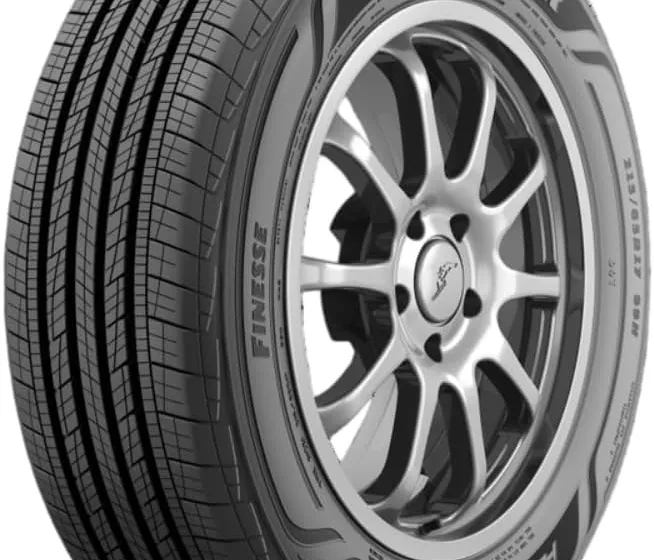
A quiet, fuel-minded all-season touring tire from a major brand, sold here in one 225/65R17 size that you have to match to the numbers on your own sidewall.
What we like
- Goodyear designed the tread pattern around ride comfort and road noise, which is what most people actually notice day to day
- The compound is built for low rolling resistance, so it costs you less fuel than a soft grippy tire
- A 102 load index in a standard load casing suits most crossovers and mid-size cars that came on this size
- Buying one tire at a time is easier on the wallet than a set of four if you only need to replace a pair
What we don't
- The listing does not state a treadwear warranty, so you cannot compare its mileage promise against the Starfire or the Travelstar
- There is no three-peak snowflake marking, so it is a light snow tire and not a winter tire
- The H speed rating tops out at 130 mph, a step down if your car came on V rated tires
- Priced higher per tire than every other pick here, and the sales rank suggests it moves slowly in this size
| Tire type | All-season touring passenger tire |
|---|---|
| Listed size | 225/65R17 102H SL |
| Load index | 102, standard load |
| Speed rating | H, rated to 130 mph |
| Listing covers | One tire |
| Price bracket | $$ |
This listing is one Goodyear Assurance Finesse in 225/65R17 SL 102 H. Go look at the sidewall of the tires on your car before you order. If those numbers do not match, Goodyear sells the Assurance Finesse in other sizes, and you should search the model name plus your own size instead.
What Goodyear is selling here is calm. The listing leads with a patented tread pattern for a comfortable and quiet ride, and that is a fair summary of the tire. A touring all-season lives or dies on things you notice on a long drive. Does the cabin get loud at 70 mph. Does the steering feel vague on a grooved concrete highway. Does the tire thump over expansion joints. Those are the problems this tread pattern is aimed at, not lap times.
The second claim is fuel. The compound and tread are described as low rolling resistance, which means the tire flexes less as it turns and wastes less energy as heat. The savings per tank are small, but they run for the life of the tire. The trade is real though, because low rolling resistance compounds are usually harder, and harder rubber grips less in the cold and wet than a soft one would.
Goodyear says the compound offers grip in wet, dry, snow and ice. Read that as light snow. Nothing in this listing claims the three-peak mountain snowflake certification, and without that mark the tire has not passed a measured severe snow traction test. If you live somewhere that gets real winter, this tire is not your answer and a set of winter tires is.
The last thing worth flagging is what the listing does not say. There is no stated treadwear warranty here, while the Starfire and the Travelstar both promise 50,000 miles in writing. That is not proof the Goodyear wears faster. It just means you have less to hold anyone to.
Research-based pick: this recommendation is based on product data, owner feedback and comparison with products we have tested, not on direct hands-on testing.
Buy it if: Someone driving a crossover or a mid-size car who wants a known brand and cares more about quiet highway miles than cornering grip.
Skip it if: You need four tires today at the lowest possible cost, where the Fullway HP108 or the Travelstar UN99 set makes more sense.
Best Value
Starfire Solarus AS
by Starfire
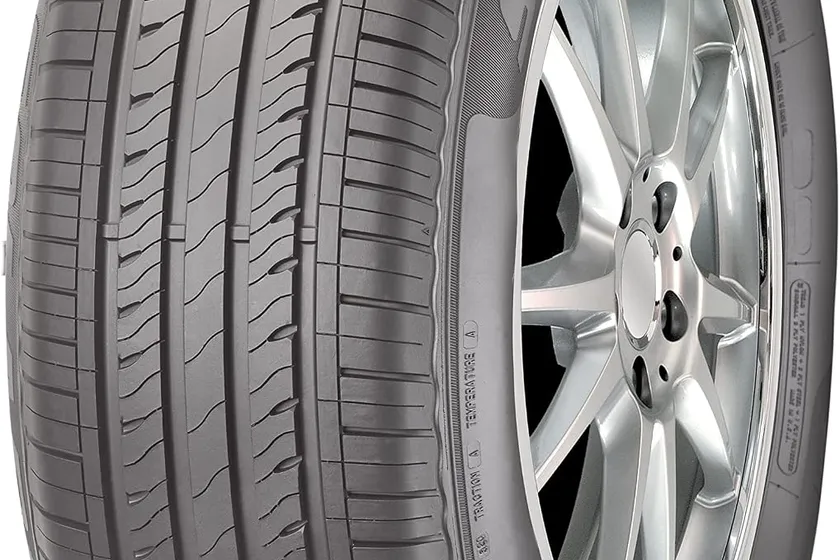
A 50,000 mile all-season touring tire made by Cooper under its budget brand, listed in a single 225/65R17 102H size that has to match your sidewall.
What we like
- Backed by a stated 50,000 mile warranty, which is a number you can hold the maker to
- Built by Cooper Tire and Rubber Company, so it comes from a real tire plant rather than an unknown supplier
- Costs meaningfully less per tire than the Goodyear in the same 225/65R17 size
- The listing is honest about what it is, a touring tire aimed at miles, traction and fuel economy
What we don't
- M+S rated only, which is a tread shape description and not a snow traction test result
- The listing gives almost no detail on the tread design, so you are buying on brand history rather than stated engineering
- Sold one tire at a time, so you need four separate orders and stock can shift between them
| Tire type | All-season touring passenger tire |
|---|---|
| Listed size | 225/65R17 102H |
| Severe snow rated | No, M+S rated only |
| Treadwear warranty | 50,000 miles |
| Listing covers | One tire |
| Price bracket | $$ |
This listing is one Starfire Solarus AS in 225/65R17 102H. Check your own sidewall first. The Solarus AS is sold in a long list of sizes, and the one in this link fits whatever came on 225/65R17, which is a common crossover and small SUV size but far from universal.
Starfire is Cooper’s value brand, and the listing says so outright. That matters more than it sounds. A lot of cheap tires on Amazon come from suppliers you cannot trace, with no history and no plant to call. This one has a named manufacturer behind it, which is why we picked it as the value option instead of something a few dollars cheaper.
The headline number is the 50,000 mile warranty. Treat it as a floor and not a promise about how the tire drives. A warranty like this pays out on a prorated basis if the tread wears out early under normal use, and claiming on it means keeping receipts and rotation records. Still, a maker who prints 50,000 miles has told you roughly what compound hardness they aimed for. The Goodyear pick here states no warranty mileage at all.
Where the Solarus AS is weakest is snow, and the listing does not hide it. It is M+S rated, which stands for mud and snow. That marking is applied by the manufacturer based on the shape of the tread grooves, with no test involved. Nearly every all-season tire on the road carries it. It is not the three-peak mountain snowflake, and the gap between those two marks is the single most misunderstood thing in tire buying.
The rest is plain. The listing promises plenty of miles, good traction and fuel economy, and nothing about the tread pattern, the siping or the construction. You are buying a competent touring tire from a real factory at a fair price, and you should not expect it to do anything memorable.
Research-based pick: this recommendation is based on product data, owner feedback and comparison with products we have tested, not on direct hands-on testing.
Buy it if: A driver who wants a dependable set of four on a normal budget and cares about the warranty mileage more than the badge on the sidewall.
Skip it if: You regularly drive on packed snow, where an M+S only tire gives up too much and a dedicated winter tire is the safer buy.
Best Set of Four
Travelstar UN99
by Travelstar
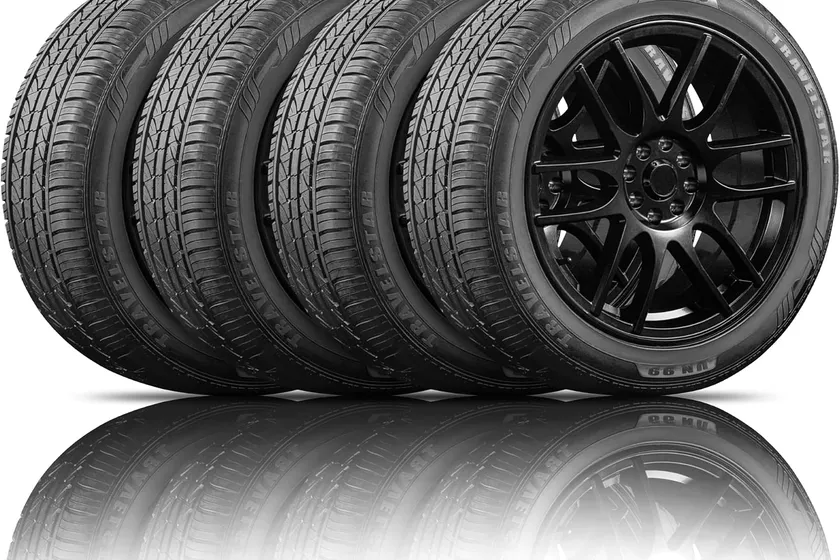
A complete set of four all-season radials in 225/65R17 with a written 50,000 mile treadwear warranty and three years of road hazard cover, for people who want the whole job done in one order.
What we like
- Ships as a set of four, so all four tires are the same age and the same production batch
- The 50,000 mile treadwear warranty is paired with a 3 year road hazard warranty that covers bulges, air leaks and blowouts
- Four wide circumferential drainage channels are aimed squarely at hydroplaning on wet highways
- The symmetric tread pattern is the easy kind to rotate, since it can go on any corner in any direction
What we don't
- M+S rated only, so it has not passed a severe snow traction test despite the all-season name
- The highest total price here, and buying four at once means no chance to try one first
- The road hazard cover only applies within the first 4/32 of an inch of tread wear, which is a short window on a 50,000 mile tire
| Tire type | All-season touring radial |
|---|---|
| Listed size | 225/65R17 102H |
| Load index | 102 |
| Treadwear warranty | 50,000 miles, plus a 3 year road hazard warranty |
| Listing covers | Set of four tires |
| Price bracket | $$$ |
This is a set of four Travelstar UN99 tires in 225/65R17 102H. Same rule as every other pick on this page. Read the numbers moulded into your own sidewall, and only buy this listing if they match.
Buying four at once has a quiet advantage that nobody advertises. All four tires come from a similar production run, so they wear at the same rate and the date codes line up. That keeps your rotations simple and it keeps the grip balanced front to rear, which is the thing that actually stops a car from spinning in a wet corner. Mixed sets are how people end up with one axle that behaves differently from the other.
The warranty package is the strongest part of this listing. Fifty thousand miles of treadwear cover, plus three years of road hazard cover for bulges, air leaks and blowouts. Read the small print on that second one though. It applies only within the first 4/32 of an inch of tread wear, so realistically it protects you for the first season or two and then quietly expires while the tire still looks new.
On the road, the design goals in the listing are ordinary and sensible. Four wide circumferential grooves move standing water out from under the tire, an optimized pitch design is aimed at cutting road noise, and a center rib is there to make the steering feel settled on the highway. The symmetric pattern means you can rotate the tires anywhere, front to back or side to side, without worrying about direction.
The honest weakness is snow. Travelstar says M+S rated and describes light snow, which is exactly what M+S means and no more. It has not earned the three-peak mountain snowflake. If your winters involve packed snow rather than the occasional dusting, this is not the tire for December and January.
Research-based pick: this recommendation is based on product data, owner feedback and comparison with products we have tested, not on direct hands-on testing.
Buy it if: Someone replacing all four tires at once on a crossover that runs 225/65R17 and wants the warranty paperwork sorted in a single purchase.
Skip it if: You only need one or two tires, where the Starfire Solarus AS in the same size is sold individually.
Best for Larger Wheels
Mastertrack M-TRAC HP
by Mastertrack
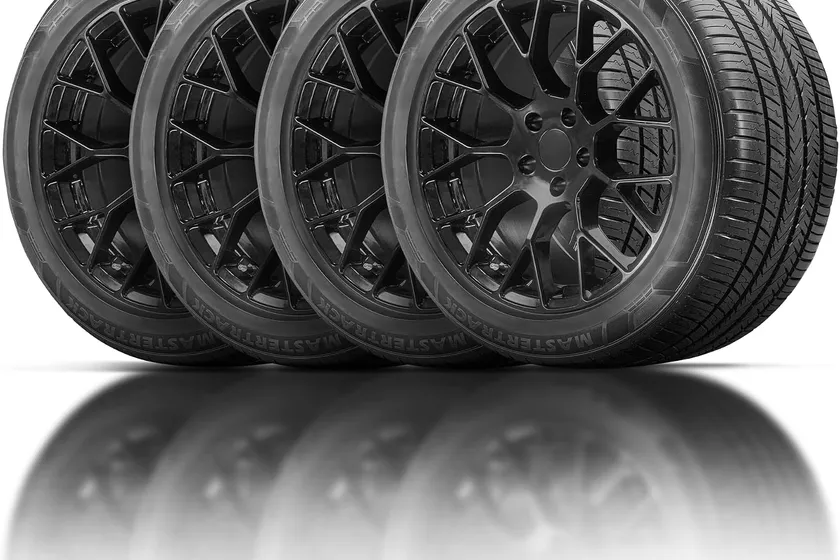
A set of four all-season high performance tires in a big 235/55R19, for the modern SUVs and crossovers that left the factory on 19 inch wheels.
What we like
- Covers a 19 inch size that most budget all-season lines simply do not offer
- The 101 load index carries 1819 lbs per tire, enough for a loaded family SUV
- V speed rating to 149 mph keeps the original rating on cars that came with sportier tires
- Comes with a 50,000 mile treadwear warranty and a 3 year road hazard warranty on top
What we don't
- The most expensive listing in this guide by a wide margin, because large sizes always cost more
- The 20 percent longer tread life claim comes from Mastertrack's own internal testing, with no independent number behind it
- M+S certified only, so it is a light snow tire despite the all-weather language in the listing
- An asymmetric tread pattern has an inside and an outside edge, so a shop has to mount it the right way round
| Tire type | All-season high performance tire |
|---|---|
| Listed size | 235/55R19 101V SL |
| Load index | 101, standard load, 1819 lbs per tire |
| Speed rating | V, rated to 149 mph |
| Listing covers | Set of four tires |
| Price bracket | $$$ |
This listing is four Mastertrack M-TRAC HP tires in 235/55R19 101V, standard load. Match that against your own sidewall before ordering, and note that this is a large, tall wheel size. It is here because 19 inch fitments are where budget tire choice normally dries up.
Big wheels change what you need from a tire. A 55 series sidewall on a 19 inch rim is short, so there is less rubber between the wheel and the road to absorb a pothole. That is why the listing spends so much space on noise reduction and pitch design. It is also why the 101 load index matters. Mastertrack states 1819 lbs per tire, which is the number to compare against the load index printed on your driver’s door placard. Never go below what the placard asks for.
The V speed rating to 149 mph is worth a mention. Cars that ship on 19 inch wheels usually came with V or H rated tires from the factory, and dropping below the original rating changes how the manufacturer expected the car to behave at speed. This one holds the line.
Two claims deserve a raised eyebrow. Mastertrack says the compound extends tread life by 20 percent over standard tires, and the listing itself credits that to internal testing. Take it as a design intent, not a measured result. The warranty is more useful. Fifty thousand miles of treadwear cover plus three years of road hazard protection on bulges, air leaks and blowouts, with the same 4/32 of an inch tread wear limit that these programs usually carry.
On snow, the listing says M+S certified and mentions light snow, which is accurate and modest. This is not a severe snow tire and there is no three-peak snowflake mark on it. Big heavy SUVs on wide tires are the worst case for winter grip, so if you get real snow, plan on a second set rather than trusting these in January.
Research-based pick: this recommendation is based on product data, owner feedback and comparison with products we have tested, not on direct hands-on testing.
Buy it if: An owner of a newer SUV or large crossover on 19 inch wheels who wants four matched tires without paying premium brand prices.
Skip it if: Your car runs a common 16 or 17 inch size, where the Starfire and Travelstar picks cost far less for the same job.
Best Budget Pick
Fullway HP108
by Fullway
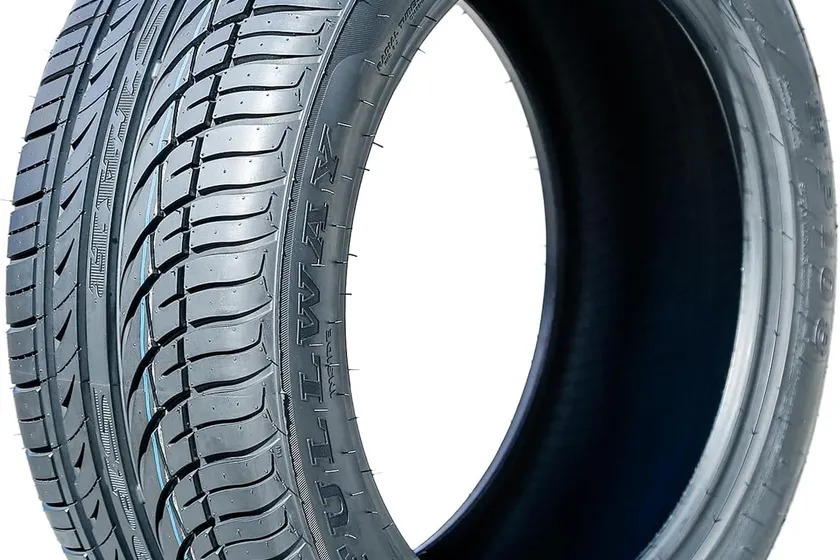
The cheapest tire here per corner, an extra load 215/55R17 with a surprisingly high W speed rating and a published UTQG grade, sold one tire at a time.
What we like
- The lowest price per tire in this guide, which makes a full set of four realistic on a tight budget
- W speed rating certified to 168 mph, higher than any other pick here
- Extra load construction with a 98 load index carrying 1653 lbs per tire
- Publishes a UTQG grade of 380AA, which is more disclosure than several pricier listings give
What we don't
- No treadwear warranty is stated anywhere in the listing, so the 380 UTQG number is all you have to go on
- No three-peak snowflake and no M+S claim in the listing, so treat its snow ability as unproven
- Fullway has no long service history to lean on the way Cooper or Goodyear do
- Sold as a single tire, so a full set means four orders and four chances for stock to run out
| Tire type | All-season high performance tire |
|---|---|
| Listed size | 215/55R17 98W XL |
| Load index | 98, extra load, 1653 lbs per tire |
| Speed rating | W, rated to 168 mph |
| Treadwear warranty | Not stated, UTQG grade is 380AA |
| Price bracket | $ |
This listing is one Fullway HP108 in 215/55R17 98W XL. Check your own sidewall. Fullway lists the HP108 in several sizes, including 205/55R16 and 215/60R16 sold as pairs and sets of four, so if this size is wrong for you the same model may still be an option in your numbers.
The reason this tire is on the page is money. It is the cheapest per corner by a clear margin, and the sales rank on this listing is under 400, which means it genuinely sells. That combination is the practical answer to a common problem. Someone has four tires down to the wear bars and cannot spend four hundred dollars this month. Four fresh budget tires beat two good ones and two bald ones every single time, and it is not a close call.
Two things in the listing are better than the price suggests. The speed rating is W, certified to 168 mph, which is higher than anything else here and well beyond what the tire will ever see. And the casing is extra load, 4 ply rated, with a 98 load index good for 1653 lbs per tire. Extra load construction means a stiffer sidewall, which helps a heavier car feel less floaty in corners.
Fullway also publishes a UTQG grade of 380AA. The 380 is the treadwear number, the first A is wet traction, the second A is temperature resistance. Wet traction of A is the second highest grade available and it is a real government test, which is more than most budget listings will tell you.
The gap is snow. There is no three-peak mark here and the listing does not even claim M+S. It says all season traction and leaves it there. So buy this as a warm and wet weather tire that will cope with a light dusting, and do not plan your January around it. There is also no stated treadwear warranty, so if the tread goes early you have no paperwork to lean on.
Research-based pick: this recommendation is based on product data, owner feedback and comparison with products we have tested, not on direct hands-on testing.
Buy it if: A driver who needs four tires now, has a hard budget, and would rather have four fresh cheap tires than two worn good ones.
Skip it if: You want a written mileage warranty behind your purchase, where the Starfire Solarus AS and Travelstar UN99 both give you 50,000 miles in print.
How we chose#
This is a research-based guide, not a hands-on tire test. We started from the all-season tires actually available on Amazon in the United States, then read each listing for the things that separate one all-season from another: the stated tire type, the listed size, the load index and speed rating, whether any snow certification is claimed, the treadwear warranty, and how many tires the listing covers.
We picked for spread instead of five versions of the same tire. That gave us a major brand touring tire built around quiet running, a value touring tire from a real factory with a written mileage warranty, a set of four with the strongest warranty package, a large 19 inch fitment for modern SUVs, and the cheapest single tire that still publishes its UTQG grade.
One thing we could not do is give you a true all-weather pick. None of the all-season tires in this candidate pool carries the three-peak mountain snowflake certification. Rather than pretend one of them does, we have said so plainly in every review and explained below what that means for you.
We also did not match tires to vehicles. Every listing here is a single size. We name that size in each review and in the comparison table so you can check it against your own sidewall.
What to consider before buying#
Start with the size, because nothing else matters if you get it wrong. Your sidewall gives the size you are running now. Your driver’s door placard gives the size the car left the factory with, plus the load index it needs. Match both. Going below the placard load index is the one substitution that is genuinely unsafe.
Then decide how you actually use the car. If most of your miles are highway commuting, ride comfort and rolling resistance are worth paying for, which points at the Goodyear Assurance Finesse. If you just need safe rubber on the car for the next four years, a warranted budget tire does that job and the money saved is real.
Buy four if you possibly can. This is the piece people get wrong most often. A cheap set of four beats an expensive pair, and the reason is grip balance rather than quality. Two axles with different grip levels behave unpredictably in the wet, and the car will surprise you at the worst moment.
Finally, look at what the listing does not say. Missing information is information. A tire that does not state a treadwear warranty, a snow rating or a UTQG grade may still be fine, but you are buying it on trust rather than on a number.
All-season versus all-weather, and the symbol that divides them#
These two names sound like marketing variations on the same idea. They are not.
An all-season tire is the default fitment on most cars sold in America. It aims to be acceptable in summer heat, acceptable in rain, and passable in a light dusting of snow. Most of them carry an M+S marking, which stands for mud and snow. That marking is applied by the manufacturer based on the geometry of the tread grooves. There is no test. A tire can be almost useless on snow and still wear it legally.
An all-weather tire carries the three-peak mountain snowflake symbol, a small mountain outline with a snowflake inside it. That symbol is a test result. The tire passed a standardized snow traction test and is certified for severe snow service. Some states and Canadian provinces recognise it in winter tire regulations. M+S is not accepted for the same purpose.
None of the five tires in this guide carries the three-peak mark. The Starfire Solarus AS, the Travelstar UN99 and the Mastertrack M-TRAC HP state M+S. The Goodyear Assurance Finesse and the Fullway HP108 do not state a snow marking at all. If you need a certified snow tire, this is the wrong page, and our winter tires guide is the right one. If your road surfaces get muddy and rutted rather than snowy, all-terrain tires solve a different problem again.
Treadwear grades, and why the number is not comparable across brands#
Every passenger tire sold in the United States has a UTQG stamp on the sidewall. It reads as a number and two letters, like the 380AA on the Fullway HP108. The number is treadwear, the first letter is wet traction, the second is temperature resistance.
Traction and temperature are graded against fixed government test procedures, so an A means the same thing everywhere. Treadwear does not work that way. The manufacturer runs its own tire over a fixed course alongside a reference tire, measures the wear, and then assigns its own grade. A grade of 400 is supposed to mean the tire wears four times as slowly as the reference tire.
The catch is that the manufacturer assigns the number, and there is a commercial incentive on both sides. A brand can be conservative to make its warranty easy to honour, or generous to look good next to a competitor. So a 500 from one company and a 500 from another are not directly comparable, and neither is a 380 from a third.
Use treadwear grades to compare tires within one brand’s own range, where the testing was at least consistent. Across brands, a stated mileage warranty is the better signal, because someone has to pay if the tire falls short. The 50,000 mile figures on the Starfire and the Travelstar mean more than any UTQG number here.
Why an all-season is a compromise at both ends#
Here is the part that guides usually skip. An all-season tire is worse than a winter tire in snow and worse than a summer tire in heat. It is a convenience choice, not a performance one.
The reason is chemistry. Rubber compounds have a temperature window where they stay flexible enough to mould into the road surface and grip. A winter compound is built to stay soft below freezing, and it turns greasy and wears fast on hot summer pavement. A summer compound is built to hold its shape when it is hot, and it goes hard and slippery in the cold. An all-season compound sits in the middle, so it never turns to jelly in August and never quite hardens to plastic in January. It also never matches either specialist at their own job.
What that means in practice is a stopping distance penalty at both ends. Below about 45 degrees Fahrenheit, an all-season is measurably longer to stop than a winter tire, on dry roads as well as snowy ones. On a hot track day or a hard mountain descent, it is longer than a summer tire and it will overheat and get greasy sooner.
For most American drivers, the compromise is the right call anyway. One set of tires, no seasonal swap, no storage problem, no second set of wheels to buy. Just be clear-eyed about it. If you are choosing an all-season because your winter is mild, that is a good decision. If you are choosing one because you do not want to deal with two sets and your winter is not mild, you are trading safety for convenience, and it is worth saying so out loud.
Reading your sidewall before you order#
Every tire on the road tells you exactly what it is, in a code moulded into the rubber. Learn to read it once and tire shopping stops being confusing.
Take 225/65R17 102H, the size on the Starfire and the Travelstar in this guide. The 225 is the tread width in millimetres. The 65 is the aspect ratio, meaning the sidewall height is 65 percent of that width. The R means radial construction, which is everything on the market today. The 17 is the wheel diameter in inches. The 102 is the load index, a code for the maximum weight one tire carries. The H is the speed rating.
The two you must not get wrong are the load index and the size itself. Your door placard states the minimum load index for your car, and the Mastertrack listing helpfully translates its 101 rating into 1819 lbs per tire so you can check. Going lower risks the tire failing under load. Speed rating you can drop a little without drama on a road car, though the manufacturer set the original rating for a reason.
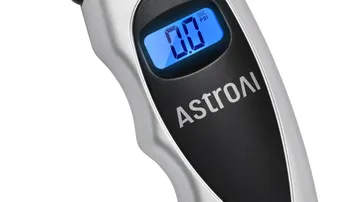
XL or SL after the numbers tells you the casing type. XL means extra load, a reinforced casing that runs higher pressures and carries more weight, like the Fullway HP108 in 215/55R17 98W XL. SL is standard load. If your car came on XL tires, replace with XL. Once the new set is on, set the pressures cold with a tire pressure gauge rather than trusting the shop, because underinflation is what kills all-season tires early.
Final recommendation#
Most people driving a crossover or a mid-size car on 225/65R17 should buy the Goodyear Assurance Finesse, because quiet highway miles and lower rolling resistance are what you actually experience every day, and Goodyear has built a lot of them. If the price stings, the Starfire Solarus AS does the same job in the same size for less, comes out of a Cooper plant, and gives you a 50,000 mile warranty the Goodyear listing does not state. Anyone replacing all four at once should look hard at the Travelstar UN99 set, which arrives as a matched batch with the fullest warranty package here. Owners of newer SUVs on 19 inch wheels have fewer choices, and the Mastertrack M-TRAC HP covers a 235/55R19 that most budget lines skip entirely. And if the real decision is between four cheap tires and staying on worn ones, buy four Fullway HP108 and stop agonising over the badge. Whichever you pick, check your own sidewall before you click, and if your winter involves packed snow rather than the odd flurry, none of these five is the tire for January.
Frequently asked questions
How do I know which all-season tire size to buy?
Look at the sidewall of the tires already on your car. You will see something like 225/65R17 102H. Buy that exact size unless a tire shop has told you otherwise. Every listing in this guide is one size, so the Goodyear Assurance Finesse link is a 225/65R17 and the Mastertrack M-TRAC HP link is a 235/55R19. If your numbers do not match, the same model is usually made in other sizes, and you should search the model name plus your size. Your driver's door placard also lists the original size and the load index the car needs.
What is the difference between an all-season and an all-weather tire?
The three-peak mountain snowflake symbol is the whole difference. An all-weather tire carries that mark, which means it passed a standardized snow traction test and is certified for severe snow service. A normal all-season tire does not carry it. None of the five picks in this guide claim it, and we say so in every review. The M+S marking that the Starfire Solarus AS, the Travelstar UN99 and the Mastertrack M-TRAC HP all carry is not the same thing. M+S is a description of the tread shape that a manufacturer applies to itself, with no test behind it.
Can all-season tires handle snow?
Light snow, yes. Packed snow and ice, not really. The rubber in an all-season tire is formulated to survive hot summer pavement, and that same compound starts to stiffen as the temperature falls toward about 45 degrees Fahrenheit. A stiff tire cannot mould itself into the road surface, so grip drops well before the first snowflake lands. If you live somewhere with a real winter, the honest answer is a second set of [winter tires](/tires/best-winter-tires/) on their own wheels, not a better all-season.
Does the treadwear number tell me how long a tire will last?
Only roughly, and only within one brand. UTQG treadwear grades like the 380 on the Fullway HP108 come from each manufacturer testing its own tire against a reference tire and then assigning the grade itself. There is no independent referee. So a 500 from one brand and a 500 from another can wear very differently. A stated mileage warranty is more useful, which is why the 50,000 mile figures on the Starfire Solarus AS and the Travelstar UN99 are worth something the Goodyear listing does not give you.
Should I buy two tires or four?
Four, if you can. Two new tires and two worn ones leaves you with one axle that grips far more than the other, and that imbalance is what turns a wet corner into a spin. If you can only afford two, put the new pair on the rear regardless of which wheels drive the car, because a rear end that lets go first is much harder to catch. The Travelstar UN99 and Mastertrack M-TRAC HP listings both ship as sets of four, which removes the temptation.
How long do all-season tires last before I should replace them?
Watch two things, tread depth and age. Tread is legally worn out at 2/32 of an inch, but wet grip falls off badly below about 4/32, so plan to replace there rather than at the legal limit. Age matters separately. Rubber hardens over time whether you drive on it or not, and most tire makers suggest replacing at six to ten years no matter how much tread is left. The date code is stamped on the sidewall as four digits, week then year.
About the author

Dale Harper Lead Gear Editor
Dale is a longtime truck owner and former accessory-shop tech who builds these guides from manufacturer fit data, aggregated owner feedback and direct spec comparison. Research-based picks are always labelled as such.
Daily driver: 2022 Ford F-150 XLT SuperCrew
- Tonneau covers and bed accessories
- Seat covers and interior protection
- Lift kits and suspension