The Best Winter Tires: 5 Snow and Ice Tires Compared for 2026
Five winter tires compared for snow, ice and slush, from a premium Continental to a budget set, plus how to match the size stamped on your sidewall.


Winter tires are the one upgrade that changes how a car behaves in the cold more than anything else you can buy for it. They are also the one people put off, usually until the first icy morning when the brakes do nothing. This guide compares five winter tires sold on Amazon in the United States, picked to cover different winters and different budgets: the premium Continental VikingContact 8 for newer crossovers and EVs, the ice-focused Dunlop Winter Maxx 2, the studdable Hankook Winter iPike X SUV W429A for heavier vehicles, the low cost Armstrong Ski-Trac PC that makes a set of four affordable, and the Mastertrack M-TRAC 4S for people who will never swap tires twice a year. One warning up front, and it matters more here than in any other guide on this site. Every tire listing on Amazon is for one specific size. Read the numbers on your own sidewall first, because a tire is bought by size, never by vehicle name.
Table of contents
- Quick picks
- Load index of each tire as listed
- Comparison table
- Best Overall: Continental VikingContact 8
- Best for Ice and Packed Snow: Dunlop Winter Maxx 2
- Best for SUVs and Light Trucks: Hankook Winter iPike X SUV (W429A)
- Best Value: Armstrong Ski-Trac PC
- Best All-Weather Alternative: Mastertrack M-TRAC 4S
- How we chose
- What to consider before buying
- The three-peak snowflake symbol versus the M+S marking
- Why the rubber matters more than the tread depth
- Studded, studless, and the legal problem
- Final recommendation
- FAQ
Quick picks
Every pick wins a specific use case. Jump to the full review before you buy.
-
Best Overall
Continental VikingContact 8
A quiet, low rolling resistance studless winter tire that suits modern cars, crossovers and electric vehicles, sold here in one specific size that you must match to your own sidewall.
-
Best for Ice and Packed Snow
Dunlop Winter Maxx 2
A three-peak certified studless winter tire built around ice and slush grip, listed here in a single 205/60R16 size that you need to match to your own tires.
-
Best for SUVs and Light Trucks
Hankook Winter iPike X SUV (W429A)
A three-peak certified winter tire made for CUVs, SUVs and light trucks that can also be pinned with studs where the law allows, listed here in one 225/65R17 size.
-
Best Value
Armstrong Ski-Trac PC
A plain, low cost studless winter tire that gets four proper winter tires under a small car for close to the price of one premium tire.
-
Best All-Weather Alternative
Mastertrack M-TRAC 4S
An all-season touring tire that carries the three-peak snow rating, sold two to a listing, for drivers who will not swap tires twice a year but still see snow.
Compare every pick
| Product | Award | Tire type | Listed size | Best for | Where to buy |
|---|---|---|---|---|---|
| Continental VikingContact 8 | Best Overall | Winter passenger tire | 235/50R19 103T XL | Drivers of newer crossovers, EVs and larger cars who want winter grip without giving up a quiet, settled ride on dry highway miles. | Check price for Continental VikingContact 8 at Amazon (affiliate link) |
| Dunlop Winter Maxx 2 | Best for Ice and Packed Snow | Winter passenger tire | 205/60R16 96T XL | Drivers in places where the roads go from packed snow to slush to bare pavement several times a week and ice is the real worry. | Check price for Dunlop Winter Maxx 2 at Amazon (affiliate link) |
| Hankook Winter iPike X SUV (W429A) | Best for SUVs and Light Trucks | Studdable winter tire for CUVs, SUVs and light trucks | 225/65R17 102T | SUV and light truck owners in states where studs are legal, or anyone who wants the option of studs without buying a second set later. | Check price for Hankook Winter iPike X SUV (W429A) at Amazon (affiliate link) |
| Armstrong Ski-Trac PC | Best Value | Studless winter touring tire | 205/55R16 91H | Drivers on a tight budget who currently run all-seasons through winter and need four real winter tires for the least money possible. | Check price for Armstrong Ski-Trac PC at Amazon (affiliate link) |
| Mastertrack M-TRAC 4S | Best All-Weather Alternative | All-season touring tire carrying a severe snow rating | 195/65R15 91H | Drivers in milder winter states who get a handful of snowy weeks a year and have nowhere to store a second set of wheels. | Check price for Mastertrack M-TRAC 4S at Amazon (affiliate link) |
Swipe sideways to compare every column.
Best Overall
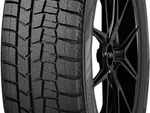
Continental VikingContact 8
by Continental
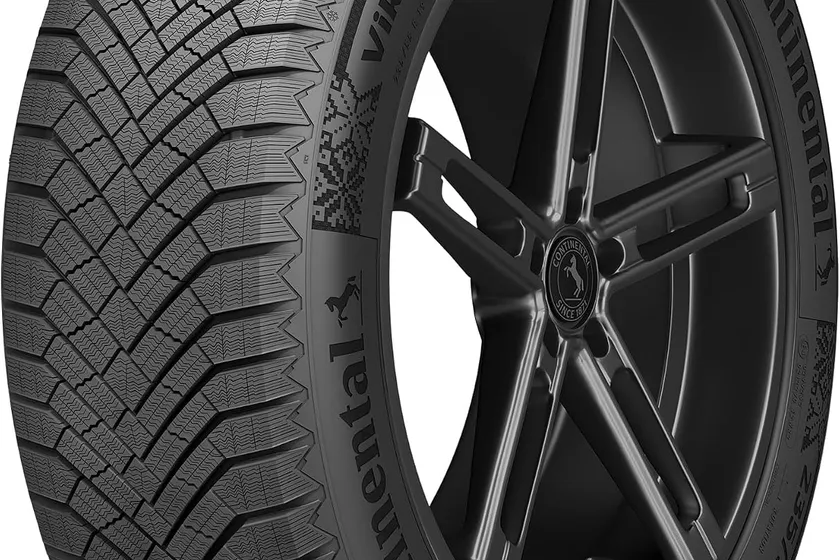
A quiet, low rolling resistance studless winter tire that suits modern cars, crossovers and electric vehicles, sold here in one specific size that you must match to your own sidewall.
What we like
- Three-layer sipes keep fresh biting edges as the tread wears down, not just when the tire is new
- The nordic tread compound is built to cut rolling resistance, which helps fuel use and EV range in the cold
- Noise-optimized tread pattern is aimed at the highway drone that puts people off winter tires
- Reinforced construction limits how much the tread squirms, so steering stays clearer than on soft winter tires
What we don't
- The listing does not spell out the three-peak snowflake marking, so check the sidewall before you commit
- It is the most expensive tire in this guide by a wide margin, and you need four of them
- This listing is a single 235/50R19 tire, a large wheel size that will not suit most small cars
| Tire type | Winter passenger tire |
|---|---|
| Listed size | 235/50R19 103T XL |
| Load index | 103, extra load |
| Speed rating | T, rated to 118 mph |
| Listing covers | One tire |
| Price bracket | $$$ |
Read the listing size before anything else. This is one Continental VikingContact 8 in 235/50R19 103T XL. That is a big wheel, the kind you find on newer crossovers and EVs. If your sidewall says something different, the same model exists in other sizes, but this particular page will not fit your car. Tires are bought by size, never by vehicle name.
With that out of the way, this is the most complete winter tire in the guide. Continental built it around three-layer sipes, which means the small slits in the tread go deep and keep their shape as rubber wears away. A winter tire that grips well at 10/32 inch and poorly at 6/32 inch is only half a tire. Layered siping is Continental’s answer to that, and it is the reason this one earns Best Overall rather than the cheapest pick.
The second reason is what it does when there is no snow on the road, which is most of the time in most places. The listing calls out a noise-optimized tread pattern and construction that limits tire deformation. Both target the two complaints people have about winter tires: the highway hum and the vague, wandering steering. Continental also points at rolling resistance here, saying the nordic compound is tuned to help fuel economy and extend EV battery range. Winter tires normally cost you range in the cold, so a tire designed around that is worth something to an EV owner.
The honest gap is certification. The listing describes snow, slush and ice performance in detail but never states the three-peak mountain snowflake marking, unlike the Dunlop and Hankook pages. Check the sidewall for the little mountain symbol when the tire arrives. The other gap is money. At this price you are spending several times what a set of Armstrong Ski-Trac PC tires costs, and the cheap set still stops far shorter than all-seasons on ice.
Research-based pick: this recommendation is based on product data, owner feedback and comparison with products we have tested, not on direct hands-on testing.
Buy it if: Drivers of newer crossovers, EVs and larger cars who want winter grip without giving up a quiet, settled ride on dry highway miles.
Skip it if: Your budget will not stretch to four of these, in which case the Dunlop Winter Maxx 2 or the Armstrong Ski-Trac PC do the important part for far less.
Best for Ice and Packed Snow
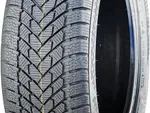
Dunlop Winter Maxx 2
by Dunlop
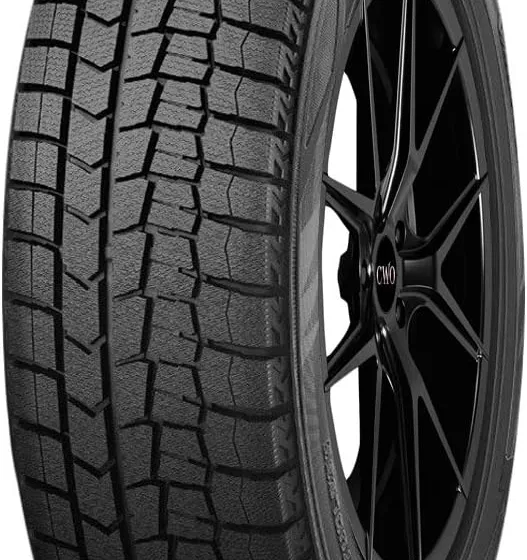
A three-peak certified studless winter tire built around ice and slush grip, listed here in a single 205/60R16 size that you need to match to your own tires.
What we like
- Carries the three-peak mountain snowflake mark, so it meets a real severe snow traction standard
- The MAXX Grip pattern and large drainage grooves are aimed at slush, which is where most winter crashes start
- Dunlop uses polymers meant to hold their properties as the tire ages, not only in the first season
- Among the lowest listed prices in this guide, which matters when you are buying four
What we don't
- The T speed rating caps it at 118 mph, so it is a downgrade for anyone with a high speed rated summer setup
- Sales rank on this size is low, so stock of a matching set of four can be thin
- Nothing in the listing mentions studs, so this is not the tire if your area allows and expects them
| Tire type | Winter passenger tire |
|---|---|
| Listed size | 205/60R16 96T XL |
| Severe snow rated | Yes, Three Peak Mountain Snowflake |
| Speed rating | T, rated to 118 mph |
| Listing covers | One tire |
| Price bracket | $$ |
This listing is one Dunlop Winter Maxx 2 in 205/60R16 96T XL. Look at the sidewall of the tires on your car right now and match those numbers before you order. Dunlop sells the Winter Maxx 2 in many sizes, and the size in this listing suits a mid-size sedan or a small crossover, not everything.
The Winter Maxx 2 is a studless winter tire, and it is the pick here for people whose problem is ice rather than deep snow. Two things in the listing point that way. The MAXX Grip pattern is Dunlop’s tread arrangement for snow traction, and the large water drainage grooves are there to flush slush out of the contact patch. Slush is the sneaky one. It builds a water layer under the tire at low speed and steals grip without ever looking dangerous, and a tire that cannot clear it will float.
It carries the three-peak mountain snowflake certification. That is the marking to look for, and it is the clearest difference between this and an all-season tire wearing an M+S stamp. The three-peak mark means the tire passed a measured snow traction test. M+S is a tread shape description that any manufacturer can apply to itself.
Dunlop also talks about polymers that hold performance across the tire’s life. Winter rubber is soft on purpose, and soft rubber hardens as it ages and gives up grip long before the tread is worn out. A compound built to resist that is a real advantage in year three and four of a set.
The trade-offs are simple. The T speed rating tops out at 118 mph, which is fine for winter driving and a step down if your car came on V rated tires. And the sales rank on this size is deep, so check that four are actually available before you build a plan around it. Never buy two.
Research-based pick: this recommendation is based on product data, owner feedback and comparison with products we have tested, not on direct hands-on testing.
Buy it if: Drivers in places where the roads go from packed snow to slush to bare pavement several times a week and ice is the real worry.
Skip it if: You want one tire you can leave on all year, where the Mastertrack M-TRAC 4S is the honest compromise.
Best for SUVs and Light Trucks
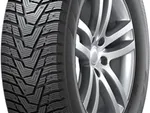
Hankook Winter iPike X SUV (W429A)
by Hankook
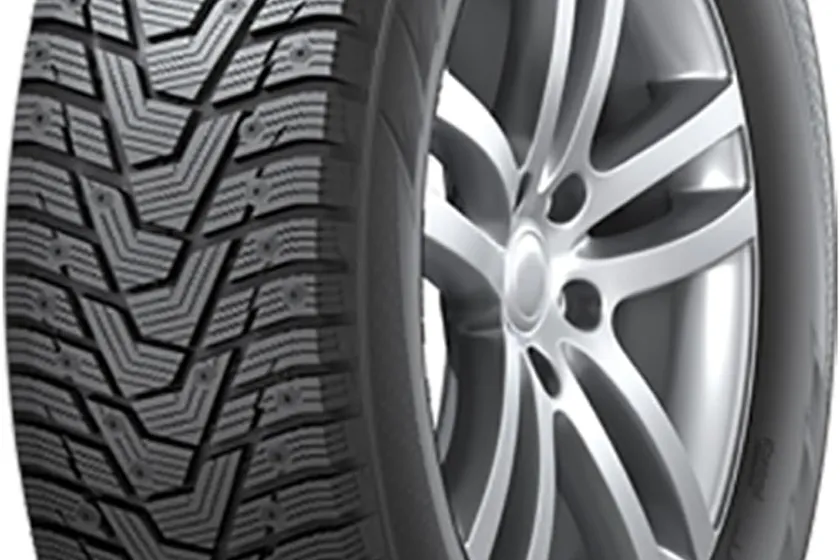
A three-peak certified winter tire made for CUVs, SUVs and light trucks that can also be pinned with studs where the law allows, listed here in one 225/65R17 size.
What we like
- Designed and load rated for CUVs, SUVs and light trucks rather than adapted from a car tire
- Can be pinned with TSMI
- Carries the three-peak mountain snowflake certification for severe snow service
- A wide center tread block gives it a solid, continuous contact area on packed snow and ice
What we don't
- Studs have to be installed by a shop before the tires are mounted, which adds cost and a booking
- Studs are restricted or banned outright in many states, so the headline feature may be off limits to you
- The 102 load index is standard load, so check it against your door placard if you tow or carry weight
| Tire type | Studdable winter tire for CUVs, SUVs and light trucks |
|---|---|
| Listed size | 225/65R17 102T |
| Load index | 102, standard load |
| Severe snow rated | Yes, Three Peak Mountain Snowflake |
| Studdable | Yes, takes TSMI #12 studs where permitted |
| Price bracket | $$ |
The linked listing is one Hankook Winter iPike X SUV W429A in 225/65R17 102T. That size is common on mid-size SUVs and crossovers, but common is not the same as universal. Check your sidewall. The Winter iPike X exists in other sizes, and the wrong size is the wrong tire no matter how good the model is.
This is the truck and SUV pick because it was drawn up for that job. Hankook lists it for CUVs, SUVs and light trucks, and a heavier vehicle asks different things of a winter tire. It puts more weight on each contact patch, it has a higher center of gravity, and it usually carries more in the back. A car tire stretched to fit will squirm under that load.
The feature that makes it unusual here is the stud pinning. The tread is molded with holes that take TSMI #12 studs. A shop presses the studs in before the tires go on the wheels, and the result is metal pins that bite into hard ice in a way that no rubber compound can match. Studs are also loud, they wear pavement, and they are the reason many states restrict them. Some allow them only between set dates, some ban them completely. Check your state rules first, because if studs are off the table you are paying for a feature you cannot use.
Left unstudded, it is still a proper three-peak certified winter tire. Hankook points to a wide block in the center of the tread for snow and ice traction, and a rubber compound aimed at longer tread life. That last part matters more on an SUV, because heavier vehicles chew through soft winter rubber faster.
Two cautions. The 102 load index here is standard load, so compare it against the number on your door placard, especially if you tow. And running studs means committing to a fitting appointment before the snow starts, not after.
Research-based pick: this recommendation is based on product data, owner feedback and comparison with products we have tested, not on direct hands-on testing.
Buy it if: SUV and light truck owners in states where studs are legal, or anyone who wants the option of studs without buying a second set later.
Skip it if: You live somewhere studs are banned and you only need a car-sized winter tire, where the Dunlop Winter Maxx 2 costs less and does the same job.
Best Value
Armstrong Ski-Trac PC
by Armstrong
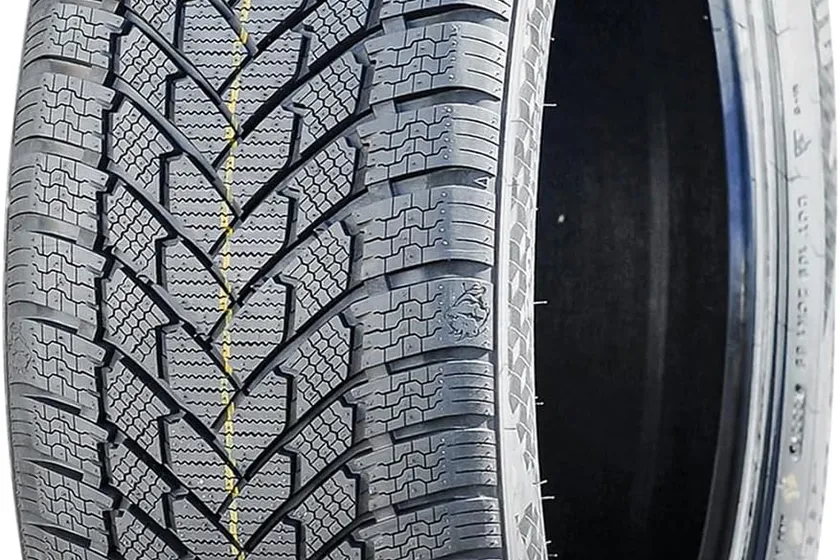
A plain, low cost studless winter tire that gets four proper winter tires under a small car for close to the price of one premium tire.
What we like
- The lowest cost route to a full set of four winter tires in this guide
- Sold as studless, so there is no stud fitting appointment and no state legality question
- The H speed rating covers 130 mph, higher than any other pick here
- Standard load, four ply rated touring construction suits normal passenger car use
What we don't
- The listing never states the three-peak mountain snowflake marking, so severe snow certification is unconfirmed
- Armstrong is a value brand with far less independent winter testing behind it than Continental or Dunlop
- The listing gives no detail at all on tread pattern or siping, so you are buying on the category label
| Tire type | Studless winter touring tire |
|---|---|
| Listed size | 205/55R16 91H |
| Load index | 91, standard load |
| Speed rating | H, rated to 130 mph |
| Severe snow rated | Not stated in this listing |
| Price bracket | $$ |
This listing is a single Armstrong Ski-Trac PC in 205/55R16 91H. It is one tire, not a set, and it is one size. Match the numbers on your sidewall before ordering four. Armstrong lists the Ski-Trac PC in other common car sizes as well, including 195/65R15 and 185/65R15, so if this one does not match, look for the size that does.
The case for this tire is arithmetic. The single biggest mistake people make in winter is staying on all-season tires because a set of winter tires feels expensive. Four Armstrong Ski-Trac PC tires cost roughly what one premium winter tire costs. A budget winter tire on all four corners will out-brake and out-steer a good all-season on cold, snowy pavement, because the rubber compound is the thing doing most of the work and every winter tire has one.
Armstrong describes it as a studless winter traction touring tire, four ply rated, standard load, with a 91 load index good for 1,356 pounds per tire. The speed rating is H, certified to 130 mph, which is actually the highest in this guide. That is a small bonus if your car came with H or V rated tires and you dislike the idea of stepping down.
Be clear about what you are not getting. The listing says nothing about the tread pattern, nothing about siping, and nothing about the three-peak mountain snowflake certification. The other winter picks here spell out what their tread does. This one just says winter. Armstrong is a budget brand and there is very little independent winter testing to fall back on.
So treat it as the honest floor. It is the tire to buy if the real choice is between these and staying on worn all-seasons for another January. If you can find another fifty dollars per tire, the Dunlop Winter Maxx 2 gives you a documented certification and a described ice strategy.
Research-based pick: this recommendation is based on product data, owner feedback and comparison with products we have tested, not on direct hands-on testing.
Buy it if: Drivers on a tight budget who currently run all-seasons through winter and need four real winter tires for the least money possible.
Skip it if: You want a documented severe snow certification and known ice performance, where the Dunlop Winter Maxx 2 costs a little more and tells you far more.
Best All-Weather Alternative
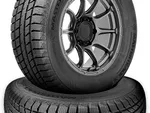
Mastertrack M-TRAC 4S
by Mastertrack
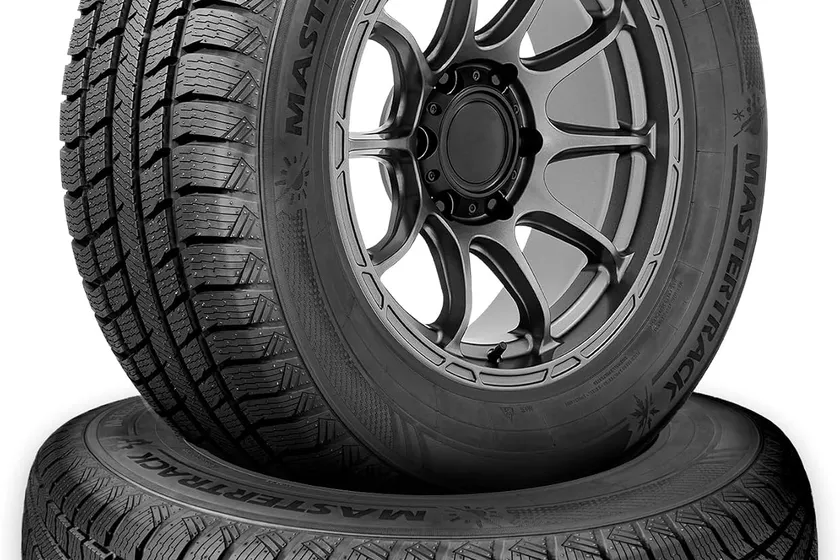
An all-season touring tire that carries the three-peak snow rating, sold two to a listing, for drivers who will not swap tires twice a year but still see snow.
What we like
- Three-peak mountain snowflake rated, so it meets the severe snow standard that ordinary all-seasons do not
- Backed by a 60,000 mile treadwear warranty plus 3 year road hazard and 5 year manufacturer coverage
- Sold as a pair, so a full set is two listings rather than four, and the per tire cost stays low
- Four wide grooves and a multi-pitch tread aim at wet grip and quieter running on bare pavement
What we don't
- It is an all-season tire with a snow rating, not a dedicated winter tire, so ice grip will trail the Dunlop and Hankook
- The listing itself says light snow, which is a smaller claim than the deep snow and ice language on the winter picks
- Mastertrack is a small brand with a thin independent testing record next to Continental or Dunlop
| Tire type | All-season touring tire carrying a severe snow rating |
|---|---|
| Listed size | 195/65R15 91H |
| Severe snow rated | Yes, Three Peak Mountain Snowflake |
| Speed rating | H, rated to 130 mph |
| Listing covers | Two tires |
| Price bracket | $$ |
Two things about this listing before anything else. It covers two tires, not one, which is different from every other pick in this guide. And the size is 195/65R15 91H, a small car size. You still need four matching tires, so that is two of these listings, and you still need to match your own sidewall.
The M-TRAC 4S is here because a real slice of drivers will never own two sets of tires. They have no garage space, no second set of wheels, and no interest in booking a swap in November and another in April. For those people the choice is not winter tires versus all-seasons. It is a plain all-season versus one carrying the three-peak mountain snowflake mark, and the marked tire is the better answer.
Mastertrack lists it as 3PMSF rated with an asymmetric tread, four wide drainage grooves, strong outer blocks for stability and 3D inner blocks for traction. The UTQG rating is 520AA and it carries a 60,000 mile treadwear warranty, a 3 year road hazard warranty and a 5 year manufacturer warranty. That warranty stack is unusual at this price and it tells you the tire is built to last a normal all-season lifespan rather than a winter one.
Now the honest part. Mastertrack’s own listing says light snow. Not deep snow, not ice. A three-peak rating is a snow traction test, and passing it does not make a tire good on ice. The tread compound in an all-weather tire still has to survive July heat, so it cannot be as soft as the rubber in the Continental or the Dunlop, and softness is what grips frozen surfaces.
That is the trade you are making. Buy it if your winter is six snowy weeks in a mild state. Do not buy it and then drive a mountain pass in February.
Research-based pick: this recommendation is based on product data, owner feedback and comparison with products we have tested, not on direct hands-on testing.
Buy it if: Drivers in milder winter states who get a handful of snowy weeks a year and have nowhere to store a second set of wheels.
Skip it if: You drive on ice or packed snow regularly, where a dedicated winter tire like the Dunlop Winter Maxx 2 is a safety difference, not a comfort one.
How we chose#
This is a research-based guide, not a hands-on winter test. We started from the winter tires actually available on Amazon in the United States, then read each listing for the things that separate one winter tire from another: the stated tire type, the three-peak certification, the load index and speed rating, whether the tread can take studs, and how many tires the listing covers.
We then picked for spread rather than for five versions of the same tire. That gave us a premium studless tire for larger modern wheels, an ice-focused certified winter tire at a low price, a studdable tire built for SUVs and light trucks, a budget tire that makes a full set of four realistic, and an all-weather tire for people who will not swap seasonally. The candidate pool did not include a true high speed rated performance winter tire, so we have not pretended otherwise. This guide covers the main winter tire types most drivers are choosing between.
One thing we deliberately did not do is match tires to vehicles. Every listing here is a single size. We name that size in each review and in the comparison table so you can check it against your own sidewall.
What to consider before buying#
Start with your winter, not your car. If your roads are icy for months, you want a dedicated winter tire and possibly studs. If you get six snowy weeks and mostly wet, cold pavement, an all-weather tire with the snow rating is a reasonable answer. Buying more tire than your climate needs is money spent on grip you never use.
Then check the numbers. Your sidewall gives the size, and your door placard gives the size the car left the factory with plus the load index it needs. The load index has to meet or beat that number. Speed rating can drop for winter use without much consequence, since nobody is doing 130 mph on snow, but it should not drop below what your owner’s manual allows.
Budget for four. This is the part people get wrong. A cheap set of four beats an expensive pair every single time, and it is not close. If four premium tires are out of reach, buy four budget winter tires instead of two good ones.
Finally, plan the swap before the weather turns. Shops book solid the week after the first snow. If you are running studs, that appointment has to happen before the tires are mounted, not after.
The three-peak snowflake symbol versus the M+S marking#
These two markings look like they mean the same thing. They do not.
M+S stands for mud and snow, and it is a description of tread geometry. A manufacturer can apply it based on the void ratio and groove shape of the tread, with no test involved. That is why nearly every all-season tire on the road wears it, including tires that are close to useless on snow.
The three-peak mountain snowflake symbol is a test result. A tire earns it by passing a standardized snow traction test, and it certifies the tire for severe snow service. That is a real, measured bar. The Dunlop Winter Maxx 2, the Hankook Winter iPike X and the Mastertrack M-TRAC 4S all state it in their listings.
Two cautions. First, the three-peak test measures snow traction only. It says nothing about ice, and ice is where most winter crashes happen. Second, an all-weather tire and a dedicated winter tire can both carry the symbol while performing very differently, because they are built to survive completely different summers. Take the symbol as the minimum, not as the answer.
Why the rubber matters more than the tread depth#
Look at a winter tire and you notice the aggressive blocks and deep grooves. Those matter for clearing snow and slush. But the reason a winter tire stops shorter on a cold road is chemistry, not shape.
All-season and summer rubber compounds are formulated for a wide temperature range that includes hot pavement. As the temperature falls toward about 45 degrees Fahrenheit, that rubber starts to stiffen. A stiff tire cannot mold itself into the tiny irregularities in the road surface, and grip drops off even on dry pavement. Below freezing it gets noticeably worse.
Winter compounds are built to stay pliable in the cold. That is what Continental means by a nordic tread compound, and it is what all the siping in these tread patterns is there to support. The soft rubber conforms to the road, and the thousands of small sipes cut into each block open up under load to create biting edges.
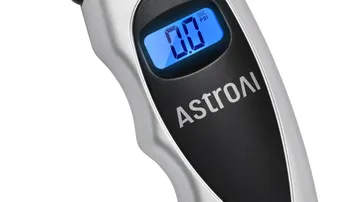
Two things follow from this. Winter tires help on cold, dry roads, not just snowy ones, which is why the temperature rule beats the snowfall rule for deciding when to fit them. And a winter tire that has hardened with age is finished as a winter tire even with plenty of tread left. Cold pressure loss compounds the problem, so check your pressures on a cold morning with a tire pressure gauge rather than trusting the reading from last month.
Studded, studless, and the legal problem#
Studs are small metal pins pressed into holes molded in the tread. On hard, polished ice they work better than any rubber compound, because they physically dig in. The Hankook Winter iPike X SUV W429A is the only tire here designed to take them, using TSMI #12 studs, and a shop has to install them before mounting.
The costs are real. Studs are loud on bare pavement, they chew up road surfaces, and they can reduce grip slightly on dry roads because the pin sits proud of the rubber. That damage to pavement is why the law gets involved. Many states allow studs only between fixed dates in the winter, several restrict them to specific counties or vehicle types, and some ban them outright year round. The rules vary enough that you have to look up your own state before you spend the money.
Studless winter tires like the Continental VikingContact 8 and the Dunlop Winter Maxx 2 skip all of that. Modern studless compounds and multi-layer siping have closed much of the ice gap, and they carry no legal restrictions anywhere. For most American drivers, studless is the sensible default and studs are a specific answer to a specific problem: regular driving on ice, in a state that permits them.
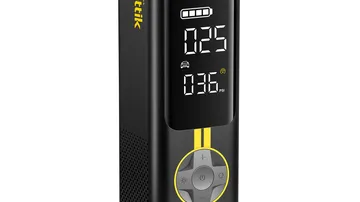
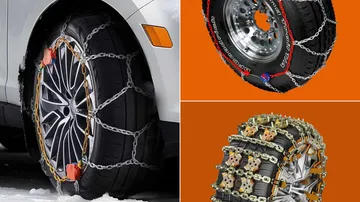
If you only face bad conditions a few days a year on a mountain route, a set of snow chains in the trunk is a cheaper answer than studs, and a portable air compressor is worth carrying either way, since cold air drops your pressures fast.
Final recommendation#
Most drivers with a newer crossover, EV or larger car should buy the Continental VikingContact 8, provided the 235/50R19 size in that listing matches their sidewall. It is the one here that pays the most attention to the parts of winter that are not snow: highway noise, steering feel and rolling resistance. If your worry is ice and slush on ordinary car sizes, the Dunlop Winter Maxx 2 gives you a stated three-peak certification and a compound built to age well for far less money. SUV and light truck owners in stud-legal states should take the Hankook Winter iPike X SUV W429A, which works well unstudded and gives you the option later. If the honest choice is between cheap winter tires and staying on worn all-seasons, buy four Armstrong Ski-Trac PC and stop worrying about the badge. And if you will genuinely never swap tires twice a year, the Mastertrack M-TRAC 4S is the compromise that at least carries the snow rating, as long as you accept it is a light snow tire and not an ice tire.
Frequently asked questions
How do I know which winter tire size to buy?
Look at the sidewall of the tires already on your car. You will see something like 205/60R16 96T. Buy that exact same size unless a tire shop has told you otherwise. The listings in this guide are each for one size, so the Dunlop link is a 205/60R16 and the Continental link is a 235/50R19. If your numbers do not match, the same tire model is usually sold in other sizes, and you should search for the model name plus your size. Your door placard also lists the original size and the load index.
What does the three-peak mountain snowflake symbol actually mean?
It means the tire passed a standardized snow traction test and is certified for severe snow service. The older M+S marking is not a test result at all. A manufacturer can stamp M+S on a tire based on the shape of the tread grooves, which is why almost every all-season tire carries it. The Dunlop Winter Maxx 2, the Hankook Winter iPike X and the Mastertrack M-TRAC 4S all state the three-peak certification. When a listing does not mention it, check the sidewall for the small mountain and snowflake symbol yourself.
Can I just put two winter tires on the drive wheels?
No, and this is the mistake that causes crashes. Two winter tires and two all-seasons gives you one axle with far more grip than the other. On a front-wheel drive car with winter tires only on the front, the rear loses grip first in a corner and the car spins. On a rear-wheel drive car with them only on the rear, the front will not steer. Tire manufacturers and shops are consistent on this. Fit four matching tires or do not fit any.
Are studded tires worth it, and are they legal?
Studs bite into hard ice better than any rubber compound, so they are worth it if you drive on ice rather than snow. The catch is the law. Many states restrict studs to set winter dates, and several ban them entirely because they damage pavement. Check your own state rules before buying. The Hankook Winter iPike X SUV W429A is the only pick here that can be pinned, using TSMI #12 studs, and the studs must be installed by a shop before the tires go on the wheels. Studless tires like the Continental and the Dunlop have no legal restrictions.
When should I put winter tires on and take them off?
Go by temperature, not by snowfall. Winter compounds are designed to stay flexible below roughly 45 degrees Fahrenheit, and all-season rubber starts stiffening around the same point. So fit them when daily highs settle under 45, which in most of the northern United States is late October or early November, and take them off in spring when highs stay above it. Running winter tires through summer heat wears them out quickly and makes the steering feel vague, because the soft compound was never meant for hot pavement.
How long does a set of winter tires last?
Usually four to six seasons, and time matters as much as mileage. Winter rubber hardens as it ages, and a hardened winter tire loses the cold grip you paid for long before the tread depth runs out. If a set is more than about six years old, check the date code on the sidewall and judge it on feel as well as depth. Store them out of sunlight, stacked flat or hung, and keep them clean of road salt. The Dunlop listing specifically mentions polymers meant to slow that ageing.
About the author

Dale Harper Lead Gear Editor
Dale is a longtime truck owner and former accessory-shop tech who builds these guides from manufacturer fit data, aggregated owner feedback and direct spec comparison. Research-based picks are always labelled as such.
Daily driver: 2022 Ford F-150 XLT SuperCrew
- Tonneau covers and bed accessories
- Seat covers and interior protection
- Lift kits and suspension