The Best Tire Pressure Gauges: 5 Picks Compared
Five real tire pressure gauges compared: digital, analog dial, pencil and dual head, with honest notes on accuracy, range and who each one suits.

A tire gauge is one of the cheapest tools you can own and one of the easiest to buy badly, because a gauge that reads 4 PSI off is worse than no gauge at all. It makes you confident about the wrong number. This guide compares five gauges actually sold on Amazon in the United States, chosen to cover different jobs rather than five versions of the same thing: the budget AstroAI digital gauge, the heavier built JACO ElitePro, the battery-free Accu-Gage RRA60X dial gauge with a hose, the pocket-sized Milton S-921 pencil gauge, and the LUMITECO dual head gauge for dually trucks and RVs. We compared them on gauge type, pressure range, the accuracy each maker actually publishes, chuck design and whether they need a battery. By the end you will know which format fits your vehicle, what pressure ceiling you need, and where spending more buys something real.
Table of contents
- Quick picks
- Top of the pressure range
- Comparison table
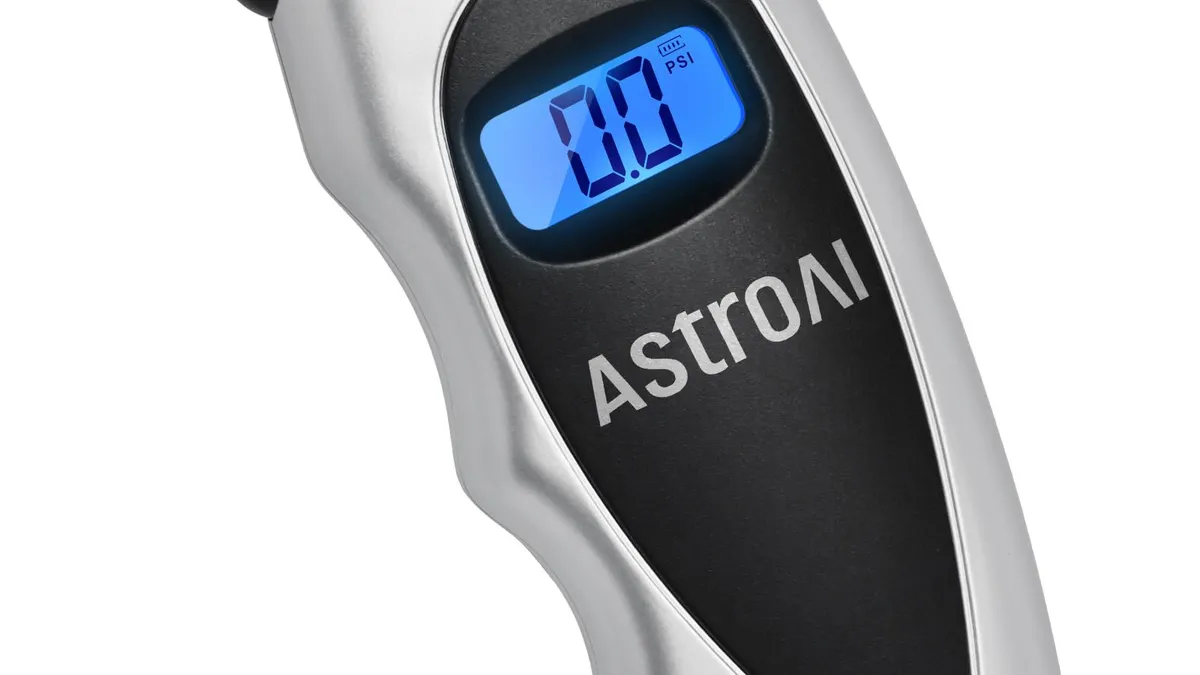
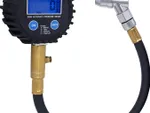
- Best Overall: AstroAI Digital Tire Pressure Gauge 150 PSI
- Best Premium: JACO ElitePro Digital Tire Pressure Gauge 100 PSI
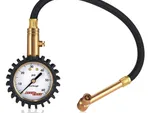
- Best Analog Dial Gauge: Accu-Gage RRA60X Dial Tire Pressure Gauge 60 PSI
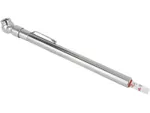
- Best Glovebox Backup: Milton S-921 Pencil Tire Pressure Gauge
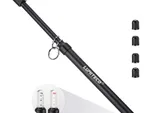
- Best for Trucks and RVs: LUMITECO 12 Inch Dual Head Tire Pressure Gauge 150 PSI
- How we chose
- What to consider before buying
- Digital versus mechanical
- Chuck design and valve stem access
- Where a gauge fits alongside your car’s warning light
- Final recommendation
- FAQ
Quick picks
Every pick wins a specific use case. Jump to the full review before you buy.
-
Best Overall
AstroAI Digital Tire Pressure Gauge 150 PSI
A cheap digital gauge with a stated accuracy figure, a lit nozzle and a 150 PSI ceiling, which covers almost every car and light truck job.
-
Best Premium
JACO ElitePro Digital Tire Pressure Gauge 100 PSI
A tougher, better built digital gauge with a brass core and a rubber sleeve, aimed at people who use a gauge weekly rather than twice a year.
-
Best Analog Dial Gauge
Accu-Gage RRA60X Dial Tire Pressure Gauge 60 PSI
A mechanical dial gauge with a hose and a right angle chuck that reads accurately, holds its reading and never needs a battery.
-
Best Glovebox Backup
Milton S-921 Pencil Tire Pressure Gauge
A plated brass pencil gauge with a built-in deflator, small enough to live in a door pocket and simple enough that it cannot really break.
-
Best for Trucks and RVs
LUMITECO 12 Inch Dual Head Tire Pressure Gauge 150 PSI
A dual head gauge on a 12 inch tube that reaches inner dual wheels and reads to 150 PSI, which is what heavy trucks and RVs actually need.
Compare every pick
| Product | Award | Gauge type | Pressure range | Stated accuracy | Chuck style | Power source | Best for | Where to buy |
|---|---|---|---|---|---|---|---|---|
| AstroAI Digital Tire Pressure Gauge 150 PSI | Best Overall | Digital handheld | 0 to 150 PSI | Within 1 PSI, ANSI B40.7 | Single head, straight, with lighted nozzle | Battery, included | Daily drivers who want one accurate, easy to read gauge in the glovebox and do not want to think about it again. | Check price for AstroAI Digital Tire Pressure Gauge 150 PSI at Amazon (affiliate link) |
| JACO ElitePro Digital Tire Pressure Gauge 100 PSI | Best Premium | Digital handheld | 0 to 100 PSI | ANSI and ASME Grade 2A, within 0.5 percent of full scale | Swivel chuck on a 10 inch rubber hose | Battery, included | Enthusiasts, track day drivers and home mechanics who check pressures often and want a gauge that lasts for years. | Check price for JACO ElitePro Digital Tire Pressure Gauge 100 PSI at Amazon (affiliate link) |
| Accu-Gage RRA60X Dial Tire Pressure Gauge 60 PSI | Best Analog Dial Gauge | Analog dial with hose | 5 to 60 PSI | ANSI B40.1 Grade B, within 2 percent | Right angle chuck on a flexible hose | None, fully mechanical | Drivers who want a dependable gauge with no batteries, and anyone whose wheels hide the valve stems behind tight spokes. | Check price for Accu-Gage RRA60X Dial Tire Pressure Gauge 60 PSI at Amazon (affiliate link) |
| Milton S-921 Pencil Tire Pressure Gauge | Best Glovebox Backup | Pencil stick | 5 to 50 PSI | Not stated in listing, reads in 1 PSI steps | Single head, straight, with built-in deflator valve | None, fully mechanical | Keeping a cheap, indestructible backup gauge in every vehicle you own so you always have one within reach. | Check price for Milton S-921 Pencil Tire Pressure Gauge at Amazon (affiliate link) |
| LUMITECO 12 Inch Dual Head Tire Pressure Gauge 150 PSI | Best for Trucks and RVs | Dual head stick with extended tube | 10 to 150 PSI | Not stated in listing | Dual head, straight-on, on a 12 inch tube | None, fully mechanical | Owners of dually pickups, RVs and heavy trailers who need to reach inner wheels and read above 100 PSI. | Check price for LUMITECO 12 Inch Dual Head Tire Pressure Gauge 150 PSI at Amazon (affiliate link) |
Swipe sideways to compare every column.
Best Overall
AstroAI Digital Tire Pressure Gauge 150 PSI
by AstroAI
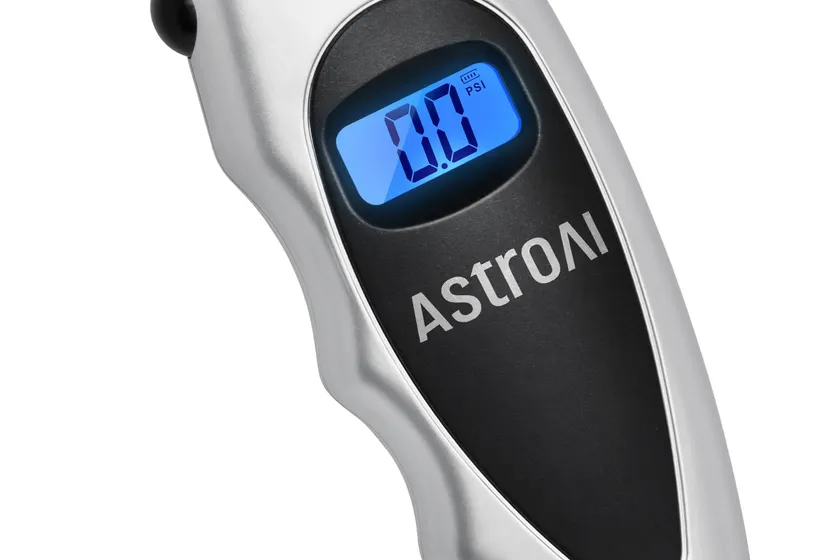
A cheap digital gauge with a stated accuracy figure, a lit nozzle and a 150 PSI ceiling, which covers almost every car and light truck job.
What we like
- Reads within 1 PSI to ANSI B40.7, so you get a real accuracy claim instead of a vague promise
- Backlit screen and a lighted nozzle let you find the valve stem and read the number in a dark driveway
- Switches between PSI, BAR, KPA and kg/cm2, which helps if your door sticker or bike uses a different unit
- The 150 PSI ceiling covers passenger cars, light trucks and most trailer tires with room to spare
What we don't
- The battery is not user friendly to swap, and a dead gauge in a parking lot is worse than a cheap mechanical one
- The plastic body will not survive being kicked around a truck bed or dropped on concrete the way brass will
- No hose, so on deeply recessed valve stems you have to fight for a clean seal
| Gauge type | Digital handheld |
|---|---|
| Pressure range | 0 to 150 PSI |
| Stated accuracy | Within 1 PSI, ANSI B40.7 |
| Chuck style | Single head, straight, with lighted nozzle |
| Power source | Battery, included |
| Price bracket | $ |
The AstroAI takes Best Overall because it does the boring thing very well. It gives you a number you can trust, it shows that number in the dark, and it costs less than a tank of gas. For the person who just wants correct tire pressure on a Tuesday morning, that is the whole job.
What sets it apart in this guide is the published accuracy claim. The listing states readings within 1 PSI, calibrated to ANSI B40.7. Plenty of cheap gauges say nothing about accuracy at all, and a gauge that is quietly 4 PSI off is worse than no gauge, because it makes you confident about the wrong number. The lit nozzle matters more than it sounds. Most people check pressure on cold tires, which in practice means early morning or after dark, and hunting for a valve stem behind a wheel spoke with a phone in your teeth gets old fast.
It also solves a smaller problem: unit confusion. Your door sticker is in PSI, your bike pump might read BAR, and a trailer or motorcycle manual may use kPa. One button covers all of it.
The real limitation is that it runs on a battery. Digital gauges drift toward being useless the day the cell dies, and this one is not designed for easy battery swaps. The plastic housing is the other soft spot. It is fine in a glovebox and poor in a toolbox that gets thrown around.
Buy it if you check four tires once a month and want the reading to be right. If you want something with no battery to fail, look at the Accu-Gage RRA60X dial gauge instead. If you need a higher range for heavy truck or RV tires, the LUMITECO dual head is the better tool here.
Research-based pick: this recommendation is based on product data, owner feedback and comparison with products we have tested, not on direct hands-on testing.
Buy it if: Daily drivers who want one accurate, easy to read gauge in the glovebox and do not want to think about it again.
Skip it if: You want a gauge that never needs a battery, in which case the Accu-Gage RRA60X or the Milton S-921 make more sense.
Best Premium
JACO ElitePro Digital Tire Pressure Gauge 100 PSI
by JACO
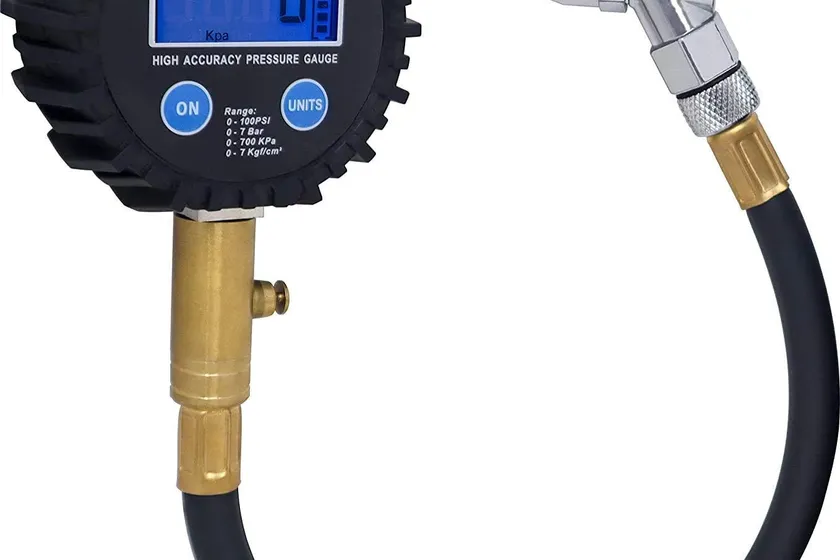
A tougher, better built digital gauge with a brass core and a rubber sleeve, aimed at people who use a gauge weekly rather than twice a year.
What we like
- Brass and steel construction under a rubber sleeve holds up to shop use far better than a plastic gauge
- The 100 PSI range with fine resolution suits car and light truck pressures, where most checks actually happen
- Rubber sleeve absorbs drops, so it survives the toolbox and the floor of a garage
- Backed by a brand that sells gauges as its main product, with a long owner review history behind it
What we don't
- Costs several times what the AstroAI does for a reading most drivers cannot tell apart
- The 10 inch hose makes it bulky, so it does not tuck into a glovebox the way a stub gauge does
- The 100 PSI ceiling is too low for heavy truck and large RV tires that run above that
| Gauge type | Digital handheld |
|---|---|
| Pressure range | 0 to 100 PSI |
| Stated accuracy | ANSI and ASME Grade 2A, within 0.5 percent of full scale |
| Chuck style | Swivel chuck on a 10 inch rubber hose |
| Power source | Battery, included |
| Price bracket | $$$ |
The JACO ElitePro earns Best Premium because it is built like a tool rather than a gadget. Most cheap digital gauges are a plastic shell around a sensor. This one puts a metal core inside a thick rubber sleeve, which is why it keeps working after the drops that kill lesser gauges.
That matters for a specific kind of buyer. If you set pressures before every track day, air down and back up on trail runs, or check a family fleet every weekend, your gauge gets handled hundreds of times a year. Cheap gauges do not fail dramatically, they just get vague, and you stop trusting them. Paying more here buys a gauge you keep using in five years instead of replacing twice.
The problem it solves is confidence over time, not raw precision on day one. A brand new budget digital gauge and this one will usually read close to each other. The difference shows up after a year in a truck door pocket.
The honest limitation is the price gap. This is the most expensive pick in this guide by a wide margin, and for a driver who checks tires when the dash light comes on, that money buys nothing they will notice. The other real limit is the ceiling. At 100 PSI it is perfect for cars and light trucks and simply not enough for heavy truck or big RV tires.
Buy it if a tire gauge is a tool you reach for often and you are tired of replacing them. If you want the same reading for pocket change, the AstroAI is the sensible pick. If you run high pressure truck or RV tires, choose the LUMITECO dual head instead.
Research-based pick: this recommendation is based on product data, owner feedback and comparison with products we have tested, not on direct hands-on testing.
Buy it if: Enthusiasts, track day drivers and home mechanics who check pressures often and want a gauge that lasts for years.
Skip it if: You only check tires a few times a year, where the AstroAI gives you the same practical answer for far less.
Best Analog Dial Gauge
Accu-Gage RRA60X Dial Tire Pressure Gauge 60 PSI
by Accu-Gage
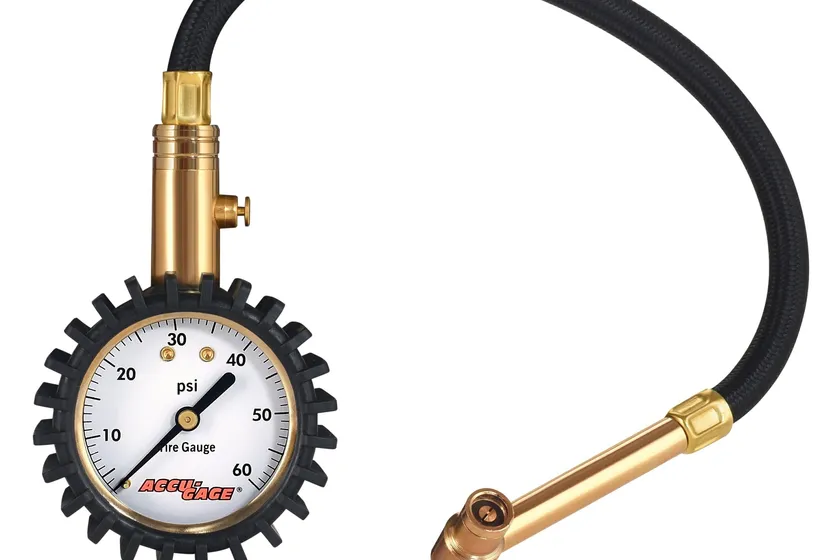
A mechanical dial gauge with a hose and a right angle chuck that reads accurately, holds its reading and never needs a battery.
What we like
- No battery to die, so it works the same on day one and five winters later
- The flexible hose and right angle chuck reach recessed valve stems that stub gauges cannot seal on
- The needle holds the reading after you pull off the valve, so you can read it in good light
- Rubber guard protects the dial from the knocks that put a stub gauge out of calibration
What we don't
- The 60 PSI ceiling rules it out for heavy truck, RV and some trailer tires
- Dial gauges are read by eye, so you are estimating between marks instead of reading an exact number
- The hose adds bulk, so it does not live neatly in a door pocket the way a pencil gauge does
| Gauge type | Analog dial with hose |
|---|---|
| Pressure range | 5 to 60 PSI |
| Stated accuracy | ANSI B40.1 Grade B, within 2 percent |
| Chuck style | Right angle chuck on a flexible hose |
| Power source | None, fully mechanical |
| Price bracket | $$ |
The Accu-Gage RRA60X is the pick for anyone who does not want a battery in the loop. It is a mechanical dial gauge, made by Milton under the Accu-Gage name, and it has been the quiet default in home garages for a long time.
Two design choices set it apart here. The first is the hose. A gauge on a short hose lets you get square on the valve stem even when the wheel design fights you, and a square seal is the single biggest cause of a bad reading. Stub gauges hiss and read low when they are on at an angle. The second is the right angle chuck, which is built for exactly that recessed stem problem.
It also holds the reading. Push it on, pull it off, walk into the light, read the needle. That sounds small until you are crouched behind a wheel well squinting at a screen.
The honest limitation is range. At 60 PSI it covers passenger cars, most light truck tires and small trailers, and nothing above that. If you tow a heavy trailer or run an RV, this is the wrong gauge. The other tradeoff is reading by eye. A needle between the 32 and 34 marks is a judgment call, where a digital gauge just prints a number.
Buy it if you want a gauge you can hand to your kid in ten years and have it still be right. If you want an exact digit and a lit nozzle, the AstroAI is the better everyday pick. If your tires need more than 60 PSI, go with the LUMITECO dual head.
Research-based pick: this recommendation is based on product data, owner feedback and comparison with products we have tested, not on direct hands-on testing.
Buy it if: Drivers who want a dependable gauge with no batteries, and anyone whose wheels hide the valve stems behind tight spokes.
Skip it if: You need readings above 60 PSI or you want an exact digit rather than a needle position, where the LUMITECO or the JACO fit better.
Best Glovebox Backup
Milton S-921 Pencil Tire Pressure Gauge
by Milton
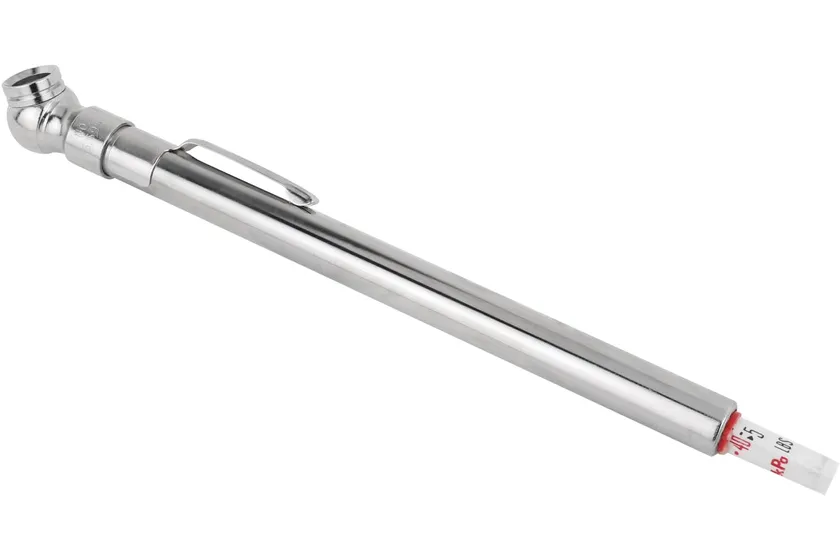
A plated brass pencil gauge with a built-in deflator, small enough to live in a door pocket and simple enough that it cannot really break.
What we like
- Plated brass body shrugs off years in a glovebox, a toolbox or a jacket pocket
- Built-in deflator valve lets you bleed pressure down without a second tool
- No battery, no screen and no electronics, so there is nothing to fail before you need it
- Reads in both PSI and kPa, which covers cars sold with either unit on the door sticker
What we don't
- The 50 PSI ceiling is too low for many light truck, trailer and RV tires
- The sliding stick scale is coarse, so you are reading in rough steps rather than tenths
- The small stub chuck is awkward on wheels with deeply recessed valve stems
| Gauge type | Pencil stick |
|---|---|
| Pressure range | 5 to 50 PSI |
| Stated accuracy | Not stated in listing, reads in 1 PSI steps |
| Chuck style | Single head, straight, with built-in deflator valve |
| Power source | None, fully mechanical |
| Price bracket | $ |
The Milton S-921 wins Best Glovebox Backup because it is the gauge you can forget about for three years and still trust when you need it. It is a plated brass pencil gauge, the same basic design that has been in service stations for decades, and there is almost nothing in it that can go wrong.
The feature that makes it more useful than a generic pencil gauge is the built-in deflator valve. Overfilling happens constantly at gas station air pumps, and without a deflator you end up pressing the valve core with a key or a screwdriver and guessing. Here you bleed pressure down and re-check with the same tool.
The problem it solves is availability. Most people own one good gauge and it lives in one car. Buying a cheap brass gauge for every vehicle means the right tool is always ten seconds away, and that alone fixes more low tires than owning one very accurate gauge you left in the other truck.
The honest limitation is resolution and range. Pencil gauges read in coarse steps, so calling 33 versus 35 PSI is guesswork, and the 50 PSI ceiling leaves out many light truck and trailer tires. The chuck is also small and stubby, which makes recessed valve stems annoying.
Buy it as a second or third gauge, or as the one that lives in a work truck where things get lost. If it is going to be your only gauge, spend a little more on the AstroAI for a real number, or on the Accu-Gage RRA60X if you want a mechanical gauge you can actually read closely.
Research-based pick: this recommendation is based on product data, owner feedback and comparison with products we have tested, not on direct hands-on testing.
Buy it if: Keeping a cheap, indestructible backup gauge in every vehicle you own so you always have one within reach.
Skip it if: This is your only gauge and you want precise readings, where the AstroAI or the Accu-Gage RRA60X do a better job.
Best for Trucks and RVs
LUMITECO 12 Inch Dual Head Tire Pressure Gauge 150 PSI
by LUMITECO
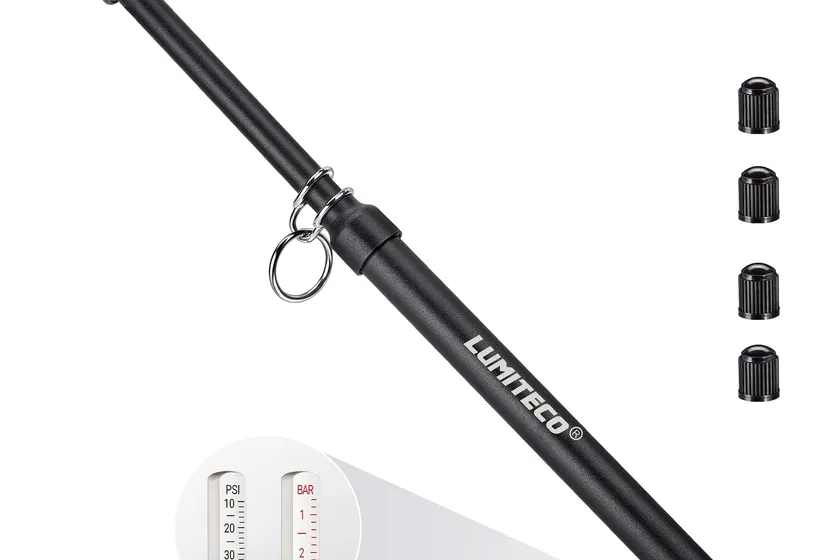
A dual head gauge on a 12 inch tube that reaches inner dual wheels and reads to 150 PSI, which is what heavy trucks and RVs actually need.
What we like
- The 12 inch extended tube reaches the inner valve stem on dual rear wheels without removing a hubcap
- Reads to 150 PSI, high enough for heavy truck, RV and heavy trailer tires that other picks here cannot cover
- Dual head chuck seats squarely on both straight and angled valve stems
- Mechanical design with no battery, which suits a vehicle that sits parked for months at a time
What we don't
- Accuracy is not stated anywhere in the listing, so you are trusting the brand rather than a published figure
- Far too long and bulky to keep in a car glovebox
- Reading starts at 10 PSI, so it is not the tool for low pressure work like airing down for sand
| Gauge type | Dual head stick with extended tube |
|---|---|
| Pressure range | 10 to 150 PSI |
| Stated accuracy | Not stated in listing |
| Chuck style | Dual head, straight-on, on a 12 inch tube |
| Power source | None, fully mechanical |
| Price bracket | $ |
The LUMITECO dual head gauge is in this guide for one reason: the other four picks cannot do this job. If you run a dually pickup, a motorhome or a heavy trailer, you have two problems a normal gauge does not solve. The inner tire on a dual wheel is hard to reach, and the pressures are often above what a car gauge can even read.
The 12 inch tube fixes the reach problem. Instead of contorting a stub gauge through a wheel opening and hoping for a seal, you slide the tube in and press the head straight onto the stem. The dual head chuck helps here too, because it seats cleanly on both the straight and angled stems you find on heavy vehicles.
The 150 PSI range fixes the second problem. Many RV and heavy trailer tires run in the 80 to 110 PSI band. A 60 PSI dial gauge is not just imprecise there, it is off the scale, and underinflation is the main cause of trailer tire blowouts.
The honest limitation is transparency. The listing does not publish an accuracy figure, so you are trusting a brand rather than a certification. For a gauge you rely on before a long tow, that is worth knowing. It is also large, and it starts reading at 10 PSI, so it is not useful for airing down on soft sand.
Buy it if your driveway has a dually or an RV in it. For the family car, the AstroAI is a friendlier daily gauge, and the JACO ElitePro is the pick if you want a documented brand with a heavier build.
Research-based pick: this recommendation is based on product data, owner feedback and comparison with products we have tested, not on direct hands-on testing.
Buy it if: Owners of dually pickups, RVs and heavy trailers who need to reach inner wheels and read above 100 PSI.
Skip it if: You drive a normal car or SUV, where the AstroAI or the Accu-Gage RRA60X are easier to store and easier to read.
How we chose#
This is a research-based comparison, not a lab test against a calibrated reference. We did not put these gauges on a dead weight tester, and we will not pretend we did.
What we did do was start from the gauge types people actually buy, then check every pick against its live Amazon listing in the United States: the stated pressure range, the accuracy figure the maker publishes and whether that figure names an ANSI grade, the chuck design, the body material and whether a battery is involved. We then read aggregated owner feedback for the failures that repeat across hundreds of reviews, which for gauges are almost always the same three: readings that drift over time, batteries that die in storage, and chucks that will not seal on recessed valve stems.
We deliberately picked across formats instead of ranking five digital gauges. That gives you a budget digital pick, a heavier built premium digital, a mechanical dial gauge with a hose, a pencil gauge for backup duty and a long dual head gauge for trucks and RVs. Gauges with no stated range, no brand history or thin review counts were left out.
What to consider before buying#
Start with your pressure ceiling. If everything you own is a car or SUV, a 60 PSI gauge is plenty and will read more finely than a 150 PSI one. If you tow, run a dually or own an RV, you need a gauge that reads well past 100 PSI, and most of the popular car gauges simply cannot do it.
Then decide whether you want a battery in the loop. Digital gauges are easier to read and give you an exact number. Mechanical gauges keep working after two winters in a door pocket. Neither answer is wrong, but people who check tires twice a year are often better served by something with no battery at all.
Last, look at the chuck. It is the part that decides whether your reading is right, and it is the part nobody thinks about.
Digital versus mechanical#
Digital gauges win on reading. You get a printed number, usually to a tenth of a PSI, plus a backlit screen and often a lit nozzle for dark driveways. The AstroAI and the JACO both do this well. The catch is the battery, and a dead gauge helps nobody in a parking lot.
Mechanical gauges win on longevity and simplicity. The Accu-Gage dial gauge holds its needle after you pull off the valve, so you can walk into the light to read it, and the Milton pencil gauge is small enough to keep one in every vehicle. The tradeoff is resolution. A needle sitting between two marks is a judgment call, and pencil gauge scales are coarser still.
The practical answer for most people is one of each: a digital gauge as the main tool and a cheap mechanical one as the backup that never fails.
Chuck design and valve stem access#
The single biggest cause of a bad reading is a bad seal. If the chuck is not square on the valve stem, air escapes and the number comes out low. Modern alloy wheels make this harder than it used to be, because valve stems often sit deep behind spokes at an awkward angle.
This is where the Accu-Gage RRA60X earns its place. A short hose plus a right angle chuck lets you get straight on the stem no matter how the wheel is shaped. Stub gauges like the AstroAI and the Milton are fine on open wheels and frustrating on tight ones. For dual rear wheels the problem changes completely, and only the LUMITECO with its 12 inch tube can reach the inner tire.
If you are constantly topping tires up at gas stations, a gauge with a hose pairs naturally with keeping your own portable air compressor in the trunk so you can set pressures at home instead.
Where a gauge fits alongside your car’s warning light#
A factory warning light is a last resort, not a maintenance tool. Most systems only trigger once a tire is around 25 percent under its target, and by then you have already lost grip and fuel economy for weeks. A gauge is what catches a slow leak while it is still a slow leak.
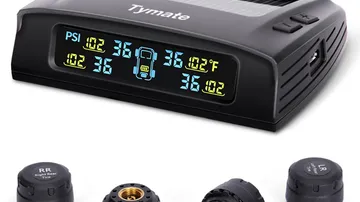
If you want live numbers rather than a single warning lamp, a tire pressure monitoring system shows all four corners as you drive, which is genuinely useful for towing. Even then, you still need a gauge to confirm the reading and set pressures correctly in the first place.
Final recommendation#
Most drivers should buy the AstroAI digital gauge. It states its accuracy, it lights up the valve stem, it covers everything a car or light truck will ask of it, and it costs almost nothing. If you use a gauge weekly and want one that survives years of handling, the JACO ElitePro is worth the jump in price for its brass core and rubber sleeve.
If you would rather never think about a battery, the Accu-Gage RRA60X is the mechanical pick, and its hose and right angle chuck make it the easiest of these to seal on awkward wheels. Buy the Milton S-921 as a cheap backup to keep in a second vehicle, not as your only gauge. And if you run a dually pickup, a heavy trailer or an RV, the LUMITECO dual head is the only pick here that can reach your inner wheels and read the pressures you actually run.
Frequently asked questions
How accurate does a tire pressure gauge really need to be?
For normal driving, within 2 PSI is fine. Carmakers set target pressures with a safety margin, so being one or two pounds off will not hurt your tires or your fuel economy in any way you can measure. Accuracy starts to matter when you are chasing handling on a track, airing down for sand or snow, or running heavy trailer tires near their limit. That is where a gauge with a published figure, like the AstroAI at within 1 PSI, beats a no-name gauge that claims nothing.
Do digital gauges lose accuracy over time?
They can drift, and they always die when the battery does. A digital gauge that has been rattling around a truck bed for three years is worth checking against a second gauge. Mechanical gauges like the Accu-Gage RRA60X and the Milton S-921 do not drift from a dead battery, but they can go out of calibration if they get dropped hard or left in extreme heat. The simple fix for either type is to own two gauges and compare them once a year.
What pressure range should I buy?
Match it to your heaviest tire. Passenger cars and most SUVs sit in the low 30s, so a 60 PSI gauge covers them with plenty of headroom. Light trucks and small trailers can reach the 50s and 60s. Heavy trailers, dually pickups and RVs often run 80 to 110 PSI, which is why the LUMITECO in this guide reads to 150 PSI. Buying more range than you need costs you resolution, not safety.
Why do gauges of the same type cost so differently?
You are mostly paying for build quality and for a published accuracy claim. A budget digital gauge and a premium one will usually read close on a fresh tire. The difference is what happens after a year of drops, heat and cold. Brass and steel bodies with rubber sleeves, like the JACO ElitePro, cost more to make and stay accurate longer than a plastic shell. Certification also costs money, which is why gauges that state an ANSI grade tend to cost more than ones that say nothing.
What is the most common mistake when checking tire pressure?
Checking warm tires. Driving heats the air inside a tire and can add 4 to 6 PSI, so a reading taken after a highway run makes an underinflated tire look correct. Always check first thing in the morning, before you drive, or at least three hours after parking. The second most common mistake is not pressing the chuck on straight. If you hear a long hiss, you are venting air and reading low.
Do I still need a gauge if my car has a tire pressure warning system?
Yes. Most factory systems only warn you once a tire is roughly 25 percent below its target, which is already low enough to hurt the tire and your fuel economy. A gauge lets you catch a slow leak weeks earlier. An aftermarket monitoring system that displays live pressures gets you closer to real-time data, but a gauge is still the tool you use to confirm the reading and set the pressure correctly.
About the author

Dale Harper Lead Gear Editor
Dale is a longtime truck owner and former accessory-shop tech who builds these guides from manufacturer fit data, aggregated owner feedback and direct spec comparison. Research-based picks are always labelled as such.
Daily driver: 2022 Ford F-150 XLT SuperCrew
- Tonneau covers and bed accessories
- Seat covers and interior protection
- Lift kits and suspension