The Best All-Terrain Tires: 5 A/T Tires Compared for Trucks and SUVs
Five all-terrain tires compared for trucks and SUVs, from the BFGoodrich KO3 to a budget pick, plus how to match the size stamped on your sidewall.

All-terrain tires are the most popular upgrade on trucks and SUVs, and they are also the most oversold. Most people who buy them never leave pavement, and a good highway tire would be quieter, cheaper and longer lived. This guide is meant to help you work out which side of that line you are on. We compare five tires sold on Amazon in the United States: the BFGoodrich All-Terrain T/A KO3 for people who really do drive gravel and rock, the Atturo Trail Blade ATS for snow states, the pavement-leaning Armstrong Tru-Trac AT with the longest treadwear warranty here, the low cost Lexani Terrain Beast AT that makes a set of four affordable, and the Thunderer Trac Grip M/T R408 for ground that is genuinely soft. One warning first. Every listing is for one exact size. Read the numbers on your own sidewall, because a tire is bought by size, never by vehicle name.
Table of contents
- Quick picks
- Load index of each tire as listed
- Comparison table
- Best Overall: BFGoodrich All-Terrain T/A KO3
- Best for Winter Roads: Atturo Trail Blade ATS
- Best for Highway Miles: Armstrong Tru-Trac AT
- Best Value: Lexani Terrain Beast AT
- Best for Mud and Deep Ruts: Thunderer Trac Grip M/T R408
- How we chose
- What to consider before buying
- A/T, R/T and M/T, and what each one gives up
- Load range C, D and E, and why the wrong one rides badly
- Road noise, and why it grows as the tire wears
- Final recommendation
- FAQ
Quick picks
Every pick wins a specific use case. Jump to the full review before you buy.
-
Best Overall
BFGoodrich All-Terrain T/A KO3
The all-terrain tire most people should buy if they can afford four of them, sold here in one heavy duty LT size that has to match your own sidewall.
-
Best for Winter Roads
Atturo Trail Blade ATS
An all-terrain tire that carries the three-peak snowflake certification on newer production, listed here in one large 20 inch size you need to match to your sidewall.
-
Best for Highway Miles
Armstrong Tru-Trac AT
A pavement-leaning all-terrain tire with the longest treadwear warranty in this guide, listed in one 17 inch size you need to check against your sidewall.
-
Best Value
Lexani Terrain Beast AT
The cheapest way here to get four real all-terrain tires under a small truck or older SUV, listed in one 15 inch size you must match to your sidewall.
-
Best for Mud and Deep Ruts
Thunderer Trac Grip M/T R408
A full mud-terrain tire rather than an all-terrain, included for the buyer whose ground is genuinely soft, listed in one LT size to match against your sidewall.
Compare every pick
| Product | Award | Tire type | Listed size | Best for | Where to buy |
|---|---|---|---|---|---|
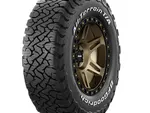
| BFGoodrich All-Terrain T/A KO3 | Best Overall | All-terrain tire for light trucks, SUVs and crossovers | LT265/75R16 123/120S | Truck and SUV owners who actually leave pavement, carry weight or tow, and want the sidewall toughness that gravel and rock roads punish. | Check price for BFGoodrich All-Terrain T/A KO3 at Amazon (affiliate link) |
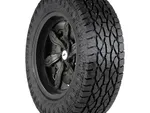
| Atturo Trail Blade ATS | Best for Winter Roads | All-terrain tire for trucks, SUVs, Jeeps and crossovers | 275/60R20 116T XL | Truck and SUV drivers in snow states who want one set of tires all year and refuse to give up the all-terrain look. | Check price for Atturo Trail Blade ATS at Amazon (affiliate link) |
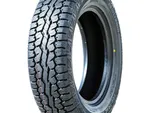
| Armstrong Tru-Trac AT | Best for Highway Miles | All-terrain tire for trucks and SUVs | 265/70R17 116T XL | Truck and SUV owners who mostly commute, want the all-terrain look and want the tread to last rather than the tire to crawl rocks. | Check price for Armstrong Tru-Trac AT at Amazon (affiliate link) |
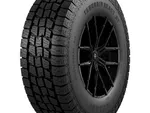
| Lexani Terrain Beast AT | Best Value | All-terrain tire for light trucks and SUVs | 215/75R15 100T | Owners of older trucks, small SUVs and trail rigs on 15 inch wheels who need four tires now and cannot spend premium money. | Check price for Lexani Terrain Beast AT at Amazon (affiliate link) |
| Thunderer Trac Grip M/T R408 | Best for Mud and Deep Ruts | Mud-terrain tire for light trucks | LT265/75R16 123Q | Drivers who really do work in mud, sand and deep ruts and accept a loud, thirsty tire as the price of getting through. | Check price for Thunderer Trac Grip M/T R408 at Amazon (affiliate link) |
Swipe sideways to compare every column.
Best Overall
BFGoodrich All-Terrain T/A KO3
by BFGoodrich
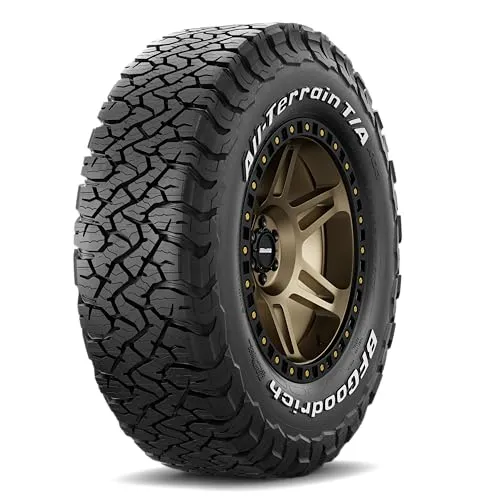
The all-terrain tire most people should buy if they can afford four of them, sold here in one heavy duty LT size that has to match your own sidewall.
What we like
- CoreGard sidewall technology came out of Baja racing and targets the failure that ends most off-road days, a split sidewall
- The Advanced Deflection Design is shaped to push sticks and stones away from the sidewall instead of letting them snag
- Load range E construction handles real payload, so it suits a working three quarter ton truck rather than just a lifted one
- Backed by a 50,000 mile treadwear warranty and a 6 year standard limited warranty, the longest coverage in this guide
What we don't
- By far the most expensive tire here, and you need four, so the set costs more than double most of the others
- The listing never states the three-peak mountain snowflake marking, so check the sidewall yourself if winter grip matters
- Load range E is stiff, and on a half ton truck that never carries weight it rides hard for no benefit
| Tire type | All-terrain tire for light trucks, SUVs and crossovers |
|---|---|
| Listed size | LT265/75R16 123/120S |
| Load index | 123 single and 120 dual |
| Load range | E |
| Treadwear warranty | 50,000 miles, plus a 6 year standard limited warranty |
| Price bracket | $$$ |
Check the size before anything else. This listing is one BFGoodrich All-Terrain T/A KO3 in LT265/75R16, load range E, 123/120S. That is a light truck size on a 16 inch wheel. Read the numbers on your own sidewall and buy that size. The KO3 is sold in many sizes, but this page is only one of them, and a tire is bought by size, never by vehicle name.
The KO3 is the third generation of the tire that made the all-terrain category mainstream. BFGoodrich says it uses a new tread pattern and a new all-terrain compound aimed at durability on gravel, which is the surface that quietly destroys cheaper all-terrains. Gravel does not wear a tire evenly. It chips chunks out of the tread blocks and slices the shoulder.
The part worth paying for is the sidewall. CoreGard came from Baja racing, and the Advanced Deflection Design shapes the sidewall so that sticks and rocks slide off instead of catching. Sidewall punctures cannot be plugged the way a tread puncture can, so a torn sidewall means a spare on the rim and a new tire later. If you drive rock roads, forest roads or job sites, that is the feature you are buying.
BFGoodrich also updated the shoulder for mud and snow, using a serrated edge and mud-phobic bars that push packed mud out of the tread. Packed tread is the reason an off-road tire suddenly stops working. The listing does not claim the three-peak snowflake marking, so if snow is your reason for buying, look for the symbol on the sidewall or take the Atturo Trail Blade ATS instead.
The honest problem is cost and stiffness. This is a load range E tire, built to carry weight. On a truck that never carries any, that stiff casing gives you a firm ride, more road noise and nothing in return.
Research-based pick: this recommendation is based on product data, owner feedback and comparison with products we have tested, not on direct hands-on testing.
Buy it if: Truck and SUV owners who actually leave pavement, carry weight or tow, and want the sidewall toughness that gravel and rock roads punish.
Skip it if: You drive an unloaded half ton on pavement almost every day, where the Armstrong Tru-Trac AT gives a softer ride and a longer treadwear warranty for far less money.
Best for Winter Roads
Atturo Trail Blade ATS
by Atturo
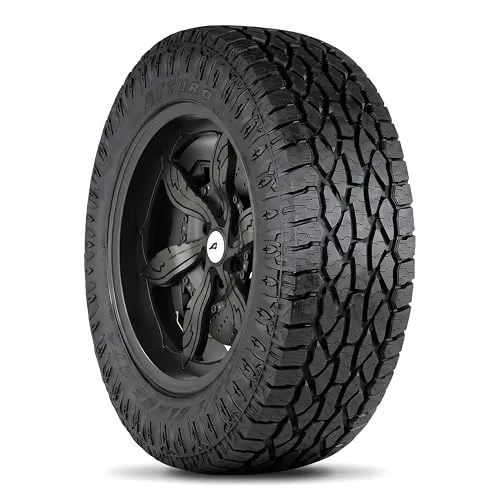
An all-terrain tire that carries the three-peak snowflake certification on newer production, listed here in one large 20 inch size you need to match to your sidewall.
What we like
- States the 3-Peak Mountain Snowflake certification on 2024 and newer production, which almost no all-terrain tire here does
- Tie bars link the shoulder blocks to the center blocks, which cuts the noise an aggressive tread normally makes
- Three-dimensional sipes widen as the tread wears, so winter grip does not fall off a cliff at half tread
- Extra load rating with a 50,000 mile warranty, and the same model is sold from 16 to 26 inch rims
What we don't
- The snowflake certification only applies to 2024 and newer production, so an older stock tire may not carry it
- This listing is a 275/60R20, a wide low profile size that suits newer trucks and will not fit an older rig
- Atturo has far less independent testing behind it than BFGoodrich, so the durability claims are the brand's own
| Tire type | All-terrain tire for trucks, SUVs, Jeeps and crossovers |
|---|---|
| Listed size | 275/60R20 116T XL |
| Severe snow rated | Yes, Three Peak Mountain Snowflake on 2024 and newer production |
| Tread pattern | Deep blocks with three-dimensional sipes and tie bars linking shoulder to center |
| Treadwear warranty | 50,000 miles |
| Price bracket | $$ |
Start with the size. This listing is one Atturo Trail Blade ATS in 275/60R20 116T XL. That is a wide, fairly low profile 20 inch size, common on newer full size trucks and SUVs. Look at your own sidewall and match those numbers exactly. Atturo lists the ATS from 16 inch to 26 inch rims, so if this size is wrong the model probably still exists in yours.
What makes this pick different is the certification. Atturo states the 3-Peak Mountain Snowflake symbol for 2024 and newer production of the ATS. That symbol is a test result, not a marketing claim, and most all-terrain tires do not carry it. If you live somewhere that gets real snow and you do not want to swap tires twice a year, that is the single most useful line on the spec sheet.
The tread is built around three-dimensional sipes. A sipe is a thin slit cut into a tread block, and it opens under load to create a biting edge. Flat two-dimensional sipes get shallower and less useful as the tire wears. Atturo says these widen through the life of the tire, so a half worn ATS should still bite in slush.
Noise is the other thing the design goes after. Tie bars are small rubber bridges between the shoulder blocks and the center blocks. They stop the shoulder blocks from flexing independently, which is what makes an aggressive tread hum on the highway. It is a real fix, not a cosmetic one.
Two honest limits. The snowflake certification is tied to production date, so ask the seller or check the date code on the sidewall. And this is an extra load passenger construction, not load range E, so it is the wrong tire for a truck that tows near its limit.
Research-based pick: this recommendation is based on product data, owner feedback and comparison with products we have tested, not on direct hands-on testing.
Buy it if: Truck and SUV drivers in snow states who want one set of tires all year and refuse to give up the all-terrain look.
Skip it if: You need load range E capacity for towing or heavy payload, where the BFGoodrich All-Terrain T/A KO3 is the stronger casing.
Best for Highway Miles
Armstrong Tru-Trac AT
by Armstrong
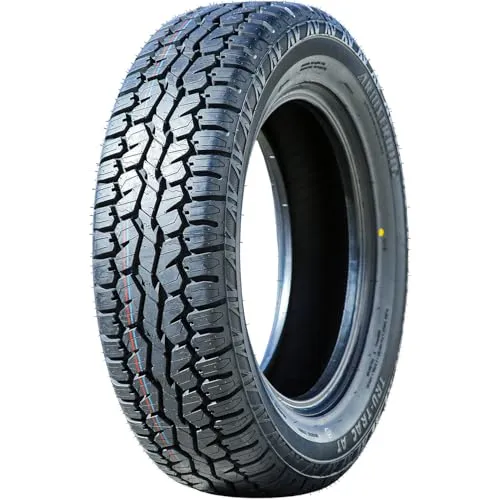
A pavement-leaning all-terrain tire with the longest treadwear warranty in this guide, listed in one 17 inch size you need to check against your sidewall.
What we like
- The 60,000 mile treadwear warranty is the longest here, and a UTQG grade of 560 A B is published rather than left blank
- Extra load rating with a 116 load index, good for up to 2,756 pounds per tire as listed
- The T speed rating covers 118 mph, which is more than most all-terrain buyers will ever need
- Four ply rated passenger construction rides softer than a load range E light truck tire on an unloaded truck
What we don't
- The listing says nothing about the tread pattern or siping, so you are buying on the category label and the warranty
- No three-peak snowflake claim, so it is an all-season tire in winter terms, not a snow-rated one
- Armstrong is a value brand with little independent all-terrain testing to check the durability claims against
| Tire type | All-terrain tire for trucks and SUVs |
|---|---|
| Listed size | 265/70R17 116T XL |
| Load index | 116, up to 2,756 lbs per tire |
| Severe snow rated | Not stated in this listing |
| Treadwear warranty | 60,000 miles, UTQG 560 A B |
| Price bracket | $$ |
This listing is one Armstrong Tru-Trac AT in 265/70R17 116T, extra load. It is a single tire in a single size. Read your own sidewall first, because 265/70R17 is a common newer truck size but it is not the only one, and the wrong size is the wrong tire no matter how good the price looks.
This is the pick for the buyer the whole all-terrain category quietly serves, the person who wants the look and the light gravel ability but spends 95 percent of their miles on pavement. Two numbers make the case. Armstrong publishes a 60,000 mile treadwear figure, which is the longest in this guide, and a UTQG grade of 560 A B. A treadwear grade of 560 is high for anything wearing an all-terrain badge. Aggressive tread and long life pull against each other, and this tire is clearly tuned toward life.
The construction supports that reading too. It is four ply rated extra load passenger construction, not a load range E light truck casing. That means a softer ride on an empty truck, less weight to accelerate and stop, and less of the hollow drumming a stiff LT tire sends through the floor. The load index of 116 still covers 2,756 pounds per tire as listed, which is plenty for a half ton pickup or a large SUV.
What you give up is information. The listing describes the sidewall, the construction and the warranty, and then stops. There is no tread pattern description, no siping detail, no snow certification. Compare that with the Atturo page, which explains its sipes and states the snowflake symbol. Here you are buying the category and the numbers.
Treat it as the sensible pavement answer. If your idea of off-road is a gravel driveway, a boat ramp and a forest road twice a summer, this tire does that and then lasts.
Research-based pick: this recommendation is based on product data, owner feedback and comparison with products we have tested, not on direct hands-on testing.
Buy it if: Truck and SUV owners who mostly commute, want the all-terrain look and want the tread to last rather than the tire to crawl rocks.
Skip it if: You regularly drive sharp gravel or rock, where the BFGoodrich All-Terrain T/A KO3 sidewall is the reason to spend more.
Best Value
Lexani Terrain Beast AT
by Lexani
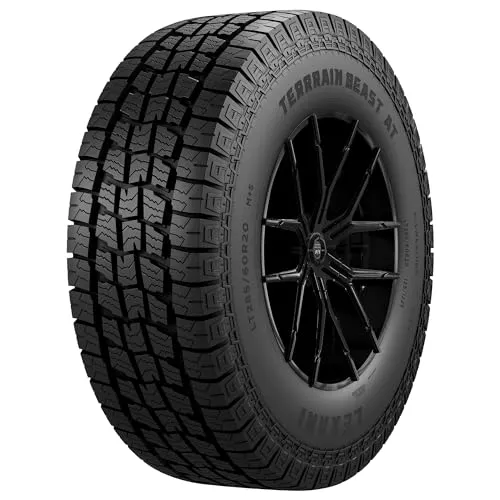
The cheapest way here to get four real all-terrain tires under a small truck or older SUV, listed in one 15 inch size you must match to your sidewall.
What we like
- The lowest priced tire in this guide by a clear margin, which is what makes a set of four realistic
- The listing describes a full-depth siping pattern, so the biting edges are cut through the whole tread depth rather than just the top
- A unilateral center rib runs down the middle of the tread, which is the part that keeps an aggressive tire steady on the highway
- Angled blocks and open shoulders are shaped to eject mud and stones instead of packing them in
What we don't
- Lexani does not state any treadwear warranty or UTQG grade in this listing, so expected life is unknown
- No three-peak snowflake claim, so treat it as an all-season tire and not a winter one
- The 215/75R15 size is a narrow old-school fitment, so most newer trucks and SUVs will not take it
| Tire type | All-terrain tire for light trucks and SUVs |
|---|---|
| Listed size | 215/75R15 100T |
| Load index | 100, standard load |
| Tread pattern | Angled blocks and open shoulders with full-depth siping and a unilateral center rib |
| Treadwear warranty | Not stated in this listing |
| Price bracket | $$ |
This listing is one Lexani Terrain Beast AT in 215/75R15 100T. Fifteen inch wheels and a 215 section width point at older trucks, small SUVs and cheap trail rigs. Check your own sidewall. Lexani sells the Terrain Beast AT in bigger fitments too, including LT265/70R17 and LT235/85R16, so search the model name plus your exact size if this one does not match.
The reason this tire is here is arithmetic. All-terrain tires get bought four at a time, and the gap between the cheapest and the most expensive pick in this guide is large enough that a full set of these costs less than two BFGoodrich KO3 tires. For a lot of people the real choice is not premium versus budget. It is four budget all-terrains now or four bald tires until spring.
For the money the tread description is better than you would expect. Lexani calls out full-depth siping, which matters because shallow sipes stop working once the tire is half worn. It also describes angled tread blocks with open shoulders that push mud, stones and dirt back out of the grooves, and a unilateral center rib. That solid rib down the middle is the part doing the on-road work. It is what keeps an open-shouldered tire from wandering under the steering.
What is missing is any measure of life. There is no treadwear warranty, no UTQG grade and no load range in the listing. Budget tires often wear faster, and without a published number you have no way to compare. Assume less life than the Armstrong figure and be pleasantly surprised if you get more.
Lexani is also a value brand without much independent testing behind it. That is fine on a second vehicle or a trail rig. It is a different decision on the truck the family rides in every day.
Research-based pick: this recommendation is based on product data, owner feedback and comparison with products we have tested, not on direct hands-on testing.
Buy it if: Owners of older trucks, small SUVs and trail rigs on 15 inch wheels who need four tires now and cannot spend premium money.
Skip it if: You want a documented treadwear warranty and a published wear grade, which the Armstrong Tru-Trac AT gives you for a moderate step up.
Best for Mud and Deep Ruts
Thunderer Trac Grip M/T R408
by Thunderer
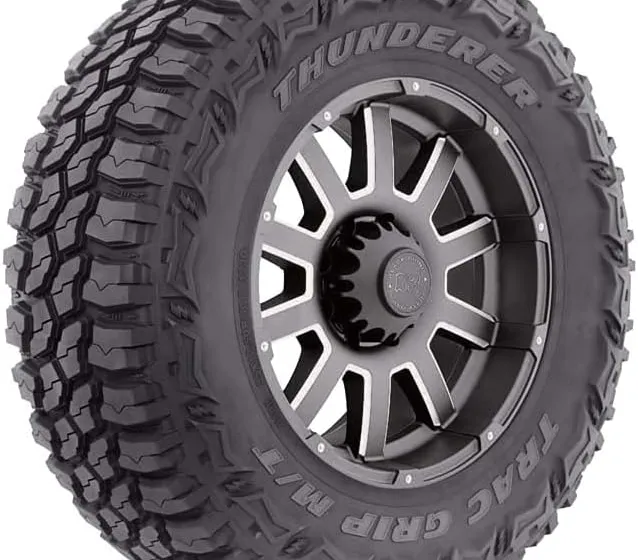
A full mud-terrain tire rather than an all-terrain, included for the buyer whose ground is genuinely soft, listed in one LT size to match against your sidewall.
What we like
- Open lugs with wide gaps between them, which is what actually clears mud instead of packing it solid
- A 123 load index in a light truck size, so it suits a working truck rather than a crossover
- The most capable pick here on soft ground, deep ruts and sand, by a wide margin
- Costs less than the BFGoodrich all-terrain while giving far more off-road bite
What we don't
- It is a mud terrain, so highway noise and wet pavement braking are both clearly worse than any all-terrain here
- Soft, open tread wears faster on pavement, and the listing states no treadwear warranty at all
- The listing gives only three short feature lines, with no load range, no siping detail and no snow claim
| Tire type | Mud-terrain tire for light trucks |
|---|---|
| Listed size | LT265/75R16 123Q |
| Load index | 123 |
| Tread pattern | Open mud-terrain lugs shaped to shed mud and sand |
| Severe snow rated | Not stated in this listing |
| Price bracket | $$ |
Read the size first. This listing is one Thunderer Trac Grip M/T R408 in LT265/75R16 123Q. That is a light truck size on a 16 inch wheel. Match it against the numbers on your own sidewall before you order four.
Be clear about what this is. The R408 is a mud terrain, not an all-terrain. It sits in this guide on purpose, because plenty of people shopping for all-terrain tires actually need more than an all-terrain can give, and plenty of others need much less. Seeing a real M/T next to the others makes the trade-off obvious instead of theoretical.
The whole design is about the gaps. Thunderer describes open tread lugs that prevent mud and sand build-up. On soft ground, grip does not come from rubber touching dirt. It comes from the tread scooping material out and flinging it clear so fresh lug edges can bite. Big blocks with big voids do that. Fine siping and closed tread do not, which is why an all-terrain tire in deep mud turns into a slick within a few yards.
The costs are just as clear. Fewer, larger blocks mean a smaller contact patch on pavement and longer wet stopping distances. The gaps that clear mud also slap the road surface and make noise, and the noise gets worse as the blocks wear unevenly. Soft compounds meant to conform to rock wear quickly on asphalt, and this listing states no treadwear warranty to argue otherwise.
The listing itself is thin. Three feature lines, no load range, no UTQG grade, no snow certification. Buy this one for what its shape does, not for what its spec sheet promises, and only if the ground you drive on is genuinely soft.
Research-based pick: this recommendation is based on product data, owner feedback and comparison with products we have tested, not on direct hands-on testing.
Buy it if: Drivers who really do work in mud, sand and deep ruts and accept a loud, thirsty tire as the price of getting through.
Skip it if: Most of your miles are on pavement, in which case the Armstrong Tru-Trac AT or the Atturo Trail Blade ATS will be quieter, safer in the rain and much longer lived.
How we chose#
This is a research-based guide, not a hands-on off-road test. We started from all-terrain tires actually in stock on Amazon in the United States, then read each listing for the things that separate one all-terrain tire from another: the tire type, the exact listed size, the load index and load range, whether the listing claims the three-peak snowflake certification, what the tread pattern is described as doing, and whether any treadwear warranty is published.
We then picked for spread. That gave us a premium tire built around sidewall toughness, a snow-certified all-terrain, a pavement-leaning tire with the longest warranty here, a budget tire that makes four affordable, and a true mud terrain to show what the next step up costs you. The candidate pool did not contain a genuine rugged terrain hybrid, the in-between category some brands now sell, so we did not pretend one was there. The Thunderer stands in as the aggressive end of the range, and we have labelled it honestly as a mud terrain.
We did not match tires to vehicles. Every listing here is a single size, and we name that size in every review and in the comparison table so you can check it against your own sidewall.
What to consider before buying#
Start with the ground you actually drive on. Most all-terrain buyers never leave pavement. If that is you, a highway or all-season tire will be quieter, cheaper, better in the rain and will last longer. That is not a criticism, it is just the honest answer, and nobody selling tires is going to tell you.
If you do leave pavement, work out which surface matters. Gravel and rock punish sidewalls, and that is what you are paying for with the BFGoodrich KO3. Snow rewards siping and a certified compound, which points at the Atturo. Deep mud needs open lugs, which means giving up quiet and wet grip.
Then check the numbers on the vehicle, not the tire. Your door placard lists the factory size and the load index the vehicle needs. The tire has to meet or beat that load index. Going above it is not free, because a stiffer casing rides harder.
Budget for four, and add mounting and balancing. A cheap set of four is a better outcome than two good tires and two worn ones, every time. Mixed tread patterns on an axle upset the way the vehicle brakes and steers.
A/T, R/T and M/T, and what each one gives up#
The three labels describe how open the tread is, and everything follows from that.
An all-terrain, or A/T, keeps a fairly closed tread with a solid rib or interlocked blocks down the center. That center section is what keeps the tire tracking straight, keeps it quiet and gives it a decent wet contact patch. The shoulder is more open so it can bite on loose surfaces. It is a compromise tuned toward pavement, and the Armstrong Tru-Trac AT and the Lexani Terrain Beast AT sit at that end.
A rugged terrain, or R/T, is the middle. The blocks get larger, the gaps get wider, the sidewall gets more aggressive, and the noise and wear go up with them. None of the tires in this guide is a true R/T.
A mud terrain, or M/T, throws out the compromise. Huge blocks, huge voids, thick sidewall lugs. The Thunderer Trac Grip M/T R408 is the example here. On soft ground it works because the tread scoops mud out and flings it clear. On wet asphalt it has less rubber touching the road, so it stops longer. It is louder, it wears faster and it usually costs fuel economy.
The mistake people make is buying one step more aggressive than they need because it looks right. Every step up costs you pavement grip, quiet and tread life, and those are the things you experience every day.
Load range C, D and E, and why the wrong one rides badly#
Load range is a letter that describes how strong the tire casing is. C, D and E climb in strength, and they used to correspond to ply counts, which is why listings still say things like 6 ply rated or 10 ply rated. Modern tires do not really have that many plies. The rating describes the strength, not the layers.
Stronger is not better. A load range E tire has a stiff casing built to carry high pressure and heavy weight. Put one on a half ton truck that never carries anything and you get a hard, jittery ride, more road noise through the floor, more unsprung weight and slower steering response. Nothing about the driving experience improves. The BFGoodrich All-Terrain T/A KO3 listing here is load range E, which suits a working truck and is more tire than an empty daily driver needs.
Go the other way and the consequences are worse. Under-rated tires run hot when loaded, and heat is what kills tires. If you tow or carry a heavy tray, the load index on the tire has to meet or beat the number on your door placard.
Pressure matters as much as the rating. A load range E tire at car pressures rides badly and wears the shoulders. Set pressure to the placard for a passenger tire, and follow the load and inflation table if you have gone up a load range. Check it cold, before driving.
Road noise, and why it grows as the tire wears#
Tread noise comes from air being trapped and released between the tread blocks and the road. Wider gaps mean more air, more slap and more hum. That is why an aggressive tread is always louder, and why the tie bars on the Atturo Trail Blade ATS matter. Bridging the shoulder blocks to the center blocks stops them flexing on their own, which is a large part of the sound.
The part people are not warned about is that the noise gets worse with age. A new all-terrain can be perfectly civil and then turn into a drone by half tread. Two things cause it. Blocks wear into a slight ramp shape, which makes each one hit the road harder than the last. And uneven wear, especially cupping on the shoulder blocks, turns a smooth hum into a rhythmic roar.
You can slow this down. Rotate every 5,000 to 7,000 miles, keep the alignment straight, and check pressures cold rather than after a drive. Aggressive tread punishes bad alignment far more than a highway tire does, because there is less rubber to spread the load over.
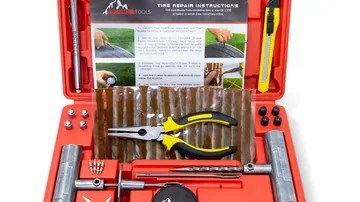
If you carry a spare plan for the trail, a tire plug kit fixes tread punctures on the trail, but nothing fixes a torn sidewall, which is the argument for the KO3 casing.
Final recommendation#
If you genuinely drive gravel, rock or job sites, buy the BFGoodrich All-Terrain T/A KO3 and treat the sidewall technology as the reason, provided the LT265/75R16 size matches your sidewall. Drivers in snow states who want one set of tires all year should take the Atturo Trail Blade ATS, since it is the only pick here that states the three-peak snowflake certification. If you are honest that your truck lives on pavement, the Armstrong Tru-Trac AT gives you the look, the longest treadwear warranty in this guide and a softer ride. When the real choice is four tires now or worn tires until spring, the Lexani Terrain Beast AT is the cheapest way to get four matching all-terrains under an older rig. And if your ground is actually soft, stop shopping for all-terrains and buy the Thunderer Trac Grip M/T R408 or look at proper mud tires, accepting the noise and the wear as the cost of getting through.
Frequently asked questions
How do I know which all-terrain tire size to buy?
Look at the sidewall of the tires already on your truck. You will see something like 265/70R17 116T, and there may be an LT in front of it. Buy that exact size unless a tire shop has told you to change. Every listing in this guide is one size, so the Armstrong Tru-Trac AT link is a 265/70R17 and the Lexani Terrain Beast AT link is a 215/75R15. If the numbers do not match, the same model is usually sold in other sizes, so search the model name plus your size. Your door placard also lists the factory size and the load index the vehicle needs.
Do I actually need all-terrain tires?
Probably not, and this is worth being honest about. If your off-road driving is a gravel driveway, a boat ramp and a campground road, a highway or all-season truck tire will be quieter, cheaper, better in the rain and longer lived. All-terrain tires earn their keep when you regularly drive loose surfaces, sharp gravel, mud or snow, or when you need the tougher sidewall that rocks punish. Buy them for the surface you drive, not for how the truck looks in the driveway.
What does the three-peak mountain snowflake mean on an all-terrain tire?
It means the tire passed a standardized snow traction test and is certified for severe snow service. The older M+S marking that nearly every all-terrain carries is not a test result, it is a description of tread shape. The Atturo Trail Blade ATS is the only pick here that states the snowflake certification, and only on 2024 and newer production. The certification measures snow traction only. It says nothing about ice, and an all-terrain tire with the symbol still will not match a dedicated winter tire on a cold, icy morning.
Are all-terrain tires loud on the highway?
Some are, and it depends mostly on how open the shoulder tread is. A tire with big gaps between the shoulder blocks slaps the pavement and hums. The Thunderer Trac Grip M/T R408 is a mud terrain and will be clearly the loudest here. The Atturo Trail Blade ATS uses tie bars between the shoulder and center blocks to reduce that noise, and the Armstrong Tru-Trac AT is the mildest tread of the five. Noise also grows as the tire wears, especially if the tread wears unevenly, so rotate on schedule.
What load range do I need, C, D or E?
Match the load index and load range on your door placard, and do not go above it without a reason. Load range E means a stiffer casing built to carry more weight, which is what you want if you tow or haul. On a half ton truck that runs empty, load range E gives you a harsh ride, more noise and more weight for no benefit. The BFGoodrich All-Terrain T/A KO3 listing here is load range E. The Atturo and Armstrong picks are extra load passenger construction, which is softer and enough for most SUVs and half ton trucks.
How long do all-terrain tires last?
It varies more than any other tire category, because the tread patterns differ so much. The Armstrong Tru-Trac AT states 60,000 miles and a UTQG grade of 560 A B. The BFGoodrich KO3 and the Atturo Trail Blade ATS both state 50,000 miles. The Lexani and the Thunderer state no treadwear figure at all, which usually means less. Aggressive tread wears faster on pavement, and uneven wear ruins an all-terrain quickly, so rotate every 5,000 to 7,000 miles and check your pressures cold.
About the author

Dale Harper Lead Gear Editor
Dale is a longtime truck owner and former accessory-shop tech who builds these guides from manufacturer fit data, aggregated owner feedback and direct spec comparison. Research-based picks are always labelled as such.
Daily driver: 2022 Ford F-150 XLT SuperCrew
- Tonneau covers and bed accessories
- Seat covers and interior protection
- Lift kits and suspension