The Best Oil Filters: 5 Picks Compared, Fitment First
Five real engine oil filters compared: Bosch, WIX XP, Purolator, a Toyota OEM filter and a Honda three pack, plus how to confirm the right part number.

An oil filter is not like a bottle of oil. Oil is graded, so any 5W-30 will physically pour into any engine that asks for it. A filter is a part number, and the wrong part number either will not thread on or will not seal. Treat it exactly the way you treat tire size, and check your year, make, model and engine before you buy anything on this page. With that settled, we compared five filters selling on Amazon right now: the Bosch 3323 with FILTECH media, the WIX 57060XP built for synthetic oil and towing, the Purolator PL14610 as the value option, the genuine Toyota 90915-YZZN1 for Toyota and Lexus owners, and a three pack of genuine Honda 15400-PLM-A02 filters with crush washers included. We looked at media type, published efficiency, anti-drainback valves and service intervals. By the end you will know which filter suits your driving, and how to confirm the number that actually fits your engine.
Table of contents
- Quick picks
- Comparison table
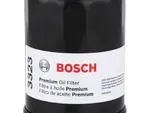
- Best Overall: BOSCH 3323 Premium Engine Oil Filter With FILTECH Filtration Technology
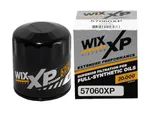
- Best for Towing and Long Drain Intervals: WIX 57060XP Oil Filter, Built for Synthetic Oil
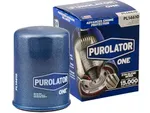
- Best Value: Purolator PL14610 PurolatorONE Advanced Engine Protection Spin On Oil Filter
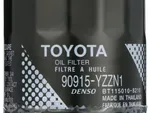
- Best OEM Replacement: Toyota Genuine Oil Filter 90915-YZZN1
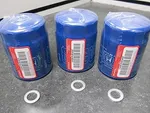
- Best Multi-Pack: Genuine Honda / Acura Engine Oil Filter 15400-PLM-A02 Plus Washers, Set of 3
- How we chose
- What to consider before buying
- Filter media, and what a micron rating really claims
- The anti-drainback valve, and dry starts
- Why efficiency and flow fight each other
- Final recommendation
- FAQ
Quick picks
Every pick wins a specific use case. Jump to the full review before you buy.
-
Best Overall
BOSCH 3323 Premium Engine Oil Filter With FILTECH Filtration Technology
A cheap, well-built spin-on filter that covers a huge slice of the Honda, Acura and Nissan fleet, as long as 3323 is the correct number for your engine.
-
Best for Towing and Long Drain Intervals
WIX 57060XP Oil Filter, Built for Synthetic Oil
The filter to fit when you run full synthetic, tow a trailer or push the drain interval past what a standard filter was built for.
-
Best Value
Purolator PL14610 PurolatorONE Advanced Engine Protection Spin On Oil Filter
A synthetic blend filter with a 15,000 mile rating for about eleven dollars, covering many of the same Honda and Nissan engines as the Bosch.
-
Best OEM Replacement
Toyota Genuine Oil Filter 90915-YZZN1
The factory Toyota and Lexus filter, worth buying when you want the exact part the dealer would fit and no argument about warranty.
-
Best Multi-Pack
Genuine Honda / Acura Engine Oil Filter 15400-PLM-A02 Plus Washers, Set of 3
Three genuine Honda filters with the crush washers included, which covers about three years of oil changes on one order.
Compare every pick
| Product | Award | Media type | Listed fitment | Best for | Where to buy |
|---|---|---|---|---|---|
| BOSCH 3323 Premium Engine Oil Filter With FILTECH Filtration Technology | Best Overall | FILTECH media, holds up to 14 grams of dirt and particles | Select Acura, Honda, Nissan, Infiniti, Mitsubishi, Mazda, Kia, Chrysler and Dodge engines. Check your exact year, make and model before ordering | Owners of Honda, Acura, Nissan, Infiniti or Mitsubishi vehicles who change oil on the factory schedule and want a solid filter for about ten dollars. | Check price for BOSCH 3323 Premium Engine Oil Filter With FILTECH Filtration Technology at Amazon (affiliate link) |
| WIX 57060XP Oil Filter, Built for Synthetic Oil | Best for Towing and Long Drain Intervals | Synthetic blended media with natural fibers, no wire backing needed | Select Buick, Chevrolet, GM, Hummer, Saturn, Saab, Dodge, Chrysler and Jeep engines from 2007 to 2015. Check your exact year, make and model before ordering | Drivers running full synthetic on GM, Chrysler, Dodge or Jeep vehicles from the 2007 to 2015 window who tow or sit in traffic. | Check price for WIX 57060XP Oil Filter, Built for Synthetic Oil at Amazon (affiliate link) |
| Purolator PL14610 PurolatorONE Advanced Engine Protection Spin On Oil Filter | Best Value | High-density synthetic blend media | Select Honda CR-V, Accord, Civic, Pilot, Odyssey, HR-V and Fit, Nissan Frontier, Titan and Xterra, Acura MDX and RDX. Check your exact year, make and model before ordering | Honda, Acura and Nissan owners who run synthetic oil and want a longer-life filter without paying for the WIX XP. | Check price for Purolator PL14610 PurolatorONE Advanced Engine Protection Spin On Oil Filter at Amazon (affiliate link) |
| Toyota Genuine Oil Filter 90915-YZZN1 | Best OEM Replacement | Toyota factory filter media, type not published | Toyota and Lexus engines that call for factory part number 90915-YZZN1. Check your exact year, make and model before ordering | Toyota and Lexus owners under warranty, or anyone who would rather buy the factory part than compare aftermarket spec sheets. | Check price for Toyota Genuine Oil Filter 90915-YZZN1 at Amazon (affiliate link) |
| Genuine Honda / Acura Engine Oil Filter 15400-PLM-A02 Plus Washers, Set of 3 | Best Multi-Pack | Honda factory filter media, type not published | Honda and Acura engines that call for 15400-PLM-A02 or its superseding number 15400-RTA-003. Check your exact year, make and model before ordering | Honda and Acura owners who do their own oil changes and want to buy filters once instead of three separate times. | Check price for Genuine Honda / Acura Engine Oil Filter 15400-PLM-A02 Plus Washers, Set of 3 at Amazon (affiliate link) |
Swipe sideways to compare every column.
Best Overall
BOSCH 3323 Premium Engine Oil Filter With FILTECH Filtration Technology
by Bosch
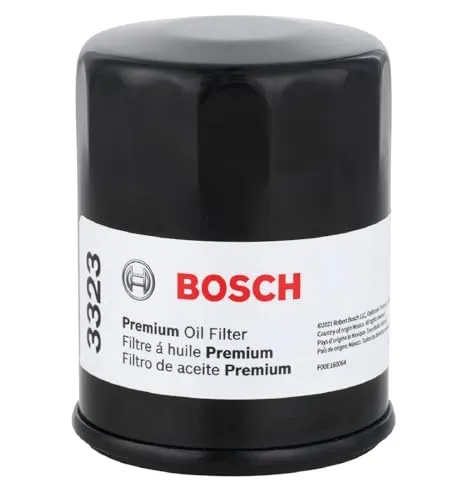
A cheap, well-built spin-on filter that covers a huge slice of the Honda, Acura and Nissan fleet, as long as 3323 is the correct number for your engine.
What we like
- FILTECH media is rated to hold up to 14 grams of dirt, which is a real capacity figure rather than a vague claim
- Silicone anti-drain back valve keeps oil in the filter overnight, so the engine is not running dry on the first turn of the key
- Steel base plate and housing resist warping, which is where cheap filters start to weep at the gasket
- Sales rank of 203 across the whole automotive category makes it one of the highest-volume filters on Amazon
What we don't
- The 3323 number fits a specific set of engines only, and the same car in a different model year often takes a different filter
- Bosch does not publish an efficiency percentage or a micron rating for this part, so you cannot compare it directly against the WIX XP
- No extended drain interval is claimed, so it is not the filter to pair with a 15,000 mile synthetic oil change
| Filter type | Spin-on canister, 1 count |
|---|---|
| Media type | FILTECH media, holds up to 14 grams of dirt and particles |
| Listed fitment | Select Acura, Honda, Nissan, Infiniti, Mitsubishi, Mazda, Kia, Chrysler and Dodge engines. Check your exact year, make and model before ordering |
| Anti drainback valve | Silicone anti-drain back valve |
| Pack quantity | 1 filter |
| Install difficulty | Easy |
| Price bracket | $ |
Before anything else, check that 3323 is the right number for your car. The Bosch listing covers a long list of vehicles, from 98 to 24 Honda Accords to 04 to 24 Nissan Titans, but engine choice changes the answer inside a single model year. Two Accords from the same year can take two different filters. Run your year, make, model and engine through the fitment tool on the listing and confirm the number before you buy.
With that out of the way, this is the filter we would put on most cars. Bosch builds the 3323 around its FILTECH media, which the company rates to hold up to 14 grams of dirt. That number matters more than people think. A filter that clogs early goes into bypass, and a filter in bypass sends unfiltered oil straight through to the bearings.
The construction is the other reason it takes the top spot. The base plate and housing are steel, so the can does not distort when you torque it down or when oil pressure spikes on a cold morning. The gasket is a high lubricity design, which sounds like marketing until you have fought a filter that welded itself to the block over 6,000 miles. It comes off by hand.
Inside there is a silicone anti-drain back valve. Silicone stays flexible in the cold and does not harden the way cheaper rubber valves do. That is the part keeping oil in the filter while the car sits overnight.
What Bosch does not give you is a number to argue with. There is no published efficiency percentage and no micron rating for the 3323, so you are trusting the brand rather than the spec sheet. If you want a filter that states 99 percent at 23 microns in writing, the WIX 57060XP does that. For a normal oil change on a normal schedule, the Bosch is the easy answer.
Research-based pick: this recommendation is based on product data, owner feedback and comparison with products we have tested, not on direct hands-on testing.
Buy it if: Owners of Honda, Acura, Nissan, Infiniti or Mitsubishi vehicles who change oil on the factory schedule and want a solid filter for about ten dollars.
Skip it if: You run long synthetic drain intervals and want a filter with a published micron rating behind it.
Best for Towing and Long Drain Intervals
WIX 57060XP Oil Filter, Built for Synthetic Oil
by Wix
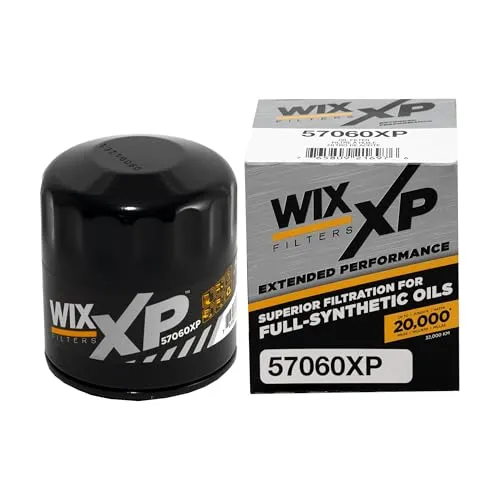
The filter to fit when you run full synthetic, tow a trailer or push the drain interval past what a standard filter was built for.
What we like
- Publishes a real efficiency figure, 99 percent at 23 microns, which is the tightest number of any pick here
- Rated for change intervals up to 20,000 miles, so it can keep pace with a long synthetic drain
- Synthetic blended media with natural fibers needs no wire backing, which frees up more pleat area inside the same can
- Built specifically for severe use like towing, stop-and-go traffic and long idle periods
What we don't
- The 23 micron figure is quoted from testing on the WIX 51515XP, not on this exact part number
- Fitment is narrow, covering a set of GM, Chrysler, Dodge and Jeep vehicles from roughly 2007 to 2015
- The listing does not state whether this XP part uses a silicone anti-drainback valve, which the cheaper WIX WL line does mention
- Costs about 40 percent more than the Bosch and Toyota filters, which is wasted money on a car that gets a 5,000 mile oil change
| Media type | Synthetic blended media with natural fibers, no wire backing needed |
|---|---|
| Listed efficiency | 99 percent at 23 microns, figure based on WIX 51515XP |
| Service interval | Up to 20,000 miles on synthetic oil |
| Listed fitment | Select Buick, Chevrolet, GM, Hummer, Saturn, Saab, Dodge, Chrysler and Jeep engines from 2007 to 2015. Check your exact year, make and model before ordering |
| Filter type | Spin-on canister, 1 count |
| Install difficulty | Easy |
| Price bracket | $ |
Fitment first, as always. WIX lists the 57060XP for a specific group of Buick, Chevrolet, GM, Hummer, Saturn, Saab, Dodge, Chrysler and Jeep vehicles built roughly between 2007 and 2015. That is a lot of vehicles and still a narrow slice of the road. Put your year, make, model and engine into the part finder on the listing. If your engine is not on it, this filter is the wrong part no matter how good it is.
The XP line exists for one reason. Synthetic oil can stay in an engine much longer than conventional oil, and a filter built for a 5,000 mile life will fill up long before the oil is finished. WIX rates this one for change intervals up to 20,000 miles. That is a claim about capacity, not a promise that you should stretch your own service that far, so keep following your manufacturer’s schedule.
The media is where the money goes. It is a synthetic blend mixed with natural fibers, strong enough that WIX does not need a wire mesh backing to hold the pleats open. Removing that mesh leaves room for more filter area inside the same size can. WIX states 99 percent efficiency at 23 microns for the XP media, tighter than the 26 micron figure on its standard line.
Read that number carefully. WIX quotes it from testing on the 51515XP, a different part in the same family. It describes the media, not this exact can. That is normal practice in the filter business, but it is worth knowing.
The gap in the listing is the anti-drainback valve. WIX mentions a silicone valve on its WL filters and says nothing about it here. If your engine mounts the filter sideways or upside down, that valve matters, and you would want to confirm it before ordering. For a truck that tows on synthetic oil, this is still the strongest filter on the list.
Research-based pick: this recommendation is based on product data, owner feedback and comparison with products we have tested, not on direct hands-on testing.
Buy it if: Drivers running full synthetic on GM, Chrysler, Dodge or Jeep vehicles from the 2007 to 2015 window who tow or sit in traffic.
Skip it if: Your car is not on the fitment list, or you change oil every 5,000 miles and will never use the extra capacity.
Best Value
Purolator PL14610 PurolatorONE Advanced Engine Protection Spin On Oil Filter
by Purolator
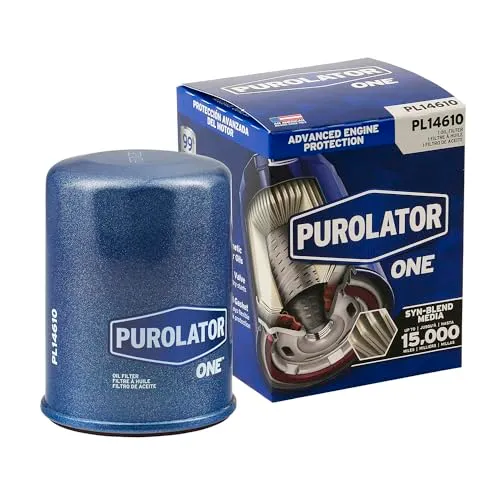
A synthetic blend filter with a 15,000 mile rating for about eleven dollars, covering many of the same Honda and Nissan engines as the Bosch.
What we like
- High-density synthetic blend media rated to keep an engine clean for up to 15,000 miles
- Silicone anti-drainback valve is listed outright, so there is no guessing about dry starts
- PTFE-treated gasket is heat resistant and stays flexible, which makes the filter easier to remove at the next change
- Metal end caps and a double-helix center tube give the element structure under high oil pressure
What we don't
- Purolator claims over 99 percent dirt capture but never says at what micron size, so the number cannot be compared to the WIX figure
- Covers a specific list of Honda, Acura and Nissan applications, and the PL14610 number does not carry across to other engines
- Sits at a higher price than the Bosch and the Toyota filter while claiming a similar job
| Media type | High-density synthetic blend media |
|---|---|
| Listed efficiency | Over 99 percent of dirt captured, micron size not published |
| Service interval | Up to 15,000 miles |
| Anti drainback valve | Silicone anti-drainback valve |
| Listed fitment | Select Honda CR-V, Accord, Civic, Pilot, Odyssey, HR-V and Fit, Nissan Frontier, Titan and Xterra, Acura MDX and RDX. Check your exact year, make and model before ordering |
| Install difficulty | Easy |
| Price bracket | $ |
Check the part number first. Purolator lists the PL14610 for Honda CR-V, Accord, Civic, Pilot, Odyssey, HR-V and Fit, Nissan Frontier, Titan and Xterra, and the Acura MDX and RDX. Those are model names, not model years. Use the confirmed fit tool on the listing with your year, make, model and engine, because the same nameplate spans several different filters over its life.
The reason this is the value pick is the media. Purolator uses a high-density synthetic blend and rates the filter to hold up for 15,000 miles. That is a step above a plain cellulose filter and it costs about a dollar more than the Bosch. If you are already paying for full synthetic oil, matching it with a filter built to last a similar distance is sensible.
Three smaller details do a lot of work here. The gasket is treated with PTFE, which keeps it from baking onto the block and turning the next oil change into a fight. The center tube is a double-helix design, which resists collapse when cold oil is being forced through a partly loaded element. The end caps are metal rather than fiber, so the pleat pack does not shift and let oil sneak past the edge.
The silicone anti-drainback valve is the part we like most. Purolator states it plainly. Many engines hang the filter horizontally or nose-down, and without a working valve the filter empties overnight and the engine starts on whatever oil is left in the galleries. Silicone holds its shape through cold winters better than the nitrile valves used on cheaper filters.
The weak spot is the efficiency claim. Over 99 percent of dirt sounds strong until you notice there is no micron size attached to it. A filter that catches 99 percent of 40 micron particles is not the same as one that catches 99 percent at 23 microns. Purolator does not say, so treat the number as a marketing line and buy this for the media grade and the price instead.
Research-based pick: this recommendation is based on product data, owner feedback and comparison with products we have tested, not on direct hands-on testing.
Buy it if: Honda, Acura and Nissan owners who run synthetic oil and want a longer-life filter without paying for the WIX XP.
Skip it if: You want a published micron rating to justify the spend, or your engine is not on the PL14610 list.
Best OEM Replacement
Toyota Genuine Oil Filter 90915-YZZN1
by Toyota
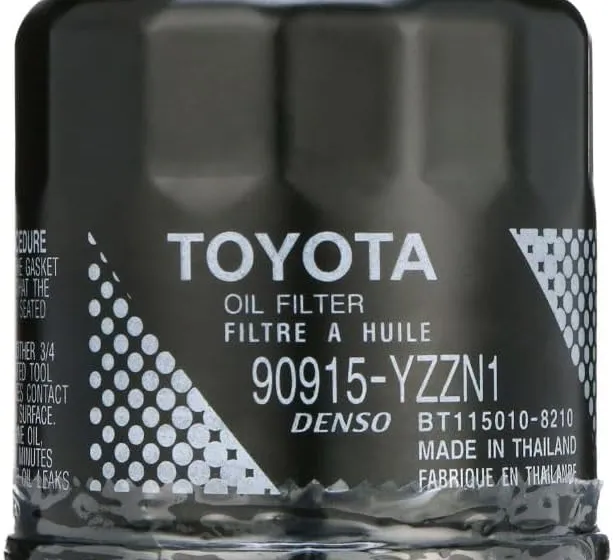
The factory Toyota and Lexus filter, worth buying when you want the exact part the dealer would fit and no argument about warranty.
What we like
- Genuine Toyota part number 90915-YZZN1, the same filter a Toyota or Lexus service department installs
- Removes the guesswork about whether an aftermarket filter meets the engine's flow and pressure requirements
- Standard threading and a 3.3 inch body make it a direct swap with a normal filter wrench
- Sales rank of 237 across automotive shows it moves in serious volume, so stock is rarely a problem
What we don't
- Toyota publishes no efficiency percentage, no micron rating and no dirt capacity for this filter
- Only fits Toyota and Lexus engines specified for 90915-YZZN1, and other Toyota engines use YZZA1, YZZD3 or a cartridge instead
- No extended drain interval is claimed, so it is built for the factory schedule rather than a stretched synthetic change
- Listing showed only 20 units in stock at the time we checked
| Filter type | Spin-on canister, listed at 3.3 inches |
|---|---|
| Listed fitment | Toyota and Lexus engines that call for factory part number 90915-YZZN1. Check your exact year, make and model before ordering |
| Media type | Toyota factory filter media, type not published |
| Service interval | Toyota's published oil change schedule for your engine |
| Pack quantity | 1 filter |
| Install difficulty | Easy |
| Price bracket | $ |
This one needs the fitment warning more than any other pick, because Toyota uses several filters across its range and they are not interchangeable. The 90915-YZZN1 is a spin-on canister. Plenty of current Toyota and Lexus engines use a cartridge element in a plastic housing instead, which needs a completely different part and a different tool. Look up your exact year, make, model and engine, or read the number off the filter that is on the car now.
Once you have confirmed the number, the appeal is simple. This is the part the dealer fits. Toyota engineered the bypass pressure, the flow rate and the media to work with the engine it built, and there is no ambiguity about whether a substitute filter satisfies the maintenance terms of your warranty. For a car still inside its coverage window, that alone is worth the ten dollars.
The build is conventional and solid. Heavy housing, standard threading, a 3.3 inch body, and a filter wrench takes it off the way you would expect. Nothing about the install is unusual.
The frustrating part is the silence on specifications. Toyota says the design captures harmful particles while maintaining proper oil flow. It does not say at what micron size, at what efficiency, or how many grams of dirt the media holds. You cannot line this filter up against the WIX 57060XP on paper at all. You are buying the manufacturer’s judgement instead of a number, which is a reasonable trade for a lot of owners and an annoying one for anybody who likes data.
There is no extended interval claim either. Toyota expects you to change it on its schedule, so pair it with the oil grade in your owner’s manual and do not stretch it because the oil bottle says 15,000 miles.
Research-based pick: this recommendation is based on product data, owner feedback and comparison with products we have tested, not on direct hands-on testing.
Buy it if: Toyota and Lexus owners under warranty, or anyone who would rather buy the factory part than compare aftermarket spec sheets.
Skip it if: Your Toyota takes a cartridge filter or a different 90915 number, which covers a large share of the modern lineup.
Best Multi-Pack
Genuine Honda / Acura Engine Oil Filter 15400-PLM-A02 Plus Washers, Set of 3
by Honda
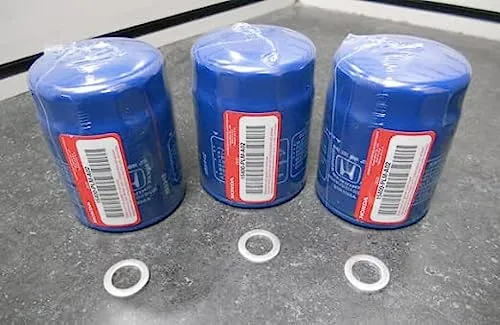
Three genuine Honda filters with the crush washers included, which covers about three years of oil changes on one order.
What we like
- Ships three genuine Honda filters plus three 94109-14000 crush washers, so you are not hunting for a drain plug washer at the last minute
- Works out to roughly twelve dollars per genuine Honda filter, close to single-unit aftermarket pricing
- The listing states plainly that 15400-PLM-A02 has been superseded by 15400-RTA-003 and both are correct, which stops a lot of panicked returns
- Same factory part a Honda or Acura dealer would install, so warranty maintenance records stay clean
What we don't
- Buying three at once is money spent up front, and it is wasted if you sell the car or the wrong number was ordered
- Honda publishes no efficiency rating, micron figure or dirt capacity for this filter
- Only suits Honda and Acura engines that call for this specific number, so it is useless in a two-car household with a Toyota
- Filters sitting in a garage for two years should be kept sealed and dry, since a rusted or dented can is not worth fitting
| Pack quantity | 3 filters plus 3 crush washers |
|---|---|
| Filter type | Spin-on canister, sold as a three pack |
| Listed fitment | Honda and Acura engines that call for 15400-PLM-A02 or its superseding number 15400-RTA-003. Check your exact year, make and model before ordering |
| Media type | Honda factory filter media, type not published |
| Service interval | Honda's own maintenance schedule for your engine |
| Install difficulty | Easy |
| Price bracket | $ |
Multi-packs turn a small fitment mistake into a large one, so confirm the number before you click buy. Honda specifies 15400-PLM-A02 for a defined set of engines, and the company has since superseded that number to 15400-RTA-003. The listing spells this out, and it is a useful piece of honesty. The box you receive may show either number, and both are the correct genuine Honda filter. What is not correct is assuming that every Honda takes it. Check your exact year, make, model and engine first.
The value here is arithmetic rather than engineering. Three genuine Honda filters at once land near the price of three single aftermarket filters, so you get the factory part without the factory premium. Most people doing their own oil changes on a Civic or CR-V will use all three inside two or three years.
The crush washers are the part we appreciate. Every oil change wants a fresh 94109-14000 washer on the drain plug, and it is the item people forget until the car is already on ramps with the old oil draining. Three filters and three washers means three complete oil changes, and nothing else to order.
Honda gives you no specifications to evaluate. There is no efficiency percentage, no micron rating and no dirt-holding figure anywhere on the listing. That is normal for factory parts, and it is the same situation as the Toyota filter here. You are buying the manufacturer’s own component for the engine it designed.
Store the spares properly. Keep them sealed in the boxes, off a damp concrete floor, and use them in order. A filter can that has been knocked around a shelf for two years and picked up surface rust is not something to bolt onto a running engine.
Research-based pick: this recommendation is based on product data, owner feedback and comparison with products we have tested, not on direct hands-on testing.
Buy it if: Honda and Acura owners who do their own oil changes and want to buy filters once instead of three separate times.
Skip it if: You are not certain 15400-PLM-A02 is your engine's filter, because a wrong multi-pack is a three times bigger mistake.
How we chose#
Read this part before the picks, because it changes how you use the rest of the article. Every filter on this page fits only certain engines. There is no universal oil filter. A number like 3323 or PL14610 maps to a specific list of applications, and buying the wrong one means either a filter that will not thread on or, worse, one that threads on with the wrong gasket size and weeps oil onto your driveway. Check your exact year, make, model and engine on the listing’s fit checker before you buy. That instruction applies to all five picks without exception.
This is a research-based comparison, not a cut-open filter test. We did not slice these filters apart on a bench or run them through an ISO 4548-12 rig. What we did was pull the live Amazon listings, compare what each manufacturer actually publishes, and note carefully where a manufacturer publishes nothing.
We chose across roles rather than ranking five near-identical cans. One premium mass-market filter with real dirt capacity data, one high-efficiency filter built for synthetic oil and towing, one value filter with synthetic blend media, one genuine OEM filter, and one OEM multi-pack for people who do their own oil changes. Those five cover most of the ways a person ends up shopping for a filter.
We also weighted honesty in the listing. Filters that publish an efficiency percentage with a micron size attached scored better than filters that say “over 99 percent of dirt” and leave the micron figure out. Where a manufacturer stays quiet, we say so in the review rather than filling the gap with a guess.
What to consider before buying#
Fitment comes before everything. Get the part number from your owner’s manual, from the filter currently on the engine, or from the fit checker on the listing using your year, make, model and engine. Do not use the model name alone. A CR-V spans several filters across its generations, and a Toyota that took a spin-on can in 2008 may take a cartridge element in 2018.
Next, match the filter to your oil and your driving. If you run conventional oil and change it every 5,000 miles, a standard filter like the Bosch 3323 or the genuine Toyota part is all you need. If you run full synthetic and stretch the interval, buy a filter rated for that distance. The best synthetic oils can go a long way between changes, and pairing one with a filter built for 5,000 miles undoes the point of the upgrade.
Think about how hard your engine works. Towing, stop-and-go traffic with long idle periods, dusty roads and short winter trips all load a filter faster than steady highway miles. WIX built the XP line specifically for that kind of use.
Finally, check the price per filter rather than the price on the button. A three pack of genuine Honda filters looks expensive at first glance and works out close to single-unit aftermarket money once you divide it by three.
Filter media, and what a micron rating really claims#
Filter media falls into three rough groups. Cellulose media is pressed paper, cheap and effective at catching larger particles, but it swells as it absorbs oil and its pores are uneven. Synthetic blend media mixes cellulose with man-made fibers, which gives more consistent pore size and better capacity in the same space. Full synthetic media is all man-made fiber, with the tightest and most even pore structure.
The Purolator PL14610 uses a high-density synthetic blend. The WIX 57060XP uses a synthetic blend with natural fibers, strong enough that WIX skips the wire mesh backing entirely. That is a real engineering gain, because the mesh takes up room that could hold filter pleats instead. Bosch calls its media FILTECH and publishes a capacity figure of up to 14 grams of dirt, which is a more useful number than most brands give you.
Micron ratings are where buyers get misled. A micron figure only means something when it is paired with an efficiency percentage. WIX states 99 percent at 23 microns, which is a complete claim. Purolator states over 99 percent of dirt with no micron size, which is not. Toyota and Honda publish nothing at all. That does not make the factory filters bad, it means you are trusting the engine’s maker instead of a spec sheet, and you should know which one you are doing.
The anti-drainback valve, and dry starts#
Most engines mount the oil filter horizontally or pointing downward. When you shut the engine off, gravity wants to pull the oil in that filter back down into the pan. The anti-drainback valve is a rubber flap that stops it.
Why it matters is simple. If the filter drains overnight, the oil pump has to refill it before pressurized oil reaches the bearings and the top of the engine. That is a few seconds of running on almost nothing, and repeated over years it does more damage than most of the miles in between. It is also the source of that rattle some cars make for a moment on a cold morning.
Valve material is the detail worth checking. Silicone stays flexible in freezing weather and keeps sealing after years of heat cycles. Nitrile rubber is cheaper and hardens over time, and a hardened valve stops sealing. Bosch lists a silicone anti-drain back valve on the 3323, and Purolator lists one on the PL14610. WIX does not state the valve material on the 57060XP listing, and neither Toyota nor Honda mention it. If your filter mounts sideways or nose-down, that is worth confirming before you order.
Why efficiency and flow fight each other#
Here is the trade-off nobody puts on the box. Tighter filter media catches smaller particles. Tighter media also resists flow. Push oil through a very fine element, especially cold thick oil, and pressure builds up across the filter.
Every spin-on filter has a bypass valve for exactly this reason. When the pressure difference across the media gets too high, the bypass opens and oil goes around the filter entirely. Unfiltered oil reaching the bearings is still far better than no oil reaching them. But a filter in bypass is doing nothing at all.
Two things push a filter into bypass. Cold, thick oil on a winter start, and a filter that has filled up with dirt. That is why dirt-holding capacity is as important as efficiency, and why the Bosch 14 gram figure is worth knowing. It is also why fitting a super-fine racing filter to a family car is usually counterproductive. The stock filter was chosen to balance filtration against flow for that specific engine, and a filter that spends half its life in bypass filters less than a plain one that never opens.
Keeping oil clean in the first place helps too. Carbon and deposits that never form do not need filtering, which is part of why a periodic clean-up with one of the best fuel injector cleaners and fresh spark plugs belongs in the same maintenance conversation.
Final recommendation#
For most drivers the Bosch 3323 is the right buy, assuming that number matches your engine. It has real dirt capacity data, a silicone anti-drainback valve, steel construction and a price under ten dollars. If you tow, sit in traffic, or run a long synthetic drain interval on a GM, Chrysler, Dodge or Jeep from the 2007 to 2015 window, spend the extra on the WIX 57060XP for its 23 micron media and 20,000 mile rating. Honda, Acura and Nissan owners who want a synthetic blend filter for less money should take the Purolator PL14610. Toyota and Lexus owners still inside a warranty period, or anyone who would rather not compare spec sheets, should buy the genuine 90915-YZZN1. And if you change your own oil on a Honda or Acura, the three pack of 15400-PLM-A02 filters with crush washers included saves you two future orders. Whichever one you pick, confirm the part number against your exact year, make, model and engine first. That single check matters more than the difference between any two filters on this list.
Frequently asked questions
How do I find the right oil filter for my car?
Start with the number on the filter that is on the car now, or look up the part in your owner's manual. Then run your year, make, model and engine through the fit checker on the product listing. Engine choice is the step people skip, and it is the step that matters. Two Honda Accords from the same model year can take different filters depending on which engine is under the hood. If your car takes a cartridge element rather than a spin-on can, none of the spin-on filters here will fit at all.
Does an expensive oil filter actually protect the engine better?
Sometimes, and mostly in specific conditions. The WIX 57060XP states 99 percent efficiency at 23 microns and a capacity rated for up to 20,000 mile intervals, which is genuinely useful if you tow or run long synthetic drains. On a commuter car changed every 5,000 miles, a ten dollar Bosch 3323 or a genuine Toyota filter will never be the reason the engine wears out. Spend the extra money when your driving is hard on oil, not by default.
What does the anti-drainback valve do?
It is a flap inside the filter that stops oil draining back into the pan while the engine is off. Without it, a filter mounted sideways or nose-down empties overnight, and the first few seconds after a cold start run on very little oil. That is where a lot of engine wear happens. The Bosch 3323 and the Purolator PL14610 both list a silicone valve, which stays flexible in cold weather. Cheaper nitrile valves harden over time and stop sealing properly.
How often should I change the oil filter?
Change it every time you change the oil. A filter costs about ten dollars and reusing one puts all the dirt you just collected back into fresh oil. If you are running an extended synthetic drain, make sure the filter is rated for it. The Purolator PL14610 is listed for up to 15,000 miles and the WIX 57060XP for up to 20,000, while the genuine Toyota and Honda filters here make no extended interval claim and are built for the factory schedule.
What does a micron rating mean on an oil filter?
It is the particle size the media is tested against, paired with an efficiency percentage. WIX quotes 99 percent at 23 microns for its XP media, meaning it traps 99 out of 100 particles that size in a standard test. A number on its own means nothing. Purolator says over 99 percent of dirt without naming a micron size, and Toyota and Honda publish no figure at all. Only compare filters where both halves of the claim are stated.
Are OEM filters better than aftermarket ones?
They are safer rather than better. A genuine Toyota 90915-YZZN1 or Honda 15400-PLM-A02 is the exact part the factory specified, so bypass pressure and flow are matched to the engine and there is no warranty argument. What you give up is data, since neither company publishes efficiency or capacity numbers. A good aftermarket filter like the Bosch 3323 or Purolator PL14610 will serve most cars just as well for similar money.
About the author

Dale Harper Lead Gear Editor
Dale is a longtime truck owner and former accessory-shop tech who builds these guides from manufacturer fit data, aggregated owner feedback and direct spec comparison. Research-based picks are always labelled as such.
Daily driver: 2022 Ford F-150 XLT SuperCrew
- Tonneau covers and bed accessories
- Seat covers and interior protection
- Lift kits and suspension