The Best Fuel Injector Cleaners: 5 Picks Compared
Five real fuel injector cleaners compared, from the concentrated Red Line SI-1 to a six pack of Gumout, with honest notes on what a bottle can and cannot fix.

A bottle of fuel injector cleaner costs about as much as lunch, which is why it is the first thing most people try when a car starts idling rough or quietly losing a mile per gallon. The catch is that the shelf holds twenty bottles that all say the same words, and the real differences are buried in the dose size and the fuel types each one covers. This guide compares five cleaners actually sold on Amazon right now: the concentrated Red Line SI-1 Complete Fuel System Cleaner, the cheap and widely trusted Chevron Techron High Mileage bottle, the shop-grade BG 44K two pack, the gas and diesel Sea Foam Motor Treatment three pack, and the Gumout six pack for people who want a routine instead of a rescue. We compared them on treatment type, container size, treatments per pack, fuel compatibility and what each maker says the product actually cleans. We also explain, plainly, when a bottle is going to help and when it is not.
Table of contents
- Quick picks
- How many treatments each pack contains
- Comparison table
- Best Overall: Red Line SI-1 Complete Fuel System Cleaner
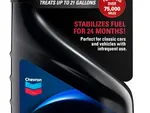
- Best Value: Chevron Techron High Mileage Fuel System Cleaner
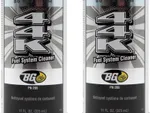
- Upgrade Pick: BG 44K Fuel System Cleaner (2 Pack)
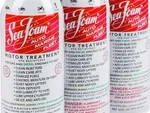
- Best for Gas and Diesel Engines: Sea Foam Motor Treatment (3 Pack)
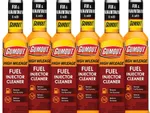
- Best Multi-Pack for Regular Use: Gumout Fuel System Cleaner (6 Pack)
- How we chose
- What to consider before buying
- What PEA actually is, and why the label may not tell you
- Fuel system cleaner or injector cleaner
- Reading the power and economy claims
- Final recommendation
- FAQ
Quick picks
Every pick wins a specific use case. Jump to the full review before you buy.
-
Best Overall
Red Line SI-1 Complete Fuel System Cleaner
A concentrated 15 ounce fuel system cleaner meant to be used as one full bottle in one tank, which is why it does more in a single treatment than most bottles on the shelf.
-
Best Value
Chevron Techron High Mileage Fuel System Cleaner
A 12 ounce Techron bottle aimed at older, higher mileage engines, and the cheapest single treatment in this guide by a clear margin.
-
Upgrade Pick
BG 44K Fuel System Cleaner (2 Pack)
The two can pack of the fuel system cleaner shops have been pouring into customer cars for decades, sold at shop strength rather than parts store strength.
-
Best for Gas and Diesel Engines
Sea Foam Motor Treatment (3 Pack)
A three pack of the one bottle that works in gasoline tanks, diesel tanks and engine oil, which makes it the sensible choice if you look after more than one machine.
-
Best Multi-Pack for Regular Use
Gumout Fuel System Cleaner (6 Pack)
Six bottles of a high mileage carbon cleaner for around twenty two dollars, which turns fuel treatment from an occasional purchase into a routine you actually keep up.
Compare every pick
| Product | Award | Treatment type | Treatments per pack | Fuel type | Best for | Where to buy |
|---|---|---|---|---|---|---|
| Red Line SI-1 Complete Fuel System Cleaner | Best Overall | Concentrated fuel system cleaner | 1 treatment | Gasoline, including carbureted engines | Someone who wants one strong clean-out treatment on a gasoline car with a rough idle, hesitation or a slow drop in fuel economy. | Check price for Red Line SI-1 Complete Fuel System Cleaner at Amazon (affiliate link) |
| Chevron Techron High Mileage Fuel System Cleaner | Best Value | High mileage fuel system cleaner | 1 treatment | Gasoline, including E10 and E85 blends | An older gasoline commuter with a lot of miles on it, where you want to try a cheap treatment before spending money on parts. | Check price for Chevron Techron High Mileage Fuel System Cleaner at Amazon (affiliate link) |
| BG 44K Fuel System Cleaner (2 Pack) | Upgrade Pick | Professional grade fuel system cleaner | 2 treatments | Gasoline engines only | An engine with real carbon build-up where you want the strongest treatment available over the counter before booking a shop induction service. | Check price for BG 44K Fuel System Cleaner (2 Pack) at Amazon (affiliate link) |
| Sea Foam Motor Treatment (3 Pack) | Best for Gas and Diesel Engines | Fuel system cleaner, stabilizer and oil treatment | 3 treatments | Gasoline and diesel, including E10 and E85 blends | Anyone running a mix of gas and diesel vehicles plus stored seasonal equipment, who wants one bottle on the shelf instead of four. | Check price for Sea Foam Motor Treatment (3 Pack) at Amazon (affiliate link) |
| Gumout Fuel System Cleaner (6 Pack) | Best Multi-Pack for Regular Use | High mileage carbon deposit cleaner | 6 treatments | Gasoline, including turbocharged and supercharged engines | A driver with an older gasoline car or a modern turbo who wants to treat the tank a few times a year without thinking about the cost each time. | Check price for Gumout Fuel System Cleaner (6 Pack) at Amazon (affiliate link) |
Swipe sideways to compare every column.
Best Overall
Red Line SI-1 Complete Fuel System Cleaner
by Red Line
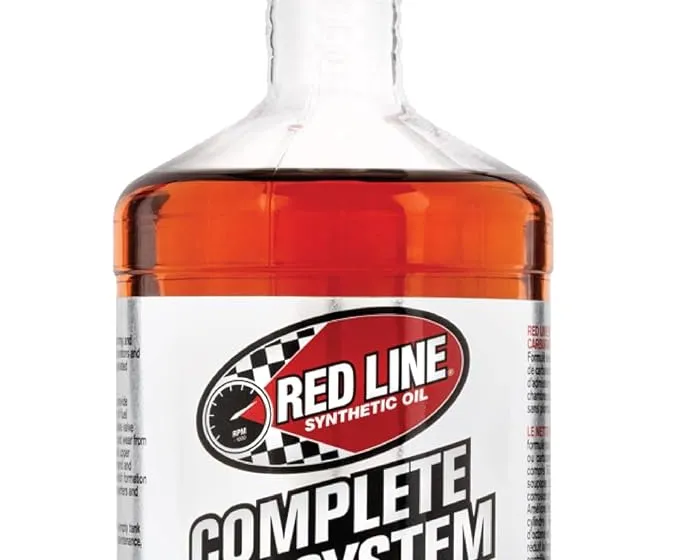
A concentrated 15 ounce fuel system cleaner meant to be used as one full bottle in one tank, which is why it does more in a single treatment than most bottles on the shelf.
What we like
- One of the strongest sellers in the category, sitting around a sales rank of 58 on Amazon
- Dosed as a whole bottle per tank, so you are not spreading a thin cleaner across many fill-ups
- Uses a blend of high-temp and low-temp detergents, so it works on hot valve deposits and cooler injector tips
- Cleans carburetors as well as injectors, which matters on older cars and small engines
What we don't
- Costs more per treatment than a supermarket bottle, and you use the whole bottle at once
- Gasoline only, so diesel owners need a different product
- The maker's claim of near 100 percent cleaning in one treatment is a lab-style figure, not something you can verify in your driveway
| Treatment type | Concentrated fuel system cleaner |
|---|---|
| Container size | 15 fl oz bottle |
| Treatments per pack | 1 treatment |
| Fuel type | Gasoline, including carbureted engines |
| Cleaning targets | Injectors, carburetors, valves and combustion chamber |
| Price bracket | $ |
Red Line SI-1 is the pick most people should start with, and the reason is dose size. Plenty of cleaners come in a small bottle that you tip into a full tank of gas. That is a lot of fuel and very little cleaner. SI-1 is sold as a 15 fl oz bottle that Red Line tells you to use in one tank, so the concentration of detergent that reaches the injectors is far higher.
It takes Best Overall partly on that and partly on the market. Its sales rank sits around 58 in the automotive category, which is very low. That number is real data, and it tells you a lot of people buy this bottle repeatedly.
The formula is described as a blend of high-temperature and low-temperature detergents. That combination matters more than it sounds. Deposits form in two very different places in a modern engine. Injector tips run relatively cool and collect gum and varnish. Intake valves and the combustion chamber run hot and bake on carbon. A cleaner tuned for only one of those leaves the other alone.
It also cleans carburetors, which is a genuinely useful line item if you keep an older car, a motorcycle or yard equipment around. Not every modern additive still bothers with that.
The honest limits are simple. This is a gasoline product, so a diesel owner should look at the Sea Foam three pack instead. And because the whole bottle goes in at once, the cost per treatment is higher than a small supermarket bottle. Read Red Line’s power and economy claims the same way you should read every claim in this category, as a best case on an engine that had real deposits to remove.
Buy it when something feels off and you want one proper clean-out. If you just want cheap regular maintenance, the Gumout six pack is the better shape of purchase.
Research-based pick: this recommendation is based on product data, owner feedback and comparison with products we have tested, not on direct hands-on testing.
Buy it if: Someone who wants one strong clean-out treatment on a gasoline car with a rough idle, hesitation or a slow drop in fuel economy.
Skip it if: You drive a diesel, or you want a cheap top-up you can pour in at every fill-up.
Best Value
Chevron Techron High Mileage Fuel System Cleaner
by Chevron
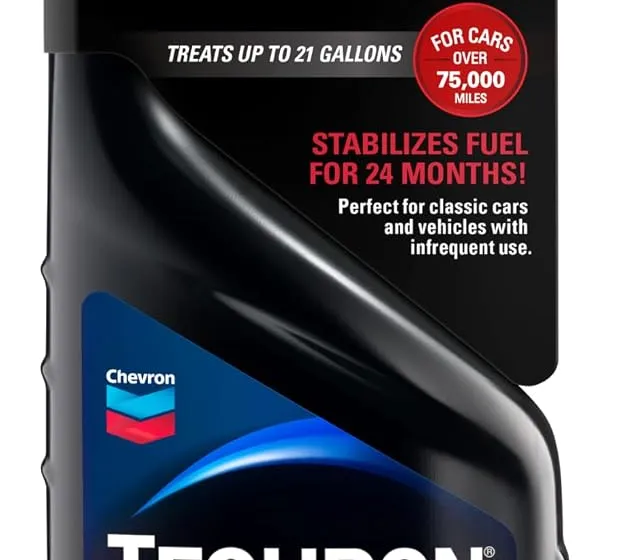
A 12 ounce Techron bottle aimed at older, higher mileage engines, and the cheapest single treatment in this guide by a clear margin.
What we like
- Lowest price of any pick here, at roughly ten dollars for a full treatment
- Techron is one of the few additive names most mechanics and drivers already recognise
- Adds corrosion inhibitors that cover both iron and steel parts and copper and silver parts
- Chevron states it is compatible with every commercial ethanol blend, including E10 and E85
What we don't
- A single 12 fl oz bottle is a smaller dose than the 15 fl oz Red Line treatment
- The high mileage version is tuned for aged, deposit-heavy engines, so a newer car gains less from it
- Gasoline only, with nothing in the listing about diesel use
| Treatment type | High mileage fuel system cleaner |
|---|---|
| Container size | 12 fl oz bottle |
| Treatments per pack | 1 treatment |
| Fuel type | Gasoline, including E10 and E85 blends |
| Added benefits | Corrosion inhibitors for metal parts and the fuel gauge sensor |
| Price bracket | $ |
Techron High Mileage is the bottle to reach for when you are not sure a fuel additive will do anything at all. It costs about ten dollars. If it helps, that is the cheapest fix your car will ever get. If it does nothing, you have lost the price of a sandwich rather than the price of a shop visit.
It wins Best Value on that math alone, but there is a bit more to it. Techron is a name that has been in fuel stations and parts stores for decades, and the High Mileage version is a specific formulation rather than a rebadged bottle. Chevron aims it at engines that have accumulated age as well as deposits.
The corrosion side is the part people overlook. The listing calls out inhibitors that protect both ferrous metals like iron and steel and non-ferrous metals like copper and silver, and it specifically mentions the fuel gauge sensor. Ethanol blends pull water into a tank, and water plus dissimilar metals is how a sending unit starts reading wrong. That is a real failure mode on older cars, and it is cheap to slow down.
Where it gives ground is dose. Twelve fluid ounces is a smaller treatment than the fifteen ounce Red Line bottle, and the BG 44K can is aimed at a harder single clean-out. If your engine has heavy carbon and you want the best shot at shifting it in one go, this is not the strongest option here.
The other honest note is that the word “restores” appears several times in Chevron’s own copy. It can only restore what deposits took away. On a well maintained engine with no deposits, there is nothing to give back.
Get it as a first try, or as a routine bottle a couple of times a year. Step up to BG 44K if this one does not move the needle.
Research-based pick: this recommendation is based on product data, owner feedback and comparison with products we have tested, not on direct hands-on testing.
Buy it if: An older gasoline commuter with a lot of miles on it, where you want to try a cheap treatment before spending money on parts.
Skip it if: You have a nearly new car with clean fuel trims, because there is likely nothing here for it to remove yet.
Upgrade Pick
BG 44K Fuel System Cleaner (2 Pack)
by BG
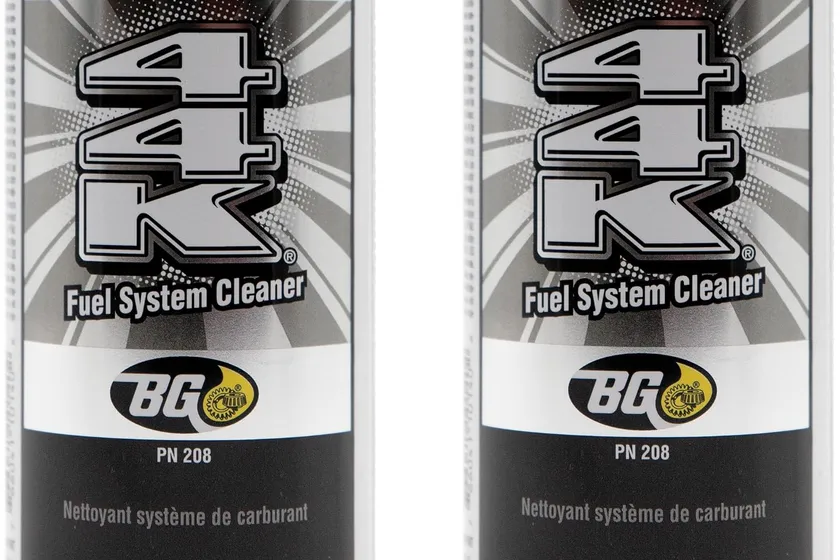
The two can pack of the fuel system cleaner shops have been pouring into customer cars for decades, sold at shop strength rather than parts store strength.
What we like
- BG states each 11 oz can treats up to 20 gallons, so the dose per gallon of fuel is high
- Aimed squarely at injectors, valves and combustion chambers rather than trying to do five jobs
- The two pack gives you a follow-up can, which suits a heavily carboned engine that needs more than one pass
- Sold in sealed metal cans, which store better in a hot garage than a part-used plastic bottle
What we don't
- By far the most expensive option here, at over forty dollars for two treatments
- Gasoline engines only, stated plainly by BG
- The listing gives you almost no detail about the formula itself, so you are buying on reputation
| Treatment type | Professional grade fuel system cleaner |
|---|---|
| Container size | 11 oz can, 2 pack |
| Treatments per pack | 2 treatments |
| Fuel type | Gasoline engines only |
| Cleaning targets | Fuel injectors, valves and combustion chambers |
| Price bracket | $$ |
BG 44K has a different history from the rest of this guide. BG sells mainly through workshops, and the listing leans on that with a line about being the choice of automotive professionals for over forty years. Plenty of drivers first meet 44K on a repair invoice, not a store shelf.
That is why it is the Upgrade Pick. It is the option you buy when the cheap bottles have not fixed the problem and the next step up costs real shop money.
The one hard number worth building a decision on is dose. BG says a single 11 oz can treats up to 20 gallons. Most cars have a tank between 12 and 18 gallons, so one can in one tank is a strong concentration, and stronger than a small bottle spread across the same fill. Getting the ratio right is most of what separates a treatment that does something from one that does not.
It is also narrow in scope, and that is a plus rather than a gap. It cleans injectors, valves and combustion chambers. It does not claim to stabilise stored fuel or clean your oil like the Sea Foam pack does. One job, done at strength.
Two things should give you pause. The price is the obvious one, above forty dollars for two treatments when Techron gives you one for around ten. The other is that BG tells you almost nothing about what is in the can. There is no chemistry breakdown on the listing, so the purchase rests on the brand’s shop reputation rather than a published formula. That is a fair reason to try a cheaper bottle first.
It also says gasoline only, in plain words. Diesel owners should take the Sea Foam route.
Research-based pick: this recommendation is based on product data, owner feedback and comparison with products we have tested, not on direct hands-on testing.
Buy it if: An engine with real carbon build-up where you want the strongest treatment available over the counter before booking a shop induction service.
Skip it if: You are treating a healthy car as routine maintenance, because you would be paying premium money for a job a ten dollar bottle handles.
Best for Gas and Diesel Engines
Sea Foam Motor Treatment (3 Pack)
by Sea Foam
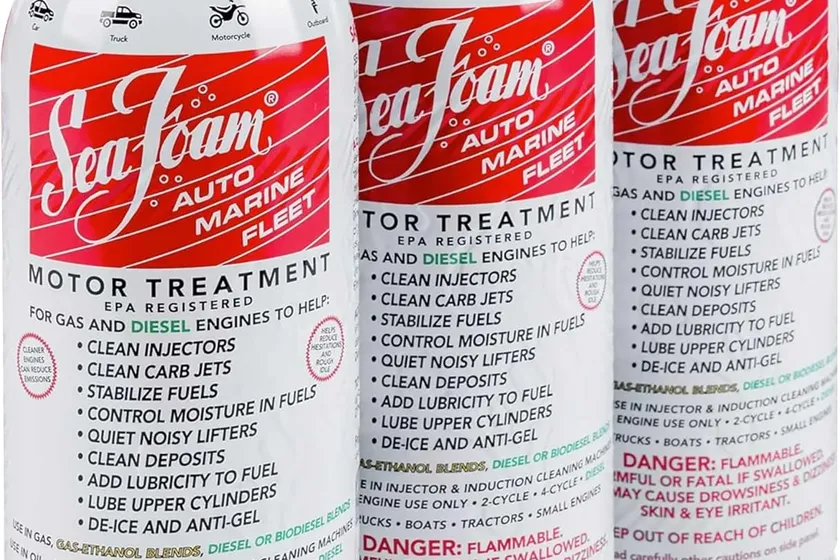
A three pack of the one bottle that works in gasoline tanks, diesel tanks and engine oil, which makes it the sensible choice if you look after more than one machine.
What we like
- Works in gasoline, diesel, E10 and E85, so one product covers a mixed driveway
- Can be added to the oil crankcase as well as the fuel tank to clean sludge and deposits
- Doubles as a fuel stabiliser and keeps stored fuel fresh for up to two years
- Also rated for mowers, snowblowers, ATVs, motorcycles, boats and generators
What we don't
- Being a general purpose treatment means it is less targeted at injector deposits than BG 44K or Red Line SI-1
- Sea Foam suggests using it every 3,000 miles, which turns into an ongoing cost rather than a one-off fix
- The three pack costs about thirty dollars up front, so it is a bigger first spend than a single bottle
| Treatment type | Fuel system cleaner, stabilizer and oil treatment |
|---|---|
| Container size | 16 oz bottle, 3 pack |
| Treatments per pack | 3 treatments |
| Fuel type | Gasoline and diesel, including E10 and E85 blends |
| Added benefits | Cleans oil crankcase sludge and keeps stored fuel fresh up to 2 years |
| Price bracket | $ |
Sea Foam earns its place here on range, not on being the strongest injector cleaner in the group. It is the only pick that Sea Foam states is compatible with diesel as well as gasoline, and with ethanol blends from E10 up to E85. If your driveway has a gas car, a diesel truck and a mower, the other four bottles here only cover part of the job.
It goes further than fuel. Sea Foam says the same product can be added to the oil crankcase to clean sludge and oil restrictions, and that it acts as a fuel stabiliser that keeps gas or diesel fresh for up to two years. That last function is the one seasonal owners care about. Fuel left in a snowblower over summer, or a boat over winter, is where gum and varnish quietly form.
The trade-off is focus. A product that treats fuel, oil and storage is by definition not tuned only for injector deposits. If you have a specific misfire or a clogged injector on a gasoline car, a concentrated treatment like BG 44K or Red Line SI-1 is the more direct tool.
Read the headline claim carefully too. The listing says it “helps restore lost power, smooth out rough idle, recover lost MPG”. Those are all real outcomes when deposits were the cause. None of them happen if your rough idle is a failing coil pack or a vacuum leak.
Note the maintenance interval as well. Sea Foam recommends adding it every 3,000 miles. Follow that and a three pack is roughly a year of driving, not a lifetime supply. Price it as an ongoing habit and decide whether that habit is worth it for your vehicles.
Research-based pick: this recommendation is based on product data, owner feedback and comparison with products we have tested, not on direct hands-on testing.
Buy it if: Anyone running a mix of gas and diesel vehicles plus stored seasonal equipment, who wants one bottle on the shelf instead of four.
Skip it if: You have a single gasoline car with a specific injector problem and want the most focused cleaner you can buy.
Best Multi-Pack for Regular Use
Gumout Fuel System Cleaner (6 Pack)
by Gumout
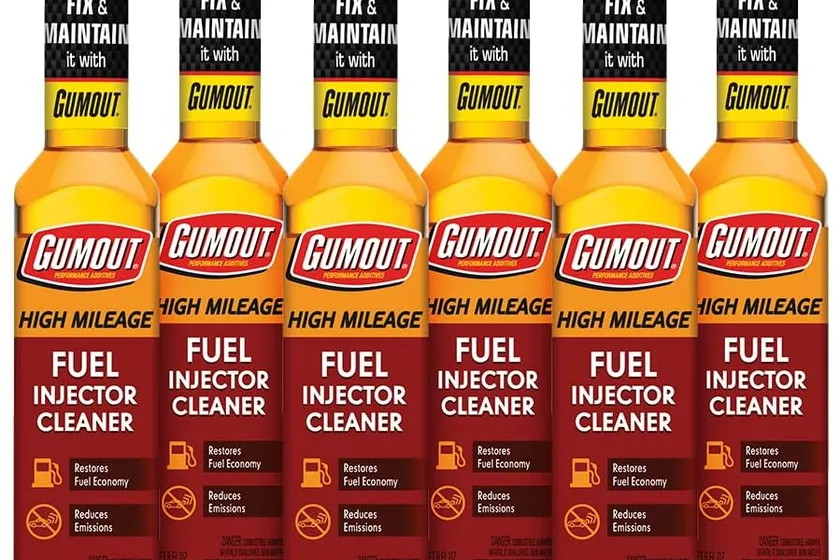
Six bottles of a high mileage carbon cleaner for around twenty two dollars, which turns fuel treatment from an occasional purchase into a routine you actually keep up.
What we like
- Six treatments for about twenty two dollars works out cheaper per bottle than anything else here
- The only pick that states it is safe in turbocharged and supercharged engines
- Gumout states it is oxygen sensor safe and will not void a factory warranty
- Formulated for engines over 75,000 miles, which is exactly when carbon starts to show up
What we don't
- Gumout does not publish the bottle size on this listing, so the dose per tank is less clear than with Red Line or BG
- Six bottles is a lot of product to commit to before you know whether it helps your car
- Aimed at high mileage engines, so a low mileage car is buying six bottles of something it may not need
| Treatment type | High mileage carbon deposit cleaner |
|---|---|
| Treatments per pack | 6 treatments |
| Fuel type | Gasoline, including turbocharged and supercharged engines |
| Cleaning targets | Fuel injectors, intake valves and ports |
| Added benefits | Oxygen sensor safe and will not void the factory warranty |
| Price bracket | $ |
The best fuel treatment is the one you actually use, and that is the argument for buying six at once. A single bottle sits in the garage, gets used once, and gets forgotten. Six bottles on the shelf turn into a habit, and habit is what keeps deposits from building back up in the first place.
At around twenty two dollars for six, this is the cheapest cost per treatment in the guide. Compared with the BG 44K two pack at over forty dollars, you are getting three times the treatments for half the money. They are not doing the same job at the same strength, but for routine upkeep the maths matters.
Two lines on the listing set it apart. Gumout states it is safe for turbocharged and supercharged vehicles, and it says it is oxygen sensor safe and will not void an OEM warranty. Nobody else in this group commits to the turbo point in writing. Given how many current small engines are turbocharged, that is worth having on the label if your car is under warranty and you want the paperwork to be clear.
It is built for engines with over 75,000 miles, and that is honest targeting rather than marketing. Carbon takes time and mileage to accumulate. A three year old car with 25,000 miles has very little for a cleaner to remove.
The one real gap is information. Gumout does not list the bottle volume on this six pack, so you cannot work out how much detergent reaches a full tank of fuel. With Red Line you know it is a whole 15 fl oz bottle, and BG tells you one can covers 20 gallons. Here you are following the label on the bottle when it arrives.
Buy this if you want a routine. Buy Red Line SI-1 if you want one deep clean.
Research-based pick: this recommendation is based on product data, owner feedback and comparison with products we have tested, not on direct hands-on testing.
Buy it if: A driver with an older gasoline car or a modern turbo who wants to treat the tank a few times a year without thinking about the cost each time.
Skip it if: You want a single strong clean-out for a specific problem, where one concentrated bottle beats six small ones.
How we chose#
This is a research-based comparison, not a lab test. We did not run before and after emissions or dyno numbers, and any guide that claims to have done that for five bottles at once is worth reading with care. What we did do is pull the live Amazon listings for the best selling fuel injector and fuel system cleaners, then compare exactly what each maker states: treatment type, container size, how many treatments are in a pack, which fuels it is rated for, and what parts of the engine it claims to clean.
We picked five products that do genuinely different jobs rather than five near-identical bottles. Red Line SI-1 is the concentrated single-tank treatment. Chevron Techron High Mileage is the cheap first try. BG 44K is the shop-grade option. Sea Foam covers gas, diesel and stored fuel. Gumout is the low cost multi-pack for routine use. Where a listing was vague about dose or chemistry, we say so in the review instead of filling the gap with guesswork.
One thing we deliberately did not use is star ratings. The product data behind this guide returned no ratings or review counts, so nothing here is ranked on a score. Where we mention that a product sells well, that comes from its sales rank, which is real.
What to consider before buying#
Start with dose, because it decides almost everything. A fuel additive is a detergent diluted into a tank of gasoline, so the ratio of cleaner to fuel is what determines whether anything happens. Red Line tells you to use the whole 15 fl oz bottle in one tank. BG says one 11 oz can covers up to 20 gallons. Those are strong ratios. A small bottle poured into the same tank is a weaker solution doing gentler work.
Next, match the fuel. Four of these five picks are gasoline products. Only Sea Foam Motor Treatment states compatibility with diesel. This is not a detail to guess at, because diesel injectors and high pressure pumps are among the most expensive parts on the vehicle.
Then think about whether you are fixing something or maintaining something. Those are different purchases. A rough running engine with high mileage wants one strong treatment. A healthy car wants a cheap bottle a couple of times a year, which is exactly what the Gumout six pack is shaped for.
Last, rule out the simple stuff first. Fuel economy drops for boring reasons far more often than it drops from injector deposits. Underinflated tires are the classic one, and a decent gauge from our guide to the best tire pressure gauges costs less than a bottle of cleaner. Old spark plugs, a dirty air filter and a lot of short cold trips all cost you miles per gallon too.
What PEA actually is, and why the label may not tell you#
Polyether amine, usually written PEA, is the detergent chemistry that serious fuel additives are built around. It matters because of where it works. Cheaper cleaners often lean on solvents such as naphtha or mineral spirits, which thin and dissolve gum in the fuel lines and on injector tips. That is real cleaning, and it is fine for light varnish. But solvents evaporate or burn off before they reach the hottest parts of the engine.
PEA does not. It survives combustion temperatures long enough to keep working on intake valves and inside the combustion chamber, which is where baked-on carbon actually lives. That is the whole difference. Solvents clean the cool end of the fuel path. PEA reaches the hot end.
Here is the honest part. Of the five listings in this guide, none publishes a full chemistry breakdown. Red Line describes a concentrated blend of high-temperature and low-temperature detergents, which points at a formula built to work in both zones. BG 44K gives you almost nothing beyond what it cleans, and rests on forty years of workshop use. Chevron, Sea Foam and Gumout describe outcomes rather than ingredients. So you cannot pick a bottle purely on chemistry from the label. Use dose and stated scope instead, and treat brand track record as a tiebreaker.
Fuel system cleaner or injector cleaner#
These two phrases sit on the same shelf and often on the same bottle, so it helps to know what each is actually promising.
An injector cleaner works on the injector tips. Those are precision nozzles with tiny openings, and even a small amount of varnish changes the spray pattern from a fine mist to a coarse dribble. That single change is enough to cause a rough idle, a slight hesitation and a drop in economy. Cleaning the tips is the cheapest and most likely win.
A fuel system cleaner claims a longer path: the tank, the pump, the lines, the injectors, the intake valves and the combustion chamber. Red Line SI-1 and BG 44K both name valves and combustion chambers specifically. Sea Foam extends past fuel entirely, into the oil crankcase and into long term fuel storage.
There is one job none of these bottles can do, and it is worth knowing. On a direct injection engine, fuel is sprayed straight into the cylinder and never touches the back of the intake valve. That means no fuel additive of any kind washes those valves, no matter what the bottle says. Carbon on direct injection intake valves is cleaned mechanically, by walnut blasting or a shop induction service. If you drive a modern turbocharged direct injection car, buy an additive for the injectors and the chamber, and do not expect it to solve an intake valve problem.
Reading the power and economy claims#
Nearly every bottle in this category uses some version of the same sentence. Restores lost power. Recovers lost MPG. Smooths out rough idle. Those claims are not lies, but they carry a hidden condition: they only apply if deposits were causing the loss in the first place.
Think of it as a ceiling rather than a promise. A treatment can move an engine back toward how it ran when it was clean. It cannot push it past that. A car with 40,000 careful miles and no deposits has no headroom, so nothing will change and you will conclude the product does not work. A high mileage car that has never been treated has plenty of headroom, and the same bottle can feel like a real improvement.
Be careful with specific percentage claims too. Numbers like a fuel economy gain of several percent come from controlled testing on engines chosen to have deposits. Your commute in traffic on a cold morning is not that test.
The practical approach is to try one cheap treatment, drive a couple of full tanks, and pay attention to idle quality and hesitation rather than trying to measure MPG by feel. If nothing changes, the problem is somewhere else. Check the boring things. A weak battery can make an engine crank slowly and run oddly on start-up, and a portable jump starter will at least tell you whether starting is the real issue. Poor visibility from tired wiper blades will not affect your engine, but it is on the same short list of cheap parts people forget until they fail.
Final recommendation#
Most people should buy Red Line SI-1 Complete Fuel System Cleaner. It is a full bottle per tank, it targets injectors, carburetors, valves and the combustion chamber, and its very low sales rank shows a lot of drivers keep coming back to it. If you would rather spend ten dollars to find out whether an additive helps your car at all, Chevron Techron High Mileage is the cheapest honest first try in this guide and adds useful corrosion protection for older fuel systems. When a cheap bottle has already failed and you want the strongest thing available over the counter before paying for shop work, BG 44K in the two can pack gives you a high dose and a second attempt. Anyone running both gasoline and diesel vehicles, or storing a mower, boat or generator through the off season, should buy the Sea Foam Motor Treatment three pack, since it is the only pick here rated for diesel and for keeping stored fuel fresh. And if what you actually want is a habit rather than a rescue, the Gumout six pack makes each treatment cheap enough to keep up, and it is the only one that states in writing that it is safe in turbocharged engines and will not void your factory warranty.
Frequently asked questions
Do fuel injector cleaners actually work?
They work on the problem they are made for, which is gum, varnish and carbon sitting on injector tips, valves and combustion chambers. If deposits are what is making your engine idle rough or drink more fuel, a proper dose of detergent can genuinely clear some of it. If the cause is a failing coil pack, a vacuum leak, a tired oxygen sensor or worn spark plugs, no bottle will help. Try a cheap treatment like Chevron Techron High Mileage first, but do not keep pouring bottles into a car that has a mechanical fault.
How often should I use a fuel injector cleaner?
Less often than the bottles suggest. Sea Foam recommends adding its treatment every 3,000 miles, which is the most aggressive interval among these five. For most modern gasoline cars running normal pump fuel, two treatments a year is plenty, and one is defensible if the car is newer and running well. Deposits build slowly. The Gumout six pack suits people who want a regular schedule because it makes each treatment cheap, while the BG 44K two pack is better saved for an engine that already has a problem.
What is the difference between a fuel system cleaner and an injector cleaner?
The names get used interchangeably on packaging, but the scope differs. A pure injector cleaner targets the injector tips where fuel sprays into the engine. A full fuel system cleaner also aims at intake valves, the combustion chamber, the fuel pump and the tank. Red Line SI-1 and BG 44K both claim the full path, injectors through combustion chamber. Sea Foam goes further again by treating engine oil and stabilising stored fuel. If your goal is a general clean-out, buy the broader product.
Can I use a fuel injector cleaner in a diesel engine?
Only if the label says so, and most of these do not. Red Line SI-1, Chevron Techron High Mileage, BG 44K and the Gumout six pack are all gasoline products, and BG states outright that 44K is for gasoline engines only. Sea Foam Motor Treatment is the exception in this guide. Its listing states it works with diesel, diesel blends, gasoline, gas-ethanol blends and E85. Putting a gasoline-only additive into a diesel tank risks the injectors and the pump, which are expensive parts.
Will a fuel additive void my car's warranty?
Gumout is the only pick here that addresses this directly, stating on its listing that the six pack is oxygen sensor safe and will not void an OEM or manufacturer's warranty. That is a useful line to have in writing if your car is still covered. The others do not make the same claim on their listings, which is not the same as saying they cause a problem. If you are inside a warranty period and want to be careful, keep the receipt and stick to a product that states compatibility with your fuel type.
Does a fuel injector cleaner really restore lost power and MPG?
It can only give back what deposits took away. Several of these listings use words like restore lost power or recover lost MPG, and those claims are written for the best case, which is a deposit-heavy engine that has never been treated. On a well maintained car with clean fuel trims there is nothing to recover, so you should expect no measurable change. On a high mileage engine that has run cheap fuel for years, a strong treatment like Red Line SI-1 or BG 44K has more to work with.
About the author

Dale Harper Lead Gear Editor
Dale is a longtime truck owner and former accessory-shop tech who builds these guides from manufacturer fit data, aggregated owner feedback and direct spec comparison. Research-based picks are always labelled as such.
Daily driver: 2022 Ford F-150 XLT SuperCrew
- Tonneau covers and bed accessories
- Seat covers and interior protection
- Lift kits and suspension