The Best Level 2 EV Chargers: 5 Picks and the Circuit Each One Needs
Five Level 2 EV chargers compared on amperage, circuit size, cable and app control, plus why a 48A charger needs a 60A breaker and when 40A is enough.

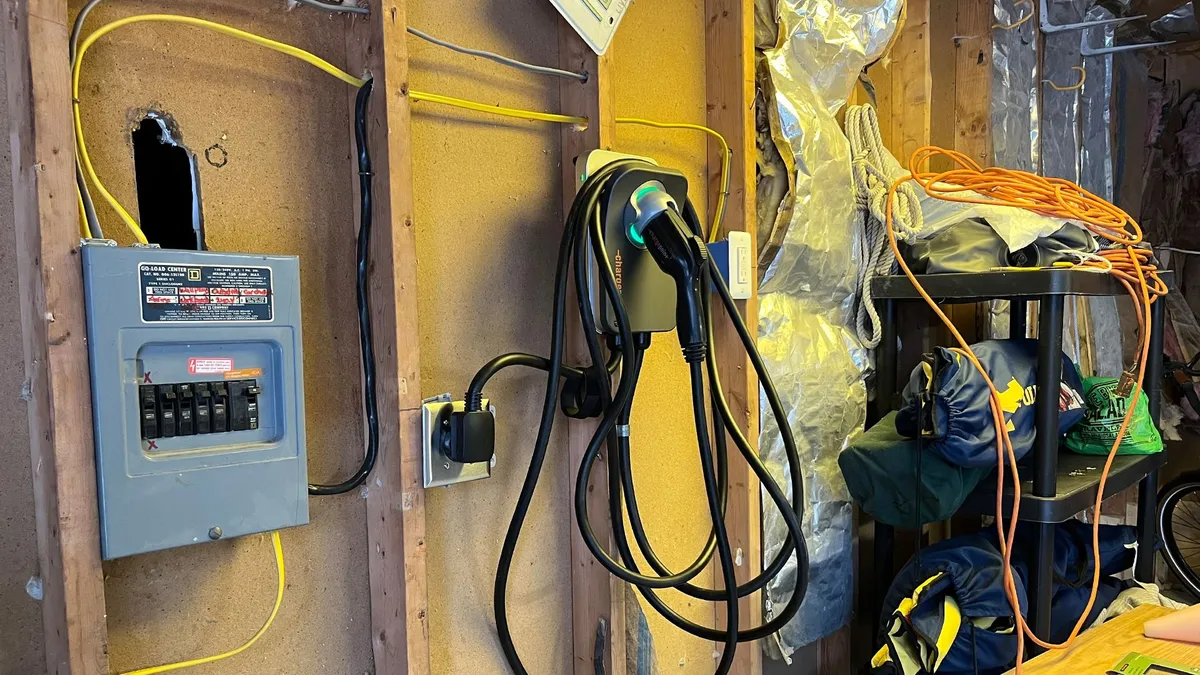
Picking a Level 2 charger is really two purchases. One is the box on the wall. The other is the circuit that feeds it, and that second one is where the money and the surprises live. This guide compares five chargers sold on Amazon right now and, more importantly, tells you what each one asks of your electrical panel. The EMPORIA 48 amp hardwired unit is our top pick because it ships preconfigured with its whip and carries the certifications rebate programs look for. The IYILO adds power sharing and dynamic load balancing for houses with a full panel. The EVIQO 40 amp plug-in lands on a 50 amp circuit and a NEMA 14-50 outlet, which suits most drivers. The NexCyber starts plug-in and converts to hardwired later. The GROWNEER is the cheap, portable one you can throw in the trunk. We compared them on maximum amperage, required circuit, connector, install type, cable length and energy monitoring.
Table of contents
- Quick picks
- The breaker size each charger needs
- Comparison table
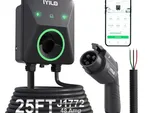
- Best Overall: EMPORIA Level 2 EV Charger, 48 Amp Hardwired with Whip
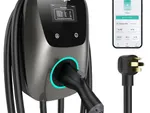
- Best for Load Management: IYILO Level 2 EV Charger, 48 Amp Hardwired 11.5 kW
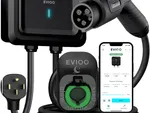
- Best Plug-In Pick: EVIQO Level 2 EV Charger J1772 40A, NEMA 14-50 Plug-In
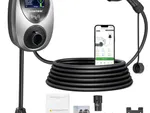
- Best Value: NexCyber Level 2 EV Charger, 48 Amp NEMA 14-50 with Touch Screen
- Best Portable Option: GROWNEER Level 2 EV Charger 48 Amp, Portable NEMA 14-50
- How we chose
- What to consider before buying
- Why a 48A charger needs a 60A circuit
- Load management, or how to skip the panel upgrade
- Cable gauge, length and what cold does to it
- Getting the utility rebate
- Final recommendation
- FAQ
Quick picks
Every pick wins a specific use case. Jump to the full review before you buy.
-
Best Overall
EMPORIA Level 2 EV Charger, 48 Amp Hardwired with Whip
A UL listed and ENERGY STAR certified 48A hardwired charger that ships preconfigured with its whip, so the electrician wires it once and walks away.
-
Best for Load Management
IYILO Level 2 EV Charger, 48 Amp Hardwired 11.5 kW
A hardwired 48A charger with power sharing and dynamic load balancing, so a full panel does not automatically mean a service upgrade.
-
Best Plug-In Pick
EVIQO Level 2 EV Charger J1772 40A, NEMA 14-50 Plug-In
A 40A plug-in charger that lands on a 50A circuit and a NEMA 14-50 outlet, which is the speed and the install most drivers actually need.
-
Best Value
NexCyber Level 2 EV Charger, 48 Amp NEMA 14-50 with Touch Screen
A plug-in 48A charger with an on-unit touch screen and an app, priced around half of the certified name brands and convertible to hardwired later.
-
Best Portable Option
GROWNEER Level 2 EV Charger 48 Amp, Portable NEMA 14-50
The cheapest pick here, built to hang on a bracket at home or ride in the trunk, with a Tesla adapter already in the box.
Compare every pick
| Product | Award | Max amperage | Circuit required | Cable length | Energy monitoring | Best for | Where to buy |
|---|---|---|---|---|---|---|---|
| EMPORIA Level 2 EV Charger, 48 Amp Hardwired with Whip | Best Overall | 48A | 60A dedicated 240V circuit | 25 ft | 2.4 GHz WiFi app with live energy data and scheduling | A homeowner who already has panel space for a 60A breaker and wants a certified unit that most utility rebate programs will accept. | Check price for EMPORIA Level 2 EV Charger, 48 Amp Hardwired with Whip at Amazon (affiliate link) |
| IYILO Level 2 EV Charger, 48 Amp Hardwired 11.5 kW | Best for Load Management | 48A | 60A dedicated 240V circuit | 25 ft | WiFi app with time-of-use rates, cost tracking and RFID users | A house with a full or nearly full panel, or a two-EV driveway, where the goal is to add charging without paying for a service upgrade. | Check price for IYILO Level 2 EV Charger, 48 Amp Hardwired 11.5 kW at Amazon (affiliate link) |
| EVIQO Level 2 EV Charger J1772 40A, NEMA 14-50 Plug-In | Best Plug-In Pick | 40A | 50A dedicated circuit feeding a NEMA 14-50 outlet | 25 ft | WiFi app with 6A to 40A control, cost and energy history | Anyone who already has or can easily add a NEMA 14-50 outlet and wants overnight charging without touching the panel again. | Check price for EVIQO Level 2 EV Charger J1772 40A, NEMA 14-50 Plug-In at Amazon (affiliate link) |
| NexCyber Level 2 EV Charger, 48 Amp NEMA 14-50 with Touch Screen | Best Value | 48A | 60A circuit if hardwired, 50A on the NEMA 14-50 plug | 25 ft | On-unit touch screen plus WiFi app for cost and history | A budget-conscious buyer who wants to start plug-in at 40A now and hardwire to 48A later without buying a second charger. | Check price for NexCyber Level 2 EV Charger, 48 Amp NEMA 14-50 with Touch Screen at Amazon (affiliate link) |
| GROWNEER Level 2 EV Charger 48 Amp, Portable NEMA 14-50 | Best Portable Option | 48A | 50A circuit feeding a NEMA 14-50 outlet | 25 ft | LCD screen showing current, voltage, power, time and temperature | A driver who wants a second charger for a vacation house, a work site or a trunk, or who wants Level 2 speed for the lowest possible spend. | Check price for GROWNEER Level 2 EV Charger 48 Amp, Portable NEMA 14-50 at Amazon (affiliate link) |
Swipe sideways to compare every column.
Best Overall
EMPORIA Level 2 EV Charger, 48 Amp Hardwired with Whip
by EMPORIA
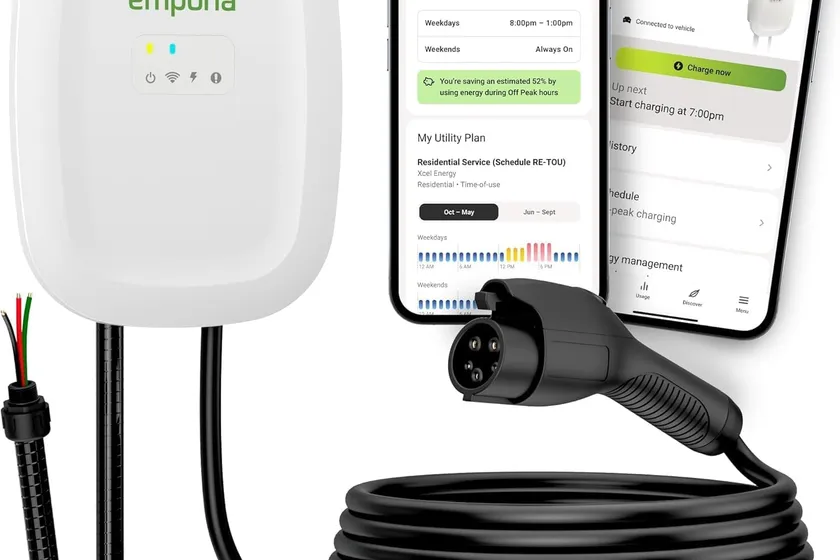
A UL listed and ENERGY STAR certified 48A hardwired charger that ships preconfigured with its whip, so the electrician wires it once and walks away.
What we like
- Ships preconfigured for hardwired install with the whip already attached, which shortens the electrician's visit
- UL listed and ENERGY STAR certified against NEC 625, SAE J1772, UL 2231, UL 2251 and UL 2594
- Delivers up to 46 miles of range per hour at the full 48A on a 60A circuit
- The 2.4 GHz WiFi app shows real energy use and schedules charging around off-peak utility rates
What we don't
- It is the priciest pick here at list price, and the 48A it is built around is more than most overnight drivers ever use
- Hardwired only, so you cannot unplug it and take it with you when you move house
- The app needs a 2.4 GHz network, which is a problem in garages that only see a 5 GHz signal
| Max amperage | 48A |
|---|---|
| Circuit required | 60A dedicated 240V circuit |
| Install type | Hardwired with a factory whip, licensed electrician |
| Cable length | 25 ft |
| Energy monitoring | 2.4 GHz WiFi app with live energy data and scheduling |
| Price bracket | $$$ |
The Emporia takes Best Overall for a boring reason. It arrives set up for the job most people want done. The whip is already fitted, the unit is preconfigured for hardwired use up to 48A, and the electrician does not have to open the case and flip DIP switches to get there. That saves labour time, and labour is usually the biggest line on an EV charger invoice.
The certification list matters more than it looks. Emporia states UL listing and ENERGY STAR certification, and lists compliance with NEC 625, SAE J1772, UL 817, UL 991, UL 2231, UL 2251 and UL 2594. Utility rebate programs and permit inspectors both care about that paperwork. ENERGY STAR in particular is the line item several state and utility programs use to decide whether your unit qualifies for money back.
At the full 48A it adds up to 46 miles of range per hour, which is about nine times a standard wall outlet. That is the headline. The quiet truth is that a car sitting in a garage from 7pm to 7am has twelve hours to work with, and at 32A it would still add well over 300 miles in that window. So the 48A here is headroom, not a daily need.
The trade-offs are real. It is hardwired, so it stays with the house. The app wants a 2.4 GHz WiFi band, and detached garages are exactly where a mesh network gets thin. And you are paying for a 60A circuit on top of the charger, which is where an unexpected panel upgrade can turn a 450 dollar purchase into a several thousand dollar project.
Buy it if you have confirmed panel capacity and want a unit that clears rebate paperwork without argument. Look at the plug-in EVIQO instead if you already have a NEMA 14-50 outlet sitting in the garage.
Research-based pick: this recommendation is based on product data, owner feedback and comparison with products we have tested, not on direct hands-on testing.
Buy it if: A homeowner who already has panel space for a 60A breaker and wants a certified unit that most utility rebate programs will accept.
Skip it if: Your panel is full or your service is 100A, because then load management or a 40A plug-in charger is the cheaper route.
Best for Load Management
IYILO Level 2 EV Charger, 48 Amp Hardwired 11.5 kW
by IYILO
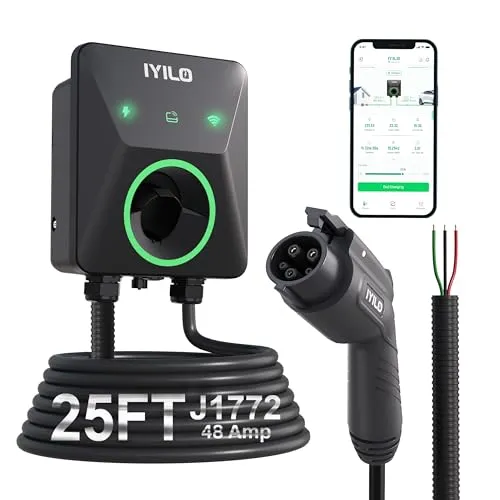
A hardwired 48A charger with power sharing and dynamic load balancing, so a full panel does not automatically mean a service upgrade.
What we like
- Power sharing lets two chargers run safely on one breaker, which is the cheap answer to a two-EV household
- Dynamic load balancing works with the paired energy meter so the charger backs off instead of tripping the main
- Connector has an NTC temperature sensor that stops charging above 221F if the plug overheats
- IYILO lists itself on several utility program portals including ComEd, PSEG, Seattle City Light and Georgia Power
What we don't
- Dynamic load balancing needs the separate energy meter that only comes in the charger plus meter bundle
- Current is adjustable from 6A to 48A but the unit still requires a 60A breaker and a licensed electrician for the full rate
- Support hours are split shifts on weekdays only, so a Saturday fault waits until Monday
| Max amperage | 48A |
|---|---|
| Circuit required | 60A dedicated 240V circuit |
| Install type | Hardwired, licensed electrician |
| Cable length | 25 ft |
| Energy monitoring | WiFi app with time-of-use rates, cost tracking and RFID users |
| Price bracket | $$$ |
Most people shopping for a Level 2 charger find out too late that the charger was the cheap part. The expensive part is the panel. IYILO is the pick here because its feature set is aimed straight at that problem rather than at raw speed.
Two features do the work. Power sharing lets two of these chargers sit on a single circuit and split the available current between them, so a household with two EVs does not need two new 60A breakers. Dynamic load balancing goes further. Paired with IYILO’s energy meter, the charger watches what the rest of the house is drawing and reduces its own draw when the oven, dryer and air conditioner all come on together. You set the breaker threshold in the app. The charger stays under it.
That is genuinely how a lot of homes avoid a service upgrade. It is also the feature with the biggest asterisk in this guide. The load balancing needs the meter, and the meter only comes in the bundle version of the product. Buy the charger alone and you have a normal 48A hardwired unit with a good app.
The connector temperature sensor is worth noting too. It tracks plug temperature in real time and cuts charging above 221F. Overheating at the handle is one of the more common failure modes in cheap charging gear, usually because of a loose outlet connection, so a sensor that acts on it is a real safety feature and not a spec sheet line.
The utility program angle is the other reason it is here. IYILO says it is listed on portals for ComEd, PSEG in New Jersey, PSEG Long Island, Seattle City Light, Salt River Project, Portland General Electric, Oregon DOT and Georgia Power. Being on your utility’s approved list is often what decides whether a rebate application is a form or a fight.
Research-based pick: this recommendation is based on product data, owner feedback and comparison with products we have tested, not on direct hands-on testing.
Buy it if: A house with a full or nearly full panel, or a two-EV driveway, where the goal is to add charging without paying for a service upgrade.
Skip it if: You want everything working out of the box, since the load balancing feature depends on buying the meter bundle and configuring a breaker threshold in the app.
Best Plug-In Pick
EVIQO Level 2 EV Charger J1772 40A, NEMA 14-50 Plug-In
by EVIQO
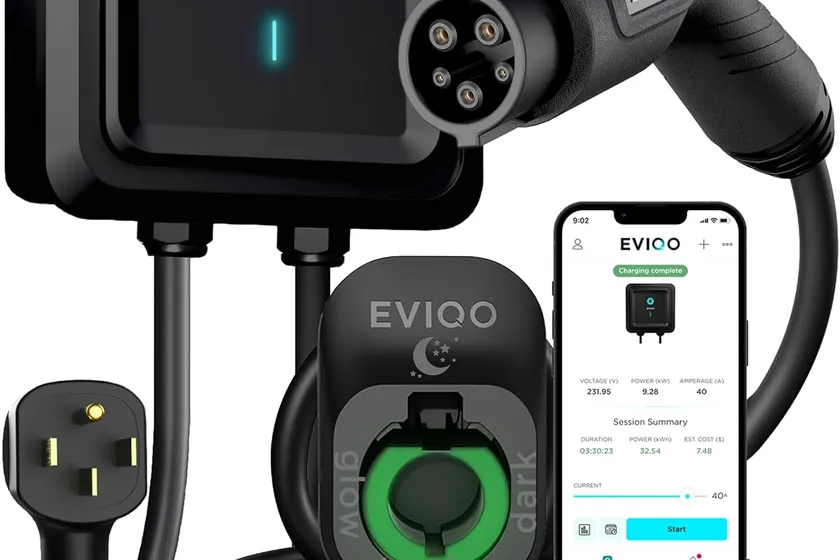
A 40A plug-in charger that lands on a 50A circuit and a NEMA 14-50 outlet, which is the speed and the install most drivers actually need.
What we like
- Plugs into an existing NEMA 14-50 outlet, so a renter or a mover can take it with them
- 40A on a 50A circuit is the correct pairing under the 80 percent rule, with no derating games
- IP66 and NEMA 4 sealed housing rated for rain, snow, heat and dust indoors or out
- Backed by a 3-year manufacturer warranty with US-based support six days a week
What we don't
- Needs a true NEMA 14-50 outlet, not a dryer outlet, and swapping outlet types is an electrician job
- Caps at 40A, so it cannot be converted upward if you later want 48A
- The app requires a 2.4 GHz WiFi network and a plug-in charger sitting outdoors is a theft target
| Max amperage | 40A |
|---|---|
| Circuit required | 50A dedicated circuit feeding a NEMA 14-50 outlet |
| Install type | Plug-in to a NEMA 14-50 outlet |
| Cable length | 25 ft |
| Energy monitoring | WiFi app with 6A to 40A control, cost and energy history |
| Price bracket | $$$ |
This is the pick that most readers should take seriously before they spend money on a 60A circuit. A 40A charger on a 50A circuit is the standard, code-clean pairing for continuous load, and it delivers around 9.6 kW. Over a twelve hour overnight window that is roughly 300 miles of range added. Very few daily drivers use 300 miles between sleeps.
The plug-in format is the other draw. EVIQO makes this version specifically for a NEMA 14-50 outlet, the four-prong 240V receptacle used for ranges and RV hookups. If you already have one in the garage, install is a bracket and a plug. If you do not, adding an outlet is usually a smaller job than running a hardwired 60A feed, and it leaves you with something you can unplug and move.
EVIQO is clear in the listing that this is not a dryer outlet, and that warning is there because people get it wrong constantly. A dryer receptacle is a NEMA 14-30 on a 30A circuit. It looks similar. It is not the same, and an adapter that lets a 40A charger draw through a 30A circuit is a fire risk, not a shortcut.
The build is sealed to IP66 and NEMA 4, so it can live on an outside wall. The glow in the dark holster is a small thing that matters more than it sounds when you are docking a heavy connector in a dark driveway. The app handles start and stop, scheduling for off-peak rates, and cost tracking, and there is a side reset button so a fault does not mean a trip to the breaker panel.
The limit is the ceiling. It is a 40A unit and it stays a 40A unit. If your car can take more and you know you want it, the hardwired EVIQO or the Emporia is the version to buy instead.
Research-based pick: this recommendation is based on product data, owner feedback and comparison with products we have tested, not on direct hands-on testing.
Buy it if: Anyone who already has or can easily add a NEMA 14-50 outlet and wants overnight charging without touching the panel again.
Skip it if: You want the maximum 48A rate now or later, since this unit is fixed at 40A and cannot be hardwired up.
Best Value
NexCyber Level 2 EV Charger, 48 Amp NEMA 14-50 with Touch Screen
by NexCyber
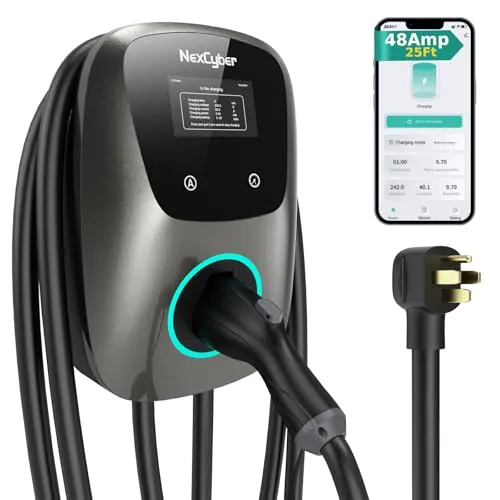
A plug-in 48A charger with an on-unit touch screen and an app, priced around half of the certified name brands and convertible to hardwired later.
What we like
- Ships as a NEMA 14-50 plug-in for 40A and converts to hardwired for the full 48A when the circuit is ready
- Touch screen on the charger sets amperage from 16A to 48A and shows voltage, speed and delay time without opening the app
- ETL, FCC and ENERGY STAR certified against SAE J1772, UL 2231, UL 2251 and UL 2594 criteria
- Listing spells out the wire gauge needed, calling for 6AWG feed conductors at 48A
What we don't
- NEMA Type 3 housing with only partial IP65 sealing, and NexCyber advises against direct sunlight or heavy rain exposure
- The listing devotes a whole bullet to E-Stop fault and sudden charging stops, which tells you owners hit that problem
- No NACS connector, so Tesla and other NACS cars need an adapter that is not included
| Max amperage | 48A |
|---|---|
| Circuit required | 60A circuit if hardwired, 50A on the NEMA 14-50 plug |
| Install type | Plug-in NEMA 14-50, convertible to hardwired |
| Cable length | 25 ft |
| Energy monitoring | On-unit touch screen plus WiFi app for cost and history |
| Price bracket | $$$ |
The NexCyber is here because it does the convertible trick well and costs roughly half of the certified name brands. Out of the box it is a NEMA 14-50 plug-in charger, which caps it at 40A on a 50A circuit. Convert it to hardwired on a 60A circuit and it runs the full 48A. That is a sensible upgrade path for someone who wants charging working this month and might add panel capacity next year.
The touch screen is the feature that separates it from cheaper units. You can set amperage from 16A up to 48A and set a charging start time directly on the unit, and the display shows charging amperage, speed, input voltage and delay time. Plenty of budget chargers make you do all of that through an app, which is miserable when the WiFi drops.
NexCyber is unusually specific about wiring, and that is a point in its favour. The listing says the feed should be no smaller than 8AWG for 40A to 48A and recommends three 6AWG conductors for a 48A install. That is the right advice and it is the number your electrician will quote you on. Longer runs cost more because copper costs more, and a 60A feed across a long garage is a real chunk of the install bill.
The weaknesses are honest ones. The housing is NEMA Type 3 with partial IP65 protection, and NexCyber itself says not to install it in direct sunlight or leave it exposed to rain. That is a garage charger, not a driveway charger. The listing also carries a troubleshooting bullet about E-Stop faults and charging stopping partway, which suggests it happens often enough to warrant the space. Neither is a dealbreaker under a roof. Both matter outdoors.
Research-based pick: this recommendation is based on product data, owner feedback and comparison with products we have tested, not on direct hands-on testing.
Buy it if: A budget-conscious buyer who wants to start plug-in at 40A now and hardwire to 48A later without buying a second charger.
Skip it if: The charger will hang on an exposed outside wall in a wet climate, since this housing is the least weather-hardened of the five.
Best Portable Option
GROWNEER Level 2 EV Charger 48 Amp, Portable NEMA 14-50
by GROWNEER
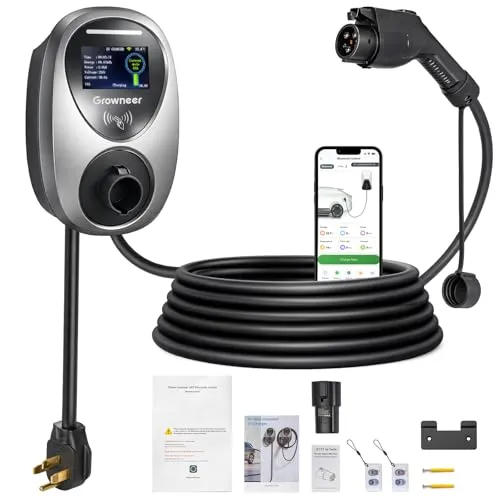
The cheapest pick here, built to hang on a bracket at home or ride in the trunk, with a Tesla adapter already in the box.
What we like
- Works two ways: mounted on the included wall bracket at home, or unplugged and carried to a friend's 14-50 outlet
- Tesla adapter is included, so NACS cars do not need a separate purchase
- LCD screen reads out charging current, voltage, power, duration, energy used and operating temperature
- Adjustable current settings let you dial the draw down for a weaker circuit
What we don't
- Listed as 48A but it uses a NEMA 14-50 plug, and a 50A circuit legally supports only 40A continuous, so treat 40A as the real ceiling
- No WiFi or app, so scheduling around off-peak rates has to happen in the car instead of the charger
- GROWNEER does not publish a weatherproofing rating in the listing, so plan on keeping it under cover
| Max amperage | 48A |
|---|---|
| Circuit required | 50A circuit feeding a NEMA 14-50 outlet |
| Connector type | SAE J1772 with a Tesla adapter in the box |
| Cable length | 25 ft |
| Energy monitoring | LCD screen showing current, voltage, power, time and temperature |
| Price bracket | $$$ |
The GROWNEER is the budget end of this list and it earns its place by being movable. It comes with a mounting bracket so it can live on a garage wall like any other Level 2 unit, and it unplugs in seconds so it can go in the trunk when you drive to a cabin, a job site or a relative’s house with a 14-50 outlet in the garage.
One number needs a caveat. The listing sells it as a 48A charger, but it ships with a NEMA 14-50 plug. A 14-50 outlet sits on a 50A circuit, and a 50A circuit supports 40A of continuous load under the 80 percent rule. So in normal use this is a 40A charger. That is still around 9.6 kW and still enough to fill most EVs overnight. Just do not buy it expecting the 48A number to show up in the real world on a standard outlet.
The LCD screen covers the basics well for a charger at this price. It reads current, voltage, power output, charging duration, energy consumed and operating temperature. Current is adjustable, which matters if you are plugging into an unfamiliar outlet and are not sure what the circuit behind it can take. Dial it down to 24A or 32A and you charge slower but you do not trip anything.
What you give up is the smart side. There is no WiFi and no app, so off-peak scheduling has to be set in the vehicle. Most EVs can do that. It is one more thing to remember. GROWNEER also does not publish an ingress rating in the listing, so this belongs indoors or under a roof.
Take it as a second charger or as a cheap way into Level 2 charging. Skip it as your only home unit if you want energy tracking or a rebate.
Research-based pick: this recommendation is based on product data, owner feedback and comparison with products we have tested, not on direct hands-on testing.
Buy it if: A driver who wants a second charger for a vacation house, a work site or a trunk, or who wants Level 2 speed for the lowest possible spend.
Skip it if: You want scheduled off-peak charging managed by the charger, or you need a unit that a utility rebate program will approve.
How we chose#
This is a research-based comparison, not a hands-on charging test. We started from Level 2 chargers that are actually selling on Amazon in the United States, then checked every claim against what the maker publishes: rated amperage, required circuit size, connector type, install method, cable length, enclosure rating and certifications.
Certifications got extra weight here because they are the difference between a permit that passes and one that does not. We looked for UL listing, ETL listing and ENERGY STAR, and we noted which units name specific standards like UL 2231, UL 2251 and UL 2594 rather than saying “certified” and leaving it there.
We then spread the picks so they answer different electrical situations, not different colours. There is a 48A hardwired unit for a house with panel room, a 48A hardwired unit built around load management for a house without it, a 40A plug-in for the very common NEMA 14-50 install, a convertible unit that starts plug-in and grows, and a cheap portable one.
Our broader guide to home EV chargers covers charger choice from the driver’s side. This article is about the wiring behind the wall.
What to consider before buying#
Start with your panel, not the charger. Open the panel door and look at two things: the main breaker rating, usually 100A, 150A or 200A, and whether there are two free adjacent slots for a double-pole breaker. A 200A service with free slots is an easy install. A 100A service with a full panel is where quotes climb into the thousands.
Next, work out what speed you actually need. Take your daily miles, divide by the range a charger adds per hour, and see how many hours it takes. At 40A most EVs gain around 30 to 38 miles per hour. A 40 mile commute is covered in under two hours. Once the answer is comfortably inside your overnight window, more amps buy nothing.
Then decide whether the charger stays with the house. Hardwired units like the Emporia and the IYILO are permanent. A plug-in unit like the EVIQO or the GROWNEER comes off the wall in a minute and goes in the moving truck.
Finally, check the connector. Every pick here uses SAE J1772. Tesla and newer NACS cars need an adapter, which the GROWNEER includes and the others do not.
Why a 48A charger needs a 60A circuit#
The rule behind almost everything on this page is the 80 percent continuous load rule. In the National Electrical Code, a load that runs at full draw for three hours or more is continuous, and a circuit can only be loaded to 80 percent of its rating with a continuous load. EV charging is the textbook example.
So the maths runs backwards from the charger. A 48A charger needs 48 divided by 0.8, which is 60A. A 40A charger needs 50A. A 32A charger needs 40A. This is why the Emporia and the IYILO both specify a 60A breaker and the EVIQO plug-in specifies 50A. It is not a manufacturer being cautious. It is code, and an inspector will check it.
Here is the part that catches people out. A NEMA 14-50 outlet lives on a 50A circuit, which means any plug-in charger using that outlet is limited to 40A continuous no matter what the box says. The GROWNEER is listed as a 48A charger and ships with a 14-50 plug. In practice, on a standard 14-50 outlet, treat it as a 40A charger. The NexCyber is honest about the same thing and states 40A on the plug, 48A only when hardwired.
The other half of the rule is the wire. NexCyber’s listing calls for conductors no smaller than 8AWG for 40A to 48A and recommends three 6AWG wires for a 48A run. That copper is a real cost, and it grows with distance. A charger on the far wall of a detached garage can cost more in wire than the charger cost.
Load management, or how to skip the panel upgrade#
If your panel is full or your service is only 100A, the old answer was a service upgrade costing thousands of dollars and often needing the utility to come out. Load management is the newer answer, and it is why the IYILO is on this list.
There are two versions of it. Power sharing splits one circuit between two chargers, so a two-EV household gets both cars charging without a second 60A breaker. Each car charges slower when both are plugged in, which almost never matters overnight.
Dynamic load balancing is the more useful one. A meter watches the total draw of the house at the main, and the charger reduces its own current when the dryer, oven and air conditioning all fire at once. You set a threshold in the app and the charger stays under it. The effect is that a house that could not safely add 60A of fixed load can add a charger anyway, because the charger yields.
The honest caveat is that IYILO’s dynamic balancing needs the separate energy meter, which comes in the charger plus meter bundle rather than the bare charger. Read the listing carefully before ordering, because the two versions look identical in search results.
Cable gauge, length and what cold does to it#
Every charger here comes with a 25 foot cable, and 25 feet has become the default for a reason. It reaches a car parked nose-in or backed in, and it reaches a second spot in the driveway. That flexibility is worth having.
It also has a cost that nobody mentions in the listing. A cable carrying 48A needs thick copper conductors, and a 25 foot length of that is heavy. Coiling it after every charge is a small chore in summer. In January it is a bigger one, because the outer jacket stiffens in the cold and the cable takes a set. It will hold whatever shape it was in when it froze. Owners in cold states routinely say the cable is the thing they like least about home charging.
Two things help. Mount the charger high enough that the cable hangs in a loop instead of dragging on the floor, and use the holster the charger comes with rather than draping the connector over the unit. EVIQO’s glow in the dark holster sounds like a gimmick until you are docking a stiff cable in a dark driveway.
Getting the utility rebate#
Rebates for home charging are common and they are not automatic. Most programs work from an approved product list, and the two things that get a charger onto that list are ENERGY STAR certification and, increasingly, the ability to report energy data or accept demand response signals from the utility.
That is why certification is a buying criterion and not a footnote. The Emporia lists UL listing and ENERGY STAR. The EVIQO lists UL, ETL, FCC and ENERGY STAR. The NexCyber lists ETL, FCC and ENERGY STAR. The GROWNEER, the cheapest pick, does not publish ENERGY STAR certification, so treat it as a charger you buy on price rather than one you expect a rebate for.
The other trap is timing and paperwork order. Several programs need a pre-approval, an installation by a licensed electrician, a permit, and the electrician’s invoice with the model number on it. Buying first and applying later gets applications rejected. Call your utility, get the approved list, then order.
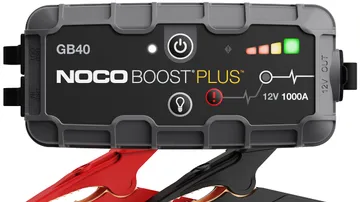
If you are also sorting out the rest of the garage, our guides to the best car battery chargers and the best portable jump starters cover the gear that keeps a 12 volt battery healthy, which EVs still have and still kill.
Final recommendation#
For most homeowners with panel space, the EMPORIA 48 amp hardwired charger is the pick. It arrives ready to hardwire, it carries the certifications that clear permits and rebates, and it will not be the limiting factor in any driveway. If your panel is full, or two EVs share one circuit, the IYILO is the smarter buy because power sharing and dynamic load balancing can save you a service upgrade that costs more than every charger on this page combined.
If you already have a NEMA 14-50 outlet, or you rent, buy the EVIQO 40 amp plug-in and stop thinking about it. It is the right amount of charger for the vast majority of drivers. The NexCyber is the value choice for anyone who wants to start at 40A on a plug and hardwire to 48A later, as long as it lives under a roof. And the GROWNEER is the one to buy as a second, portable charger, or as the cheapest honest way into Level 2 charging, provided you accept it as a 40A unit on a standard outlet and you do not need a rebate.
Frequently asked questions
Why does a 48A EV charger need a 60A breaker?
Because EV charging is a continuous load. The National Electrical Code says a circuit feeding a load that runs for three hours or more can only be worked at 80 percent of its rating. A car charges for hours at a steady draw, so it counts. Multiply 60 by 0.8 and you get 48. That is the whole reason the Emporia and the IYILO both call for a 60A circuit. The same maths runs down the scale. A 50A breaker legally supports 40A, which is what the EVIQO plug-in uses, and a 40A breaker supports 32A.
Do I actually need 48 amps at home?
Most people do not. A 32A charger adds roughly 25 miles of range per hour, so a twelve hour overnight window gives you about 300 miles. Very few drivers burn 300 miles between sleeps. The 48A units here are useful if you drive a big truck or SUV with a huge pack, if two cars share one charger, or if you regularly need a fast top-up in the evening before going out again. Buying 48A capability your panel cannot supply is a common and expensive mistake.
Can I plug a Level 2 charger into my dryer outlet?
No, not safely, and EVIQO says so in its own listing. A dryer receptacle is usually a NEMA 14-30 on a 30A circuit, which supports 24A continuous. A NEMA 14-50 charger like the EVIQO or the GROWNEER wants a 50A circuit. Adapters that bridge the two exist and they let a charger try to pull more current than the wiring behind the wall is rated for. If you only have a dryer outlet, set the charger down to 24A or have a 14-50 installed properly.
Should I buy hardwired or plug-in?
Hardwired gets you the full 48A and a cleaner install, and it is what the Emporia and IYILO are built for. Plug-in caps at 40A on a 50A circuit but you can unplug it and take it with you, which matters if you rent or expect to move. Plug-in also makes a failed charger easy to swap under warranty. The NexCyber sits in the middle. It ships plug-in at 40A and converts to hardwired at 48A when your circuit is ready.
Will my utility give me money back for a home charger?
Often yes, but the paperwork usually names a specific list of approved units. ENERGY STAR certification is the most common requirement, which the Emporia, the EVIQO and the NexCyber all list. Some programs go further and only accept units already listed on their portal, which is where IYILO helps by naming ComEd, PSEG, PSEG Long Island, Seattle City Light, Salt River Project, Portland General Electric, Oregon DOT and Georgia Power. Check the approved list before you order, not after.
How long should the charging cable be?
Every pick here uses a 25 foot cable, which reaches across a two-car garage or out to a driveway spot. Longer is not always better. A 25 foot cable carrying 48A is heavy, and in cold weather the insulation stiffens and it fights you when you try to coil it. If your parking spot is close to the wall, a shorter cable is easier to live with. If you park outside in a northern winter, mount the charger so the cable hangs rather than sits in a puddle that freezes.
About the author

Dale Harper Lead Gear Editor
Dale is a longtime truck owner and former accessory-shop tech who builds these guides from manufacturer fit data, aggregated owner feedback and direct spec comparison. Research-based picks are always labelled as such.
Daily driver: 2022 Ford F-150 XLT SuperCrew
- Tonneau covers and bed accessories
- Seat covers and interior protection
- Lift kits and suspension