The Best Home EV Chargers: 5 Picks for Real Garages
Five home EV chargers compared on amps, plug-in versus hardwired, cable length and smart features, plus what the install really costs on top.

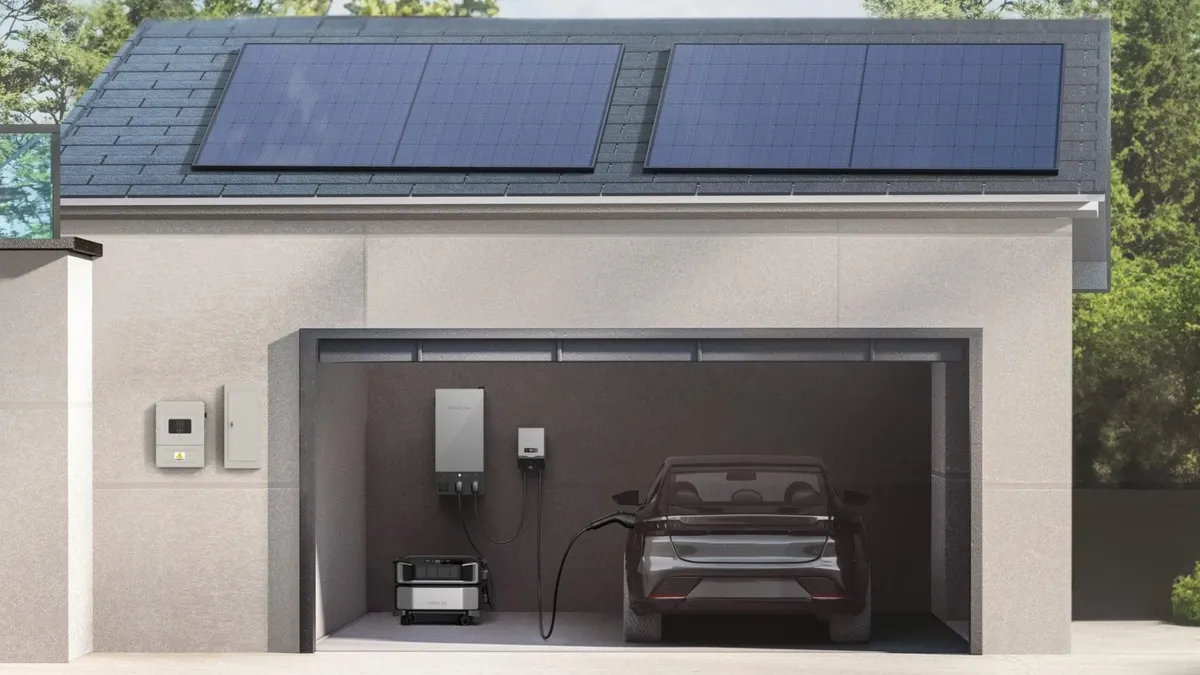
A home charger turns an electric car from a thing you plan trips around into a thing you plug in at night. The choice comes down to three numbers and one decision. The numbers are amps, cable length and how many miles of range you get per hour parked. The decision is whether the charger plugs into an outlet or gets wired straight into your panel. We compared five Level 2 chargers sold on Amazon right now: the Emporia 48 amp unit that ships with a NEMA 14-50 plug and converts to hardwired later, the sealed EVIQO EVIPOWER 48 amp hardwired station, the ChargePoint HomeFlex 50 amp hardwired charger with its public station network, the NexCyber 48 amp plug-in charger that works with no app at all, and the portable EVDANCE 40 amp charger that lives in a bag. All five use the J1772 connector.
Table of contents
- Quick picks
- Top charging current each unit can deliver
- Comparison table
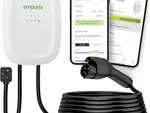
- Best Overall: Emporia Level 2 EV Charger 48 Amp with NEMA 14-50 Plug
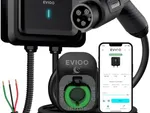
- Best Hardwired Pick: EVIQO EVIPOWER Level 2 EV Charger 48A Hardwired
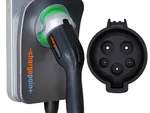
- Best Smart Charger: ChargePoint HomeFlex Level 2 EV Charger 50A Hardwired
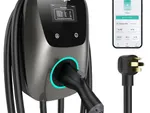
- Best Value: NexCyber Level 2 EV Charger 48A with NEMA 14-50 Plug
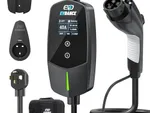
- Best for Travel: EVDANCE Level 2 Portable EV Charger 40A with NEMA 14-50 Plug
- How we chose
- What to consider before buying
- Amps to miles, the arithmetic that decides what you need
- Plug-in or hardwired, and where the 40 amp ceiling comes from
- Why your panel, not the charger, is usually the limit
- J1772, NACS and the adapter question
- Final recommendation
- FAQ
Quick picks
Every pick wins a specific use case. Jump to the full review before you buy.
-
Best Overall
Emporia Level 2 EV Charger 48 Amp with NEMA 14-50 Plug
A 48 amp charger that ships as a plug-in unit and converts to hardwired later, so one purchase covers both install paths.
-
Best Hardwired Pick
EVIQO EVIPOWER Level 2 EV Charger 48A Hardwired
A sealed 48 amp hardwired charger for a garage that already has, or is getting, a dedicated 60 amp circuit.
-
Best Smart Charger
ChargePoint HomeFlex Level 2 EV Charger 50A Hardwired
The hardwired HomeFlex pairs a 50 amp charger with the ChargePoint app and network, so home and public charging live in one account.
-
Best Value
NexCyber Level 2 EV Charger 48A with NEMA 14-50 Plug
A plug-in 48 amp charger with a touch screen that works with no app at all, at roughly half the price of the name-brand picks.
-
Best for Travel
EVDANCE Level 2 Portable EV Charger 40A with NEMA 14-50 Plug
A 40 amp Level 2 charger that lives in a bag rather than on a wall, for renters and for drivers who need charging at more than one address.
Compare every pick
| Product | Award | Max amperage | Install type | Smart features | Weather rating | Best for | Where to buy |
|---|---|---|---|---|---|---|---|
| Emporia Level 2 EV Charger 48 Amp with NEMA 14-50 Plug | Best Overall | 48 A hardwired, 40 A through the NEMA 14-50 plug | Plug-in NEMA 14-50 out of the box, convertible to hardwired | 2.4 GHz WiFi app with real-time energy data, cost tracking and scheduled charging | Not stated in the listing, UL listed and ENERGY STAR certified to NEC 625 and SAE J1772 | A first-time buyer who wants one charger that works with an outlet now and can be hardwired later without buying a second unit. | Check price for Emporia Level 2 EV Charger 48 Amp with NEMA 14-50 Plug at Amazon (affiliate link) |
| EVIQO EVIPOWER Level 2 EV Charger 48A Hardwired | Best Hardwired Pick | 48 A on a dedicated 60 A circuit, 50 A with DIP switches 4 and 5 on a 70 A circuit | Hardwired only, licensed electrician required | App start and stop, 6 to 48 A speed setting, reminders, energy and cost tracking, over-the-air updates | IP66 and NEMA 4 sealed housing, rated for indoor or outdoor use | An owner with panel capacity to spare who wants the fastest home charging and does not need to unplug and move the unit. | Check price for EVIQO EVIPOWER Level 2 EV Charger 48A Hardwired at Amazon (affiliate link) |
| ChargePoint HomeFlex Level 2 EV Charger 50A Hardwired | Best Smart Charger | 50 A, delivering up to 45 miles of range per hour | Hardwired, installed by an electrician indoors or outdoors | ChargePoint app with reminders, smart home links, charging data and access to 274,000 plus network stations | Not stated in the listing, UL certified and rated for indoor or outdoor installation | A driver who charges on public networks often and wants home and away charging tracked through one familiar app. | Check price for ChargePoint HomeFlex Level 2 EV Charger 50A Hardwired at Amazon (affiliate link) |
| NexCyber Level 2 EV Charger 48A with NEMA 14-50 Plug | Best Value | 48 A hardwired for up to 46 miles per hour, 40 A on the NEMA 14-50 plug for up to 38 | Plug-in NEMA 14-50 by default, can be hardwired for the full 48 A | Touch screen sets amps and delay without a phone, optional WiFi app for cost, history and scheduling | NEMA Type 3 and IP65, seller advises against direct sunlight or heavy rain exposure | A buyer charging inside a dry garage who wants full Level 2 speed without paying for a charging network account. | Check price for NexCyber Level 2 EV Charger 48A with NEMA 14-50 Plug at Amazon (affiliate link) |
| EVDANCE Level 2 Portable EV Charger 40A with NEMA 14-50 Plug | Best for Travel | 40 A for up to 9.6 kW, adjustable to 10, 16, 20, 24 or 32 A | Plug-in NEMA 14-50, portable with a carry bag and holders | No app, a 2.4 inch TFT screen shows volts, amps, kWh and time, plus a 1 to 12 hour delay start | IP66 rated and specified from -22 F to 122 F | A renter, a two-home driver, or anyone who wants Level 2 speed without leaving hardware attached to a house they do not own. | Check price for EVDANCE Level 2 Portable EV Charger 40A with NEMA 14-50 Plug at Amazon (affiliate link) |
Swipe sideways to compare every column.
Best Overall
Emporia Level 2 EV Charger 48 Amp with NEMA 14-50 Plug
by Emporia
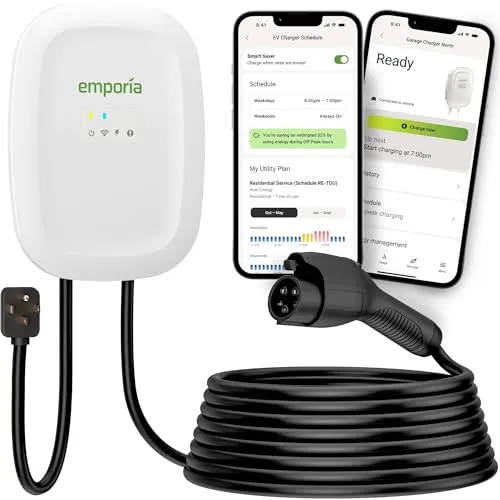
A 48 amp charger that ships as a plug-in unit and converts to hardwired later, so one purchase covers both install paths.
What we like
- Plugs into a NEMA 14-50 outlet at 40 A on day one, then converts to hardwired for the full 48 A if you upgrade the circuit later
- Emporia lists real speed numbers, up to 46 miles of range per hour hardwired and up to 38 through the plug
- UL listed and ENERGY STAR certified against a named list of standards including NEC 625, SAE J1772 and UL 2594
- The app tracks energy and cost per session and schedules charging into cheap overnight hours
What we don't
- The listing never states a weather rating, so there is no IP or NEMA enclosure number to check before you mount it outside
- The 40 A plug mode gives up about eight miles of range per hour against the hardwired mode, so the plug convenience does cost you speed
- WiFi is 2.4 GHz only, and a charger at the far end of a detached garage may need a range extender
| Max amperage | 48 A hardwired, 40 A through the NEMA 14-50 plug |
|---|---|
| Install type | Plug-in NEMA 14-50 out of the box, convertible to hardwired |
| Cable length | 25 ft |
| Smart features | 2.4 GHz WiFi app with real-time energy data, cost tracking and scheduled charging |
| Weather rating | Not stated in the listing, UL listed and ENERGY STAR certified to NEC 625 and SAE J1772 |
| Price bracket | $$$ |
Most people buying their first home charger do not yet know which install they will end up with. The electrician has not been out, the panel has not been counted, and the quote could come back at a few hundred dollars or a few thousand. This Emporia is the pick because it does not make you decide first.
Out of the box it is a plug-in unit with a NEMA 14-50 plug, set for 40 amps, which Emporia says is worth up to 38 miles of range per hour. If your electrician later runs a proper 240 volt circuit and you want the extra speed, the same unit converts to a hardwired install at 48 amps, up to 46 miles per hour. Nothing gets thrown away.
The safety paperwork is unusually specific for this price. Emporia names UL 817, UL 991, UL 2231, UL 2251 and UL 2594, plus NEC 625 and SAE J1772, and the unit is ENERGY STAR certified. Plenty of cheap chargers say “safety certified” and stop there. A named standard is something you can actually look up.
The app is the ordinary kind, and that is fine. It runs on 2.4 GHz WiFi, shows energy use in real time, and lets you set a schedule so the car charges when power is cheapest. That last one is where a smart charger pays for itself, not in the phone controls people stop opening after a month.
The gap in the listing is weather. Emporia does not publish an IP or NEMA enclosure rating for this model. If it is going on a wall inside a garage that is a non-issue. If it is going outside on a post in Ohio, the sealed IP66 housing on the EVIQO pick tells you far more about what it can take. Buy this one for a garage.
Research-based pick: this recommendation is based on product data, owner feedback and comparison with products we have tested, not on direct hands-on testing.
Buy it if: A first-time buyer who wants one charger that works with an outlet now and can be hardwired later without buying a second unit.
Skip it if: You are mounting the charger on an exposed outside wall and want a published IP or NEMA enclosure rating in writing.
Best Hardwired Pick
EVIQO EVIPOWER Level 2 EV Charger 48A Hardwired
by EVIQO
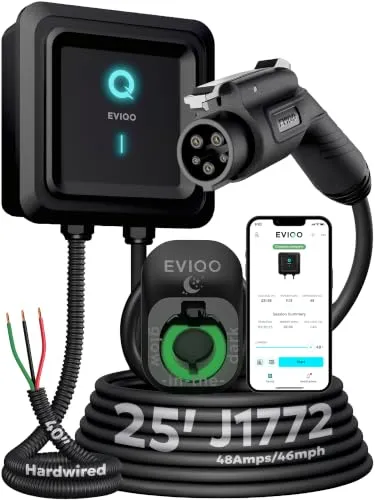
A sealed 48 amp hardwired charger for a garage that already has, or is getting, a dedicated 60 amp circuit.
What we like
- Delivers the full 48 A on a dedicated 60 A circuit, and DIP switches 4 and 5 unlock 50 A if the panel supports a 70 A circuit
- IP66 and NEMA 4 sealed housing with internal steel shielding, so an outdoor wall or a carport post is fair game
- Charging speed is settable from 6 A to 48 A in the app, which lets you dial it down if an electrician gives you a smaller circuit
- A side reset button restarts the unit without opening it or walking to the breaker panel
What we don't
- Hardwired only, so there is no way to install this yourself or take it with you when you move house
- The 60 A circuit it wants is a real ask, and an older 100 A panel often cannot spare it without load management or a panel upgrade
- US support runs Monday to Saturday, 8 AM to 4 PM Pacific, which is awkward if you are on the east coast and charge at night
| Max amperage | 48 A on a dedicated 60 A circuit, 50 A with DIP switches 4 and 5 on a 70 A circuit |
|---|---|
| Install type | Hardwired only, licensed electrician required |
| Cable length | 25 ft |
| Smart features | App start and stop, 6 to 48 A speed setting, reminders, energy and cost tracking, over-the-air updates |
| Weather rating | IP66 and NEMA 4 sealed housing, rated for indoor or outdoor use |
| Price bracket | $$$ |
Hardwiring is the trade you make when you want the last bit of speed. A plug-in charger is capped at 40 amps by the outlet it uses. Wire the charger straight into the panel and 48 amps becomes possible, which is roughly a fifth more range for every hour the car sits there.
The EVIQO EVIPOWER is built for exactly that job. It runs 48 amps on a dedicated 60 amp, 240 volt circuit, and EVIQO puts DIP switches inside so an electrician can raise it to 50 amps if you have a 70 amp circuit available. Most households will never need that setting. It is nice that it exists rather than being locked away in a firmware tier.
The housing is the other reason to pick it. IP66 and NEMA 4 means a fully sealed enclosure, and EVIQO adds internal steel shielding around the electronics. Rain, blown snow, dust off a gravel drive, none of it should get in. That matters more than people expect, because plenty of home chargers end up on an outside wall next to the meter rather than inside the garage.
The app does the useful things. Start and stop, set the amps anywhere from 6 to 48, schedule overnight charging, and see what each session cost. There is a physical reset button on the side, so a charger that has locked up does not mean a trip to the breaker box.
Be honest with yourself about the circuit before you buy. A 60 amp breaker is a large chunk of a 100 amp or 150 amp service, and an electrician may tell you the panel cannot carry it alongside an electric range and an air conditioner. Our Level 2 EV charger guide goes deeper into circuit sizing and load management if that is where your quote lands.
Research-based pick: this recommendation is based on product data, owner feedback and comparison with products we have tested, not on direct hands-on testing.
Buy it if: An owner with panel capacity to spare who wants the fastest home charging and does not need to unplug and move the unit.
Skip it if: You are renting, or your panel is already close to full and a 60 amp circuit means paying for a service upgrade.
Best Smart Charger
ChargePoint HomeFlex Level 2 EV Charger 50A Hardwired
by ChargePoint
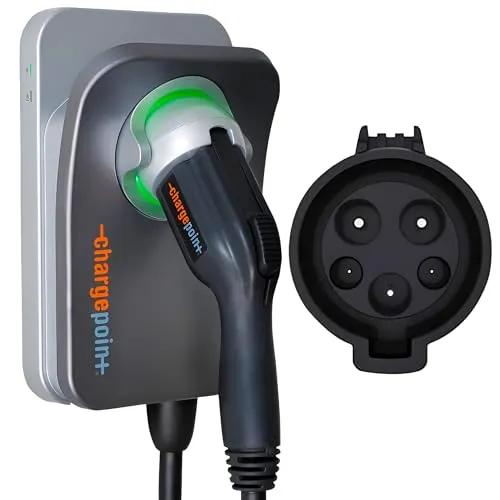
The hardwired HomeFlex pairs a 50 amp charger with the ChargePoint app and network, so home and public charging live in one account.
What we like
- Up to 45 miles of range per hour, which ChargePoint puts at about nine times the speed of a 120 V household outlet
- The same app runs your home charger and finds public stations across a network ChargePoint puts at 274,000 plus in North America and Europe
- Reminders, charging data and smart home connections, so the charger fits into a wider home setup rather than sitting alone
- UL certified, rated for indoor or outdoor installation, and supplied with a cold-resistant cable for cold climates
What we don't
- The most expensive pick here by a clear margin, and much of that premium buys network features rather than charging speed
- ChargePoint states that WiFi is needed for certain functions and troubleshooting, so a garage with weak signal costs you features you paid for
- The listing does not publish a cable length, so you cannot confirm reach before it arrives
- Hardwired only, and the stated circuit requirement is broad enough that you need an electrician to pin down what your install actually needs
| Max amperage | 50 A, delivering up to 45 miles of range per hour |
|---|---|
| Connector type | SAE J1772 |
| Install type | Hardwired, installed by an electrician indoors or outdoors |
| Smart features | ChargePoint app with reminders, smart home links, charging data and access to 274,000 plus network stations |
| Weather rating | Not stated in the listing, UL certified and rated for indoor or outdoor installation |
| Price bracket | $$$ |
ChargePoint is a charging network first and a hardware maker second, and the HomeFlex reflects that. The charging side is straightforward. It is a hardwired 50 amp unit with a J1772 connector, good for up to 45 miles of range per hour depending on what the car will accept, roughly nine times what you get from a normal wall socket.
What you are really paying for is the account. The same ChargePoint app that controls the charger on your garage wall also maps the company’s public stations, which ChargePoint counts at more than 274,000 across North America and Europe, plus a further 565,000 roaming partner stations. If you already stop at ChargePoint posts on longer trips, having one login and one charging history is genuinely convenient.
The build is aimed at real weather. ChargePoint says the unit is UL certified, can be installed indoors or outdoors by an electrician, and ships with a cold-resistant cable. Anyone who has tried to coil a stiff charging cable at 10 degrees knows why that last detail is listed.
Two things temper the recommendation. This is the priciest charger in the guide, and the gap over the Emporia and EVIQO picks does not buy meaningfully faster charging. It buys the network. Second, ChargePoint states plainly that WiFi is needed for some functions and for troubleshooting connection problems. A charger in a basement or a detached garage with poor signal loses part of what makes it worth the money.
If you drive mostly local miles and plug in at home every night, a cheaper charger and a better electrician is the smarter split of the same budget.
Research-based pick: this recommendation is based on product data, owner feedback and comparison with products we have tested, not on direct hands-on testing.
Buy it if: A driver who charges on public networks often and wants home and away charging tracked through one familiar app.
Skip it if: You only charge at home and would rather put the extra money toward the electrical work than toward network features.
Best Value
NexCyber Level 2 EV Charger 48A with NEMA 14-50 Plug
by NexCyber
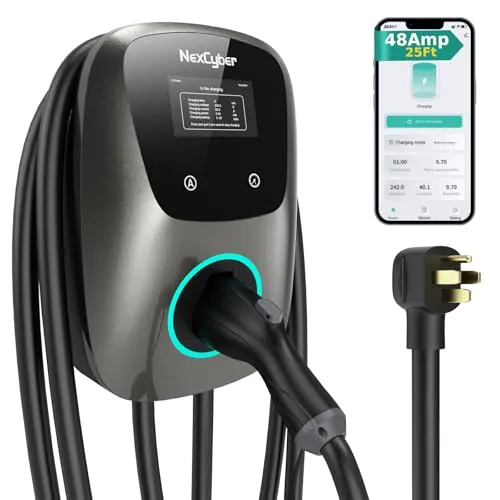
A plug-in 48 amp charger with a touch screen that works with no app at all, at roughly half the price of the name-brand picks.
What we like
- Costs a fraction of the ChargePoint and still gives up to 46 miles of range per hour when hardwired at 48 A
- The touch screen sets amps from 16 A to 48 A and a delay start on the unit itself, so the charger works even if you never install the app
- Ships with a NEMA 14-50 plug for a 40 A outlet install, and can be hardwired later for the full 48 A
- ETL, FCC and ENERGY STAR certified against SAE J1772, UL 2231, UL 991, UL 2251, UL 1998 and UL 2594, with a 3 year warranty
What we don't
- NEMA Type 3 and IP65 is the weakest weather rating here, and NexCyber openly advises against direct sunlight or rain exposure
- The listing spends a bullet on how to clear an E-Stop fault and a sudden mid-charge stop, which tells you something about how often that happens
- Wiring the input side properly needs 6 AWG cable for 48 A, so the cheap charger does not make the install cheap
| Max amperage | 48 A hardwired for up to 46 miles per hour, 40 A on the NEMA 14-50 plug for up to 38 |
|---|---|
| Install type | Plug-in NEMA 14-50 by default, can be hardwired for the full 48 A |
| Cable length | 25 ft |
| Smart features | Touch screen sets amps and delay without a phone, optional WiFi app for cost, history and scheduling |
| Weather rating | NEMA Type 3 and IP65, seller advises against direct sunlight or heavy rain exposure |
| Price bracket | $$$ |
The gap between this charger and the ChargePoint is more than two hundred dollars, and the charging speed is basically the same. Hardwired at 48 amps NexCyber quotes up to 46 miles of range per hour. Through the NEMA 14-50 plug it is 40 amps and up to 38 miles per hour. Those are the same numbers Emporia quotes for the same amperages, because the physics does not care what the box costs.
What you give up is polish and weather sealing, in that order. The enclosure is NEMA Type 3 with IP65 protection, and NexCyber says outright that it should not be installed in direct sunlight or left exposed on a rainy day. That is an unusually honest thing for a seller to print, and it rules the unit out for an outdoor wall.
The screen is a real advantage and gets undersold. Amperage from 16 to 48, a delay start timer, live voltage and charging speed, all set by touching the unit. Plug and charge is the default mode and no app is required. The WiFi app is there if you want cost history and notifications, but the charger is not bricked when a cloud service has a bad day.
There is a warning sign in the listing worth reading twice. One whole bullet explains how to clear an “E-Stop Fault” and what to do if charging stops suddenly after a while, and the fix is pressing and releasing the emergency stop button three times. Sellers write that bullet because buyers keep asking. Expect the occasional reset.
Also read the wiring note. For a 48 amp install NexCyber calls for 6 AWG on the supply side. Thick copper is not cheap, so the low sticker price does not carry through to the electrician’s invoice.
Research-based pick: this recommendation is based on product data, owner feedback and comparison with products we have tested, not on direct hands-on testing.
Buy it if: A buyer charging inside a dry garage who wants full Level 2 speed without paying for a charging network account.
Skip it if: The charger has to live outdoors, or you want a brand with long-term firmware and support behind it.
Best for Travel
EVDANCE Level 2 Portable EV Charger 40A with NEMA 14-50 Plug
by EVDANCE
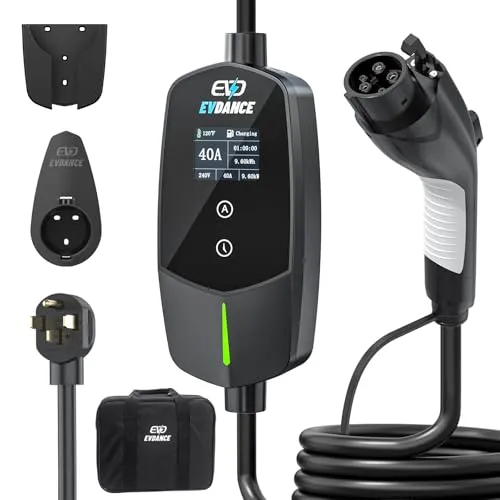
A 40 amp Level 2 charger that lives in a bag rather than on a wall, for renters and for drivers who need charging at more than one address.
What we like
- Comes with a carry bag, a cable holder and a control box holder, so it can be used at home and then packed into the trunk
- Current is adjustable at 10, 16, 20, 24, 32 or 40 A, which lets you match a weaker outlet instead of tripping its breaker
- A 2.4 inch TFT screen shows volts, amps, kWh, charging time and status without needing a phone or an account
- IP66 rated and specified from -22 F to 122 F, so an outdoor outlet in winter is within its stated range
What we don't
- Peaks at 40 A and 9.6 kW, so it will always charge slower than the hardwired 48 A picks
- There is no WiFi and no app, meaning no remote start, no cost history and no utility time-of-use integration
- It needs a NEMA 14-50 outlet wherever you take it, and those are common at RV parks and rare in ordinary garages
- A charger that gets unplugged and coiled up repeatedly wears its plug and cable faster than one bolted to a wall
| Max amperage | 40 A for up to 9.6 kW, adjustable to 10, 16, 20, 24 or 32 A |
|---|---|
| Install type | Plug-in NEMA 14-50, portable with a carry bag and holders |
| Cable length | 25 ft |
| Smart features | No app, a 2.4 inch TFT screen shows volts, amps, kWh and time, plus a 1 to 12 hour delay start |
| Weather rating | IP66 rated and specified from -22 F to 122 F |
| Price bracket | $$$ |
Every other pick here is designed to be screwed to a wall and left there. This one is designed to be picked up. EVDANCE ships it with a carry bag, a cable holder and a holder for the control box, and the whole thing plugs into a NEMA 14-50 outlet rather than being wired into a panel.
That changes who it suits. If you rent, you cannot hardwire anything, and you may not want to pay an electrician to improve a landlord’s building. If you split time between two houses, buying two wall units is silly. A portable unit and a 14-50 outlet at each end solves both problems for less money.
The speed is real Level 2 speed, just not the fastest. At 40 amps on 240 volts it delivers up to 9.6 kW, which EVDANCE puts at about eight times a Level 1 cord. On a normal commute that is the difference between plugging in for an hour and plugging in overnight. It is not the difference between charging and not charging.
The adjustable current is the feature that makes a travel charger usable. You can set 10, 16, 20, 24, 32 or 40 amps from the panel, so if you arrive somewhere with an outlet on a smaller circuit you turn the charger down rather than tripping a breaker at midnight. The 2.4 inch screen tells you what it is actually drawing, and a 1 to 12 hour delay start covers off-peak charging without an app.
What you lose is everything a connected charger does. No remote start, no cost tracking, no utility programs. If you park in the same garage every night, that missing software is worth more than the portability.
Research-based pick: this recommendation is based on product data, owner feedback and comparison with products we have tested, not on direct hands-on testing.
Buy it if: A renter, a two-home driver, or anyone who wants Level 2 speed without leaving hardware attached to a house they do not own.
Skip it if: You own the house, park in the same spot every night and want scheduled off-peak charging handled automatically.
How we chose#
This is a research-based comparison, not an install log. We have not wired these units into a panel. What we did was pull the chargers that are actually selling in the United States on Amazon right now, then read every claim against what the maker publishes: rated amps, connector type, install method, cable length, enclosure rating and which safety standards are named by number rather than by vibe.
That last point separated the field quickly. Emporia, EVIQO and NexCyber all list the specific UL standards their units meet. Some cheaper chargers say “safety certified” and never say certified to what. We also flagged the gaps. Emporia does not publish a weather rating for this model, and ChargePoint does not publish a cable length. Those blanks are in the comparison table too, because a spec a seller will not print is information.
We spread the five picks across the real ways people end up buying. One convertible unit for someone who has not had an electrician out yet, one sealed hardwired station for a finished install, one network-connected charger, one cheap plug-in unit that works without an app, and one portable charger for renters.
What to consider before buying#
Start with the outlet, not the charger. If a NEMA 14-50 outlet already exists in the garage, you can buy the NexCyber today and be charging tonight. If there is nothing on that wall, the charger is the small decision and the electrician is the big one.
Then look at cable length. Four of the five picks run 25 feet, which reaches across a two-car garage and out to a driveway. ChargePoint does not publish a length for the HomeFlex at all. Measure from where the charger will hang to where the car’s charge port sits when parked, then add slack for the coil. A cable that is two feet short means backing in every single night.
Weather rating matters more than people expect, because a lot of home chargers end up outside next to the meter rather than inside. The EVIQO is IP66 and NEMA 4, fully sealed. The EVDANCE is IP66 and rated from -22 F to 122 F. The NexCyber is IP65 and NEMA Type 3, and the seller specifically warns against direct sun and rain. That one belongs indoors.
Last, decide whether you want the charger to be smart. Scheduling charging into off-peak hours is the only smart feature that reliably pays for itself, and many cars already do it on their own. Everything else is convenience.
Amps to miles, the arithmetic that decides what you need#
The maths is simple and it stops you overbuying. Volts times amps gives watts. A home Level 2 circuit is 240 volts, so a 40 amp charger delivers 9.6 kW and a 48 amp charger delivers about 11.5 kW. Most electric cars travel roughly 3 to 4 miles on a kilowatt hour. Multiply those together and 40 amps is somewhere around 30 to 38 miles of range for every hour the car is plugged in.
That lines up with what the makers claim. Emporia and NexCyber both quote up to 38 miles per hour at 40 amps and up to 46 at 48 amps. ChargePoint quotes up to 45 miles per hour from the HomeFlex.
Now compare that with your driving. The average American drives around 40 miles a day. At 40 amps you replace that in a bit over an hour. The car sits in the garage for ten or twelve hours. The extra speed of a 48 amp charger buys you nothing on a normal night, because the car finished hours before you woke up either way.
Speed starts to matter in three cases: you drive well over 100 miles a day, two EVs share one charger, or you regularly come home nearly empty and leave again in a few hours. If none of those describe you, buy 40 amps and spend the difference on a tidy install.
Plug-in or hardwired, and where the 40 amp ceiling comes from#
A plug-in charger uses a NEMA 14-50 outlet, the same four-prong 240 volt socket used for ranges and RV hookups. It is not a dryer outlet, and the EVIQO listing is blunt about that. Electrical rules require a continuous load to run at no more than 80 percent of the circuit rating, so a 50 amp circuit gives you 40 amps of charging. That is the ceiling on every plug-in unit here.
Hardwiring removes the outlet from the equation. The charger connects straight to a dedicated circuit, and 48 amps on a 60 amp circuit becomes possible. The EVIQO EVIPOWER and the ChargePoint HomeFlex both work this way, and both makers require a licensed electrician.
The convertible option is the quiet winner for most first-time buyers. The Emporia and the NexCyber ship configured for a 14-50 plug and can be converted to hardwired later for the full 48 amps. You do not have to guess right on day one. If you want the full breakdown of 48 amp circuits, breaker sizing and load management, our Level 2 EV charger guide covers that side in detail.
Why your panel, not the charger, is usually the limit#
Here is the part that surprises people. The charger is often the cheapest line on the invoice. The hardware in this guide runs from about 200 dollars to about 500 dollars. The electrical work behind it can cost several times that.
A short run from a modern panel with spare breaker slots to a garage wall is a few hundred dollars of labour and material. A run across a finished basement, through masonry, or out to a detached garage climbs fast. And if you have an older 100 amp service that is already carrying an electric range, a water heater and air conditioning, an electrician may tell you there is no room for a 50 or 60 amp circuit at all. A service upgrade is a four figure job.
None of that is a reason to skip a home charger. It is a reason to get a quote before you click buy. Ask the electrician what circuit size your panel can support, then buy a charger that matches. Buying a 48 amp station for a panel that can only give you 30 amps is money spent on a number you will never use.
While the electrician is out, it is worth remembering that an EV still has an ordinary 12 volt battery running its computers and door locks, and it still dies. Our guides to car batteries and portable jump starters apply to electric cars exactly as they do to petrol ones.
J1772, NACS and the adapter question#
All five chargers here use the J1772 connector. That is the long-standing North American standard for AC charging, and it fits Ford, Chevrolet, Hyundai, Kia, Nissan, BMW, Volkswagen, Audi, Rivian, Lucid and most plug-in hybrids without any adapter.
Tesla owners are covered too. Every Tesla comes with a J1772 adapter in the boot, so a J1772 charger works on a Tesla out of the box.
The complication is going the other way. The industry is shifting to the NACS port, the Tesla-style connector, and newer models from several brands now ship with it. Those cars need a NACS to J1772 adapter to use a charger like these, and it is usually not included. If your car has a NACS port, look at native NACS versions instead. EVIQO sells the same EVIPOWER hardware with a NACS connector, and other brands do the same.
Check your car’s port before you order. It is the single most common ordering mistake, and it is the easiest one to avoid.
Final recommendation#
Most people should buy the Emporia 48 amp charger. It plugs into a 14-50 outlet now and converts to hardwired later, which means you do not have to make the install decision before the electrician has looked at your panel. If your install is already sorted and the charger is going on an outside wall, the sealed EVIQO EVIPOWER is the better fit. Pick the ChargePoint HomeFlex only if you use ChargePoint’s public stations often enough that one app and one charging history is worth the extra money. If you park inside a dry garage and want full Level 2 speed for as little as possible, the NexCyber does the same job as the expensive units with a screen instead of a subscription mindset. And if you rent, split time between two houses, or simply do not want to bolt hardware to a building you do not own, the portable EVDANCE is the one that goes in the bag with you.
Frequently asked questions
How many amps do I need for a home EV charger?
Forty amps covers almost everyone. On a 240 volt circuit that is 9.6 kW, which adds somewhere around 30 to 38 miles of range an hour depending on the car. A typical commute is under 40 miles, so the car is full in about an hour and a half of a ten hour night. Go to 48 amps, like the EVIQO or a hardwired Emporia, only if you drive long daily miles or share one charger between two EVs. Going bigger costs more in wire and breaker than it saves in time.
Is a plug-in or hardwired EV charger better?
Plug-in is easier and hardwired is faster. A NEMA 14-50 outlet caps the charger at 40 amps, and you can unplug the unit and take it with you when you move. Hardwiring skips the outlet and allows 48 amps or more, which is where the EVIQO EVIPOWER and the ChargePoint HomeFlex sit. The Emporia and the NexCyber both ship as plug-in units and can be converted to hardwired later, which is the safest choice if you have not had an electrician out yet.
How much does it cost to install a home EV charger?
The charger is often the cheapest part of the job. If your panel has spare capacity and sits on the garage wall, a short run and a new breaker is a few hundred dollars of labour and material. If the panel is on the far side of the house, or it is an older 100 amp service with nothing to spare, you are into long conduit runs, a subpanel, or a full service upgrade, and those routinely cost several times the charger. Get a quote before you pick a model.
Can I use a home charger with a Tesla?
Yes, with an adapter. All five picks here use the J1772 connector, which is standard on non-Tesla EVs. Every Tesla ships with a J1772 adapter, so a J1772 charger works on a Tesla with no extra purchase. It runs the other way too. Newer cars from other brands are moving to the NACS port, and those need a NACS to J1772 adapter to use these chargers. EVIQO and other brands also sell native NACS versions of the same hardware if you would rather skip the adapter.
Do I need a smart EV charger with WiFi?
Only if you have a time-of-use electricity rate. The point of a smart charger is telling the car to wait until off-peak hours, and that saves real money every month. The Emporia, EVIQO and ChargePoint all schedule charging from an app. If your rate is flat, most cars can already schedule charging themselves, and the NexCyber and EVDANCE both do delay timers on the unit without a phone. A charger with no cloud account also cannot break when a server goes down.
Can I install a Level 2 EV charger myself?
The plug-in ones, partly. If a correctly wired NEMA 14-50 outlet already exists on a dedicated circuit, plugging in the NexCyber or the EVDANCE is a two minute job. Installing that outlet is not DIY work in most places, because a 240 volt circuit is permitted, inspected work in most US jurisdictions. Hardwired units like the EVIQO and the ChargePoint HomeFlex require a licensed electrician, and both makers say so. Bad work on a 50 amp circuit is a fire risk, not a warranty problem.
About the author

Dale Harper Lead Gear Editor
Dale is a longtime truck owner and former accessory-shop tech who builds these guides from manufacturer fit data, aggregated owner feedback and direct spec comparison. Research-based picks are always labelled as such.
Daily driver: 2022 Ford F-150 XLT SuperCrew
- Tonneau covers and bed accessories
- Seat covers and interior protection
- Lift kits and suspension