Best Car Speakers: 5 Coaxial Pairs Compared and Ranked (2026 Buyer's Guide)
We compared 5 car speakers on sensitivity, power handling, and mounting depth, from a 30 dollar Pioneer pair to a Rockford Fosgate upgrade set.

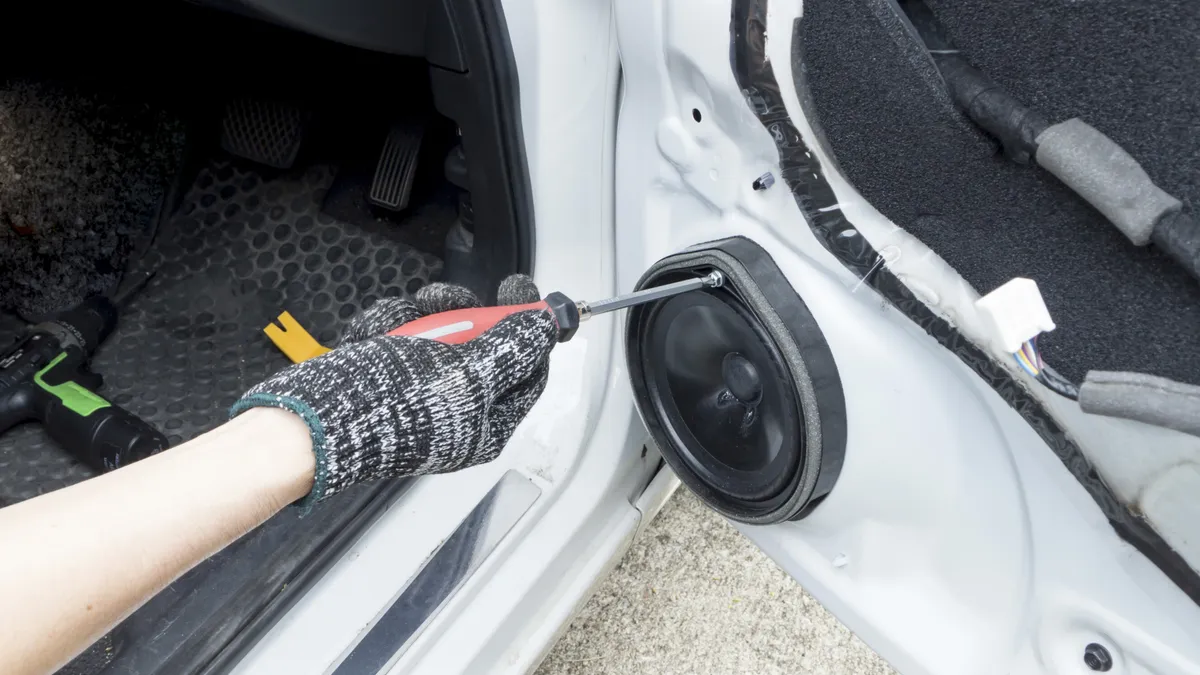
Factory car speakers wear out. The foam surround dries, the cone tears, and one day the driver's door starts buzzing on every bass note. Replacing them is one of the cheapest upgrades you can make to a car, and it is also one of the easiest to get wrong, because the number printed largest on the box is the number that matters least. For this guide we compared five coaxial speaker pairs sold on Amazon on the specs that actually predict how they will sound in your car: sensitivity, continuous power handling, published frequency range, and mounting depth. The five picks are the Pioneer TS-A1681F as the best overall, the Pioneer TS-F1634R as the cheap repair option, the Pioneer TS-A6971F for sedan rear decks, the BOSS Audio CH6530 for shallow door cavities, and the Rockford Fosgate P1650 for people building a system around an amplifier.
Table of contents
- Quick picks
- Maximum power rating each pair advertises
- Comparison table
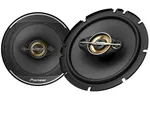
- Best Overall: Pioneer A-Series Plus TS-A1681F 6.5" 4-Way Coaxial Car Speakers
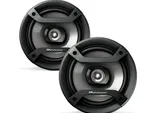
- Best Value: Pioneer F-Series TS-F1634R 6.5" 2-Way Coaxial Car Speakers
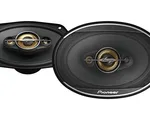
- Best for Rear Decks: Pioneer A-Series Plus TS-A6971F 6" x 9" 4-Way Coaxial Car Speakers
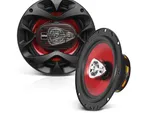
- Best for Shallow Door Cavities: BOSS Audio Systems CH6530 6.5" 3-Way Car Speakers
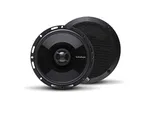
- Upgrade Pick: Rockford Fosgate P1650 Punch 6.5" 2-Way Coaxial Speakers
- How we chose
- What to consider before buying
- Sensitivity is the spec that decides whether factory power is enough
- Coaxial vs component, and whether you have anywhere to put a tweeter
- Mounting depth ends more upgrade projects than budget does
- New speakers on a factory radio still make a big difference
- Final recommendation
- FAQ
Quick picks
Every pick wins a specific use case. Jump to the full review before you buy.
-
Best Overall
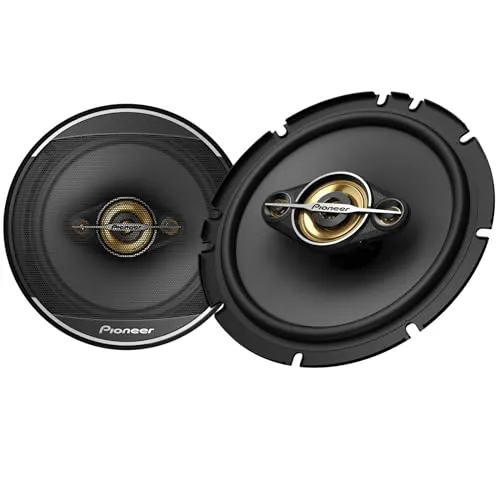
Pioneer A-Series Plus TS-A1681F 6.5" 4-Way Coaxial Car Speakers
A 6.5 inch coaxial pair that is efficient enough to sound loud on a factory radio and detailed enough to keep up if you add an amplifier later.
-
Best Value
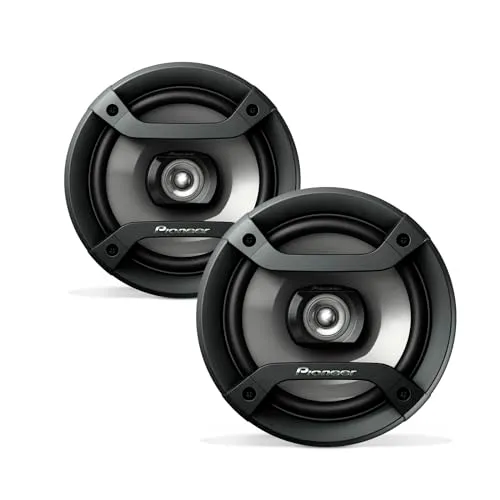
Pioneer F-Series TS-F1634R 6.5" 2-Way Coaxial Car Speakers
A plain 6.5 inch two-way pair for around thirty dollars that fixes blown factory speakers without asking you to change anything else in the car.
-
Best for Rear Decks
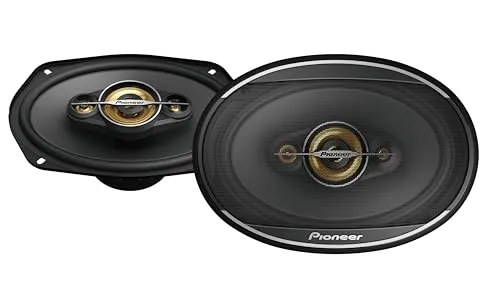
Pioneer A-Series Plus TS-A6971F 6" x 9" 4-Way Coaxial Car Speakers
A 6 by 9 inch four-way pair for sedan rear decks that reaches lower than any 6.5 inch speaker here and is the most efficient pick in the group.
-
Best for Shallow Door Cavities
BOSS Audio Systems CH6530 6.5" 3-Way Car Speakers
The only pick here that publishes a mounting depth under two and a quarter inches, which makes it the safe choice when your door has almost no room behind the grille.
-
Upgrade Pick
Rockford Fosgate P1650 Punch 6.5" 2-Way Coaxial Speakers
A 55 watt RMS Punch series pair built for people who are adding an amplifier, sold with grilles, hardware and published mounting measurements.
Compare every pick
| Product | Award | Speaker size | Speaker type | Best for | Where to buy |
|---|---|---|---|---|---|
| Pioneer A-Series Plus TS-A1681F 6.5" 4-Way Coaxial Car Speakers | Best Overall | 6.5 inch round | 4-way coaxial | Someone replacing tired factory front door speakers who wants a clear jump in sound without rewiring the whole car. | Check price for Pioneer A-Series Plus TS-A1681F 6.5" 4-Way Coaxial Car Speakers at Amazon (affiliate link) |
| Pioneer F-Series TS-F1634R 6.5" 2-Way Coaxial Car Speakers | Best Value | 6.5 inch round | 2-way coaxial | A driver with one or two blown door speakers in an older car who wants sound back for the least money. | Check price for Pioneer F-Series TS-F1634R 6.5" 2-Way Coaxial Car Speakers at Amazon (affiliate link) |
| Pioneer A-Series Plus TS-A6971F 6" x 9" 4-Way Coaxial Car Speakers | Best for Rear Decks | 6 x 9 inch oval | 4-way coaxial | A sedan owner with factory 6 by 9 inch rear deck openings who wants more low end without installing a subwoofer. | Check price for Pioneer A-Series Plus TS-A6971F 6" x 9" 4-Way Coaxial Car Speakers at Amazon (affiliate link) |
| BOSS Audio Systems CH6530 6.5" 3-Way Car Speakers | Best for Shallow Door Cavities | 6.5 inch round | 3-way coaxial | Anyone whose door cavity is too tight for a normal speaker, or who needs a working pair for under thirty dollars. | Check price for BOSS Audio Systems CH6530 6.5" 3-Way Car Speakers at Amazon (affiliate link) |
| Rockford Fosgate P1650 Punch 6.5" 2-Way Coaxial Speakers | Upgrade Pick | 6.5 inch round | 2-way coaxial | Someone building a system in stages who already owns an amplifier or plans to buy one within a few months. | Check price for Rockford Fosgate P1650 Punch 6.5" 2-Way Coaxial Speakers at Amazon (affiliate link) |
Swipe sideways to compare every column.
Best Overall
Pioneer A-Series Plus TS-A1681F 6.5" 4-Way Coaxial Car Speakers
by Pioneer
A 6.5 inch coaxial pair that is efficient enough to sound loud on a factory radio and detailed enough to keep up if you add an amplifier later.
What we like
- 91 dB sensitivity means it plays loud on the small amount of power a factory head unit puts out
- Four separate drivers cover lows, mids, highs and the top end, so vocals sit forward instead of sounding muffled
- Rated 35 Hz to 29 kHz, the second widest low-end reach in this group
- Ships with 6-1/2 inch multi-fit adapters, so it drops into a lot of factory openings without cutting
What we don't
- Pioneer does not publish a mounting depth for this speaker, so you have to measure your door before you order
- The 80 W continuous rating is more than most factory radios will ever deliver, so part of what you pay for sits unused without an amplifier
- Bronze cones are visible through many factory grilles, which some owners do not want
| Speaker size | 6.5 inch round |
|---|---|
| Speaker type | 4-way coaxial |
| Sensitivity db | 91 dB |
| Power rms watts | 80 W continuous |
| Frequency response | 35 Hz to 29 kHz |
| Install difficulty | Moderate |
| Price bracket | $$ |
The TS-A1681F sits in Pioneer’s A-Series Plus line, one step above the plain A-Series. The reason it wins here has nothing to do with its 350 watt maximum number. It wins because it is rated at 91 dB sensitivity. Sensitivity is how much sound a speaker makes from one watt, and a factory radio usually has fewer than 20 clean watts per channel to give. An efficient speaker turns that small amount of power into real volume. A less efficient one does not.
The four-way layout is the other thing worth paying for. Instead of one cone doing everything, this speaker splits the work between a woofer, a midrange and two tweeters. In practice that means voices and cymbals come out of the door instead of getting buried under the bass. The published range runs from 35 Hz up to 29 kHz. The bottom of that range is not real subwoofer bass, and no 6.5 inch door speaker delivers that, but it is enough to make a kick drum feel like a kick drum.
Fitment is the part that trips people up. Pioneer includes 6-1/2 inch multi-fit adapters, which handle the common mounting patterns. What Pioneer does not publish anywhere in the listing is a mounting depth figure. That matters, because a door speaker that is a quarter inch too deep will hit the window glass when the window drops. Pull the door card, measure from the mounting surface to the nearest obstruction, and compare before you buy.
Price sits in the middle of this group at around seventy dollars for the pair. That buys you the best balance here: efficient enough for stock power, capable enough that adding an amplifier later is not wasted money.
Pick the cheaper Pioneer TS-F1634R if you just want working speakers again and do not care about the last bit of detail. Pick this one if you actually listen to music in the car. This is a research-based assessment built from Pioneer’s published specifications and listing data, not our own bench testing.
Research-based pick: this recommendation is based on product data, owner feedback and comparison with products we have tested, not on direct hands-on testing.
Buy it if: Someone replacing tired factory front door speakers who wants a clear jump in sound without rewiring the whole car.
Skip it if: Your doors are shallow and you cannot measure the cavity, or you only want the cheapest thing that makes noise again.
Best Value
Pioneer F-Series TS-F1634R 6.5" 2-Way Coaxial Car Speakers
by Pioneer
A plain 6.5 inch two-way pair for around thirty dollars that fixes blown factory speakers without asking you to change anything else in the car.
What we like
- Around thirty dollars for the pair, the cheapest way here to replace a dead factory speaker with a known brand
- 88 dB sensitivity is high enough to sound clearly better than a torn paper factory cone on stock power
- Low sales rank on Amazon shows it sells in real volume, so stock and support are easy to find
- Standard 6.5 inch frame and 4 ohm impedance match what most factory wiring already expects
What we don't
- Pioneer publishes no frequency response figure for this model, so you cannot compare its bass reach on paper
- Two drivers instead of three or four means less separation between voices and cymbals than the A-Series picks
- The 25 W nominal rating leaves little headroom if you ever add an amplifier, so this is a stock-system speaker
| Speaker size | 6.5 inch round |
|---|---|
| Speaker type | 2-way coaxial |
| Sensitivity db | 88 dB |
| Power rms watts | 25 W nominal |
| Power peak watts | 200 W max |
| Install difficulty | Easy |
| Price bracket | $ |
Most people searching for car speakers do not want a sound system. They want the crackling in the driver’s door to stop. The TS-F1634R is the honest answer to that. It is a basic two-way 6.5 inch coaxial pair from a brand that has been making car speakers for decades, and it costs about the same as a tank of gas.
The number that matters is 88 dB sensitivity. That is a full three decibels below the TS-A1681F, which sounds small but is not. Roughly speaking, you would need about twice the amplifier power to make up a three decibel gap. On a factory radio you do not have twice the power. So this pair will play a little quieter at full volume than the A-Series picks. What it will do is sound cleaner than a factory cone that has gone soft or torn, and for most drivers that is the whole point.
Pioneer keeps the F-Series listing thin. There is no frequency response figure and no mounting depth figure published anywhere on the page. That is normal for a budget line, and it is also a reason to measure your door cavity yourself instead of assuming. The 4 ohm impedance is stated, and that is the one number that has to match your factory wiring. It does.
The 200 watt maximum printed on the box is a marketing figure. The 25 watt nominal rating is the number that describes real use, and it is a fine match for a factory head unit. It is a poor match for an amplifier, because you will run out of speaker before you run out of amp.
Buy this if the job is repair, not upgrade. If you want the car to sound genuinely different, spend the extra on the TS-A1681F. This assessment comes from Pioneer’s listing data and aggregated owner feedback, not hands-on testing.
Research-based pick: this recommendation is based on product data, owner feedback and comparison with products we have tested, not on direct hands-on testing.
Buy it if: A driver with one or two blown door speakers in an older car who wants sound back for the least money.
Skip it if: You plan to run an amplifier, or you want a clear step up in detail rather than a clean repair.
Best for Rear Decks
Pioneer A-Series Plus TS-A6971F 6" x 9" 4-Way Coaxial Car Speakers
by Pioneer
A 6 by 9 inch four-way pair for sedan rear decks that reaches lower than any 6.5 inch speaker here and is the most efficient pick in the group.
What we like
- 92 dB sensitivity, the highest of these five, so it plays loudest for a given amount of power
- The large 6 by 9 inch cone is rated down to 29 Hz, the deepest low-end reach in this comparison
- 100 W continuous power handling gives it real headroom if you later add an amplifier
- Includes 6 by 9 inch multi-fit adapters that cover the common factory mounting patterns
What we don't
- Only fits vehicles with factory 6 by 9 inch openings, which usually means a sedan rear deck, not a door
- Pioneer does not publish a mounting depth, and rear deck cavities are often shallower than owners expect
- Rear speakers sit behind you, so putting your best speaker back there can pull the sound away from the windshield
| Speaker size | 6 x 9 inch oval |
|---|---|
| Speaker type | 4-way coaxial |
| Sensitivity db | 92 dB |
| Power rms watts | 100 W continuous |
| Frequency response | 29 Hz to 33 kHz |
| Install difficulty | Moderate |
| Price bracket | $$ |
Physics does most of the work with a 6 by 9. A bigger cone moves more air, and moving more air is how you get bass. The TS-A6971F is rated from 29 Hz to 33 kHz, which is the widest span in this group, and its 92 dB sensitivity is the highest here. Put those two together and you have the pick that makes the biggest audible change on a stock radio.
The catch is that you do not get to choose 6 by 9. Your car does. These openings live in the rear decks of sedans and in the doors of some older trucks. If your car has round 6.5 inch holes everywhere, this speaker is not an option no matter how good the numbers look. Check the opening shape first, then read the rest of this.
Four separate drivers handle the frequency split, same as the TS-A1681F, so highs stay clear rather than getting swallowed by the big woofer. Power handling is 100 watts continuous, which is genuinely useful if an amplifier is in your future. On factory power the sensitivity rating is doing the heavy lifting, not the wattage.
There is a listening trade-off worth understanding. Sound pulls toward whatever is loudest. Fitting your strongest speakers in the rear deck and leaving weak ones in the front doors makes the music seem to come from behind your head. If you install these, plan on upgrading the front doors too, or turn the fader forward once they are in.
Pioneer again leaves mounting depth off the listing. Rear decks are shallow, and the metal underneath is close. Measure before you order. This is a research-based pick built from Pioneer’s published specifications, not our own testing.
Research-based pick: this recommendation is based on product data, owner feedback and comparison with products we have tested, not on direct hands-on testing.
Buy it if: A sedan owner with factory 6 by 9 inch rear deck openings who wants more low end without installing a subwoofer.
Skip it if: Your car only has round door openings, or you want the sound to come from in front of you rather than behind.
Best for Shallow Door Cavities
BOSS Audio Systems CH6530 6.5" 3-Way Car Speakers
by BOSS Audio Systems
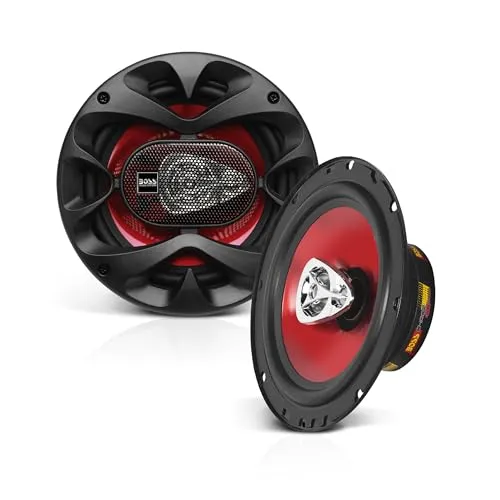
The only pick here that publishes a mounting depth under two and a quarter inches, which makes it the safe choice when your door has almost no room behind the grille.
What we like
- 2.1 inch mounting depth is published up front, so you can check fitment before you take the door card off
- 5.5 inch mounting hole and 4 ohm impedance match common factory openings and factory wiring
- 90 dB sensitivity is high for the price and works well on a stock head unit
- Backed by a 3-year dealer warranty when bought through Amazon, longer than any other pick here
What we don't
- Frequency response is rated only from 100 Hz up, so it gives up real bass compared with every other speaker here
- BOSS publishes a 300 watt figure for the pair and no continuous rating at all, which makes power comparison impossible
- The piezo tweeter is a cheaper design than the dome and soft tweeters used by Pioneer and Rockford Fosgate
| Speaker size | 6.5 inch round |
|---|---|
| Mounting depth | 2.1 inches |
| Sensitivity db | 90 dB at 1 watt and 1 meter |
| Frequency response | 100 Hz to 18 kHz |
| Speaker type | 3-way coaxial |
| Install difficulty | Easy |
| Price bracket | $ |
The CH6530 earns its spot here for one reason: BOSS publishes the numbers that decide whether a speaker physically fits. Mounting depth is 2.1 inches. Mounting hole is 5.5 inches. Overall size is 6.6 by 6.6 by 2.4 inches. Impedance is 4 ohms. Pioneer publishes none of that for its A-Series and F-Series picks, which means you are measuring blind. With this one you can check your door before you spend anything.
That is not a small advantage. Shallow doors are the most common reason an upgrade gets returned. If the speaker sticks too far into the cavity, the window glass hits it on the way down, and you find out the expensive way.
Where the CH6530 loses is bass. The published frequency response starts at 100 Hz. Every other speaker in this guide starts somewhere in the twenties or thirties. You will notice that. Bass lines lose weight, kick drums lose punch, and the sound gets thin at low volume. The 90 dB sensitivity keeps it loud, but loud and full are different things.
The power rating is a good example of why watts confuse buyers. BOSS lists 300 watts per pair and never states a continuous rating. Rockford Fosgate lists 55 watts RMS per speaker. The Rockford number looks smaller and describes a far more capable speaker. Never rank speakers by the biggest number on the box.
There is a real warranty here, three years through Amazon purchases, which is longer than Rockford Fosgate offers on the P1650. Buy this for tight doors and tight budgets. Buy something else if music matters more than fitment. This is a research-based pick from listing specifications, not hands-on testing.
Research-based pick: this recommendation is based on product data, owner feedback and comparison with products we have tested, not on direct hands-on testing.
Buy it if: Anyone whose door cavity is too tight for a normal speaker, or who needs a working pair for under thirty dollars.
Skip it if: You care about low end, since the published response stops at 100 Hz and you will hear that.
Upgrade Pick
Rockford Fosgate P1650 Punch 6.5" 2-Way Coaxial Speakers
by Rockford Fosgate
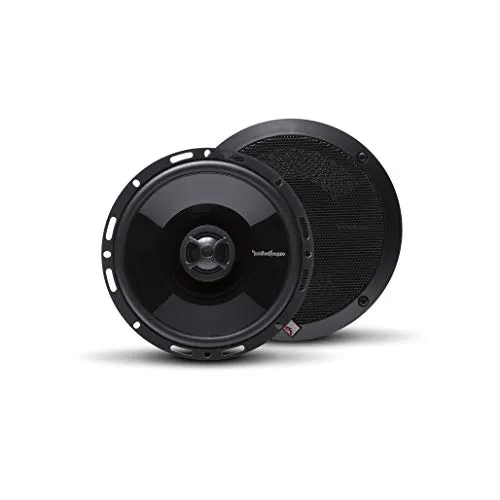
A 55 watt RMS Punch series pair built for people who are adding an amplifier, sold with grilles, hardware and published mounting measurements.
What we like
- 55 W RMS per speaker is the highest verified continuous rating here relative to its modest 110 W maximum, a sign of an honest rating
- Mounting diameter of 5.51 inches and depth of 2.24 inches are both published, so fitment can be checked before purchase
- Grilles, mounting hardware and an owner's guide are included in the box
- Rockford Fosgate publishes cutting and mounting templates, which makes a custom install far less guesswork
What we don't
- Rockford Fosgate does not publish a sensitivity figure, so you cannot predict how loud it will play on factory head unit power
- No published frequency response either, which makes a paper comparison against the Pioneer picks impossible
- At around 110 dollars the pair it costs roughly four times the Pioneer TS-F1634R while sitting on the same factory power
- Warranty is one year, shorter than the three years BOSS offers on the CH6530
| Speaker size | 6.5 inch round |
|---|---|
| Speaker type | 2-way coaxial |
| Power rms watts | 55 W RMS |
| Power peak watts | 110 W max |
| Mounting depth | 2.24 inches |
| Install difficulty | Moderate |
| Price bracket | $$ |
The Punch P1650 is the most expensive pair in this guide and the one most likely to disappoint the wrong buyer. Rockford Fosgate designed it as a high-quality factory replacement for people who take car audio seriously, and the spec sheet reflects that. Power handling is 55 watts RMS with a 110 watt maximum. Notice how close those two numbers are. Cheap speakers quote a maximum four or five times their continuous rating, because the big number sells. A tight ratio like this usually means the continuous figure is real.
Fitment information is unusually complete. Mounting diameter is 5.51 inches, mounting depth is 2.24 inches, and the company publishes cutting and mounting templates alongside the owner’s guide. Grilles and hardware come in the box, which the Pioneer picks do not include. If you are cutting new holes or building adapter rings, this is the pick that gives you something to work from.
The gap in the data is sensitivity. Rockford Fosgate does not publish it in the Amazon listing, and that is the single number that predicts how these will behave on a factory radio. A 55 watt RMS speaker with average efficiency can easily sound quieter on stock power than an 88 dB Pioneer that costs thirty dollars. Do not read the higher price as guaranteed loudness.
That is why this is the upgrade pick and not the overall winner. Feed it 40 to 60 watts per channel from a small amplifier and the extra cone control and build quality show up as cleaner sound at volume. Leave it on a stock head unit and you may wonder what you paid for.
Warranty is one year, which is short next to the three-year cover BOSS provides on the CH6530. This is a research-based assessment built from published specifications and listing data, not our own testing.
Research-based pick: this recommendation is based on product data, owner feedback and comparison with products we have tested, not on direct hands-on testing.
Buy it if: Someone building a system in stages who already owns an amplifier or plans to buy one within a few months.
Skip it if: You are staying on the factory radio, because the money is better spent on the more efficient Pioneer A-Series picks.
How we chose#
We started with the coaxial speakers Americans actually buy on Amazon, then filtered on the specs that predict real behaviour in a car rather than the ones printed on the box. Sensitivity came first, because it decides whether a speaker works on factory power. Continuous power handling came second, because it tells you whether an amplifier upgrade later is money well spent. Published frequency range and mounting depth came next, because those two numbers separate a speaker that fits and sounds full from one that either hits the window glass or plays thin.
We also gave credit for published data. Two of the five picks tell you their mounting depth up front. The other three do not, and we say so in every review rather than filling the gap with a guess. Sales rank told us which models move in volume, which matters for stock and support, and the Pioneer F-Series pair is a genuine high-volume seller.
We did not conduct hands-on listening tests for this guide. These are research-based picks built from manufacturer specifications, Amazon listing data, and aggregated owner feedback, and every review says so.
What to consider before buying#
Measure before you shop. Speaker size is written as a diameter, but the number that ends most projects is depth. Pull the door card, look at how much room sits between the mounting surface and the window glass when the window is down, and write that number on your hand. Anything deeper than that will not go in without a spacer ring.
Decide now whether an amplifier is coming. If the answer is no, buy for sensitivity and ignore wattage entirely. If the answer is yes, buy for continuous power handling and build quality, and accept that the speakers may sound flat until the amplifier arrives. Mixing those two goals is how people end up disappointed.
Think about where the sound should come from. Front door speakers put the music in front of you, which is how it is supposed to work. Rear speakers fill in the cabin. If you only have money for one pair, put it in the front doors, not the rear deck.
Finally, check what comes in the box. The Rockford Fosgate P1650 includes grilles and mounting hardware. The Pioneer picks include multi-fit adapters but not grilles. If your factory grilles are cracked, that difference is real money.
Sensitivity is the spec that decides whether factory power is enough#
Sensitivity is measured in decibels and describes how much sound a speaker produces from one watt of input. It is written as a single number, usually somewhere between 85 and 93 dB for car speakers, and it is the most predictive spec on the page for anyone keeping their stock radio.
Here is the part that surprises people. A 3 dB difference in sensitivity is roughly equivalent to doubling amplifier power. So the Pioneer TS-A6971F at 92 dB and the Pioneer TS-F1634R at 88 dB are separated by about a factor of two and a half in effective loudness on the same head unit. That gap is far bigger than anything the wattage ratings suggest.
This is where power ratings actively mislead buyers. A speaker with a high RMS rating and low sensitivity will sound quieter on a factory radio than a cheap efficient one. The Rockford Fosgate P1650 is rated at 55 watts RMS and the Pioneer TS-F1634R at 25 watts nominal, but Rockford Fosgate does not publish a sensitivity figure at all. Without it, the more expensive speaker is the bigger gamble on stock power. Watts describe what a speaker can survive. Decibels describe what you will hear.
Coaxial vs component, and whether you have anywhere to put a tweeter#
A coaxial speaker stacks the tweeter in the centre of the woofer cone. One hole, one pair of wires, done. Every pick in this guide is coaxial, and that is deliberate, because it is the right answer for the large majority of drivers replacing factory speakers.
A component set splits them up. The woofer goes in the door, the tweeter mounts separately in the A-pillar or sail panel near ear level, and a passive crossover box divides the signal between them. It sounds better for a real reason: high frequencies are directional, so a tweeter aimed at your ears produces a clearer, more stable stereo image than one firing at your knee from inside the door.
The cost is labour. You need a mounting location for the tweeter, which often means drilling a trim panel or buying a vehicle-specific pod. You need to run extra wire through the door boot. You need somewhere dry to mount the crossover. And you need to accept that a poorly aimed tweeter can sound harsher than the coaxial it replaced. If you are not prepared for that, a good coaxial pair like the TS-A1681F is the better outcome.
Driver count is a separate question. A four-way coaxial like the TS-A1681F splits the work between more drivers inside one frame. That helps, but it is not the same as a tweeter at ear level.
Mounting depth ends more upgrade projects than budget does#
Mounting depth is the distance a speaker protrudes behind its mounting surface. In a door, the thing waiting behind that surface is the window glass, and glass does not compromise. A speaker that is a quarter inch too deep will make contact when the window rolls down, and you will hear it as a grinding noise before you understand what caused it.
Factory door cavities in compact cars are often under two and a half inches deep. That is why the BOSS Audio CH6530 earned a place here at 2.1 inches, and why the Rockford Fosgate P1650 at 2.24 inches is worth noting. Both companies publish the figure. Pioneer does not publish mounting depth for the TS-A1681F, the TS-F1634R, or the TS-A6971F anywhere in the Amazon listing, which means you are measuring blind unless you measure your car first.
Rear decks have the same problem. The metal below a sedan rear deck sits close, and a 6 by 9 inch opening is wide but not always deep. Spacer rings buy you a quarter inch or so, but they also let sound leak backwards, which costs you bass.
New speakers on a factory radio still make a big difference#
There is a common belief that speakers are pointless without a new head unit and an amplifier. That is not true, and it stops a lot of people from making a cheap improvement.
Factory speakers are built to a price. Paper cones, foam surrounds that dry out, and small magnets. After eight or ten years the surround hardens or splits, the cone loses control, and everything sounds muddy at any volume. Dropping in a modern coaxial with a poly or fibre cone and a rubber surround fixes distortion, tightens the bass you do have, and clears up vocals, all on the same 15 or so watts the radio was already producing.
What stock power cannot do is make a speaker play deeper or louder than its efficiency allows. So the improvement you hear is in clarity and control, not raw volume. If you want the car to get properly loud, that is an amplifier conversation, and adding a car amplifier or a car subwoofer is the next step. Replacing the head unit is a separate upgrade that mostly buys you features like CarPlay, though the built-in amplifier in an aftermarket unit is often a little stronger than factory.
Final recommendation#
Buy the Pioneer TS-A1681F if you want one answer and you are keeping your factory radio. It is efficient enough at 91 dB to sound loud on stock power, detailed enough with four drivers to be worth listening to, and capable enough at 80 watts continuous that adding an amplifier later is not wasted money.
Buy the Pioneer TS-F1634R if the job is a repair. Around thirty dollars fixes a buzzing door, and for a lot of drivers that is the entire goal.
Buy the Pioneer TS-A6971F if your car has 6 by 9 inch rear deck openings and you want more low end without cutting metal or installing a subwoofer. It is the most efficient and deepest-reaching pick here, though you should upgrade the front doors too so the sound does not sit behind your head.
Buy the BOSS Audio CH6530 if you measured your door and found under two and a half inches of clearance, or if you need working speakers for the least possible money. Just accept that its published response stops at 100 Hz and you will hear that.
Buy the Rockford Fosgate P1650 only if an amplifier is already in the car or already on order. On a factory radio it is the riskiest pick here, because Rockford Fosgate never publishes the sensitivity figure that would tell you how it behaves. Give it 40 to 60 watts per channel and it becomes the best speaker in this guide.
Frequently asked questions
Will new speakers sound better on my stock radio?
Usually yes, and often by a lot. Factory speakers use thin paper cones and cheap surrounds that go soft after a few years, so replacing them fixes distortion and buzzing straight away. The catch is that you need an efficient speaker to hear the full benefit. A stock head unit puts out well under 20 clean watts per channel. The Pioneer TS-A1681F at 91 dB and the Pioneer TS-A6971F at 92 dB are built for exactly that situation. A less efficient speaker will sound quieter than the one you removed.
What does sensitivity mean and why does it matter more than watts?
Sensitivity is how loud a speaker plays from one watt of power, measured in decibels. A 3 dB difference is roughly the same as doubling your amplifier power. So a 92 dB speaker on a factory radio can play noticeably louder than an 89 dB speaker fed the same signal. Watts only tell you how much power a speaker can survive, not how much sound it makes. If you are not adding an amplifier, sensitivity is the single most important number on the page.
How do I know what size speaker fits my car?
Check the opening shape and the depth, in that order. Round 6.5 inch openings are the most common in doors, which is why four of our five picks are that size. Oval 6 by 9 inch openings usually live in sedan rear decks, which is where the Pioneer TS-A6971F goes. Then measure the depth from the mounting surface to the nearest obstruction, usually the window glass. BOSS publishes 2.1 inches for the CH6530 and Rockford Fosgate publishes 2.24 inches for the P1650. Pioneer publishes nothing, so measure yourself.
Do I need an amplifier for new car speakers?
Not for most of these. The Pioneer TS-F1634R at 25 watts nominal and the BOSS CH6530 are designed to run happily off a factory head unit. The Rockford Fosgate P1650 is the exception. Its 55 watt RMS rating means it is built to be driven properly, and on stock power you will not hear what you paid for. If you buy the P1650, plan on a small four-channel amplifier delivering 40 to 60 watts per channel.
Should I buy coaxial or component speakers?
Coaxial for almost everyone, which is why every pick here is coaxial. A coaxial speaker puts the tweeter in the middle of the woofer, so it drops into the factory hole and uses the factory wiring. A component set separates the tweeter into its own housing with a crossover box, which sounds better because the tweeter sits at ear level, but it needs a mounting spot in the A-pillar or sail panel, more wire, and somewhere to hide the crossover. That is a weekend job, not an hour.
Why is the most expensive pick not the best overall?
Because price does not equal volume on factory power. The Rockford Fosgate P1650 costs around four times what the Pioneer TS-F1634R costs, and Rockford Fosgate does not publish a sensitivity figure for it anywhere in the listing. Without that number you cannot predict how it behaves on a stock radio. It is genuinely the better built speaker, and with an amplifier behind it that shows. On its own it may well sound quieter than a thirty dollar Pioneer. The Pioneer TS-A1681F wins overall because it is strong in both situations.
About the author

Dale Harper Lead Gear Editor
Dale is a longtime truck owner and former accessory-shop tech who builds these guides from manufacturer fit data, aggregated owner feedback and direct spec comparison. Research-based picks are always labelled as such.
Daily driver: 2022 Ford F-150 XLT SuperCrew
- Tonneau covers and bed accessories
- Seat covers and interior protection
- Lift kits and suspension