The Best LED Headlight Bulbs: 5 Picks Compared by Bulb Size
Five LED headlight bulbs compared by bulb size, beam type and cooling, plus a plain answer on DOT rules, glare and why lumen claims mean little.

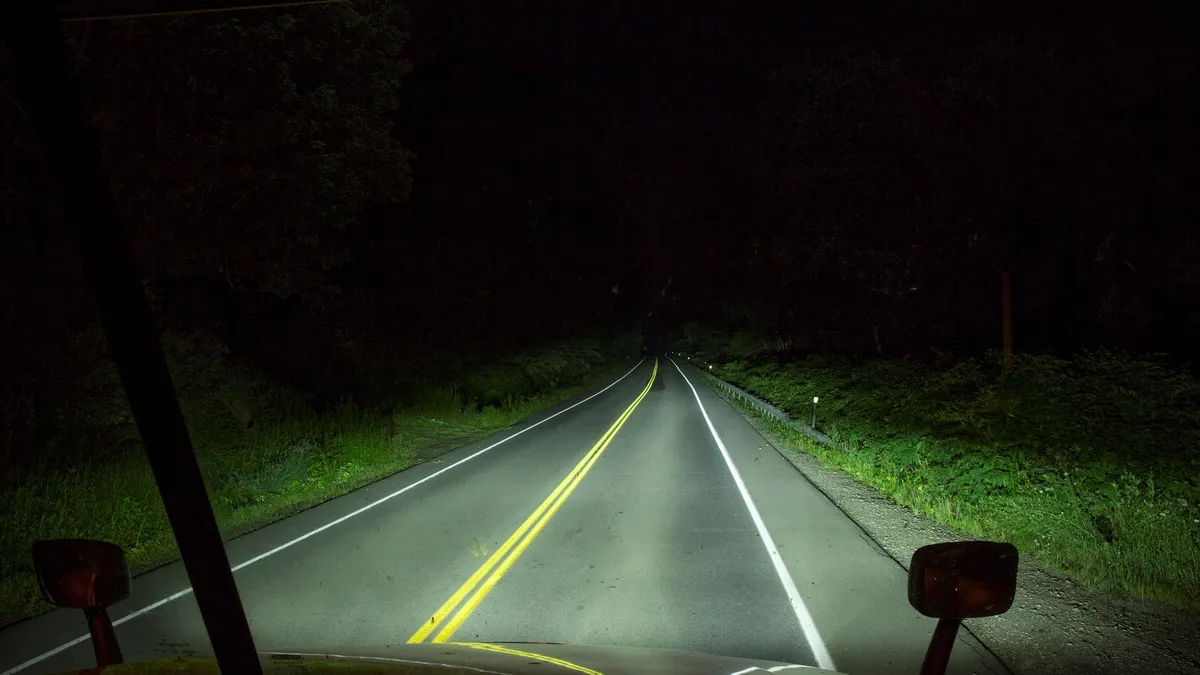
LED headlight bulbs are the cheapest upgrade that changes how a car feels at night, and also the one people get wrong most often. The reason is fitment. A headlight bulb is sized, and buying the wrong number means the bulb will not seat, will not aim, or will not go in at all. So this guide is organised around size rather than around brand. The five picks are the SEALIGHT S1-Pro 9005 and H11 combo, the budget ZonCar H11 pair, the fanless-looking Marsauto H7 pair for European cars, the SEALIGHT S6-Pro H4 dual-beam pair for vehicles that use one bulb per side, and the Termitor New-Gen H11 and 9005 combo with copper cooling. We compared them on bulb size, colour temperature, claimed output, cooling design, CANbus handling and beam duty. Before you read a single spec, go look up what size your own car takes.
Table of contents
- Quick picks
- Claimed service life for each bulb
- Comparison table
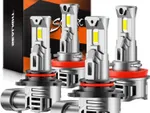
- Best Overall: SEALIGHT S1-Pro 9005 and H11 LED Bulb Combo, Pack of 4
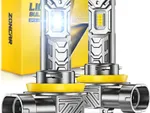
- Best Value: ZonCar H11 LED Bulbs, Pack of 2
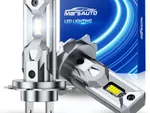
- Best Compact Option: Marsauto H7 LED Bulbs, Pack of 2
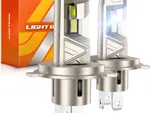
- Best for Dual-Beam Housings: SEALIGHT S6-Pro H4 9003 LED Bulbs, Pack of 2
- Upgrade Pick: Termitor New-Gen H11 and 9005 LED Bulb Combo, Pack of 4
- How we chose
- What to consider before buying
- Lumen claims are close to meaningless
- Reflector housings, projector housings, and glare
- Colour temperature and why 6500K is not the smart choice
- Final recommendation
- FAQ
Quick picks
Every pick wins a specific use case. Jump to the full review before you buy.
-
Best Overall
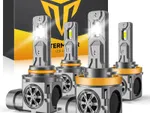
SEALIGHT S1-Pro 9005 and H11 LED Bulb Combo, Pack of 4
A four-bulb kit that covers the two most common sizes on American cars in one box, with the strongest sales record of anything in this guide.
-
Best Value
ZonCar H11 LED Bulbs, Pack of 2
The cheapest way to put a fan-cooled H11 LED pair in your car, and it gives up less than the price gap suggests.
-
Best Compact Option
Marsauto H7 LED Bulbs, Pack of 2
An H7 pair with no cooling fan listed, which makes it the smallest and quietest option here and the right shape for a tight headlight cavity.
-
Best for Dual-Beam Housings
SEALIGHT S6-Pro H4 9003 LED Bulbs, Pack of 2
An H4 pair for the cars and trucks that run one bulb per side for both high and low beam, which no combo kit in this guide can cover.
-
Upgrade Pick
Termitor New-Gen H11 and 9005 LED Bulb Combo, Pack of 4
The same 9005 and H11 coverage as our top pick with the longest claimed service life here, for buyers who want the bigger numbers on paper.
Compare every pick
| Product | Award | Bulb size | Cooling type | Best for | Where to buy |
|---|---|---|---|---|---|
| SEALIGHT S1-Pro 9005 and H11 LED Bulb Combo, Pack of 4 | Best Overall | 9005/HB3 plus H11, and the H11 bulbs also cover H8, H9 and H16 | 26000 RPM turbo fan in an aerospace-grade aluminum body | Someone whose car uses 9005 for one beam and H11 for the other, or for the fog lights, and who wants the whole front end done in one order. | Check price for SEALIGHT S1-Pro 9005 and H11 LED Bulb Combo, Pack of 4 at Amazon (affiliate link) |
| ZonCar H11 LED Bulbs, Pack of 2 | Best Value | H11, and the same bulb covers H8, H9 and H16 | 25000 RPM turbo fan with a hollow heat sink | A driver who wants brighter low beams or fog lights on an H11 car without spending much, and who accepts that a cheap bulb is a gamble. | Check price for ZonCar H11 LED Bulbs, Pack of 2 at Amazon (affiliate link) |
| Marsauto H7 LED Bulbs, Pack of 2 | Best Compact Option | H7 only, so check your manual before you order | Aviation-grade aluminum with an internal cooling system, no fan listed | An H7 car with a cramped headlight cavity or a deep dust cap, where a fan-tailed bulb physically will not fit. | Check price for Marsauto H7 LED Bulbs, Pack of 2 at Amazon (affiliate link) |
| SEALIGHT S6-Pro H4 9003 LED Bulbs, Pack of 2 | Best for Dual-Beam Housings | H4, also sold as 9003 and HB2, so all three names mean the same bulb | 25000 RPM silent fan in an aerospace-grade aluminum hollow chamber | Older trucks, small cars and motorcycles that use one H4 bulb per side to do both jobs. | Check price for SEALIGHT S6-Pro H4 9003 LED Bulbs, Pack of 2 at Amazon (affiliate link) |
| Termitor New-Gen H11 and 9005 LED Bulb Combo, Pack of 4 | Upgrade Pick | H11 plus 9005/HB3, and the H11 bulbs also cover H8, H9 and H16 | Turbine fans over copper substrates with a dual-path heat exit | A 9005 and H11 owner who wants copper cooling and the longest claimed life, and does not mind a brand with a shorter track record. | Check price for Termitor New-Gen H11 and 9005 LED Bulb Combo, Pack of 4 at Amazon (affiliate link) |
Swipe sideways to compare every column.
Best Overall
SEALIGHT S1-Pro 9005 and H11 LED Bulb Combo, Pack of 4
by SEALIGHT
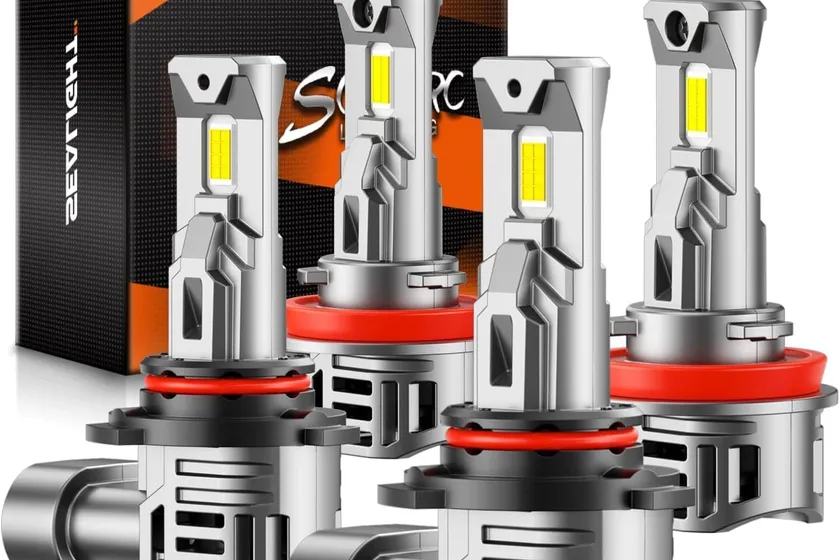
A four-bulb kit that covers the two most common sizes on American cars in one box, with the strongest sales record of anything in this guide.
What we like
- Covers 9005/HB3 and H11 in one purchase, and the H11 bulbs also fit H8, H9 and H16 sockets
- Sales rank near the top of the category, which is the only hard popularity signal available here
- 26000 RPM fan is the fastest cooling here, and heat is what actually kills an LED bulb
- 1:1 body size with a built-in driver, so nothing extra has to be zip-tied behind the housing
What we don't
- Most expensive pick in the guide at the price checked, and you pay for four bulbs even if you only need two
- The fan is a moving part in a hot, wet place, and it is the part most likely to fail first
- 6500K is a cold blue-white that scatters more in rain, fog and snow than a warmer bulb
| Bulb size | 9005/HB3 plus H11, and the H11 bulbs also cover H8, H9 and H16 |
|---|---|
| Color temperature | 6500K cool white |
| Cooling type | 26000 RPM turbo fan in an aerospace-grade aluminum body |
| Beam type | Four bulbs, so one pair runs a beam and the other pair runs fogs |
| Rated lifespan | 70000 hours claimed |
| Install difficulty | Easy |
| Price bracket | $$ |
The 9005 and H11 pairing is the most common headlight setup on cars and trucks sold in the US over the last fifteen years. Plenty of vehicles run 9005 for high beam and H11 for low beam, or H11 in the fog lights below the bumper. Buying one box that handles both is why this kit leads the guide.
It also has the best sales position of anything here. Amazon put it near the top of the whole lighting category on the day we pulled the data. That is not a review score and it is not a lab result, but it is real, and in a category full of nearly identical listings from brands nobody has heard of, it is worth something.
The build details that matter are the fan speed and the body size. SEALIGHT lists a 26,000 RPM turbo fan, the quickest of the five, inside an aluminum body cut with hollow channels. LED bulbs do not burn out the way halogen does. They dim slowly as the chip cooks, so cooling is the spec that decides whether you get three good years or one. The body is also built to the same size as the halogen bulb it replaces, with the driver inside, so there is no separate box to find a home for behind a crowded headlight.
Now the part the listing will not tell you. This is a halogen replacement bulb, not a sealed DOT-approved headlamp, and putting it in a housing built for halogen is not compliant for road use in the United States. The 6500K color adds a second problem. It looks bright and modern to the driver, but blue-heavy light scatters harder off water and snow, so it can actually cut your usable distance in bad weather.
Buy this if you want one order to cover a 9005 and H11 car. If your car takes a single dual-beam bulb, the SEALIGHT H4 kit is the one that fits. If you only need one pair and price matters more than fan speed, the ZonCar H11 costs a third as much.
Research-based pick: this recommendation is based on product data, owner feedback and comparison with products we have tested, not on direct hands-on testing.
Buy it if: Someone whose car uses 9005 for one beam and H11 for the other, or for the fog lights, and who wants the whole front end done in one order.
Skip it if: Your car uses a single dual-beam bulb such as H4, or you only need one pair and do not want to pay for four bulbs.
Best Value
ZonCar H11 LED Bulbs, Pack of 2
by ZonCar
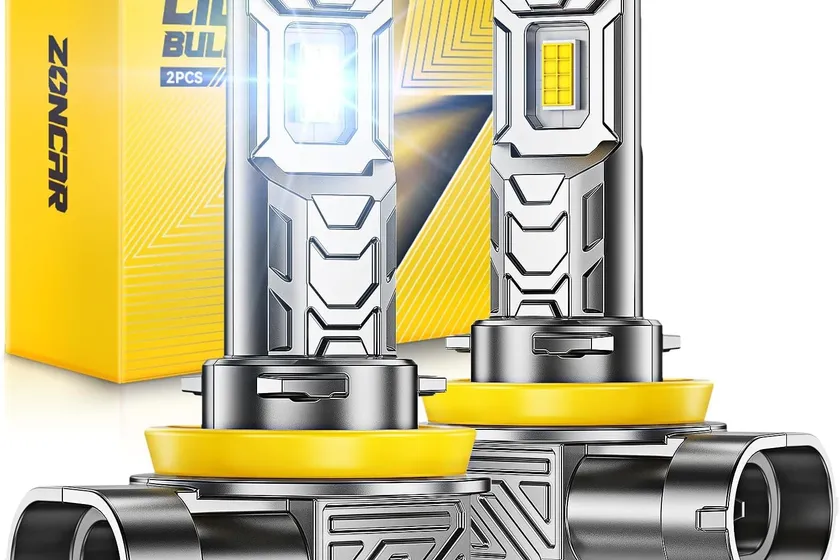
The cheapest way to put a fan-cooled H11 LED pair in your car, and it gives up less than the price gap suggests.
What we like
- Lowest price in this guide by a wide margin at the price we checked
- 25000 RPM fan, which is within a rounding error of the fan in the pick that costs three times more
- One bulb covers H11, H8, H9 and H16 sockets, so it fits a lot of cars
- Listing calls out anti hyper flashing, which is the flicker problem cheap bulbs usually cause
What we don't
- Pack of two only, so a car that needs a different size for high beam and fogs takes two orders
- Lowest claimed lifespan in the guide at 60000 hours, and it sits at the bottom of the five on sales rank
- Listing gives no ingress rating in plain terms and mixes marketing shorthand into the waterproofing claim
| Bulb size | H11, and the same bulb covers H8, H9 and H16 |
|---|---|
| Color temperature | 6500K cool white |
| Lumens claimed | 60000 lumens claimed for the pair |
| Cooling type | 25000 RPM turbo fan with a hollow heat sink |
| Canbus ready | CANbus ready with anti hyper flashing |
| Install difficulty | Easy |
| Price bracket | $ |
Twenty dollars buys a pair of fan-cooled H11 bulbs here. That is the whole argument. Once you look past the price, the spec sheet is not far off the pick that leads this guide. Same 6500K color, a 25,000 RPM fan against the leader’s 26,000, and the same 1:1 body that drops into a factory socket without an external driver hanging off it.
Where it gives ground is on longevity and track record. ZonCar claims 60,000 hours, the lowest number of the five, and its sales position is the weakest in the group. In a category where dozens of listings share the same photos and the same 900 percent brightness claim, a thin sales history is a reason to keep expectations low. Assume you are buying two or three seasons, not ten years.
The single-size pack is the other limit. This is one pair of H11 bulbs. If your car runs 9005 for the high beam and H11 for the low, you are placing a second order, and by the time you do that you have spent close to what the SEALIGHT combo costs. Check your own bulb size in the owner’s manual or read the number off the old bulb before you buy anything, because the fitment tool on the listing page can be wrong.
One thing the listing does get right is the flicker note. Cars with bulb-out monitoring see an LED’s low current draw and either throw a dash warning or strobe the light. ZonCar builds in CANbus handling and calls out anti hyper flashing directly. It will not solve every car, but it is a better sign than a listing that stays quiet about it.
Take this one if you are testing the waters on an H11 car. If you want the wider fitment or a longer bet, step up to the SEALIGHT S1-Pro combo.
Research-based pick: this recommendation is based on product data, owner feedback and comparison with products we have tested, not on direct hands-on testing.
Buy it if: A driver who wants brighter low beams or fog lights on an H11 car without spending much, and who accepts that a cheap bulb is a gamble.
Skip it if: You need two different bulb sizes covered, or you want the longest-running fan and the strongest sales history behind your purchase.
Best Compact Option
Marsauto H7 LED Bulbs, Pack of 2
by Marsauto
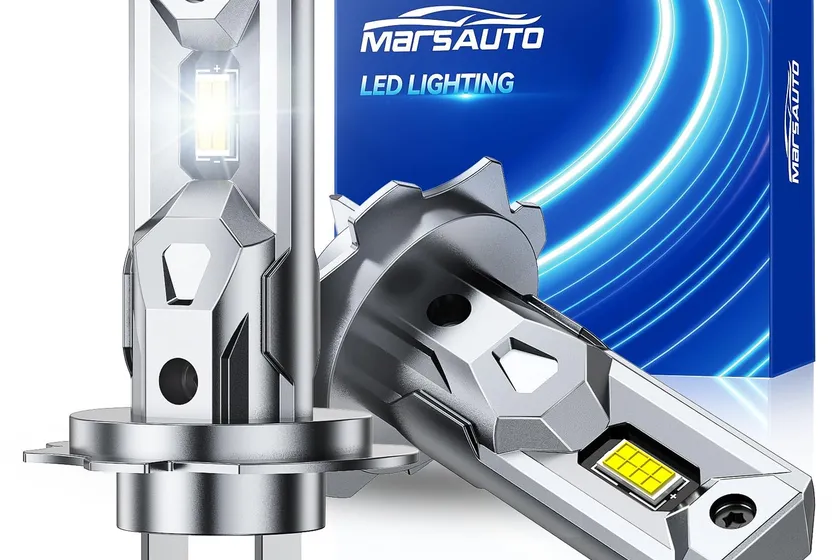
An H7 pair with no cooling fan listed, which makes it the smallest and quietest option here and the right shape for a tight headlight cavity.
What we like
- Only H7 bulb in this guide, which is the standard size on a lot of European cars
- No fan in the listed build, so there is no bearing to seize and no fan noise at idle
- Second-strongest sales position of the five, behind only the overall pick
- Compact body with no external driver box, which matters when the dust cap barely clears the bulb
What we don't
- Listing contradicts itself on color, showing 6000K in the product data and 6500K in the description
- Gives no lumen figure at all, only a percentage claim, so there is nothing to compare against the others
- Passive cooling depends on airflow behind the headlight, and a sealed housing traps heat that a fan would move
| Bulb size | H7 only, so check your manual before you order |
|---|---|
| Color temperature | Listed as 6000K white, brand text also says 6500K |
| Lumens claimed | No lumen figure given, brand claims 800 percent brighter than stock |
| Cooling type | Aviation-grade aluminum with an internal cooling system, no fan listed |
| Rated lifespan | 80000 hours claimed |
| Install difficulty | Easy |
| Price bracket | $ |
H7 is the size a lot of buyers get stuck on. It is common on Volkswagen, BMW, Mercedes and plenty of other European cars, and most of the four-bulb combo kits sold on Amazon skip it entirely because the American volume sits with 9005 and H11. This Marsauto pair exists to fill that gap, and it is the only H7 option in this guide.
The build is unusual in a useful way. Marsauto lists aviation-grade aluminum and an internal cooling system, and nowhere in the listing does a fan appear. Every other bulb here names an RPM figure. That gives this one a shorter, simpler tail. If your headlight has a deep dust cap or a plastic wall sitting an inch behind the socket, that shape is the difference between the bulb going in and the bulb going back in the box. There is no bearing to fail either.
The trade is heat. A fan moves warm air out of the base. Passive cooling relies on the metal fins finding air to give the heat to, and a sealed headlight housing on a hot day does not offer much. That will not make the bulb quit, but it does tend to make LEDs dim earlier than the claimed hours suggest.
Two things in the listing deserve a straight answer. The product data says 6000K white while the description text says 6500K, and there is no way to tell from the outside which one you get. Both are cold white either way. And the brightness claim is 800 percent, with no lumen number anywhere. That is honestly no worse than the four-digit lumen figures on the other picks, since none of those are measured or verified, but it does mean there is nothing here to compare.
Pick this if you drive an H7 car or you have fought a fan-tailed bulb into a tight housing before. If your car takes 9005 or H11, the SEALIGHT and Termitor combos give you more light for the money.
Research-based pick: this recommendation is based on product data, owner feedback and comparison with products we have tested, not on direct hands-on testing.
Buy it if: An H7 car with a cramped headlight cavity or a deep dust cap, where a fan-tailed bulb physically will not fit.
Skip it if: Your car uses 9005, H11 or H4, or you want a measured brightness number you can hold the seller to.
Best for Dual-Beam Housings
SEALIGHT S6-Pro H4 9003 LED Bulbs, Pack of 2
by SEALIGHT
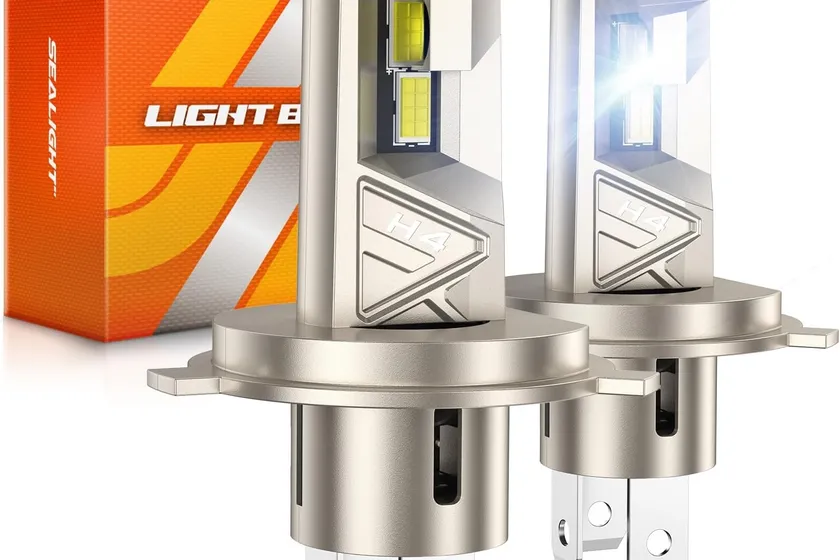
An H4 pair for the cars and trucks that run one bulb per side for both high and low beam, which no combo kit in this guide can cover.
What we like
- Dual beam, so a single bulb per side handles both the high and the low beam
- Covers the H4, 9003 and HB2 names, which are three labels for the same bulb and a common source of wrong orders
- 25000 RPM fan and IP68 sealing, the same cooling hardware as SEALIGHT's more expensive kits
- Middle of the pack on price while offering the widest beam duty of the five
What we don't
- Listing gives two different brightness numbers, 66000 lumens in the title and 42000 per set in the bullets
- Stock was down to 13 units when we checked, so it may go unavailable without warning
- Dual-beam LEDs are the hardest type to aim correctly, because both chip rows have to land where the halogen filaments used to sit
| Bulb size | H4, also sold as 9003 and HB2, so all three names mean the same bulb |
|---|---|
| Beam type | Dual beam, so one bulb per side runs both the high and the low beam |
| Lumens claimed | 66000 lumens in the title, 42000 lumens per set in the bullet points |
| Cooling type | 25000 RPM silent fan in an aerospace-grade aluminum hollow chamber |
| Canbus ready | CANbus ready, brand claims 99 percent vehicle compatibility |
| Install difficulty | Moderate |
| Price bracket | $ |
H4 is a different animal from the rest of this guide. Instead of one bulb for the low beam and another for the high, an H4 car puts both filaments in one bulb, and the reflector is shaped to throw each one differently. Replace it with an LED and the bulb has to reproduce two beam positions from two rows of chips. Nothing else here does that job.
SEALIGHT builds this one on the same hardware as its combo kits. A 25,000 RPM fan, a hollow aluminum chamber, IP68 sealing and a body sized to the halogen bulb it replaces so the whole thing goes in without an external driver. At the price we checked it is one of the cheaper picks in the guide, which is a fair deal for the extra work the bulb is doing.
The listing is messy about brightness, and it is worth naming. The title says 66,000 lumens. The first bullet says 42,000 lumens per set. The same bullet also claims a 900 percent increase. Those numbers cannot all be true at once, and none of them come from a test anyone can check. Ignore all three.
Aiming is where a dual-beam LED goes wrong. A halogen H4 filament sits in one exact spot, and the reflector behind it was cut around that spot. If the LED chip rows sit even slightly off, the low beam stops having a clean cutoff and starts throwing light straight into the eyes of the driver coming the other way. This is worse in a dual-beam housing than anywhere else, and it is the main reason this kind of swap is not DOT compliant for road use in the US. Aim the beams against a wall after fitting, and drop them if the hot spot is high.
Choose this if your vehicle takes H4, 9003 or HB2. Anything with separate high and low beam bulbs should look at the 9005 and H11 combos instead.
Research-based pick: this recommendation is based on product data, owner feedback and comparison with products we have tested, not on direct hands-on testing.
Buy it if: Older trucks, small cars and motorcycles that use one H4 bulb per side to do both jobs.
Skip it if: Your car has separate high and low beam bulbs, which is most vehicles built in the last twenty years.
Upgrade Pick
Termitor New-Gen H11 and 9005 LED Bulb Combo, Pack of 4
by Termitor
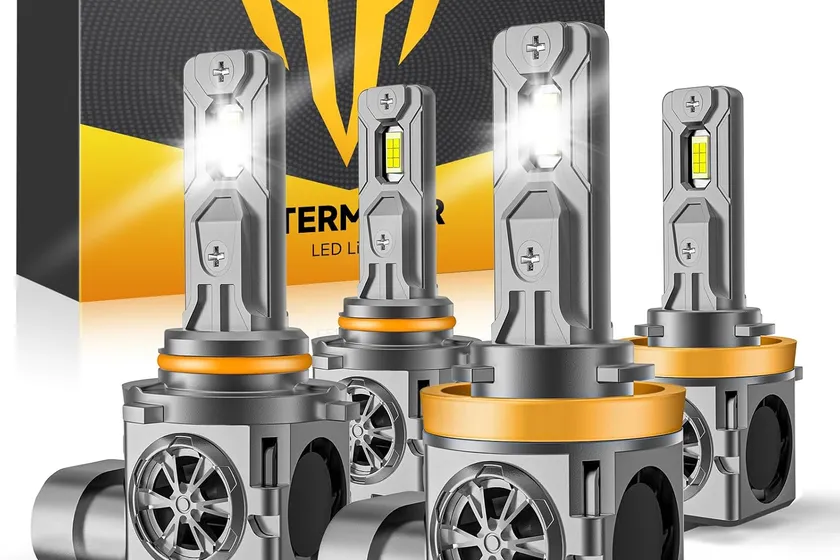
The same 9005 and H11 coverage as our top pick with the longest claimed service life here, for buyers who want the bigger numbers on paper.
What we like
- Longest claimed lifespan of the five at 85000 hours
- Copper heat substrates under the chips, which move heat away faster than aluminum alone
- Four bulbs covering 9005/HB3 and H11, with H8, H9 and H16 included on the H11 side
- Costs less than our overall pick while claiming more on every headline spec
What we don't
- Title claims 160000 lumens while the bullets say 150000, so the brand cannot agree with itself
- Sits well behind the SEALIGHT S1-Pro on sales rank, so there is less buyer history to lean on
- Listing warns that sensitive vehicles may still need a separate CANbus decoder, which is an extra part and extra install time
| Bulb size | H11 plus 9005/HB3, and the H11 bulbs also cover H8, H9 and H16 |
|---|---|
| Color temperature | 6500K crisp white |
| Lumens claimed | 160000 lumens in the title, 150000 lumens in the bullet points |
| Cooling type | Turbine fans over copper substrates with a dual-path heat exit |
| Rated lifespan | 85000 hours claimed |
| Install difficulty | Easy |
| Price bracket | $$ |
On paper this kit beats our overall pick on every headline number and costs less. Termitor claims 85,000 hours against SEALIGHT’s 70,000, and its lumen figure is larger than anything else in the guide. It covers the same 9005 and H11 sizes in the same four-bulb box.
The one build detail worth taking seriously is the cooling. Termitor pairs turbine fans with copper substrates under the chips and routes the hot air out through two channels instead of one. Copper pulls heat away from a chip faster than aluminum does, and heat is the thing that quietly dims an LED long before it fails outright. That is a real engineering difference, not a marketing line.
The brightness claims are a different story. The title says 160,000 lumens and the bullet points say 150,000. Neither figure comes from a test, neither is regulated, and a genuine 150,000 lumen output from four small bulbs would be closer to a stadium light than a headlight. Read those numbers as advertising and nothing else.
There is a practical note in the listing that deserves attention. Termitor says sensitive vehicles may need a CANbus decoder. Some cars watch the current a headlight draws to tell whether the bulb is still alive. An LED pulls far less than a halogen, so the car thinks the bulb has died and either warns you or flashes the light. A decoder adds a resistor in line to fake the old draw, and it means another part behind the headlight and another twenty minutes of work.
Everything in this guide sits in the same regulatory hole. An LED in a housing designed for halogen is not DOT compliant for road use in the US, and the brighter the bulb, the more glare you throw at oncoming traffic when the beam is not aimed right.
Go with this one for the copper cooling and the longer claim. Take the SEALIGHT S1-Pro instead if you would rather buy the kit with the most owners behind it.
Research-based pick: this recommendation is based on product data, owner feedback and comparison with products we have tested, not on direct hands-on testing.
Buy it if: A 9005 and H11 owner who wants copper cooling and the longest claimed life, and does not mind a brand with a shorter track record.
Skip it if: You want the pick with the most buyers behind it, or your car is known to be fussy about bulb-out warnings.
How we chose#
This is a research-based guide, not a beam test. We did not put these bulbs in a housing and measure the pattern on a wall. What we did was pull the real listing data for every LED headlight bulb selling well on Amazon in the US, then compare what the sellers actually commit to in writing: bulb size, colour temperature, cooling design, CANbus handling, claimed life and how many bulbs are in the box.
Size drove the picks more than anything else. There is no single best LED headlight bulb, because a bulb that is perfect for a Silverado is useless on a Golf. So we spread the five across the sizes that cover most American driveways. Two combo kits handle 9005 and H11, which together cover a huge share of cars and trucks sold here since about 2010. One pick covers H7, the European standard that most combo kits skip. One covers H4, where a single bulb does both high and low beam. One is simply the cheapest fan-cooled H11 pair we could find that still says something specific about flicker.
We also leaned on sales rank, because it is the only hard number here. In a market full of near-identical listings from unfamiliar brands, the kits people keep buying are a better bet than the ones with the biggest claims. Brightness claims got no weight at all, for reasons covered below.
What to consider before buying#
Start with size, and get it from your car rather than from a website. Open the owner’s manual, or pull the old bulb and read the number stamped on the base. Most cars use different sizes front and rear of the beam system, so write down all of them before you order. Several of the listings in this guide admit in their own bullet points that Amazon’s fitment tool is not always right.
Here is the part most guides skip. An LED bulb dropped into a headlight housing that was designed for halogen is not DOT compliant for road use in the United States. The regulation approves a complete headlamp assembly, not a bulb by itself, so no LED retrofit bulb is legal in a halogen housing no matter what the box says. Every pick in this guide falls under that. Enforcement is uneven and most drivers never hear a word about it, but the reason the rule exists is glare, and glare is not a paperwork problem. It is the light you throw into the eyes of the person coming the other way.
Then think about heat. LEDs do not burn out like halogen bulbs. They fade slowly as the chip runs hot, which is why every listing here talks about fans and aluminum and copper. A fan is the more effective answer and also a moving part sitting in a hot, damp place.
Last, check your space. A fan-cooled LED has a tail the halogen bulb never had, and plenty of cars have a dust cap sitting an inch behind the socket. Measure before you order, or pick something short.
Lumen claims are close to meaningless#
Every bulb in this category shouts a lumen number, and none of them are worth reading. There is no standard test behind these figures, no independent body checking them, and no penalty for exaggeration. The numbers have inflated year after year, which is how listings now advertise output closer to a stadium floodlight than a car headlight.
Two of the five picks here contradict themselves inside their own listing. The SEALIGHT S6-Pro H4 says 66,000 lumens in its title and 42,000 lumens per set in the first bullet point. The Termitor combo says 160,000 in the title and 150,000 in the bullets. The Marsauto H7 gives no lumen figure at all, only a percentage. If the seller cannot pick a number and stick with it, the number was never measured.
What matters instead is beam pattern, which is where the light lands. A halogen filament is a tiny glowing wire sitting in an exact spot, and the reflector behind it was shaped around that spot. An LED chip is flat and sits in a different place. Get that geometry close and you get a clean beam with a sharp cutoff. Get it wrong and the same light output ends up in the trees, in the road signs and in the windscreen of the car ahead. Same lumens, completely different result. Every listing here claims a 1:1 design that copies the original bulb’s geometry, and that claim is worth more attention than any output figure.
Reflector housings, projector housings, and glare#
Look into your headlight with the light off. If you see a bowl of mirrored surfaces, you have a reflector. If you see a round glass lens with a small bulb behind it, you have a projector. This matters more than which bulb you buy.
A projector has a shield inside that cuts the top off the beam. It is a physical barrier, so even a mediocre LED behind it produces a beam with some kind of cutoff. A reflector has no such barrier. The bowl aims every ray it collects, and it was cut around the exact position of a halogen filament. Put an LED chip in there and the rays that would have hit the lower part of the bowl now go somewhere else, which usually means up.
That is why an LED in a reflector can genuinely blind oncoming drivers, and why the driver doing it rarely notices. From behind the wheel, more scattered light looks like more visibility. From the other lane it is a wall of glare. Fit any bulb in this guide to a reflector housing and you should aim it against a garage wall afterwards, lowering the hot spot until the cutoff sits below the eye line of an approaching car.
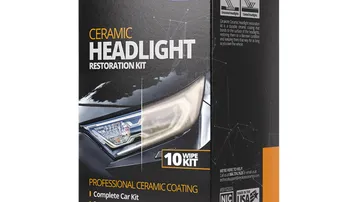
The same trap applies to clouded lenses. If your headlights are yellowed, a brighter bulb makes the scatter worse, not better, because the haze spreads every ray it passes. Clear the lens first with a headlight restoration kit, then decide whether you still need bulbs at all.
Colour temperature and why 6500K is not the smart choice#
Four of the five picks here are 6500K, and the fifth is listed at 6000K. That is not a coincidence. Cold blue-white sells, because next to a yellowish halogen it looks sharp and modern, and buyers judge headlights in a parking lot rather than in weather.
Physics does not agree. Shorter, bluer wavelengths scatter more when they hit water droplets or snowflakes. In rain, fog or falling snow, a 6500K bulb throws more light back into your own eyes and less down the road. Warmer light in the 4300K to 5000K range punches through the same weather better, which is why fog lights have traditionally been yellow. None of the bulbs in this guide offer that, so if you drive somewhere with real winters, keep the expectation honest. You are buying more light, not better light in the worst conditions. Good wiper blades will do more for your rainy-night vision than any bulb here.
The other jargon worth decoding is CANbus. Many cars measure the current a headlight circuit draws so they can tell you when a bulb has failed. An LED draws far less than the halogen it replaced, so the car reads it as dead and either lights a warning or makes the bulb flicker. Bulbs described as CANbus ready have circuitry inside to smooth this over, and it works on most vehicles. When it does not, you need a decoder wired in line, which is another part and another twenty minutes with the bumper cover off. Termitor states this plainly in its listing, which is more honest than the brands that stay quiet. If you want extra light without touching your headlight circuit at all, our guide to truck LED light bars covers that route.
Final recommendation#
Match the bulb to the car first, then to your budget. If your vehicle uses 9005 and H11, which covers a very large share of American cars and trucks, the SEALIGHT S1-Pro combo is the safest buy in this guide. It has the fastest fan, the widest coverage in one box and by far the strongest sales position. Want the same coverage with copper cooling and a longer claimed life for less money, and you do not mind a less established brand, take the Termitor New-Gen combo instead.
Drive an H7 car, most likely something European, and the Marsauto pair is your only option here. It also happens to be the shortest bulb in the group, which helps if your dust cap sits close. If your car runs a single dual-beam bulb per side, the SEALIGHT S6-Pro H4 is the one that fits, and it deserves the most careful aiming of anything in this guide. And if you just want to see whether an LED upgrade is worth it to you before spending real money, the ZonCar H11 pair costs about twenty dollars and gives up less than the price gap suggests.
Whichever you pick, aim them afterwards. Every bulb here is a halogen replacement in a housing that was never designed for it, and aiming is what separates a useful upgrade from a hazard for everyone else on the road.
Frequently asked questions
How do I find out what bulb size my car takes?
Two reliable ways. Open the owner's manual and look under bulb replacement, where the sizes are listed by position. Or pull the old bulb out and read the number moulded into its base. It will say something like H11, 9005, H7 or H4. Do not trust the fitment tool on a shopping page. Several of these listings say so themselves, in their own bullet points, because the tool guesses from model year and gets trim-level differences wrong.
Are LED headlight bulbs street legal in the US?
In a housing that was built for a halogen bulb, no. Federal rules approve a complete headlamp assembly, not a bulb on its own, so an LED retrofit into a halogen reflector or projector is not DOT compliant for road use. That is true of all five picks here, including the SEALIGHT S1-Pro. Enforcement varies a lot by state and most drivers never hear about it, but the glare problem is real regardless of whether anyone stops you.
Why do my new LED bulbs flicker or trigger a dash warning?
Your car is watching how much current the headlight circuit draws so it can tell you when a bulb dies. An LED pulls far less than the halogen it replaced, so the car reads it as a burned-out bulb and either warns you or strobes the light. Bulbs with CANbus circuitry built in, like the ZonCar H11 and the Termitor combo, handle this on most cars. Some vehicles still need a separate decoder wired in line, which Termitor says outright in its listing.
Is 6500K better than 4300K?
Not for seeing. 6500K is a cold blue-white and it looks impressive on dry pavement, which is why almost every bulb sold is 6500K, including four of the five here. Blue-heavy light scatters more off rain, fog and falling snow, so it bounces back at you instead of lighting the road. Warmer light around 4300K to 5000K cuts through weather better. If you drive in real winters, the colour that looks less exciting is usually the one that helps.
Do the lumen numbers on these listings mean anything?
Almost nothing. The figures are not measured under any standard and nobody audits them. Two of our picks contradict themselves inside their own listing. The SEALIGHT H4 says 66,000 lumens in the title and 42,000 per set in the bullets. Termitor says 160,000 in the title and 150,000 in the bullets. What actually matters is whether the light lands on the road in the right shape, and no lumen figure tells you that.
Will an LED bulb fit behind my dust cap?
Sometimes not. Many headlights have a rubber or plastic cap that sits close behind the bulb, and a fan-cooled LED has a tail the halogen bulb did not. All five picks here are built to the same body size as the bulb they replace with the driver inside, which helps a lot. The Marsauto H7 lists no cooling fan at all, so it has the shortest tail of the group and is the safest bet in a tight cavity.
About the author

Dale Harper Lead Gear Editor
Dale is a longtime truck owner and former accessory-shop tech who builds these guides from manufacturer fit data, aggregated owner feedback and direct spec comparison. Research-based picks are always labelled as such.
Daily driver: 2022 Ford F-150 XLT SuperCrew
- Tonneau covers and bed accessories
- Seat covers and interior protection
- Lift kits and suspension