The Best Leather Cleaners for Cars: 5 Picks Compared for 2026
Five real leather cleaners for car seats compared, from a cheap one-step spray to a kit with brushes, plus what coated car leather actually needs.

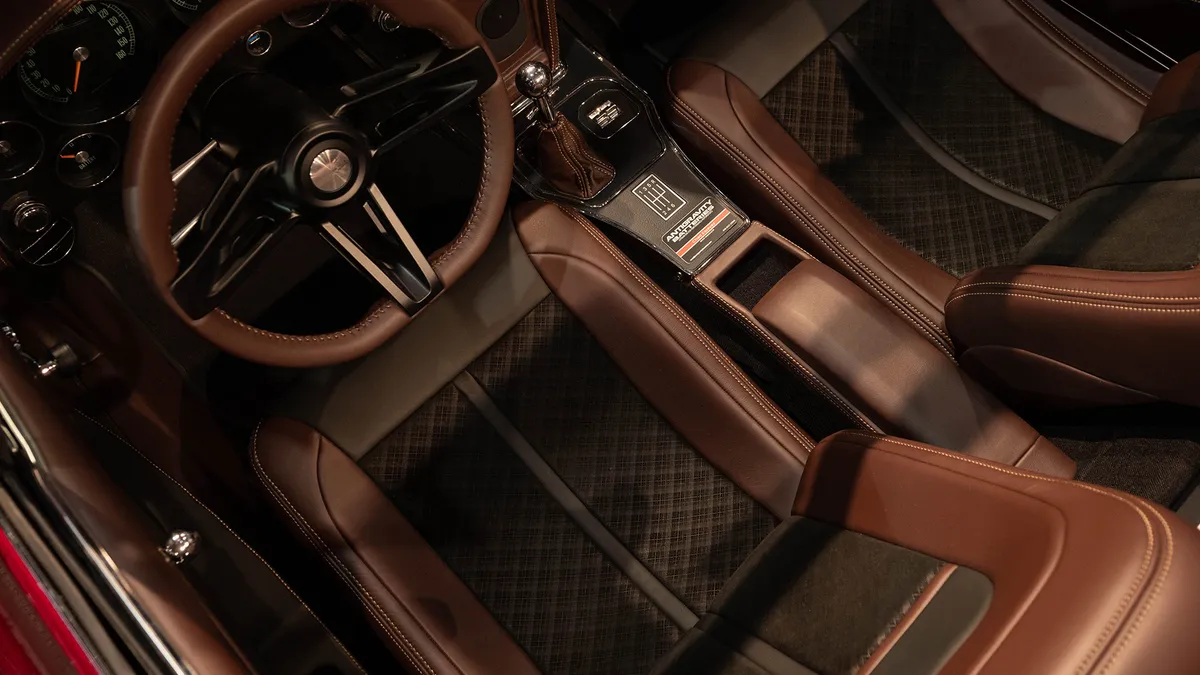
Leather seats do not usually fail because they dried out. They fail because body oil, denim dye and grit get ground into the finish and nobody wiped them off. That is why this guide leads with cleaning and treats conditioning as the second question. The Chemical Guys Leather Cleaner & Conditioner Kit is our top pick because it keeps the two jobs in separate bottles. The Weiman Leather Cleaner, Conditioner & Protector does both in one cheap trigger spray and adds sun protection, which is the sensible choice for most drivers. The Stemni six-piece kit adds a horse hair brush and pads for anyone starting from nothing. Chemical Guys VentRight targets perforated cooled seats, where ordinary product pools in the holes and stains. And Leather Honey is the conditioner to reach for when leather is genuinely dry. We compared them on product type, bottle size, whether a conditioner is included, the finish left behind, pH claims and what tools come in the box.
Table of contents
- Quick picks
- How much product comes in each pack
- Comparison table
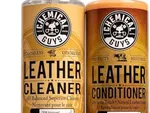
- Best Overall: Chemical Guys Leather Cleaner & Conditioner Kit, 2 x 16 oz
- Best Value: Weiman Leather Cleaner, Conditioner & Protector
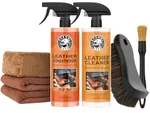
- Best Kit With Tools: Stemni Car Leather Cleaner and Conditioner Kit, 6 Pieces
- Best for Perforated Seats: Chemical Guys VentRight Leather Cleaner & Conditioner, 16 oz
- Best Conditioner for Dry Leather: Leather Honey Leather Conditioner, 8 oz
- How we chose
- What to consider before buying
- Your car leather is coated, and that changes everything
- What a conditioner actually does on a coated seat
- Perforated seats and the holes that hold product
- How often to clean, and the dye transfer problem
- Final recommendation
- FAQ
Quick picks
Every pick wins a specific use case. Jump to the full review before you buy.
-
Best Overall
Chemical Guys Leather Cleaner & Conditioner Kit, 2 x 16 oz
A proper two-bottle system that cleans first and conditions second, in a size that will last a normal car several years.
-
Best Value
Weiman Leather Cleaner, Conditioner & Protector
A cheap one-step trigger spray that cleans, conditions and adds sun protection in a single pass over the seat.
-
Best Kit With Tools
Stemni Car Leather Cleaner and Conditioner Kit, 6 Pieces
A six-piece set that pairs a cleaner and a conditioner with the horse hair brush and pads you would otherwise buy separately.
-
Best for Perforated Seats
Chemical Guys VentRight Leather Cleaner & Conditioner, 16 oz
A cleaner built for ventilated and perforated leather, where ordinary product runs into the holes and stays there.
-
Best Conditioner for Dry Leather
Leather Honey Leather Conditioner, 8 oz
A long-lasting, fragrance-free conditioner for genuinely dry leather, and one of the few worth using on an older or unfinished interior.
Compare every pick
| Product | Award | Product type | Container size | Conditioner included | Best for | Where to buy |
|---|---|---|---|---|---|---|
| Chemical Guys Leather Cleaner & Conditioner Kit, 2 x 16 oz | Best Overall | Two-step kit, cleaner and conditioner in separate bottles | 32 oz total, two 16 oz bottles | Yes, in its own bottle | Someone who cleans their own car properly and wants full control over the cleaning step and the conditioning step. | Check price for Chemical Guys Leather Cleaner & Conditioner Kit, 2 x 16 oz at Amazon (affiliate link) |
| Weiman Leather Cleaner, Conditioner & Protector | Best Value | One-step spray that cleans and conditions in the same pass | 12 oz trigger spray | Yes, mixed into the same liquid | Anyone who wants clean seats without a two-stage process, especially in a car parked outside all summer. | Check price for Weiman Leather Cleaner, Conditioner & Protector at Amazon (affiliate link) |
| Stemni Car Leather Cleaner and Conditioner Kit, 6 Pieces | Best Kit With Tools | Two-step kit with brushes, pad and towel | 32 oz total, two 16 oz bottles | Yes, in its own 16 oz bottle | A first-time buyer starting from nothing who wants the bottles and the tools to arrive in one box. | Check price for Stemni Car Leather Cleaner and Conditioner Kit, 6 Pieces at Amazon (affiliate link) |
| Chemical Guys VentRight Leather Cleaner & Conditioner, 16 oz | Best for Perforated Seats | Cleaner aimed at perforated and ventilated leather seats | 16 oz bottle | Named on the bottle, but the listing says to follow with your own conditioner | Owners of cooled or heated seats with perforated inserts, where product trapped in the holes is the real problem. | Check price for Chemical Guys VentRight Leather Cleaner & Conditioner, 16 oz at Amazon (affiliate link) |
| Leather Honey Leather Conditioner, 8 oz | Best Conditioner for Dry Leather | Conditioner only, no cleaning agent | 8 oz bottle | This is the conditioner, buy a cleaner separately | An older car with dry, thirsty leather, or a classic interior where the hide is not coated in modern polymer. | Check price for Leather Honey Leather Conditioner, 8 oz at Amazon (affiliate link) |
Swipe sideways to compare every column.
Best Overall
Chemical Guys Leather Cleaner & Conditioner Kit, 2 x 16 oz
by Chemical Guys
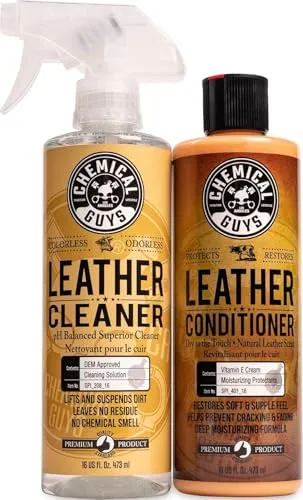
A proper two-bottle system that cleans first and conditions second, in a size that will last a normal car several years.
What we like
- Cleaner and conditioner come in separate 16 oz bottles, so you control how much of each goes on the seat
- Chemical Guys states the formulas are pH balanced and safe on natural, synthetic and sealed leather
- 32 oz of product for under thirty dollars is a lot of seat cleaning per bottle
- Works on furniture, boots and bags too, so the kit does not sit unused between car washes
What we don't
- Two steps means two passes over every seat, which takes roughly twice as long as a single spray
- No brush, pad or towel in the box, so you need to supply your own applicators
- The 16 oz bottles are more product than a small car with two leather seats will use in years
| Product type | Two-step kit, cleaner and conditioner in separate bottles |
|---|---|
| Container size | 32 oz total, two 16 oz bottles |
| Conditioner included | Yes, in its own bottle |
| Ph balanced | Yes, stated by Chemical Guys |
| Applicator included | No, bottles only |
| Price bracket | $ |
This kit takes the top spot because it does the thing most leather products refuse to do. It separates the two jobs. Cleaning leather and conditioning leather need different chemistry, and a bottle that claims to do both at once is always a compromise on one side or the other. Here you get a dedicated cleaner in one 16 oz bottle and a dedicated conditioner in the other.
The order matters. You spray the cleaner onto an applicator pad or a towel, not straight onto the seat, then work one panel at a time and wipe the lifted dirt off before it dries. Once the seat is clean and dry, the conditioner goes on thin. Thin is the whole trick. A heavy coat of conditioner on a modern coated seat has nowhere to go, so it sits on the surface and makes the seat slick.
Chemical Guys says both formulas are pH balanced and safe on natural, synthetic and sealed leather. That last word covers almost every car built in the past thirty years, since the leather in your seats is finished with a pigmented polymer coat rather than left as bare hide.
The kit is not fast. Two passes over four seats plus a steering wheel and a couple of door cards is a real job, closer to an hour than fifteen minutes. It also arrives as two bare bottles, so budget for a pad and a stack of towels if you do not already have them.
What you are paying for is control and volume. Thirty-two ounces will outlast most people’s interest in detailing, and the same bottles work on a leather sofa, a pair of boots or a bag. It sits in the mid-range of Amazon’s leather care sales rank, which is where a two-step product usually lands next to the one-bottle sprays.
This is a research-based pick built from the live Amazon listing and manufacturer information, not hands-on testing.
Research-based pick: this recommendation is based on product data, owner feedback and comparison with products we have tested, not on direct hands-on testing.
Buy it if: Someone who cleans their own car properly and wants full control over the cleaning step and the conditioning step.
Skip it if: You want the job done in one pass, in which case the Weiman spray is the sensible pick.
Best Value
Weiman Leather Cleaner, Conditioner & Protector
by Weiman
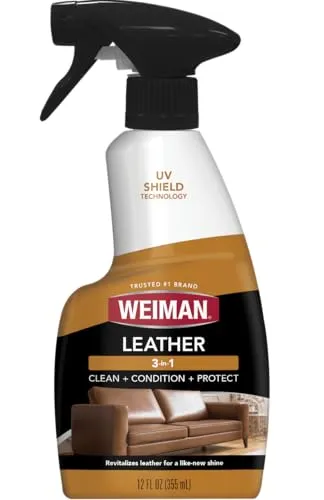
A cheap one-step trigger spray that cleans, conditions and adds sun protection in a single pass over the seat.
What we like
- Under ten dollars for 12 oz makes this the lowest cost per clean of any pick here
- One bottle and one pass, so a full interior takes about twenty minutes instead of an hour
- Weiman includes UVX-15 sun protection, which targets the fading and cracking that kills leather dashes and seat tops
- Strong seller in Amazon's leather care category, which is a real signal that people repurchase it
What we don't
- A combined cleaner and conditioner does neither job as thoroughly as two separate bottles
- Weiman lists it for finished leather only, so it is the wrong product for a bare aniline or nubuck seat
- 12 oz is the smallest useful size here, and a large SUV interior will go through it quickly
| Product type | One-step spray that cleans and conditions in the same pass |
|---|---|
| Container size | 12 oz trigger spray |
| Conditioner included | Yes, mixed into the same liquid |
| Finish left | No greasy residue, with UVX-15 sun protection |
| Applicator included | No, trigger spray only |
| Price bracket | $ |
Weiman is the pick for people who want the seats clean and do not want a project. It is a trigger spray. You spray it on a microfiber towel, wipe a panel, and the same liquid that lifts the dirt leaves conditioning oils and a sun blocker behind. One pass, one bottle, done.
The formula is built around six natural oils plus a UV screen Weiman calls UVX-15. Sun protection matters more on a car seat than on a sofa, because the top of a seat back and the bolster nearest the window take direct sunlight every day the car is parked outside. That is where cracking and fading show up first, years before the seat wears through.
The trade-off is real and worth stating. A product that cleans and conditions in the same liquid is holding back on the cleaning side, because a cleaner strong enough to strip embedded grime would also strip the oils it is trying to leave behind. On lightly soiled seats you will not notice. On a five year old driver’s seat with a dark polished patch on the bolster, you will, and a dedicated cleaner will pull more out.
Weiman is clear that this is for finished leather. Almost all car seats qualify. If you have an unfinished aniline or nubuck seat in an older luxury car, this is not the product, and neither is most of what is sold as car leather cleaner.
At under ten dollars for 12 oz it is the cheapest way to keep leather seats in decent shape, and the low sales rank suggests plenty of people buy it more than once. Its size is the main limit. Two rows of leather in an SUV will empty the bottle faster than you expect.
This is a research-based pick built from the live Amazon listing and manufacturer information, not hands-on testing.
Research-based pick: this recommendation is based on product data, owner feedback and comparison with products we have tested, not on direct hands-on testing.
Buy it if: Anyone who wants clean seats without a two-stage process, especially in a car parked outside all summer.
Skip it if: Your seats are heavily soiled, where a dedicated cleaner will lift more than a combination spray can.
Best Kit With Tools
Stemni Car Leather Cleaner and Conditioner Kit, 6 Pieces
by Stemni
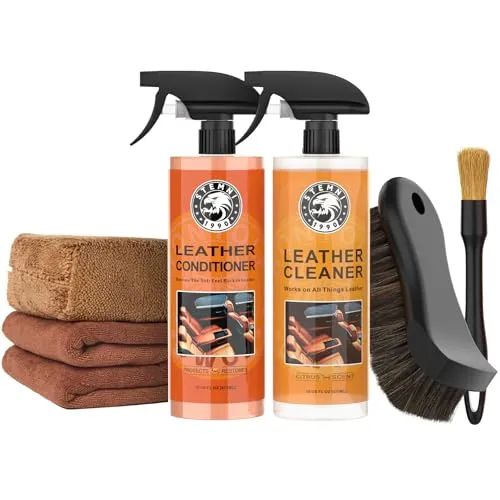
A six-piece set that pairs a cleaner and a conditioner with the horse hair brush and pads you would otherwise buy separately.
What we like
- Includes a horse hair brush, a smaller detailing brush, an applicator pad and a microfiber towel alongside both bottles
- Soft horse hair bristles reach into grain and stitching where a flat towel just slides over the top
- Two 16 oz bottles means a full cleaner plus a full conditioner, not sample sizes
- Stemni states the formulas are pH balanced and safe on natural, synthetic and sealed leather
What we don't
- Costs about a third more than the same two bottles bought on their own from an established brand
- Stemni is a newer name with far less track record than Chemical Guys, Weiman or Leather Honey
- The brush tempts people to scrub, and hard scrubbing is what wears the printed grain off a coated seat
| Product type | Two-step kit with brushes, pad and towel |
|---|---|
| Applicator included | Yes, horse hair brush, detailing brush, applicator pad and microfiber towel |
| Container size | 32 oz total, two 16 oz bottles |
| Conditioner included | Yes, in its own 16 oz bottle |
| Ph balanced | Yes, stated by Stemni |
| Price bracket | $ |
Most leather cleaner sold for cars arrives as a bare bottle, and then you find out that a towel alone does not get into the grain. Stemni solves that by putting the tools in the box. You get a 16 oz cleaner, a 16 oz conditioner, a horse hair brush, a smaller detailing brush, an applicator pad and a microfiber towel.
The horse hair brush is the piece that earns the kit its place. Car leather is embossed with a grain pattern, and dirt settles into the low points of that pattern and into the stitching seams. Wiping with a flat towel skims the high points and leaves the rest. A soft brush agitates the cleaner down into those channels so the towel has something to pick up.
Use it gently. Horse hair is chosen because it is soft, and the technique is light circles with the cleaner already foaming, not pressure. The finish on a modern seat is a printed and coated layer, and enough scrubbing will dull or thin it. Once that happens no conditioner brings it back.
Stemni describes the formulas as pH balanced and safe for natural, synthetic and sealed leather, which matches what the bigger brands claim. The company itself is new, and its sales rank sits well below the established names in the category. That is not evidence of a bad product, but it does mean less accumulated feedback to lean on than a formula that has been sold for decades.
Price is the sticking point. The bundle costs noticeably more than an established two-bottle kit, and the difference is the tools. If you have never detailed an interior and own nothing, that is fair. If your garage already has brushes and a stack of microfiber, buy bottles instead.
This is a research-based pick built from the live Amazon listing and manufacturer information, not hands-on testing.
Research-based pick: this recommendation is based on product data, owner feedback and comparison with products we have tested, not on direct hands-on testing.
Buy it if: A first-time buyer starting from nothing who wants the bottles and the tools to arrive in one box.
Skip it if: You already own brushes and towels, since you are then paying extra for duplicates.
Best for Perforated Seats
Chemical Guys VentRight Leather Cleaner & Conditioner, 16 oz
by Chemical Guys
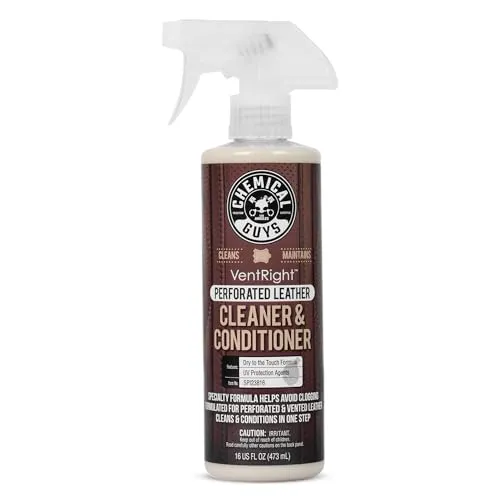
A cleaner built for ventilated and perforated leather, where ordinary product runs into the holes and stays there.
What we like
- Formulated to move through the perforations instead of pooling in them and drying to a crust
- Aimed squarely at cooled and heated seats, which no other pick here addresses
- 16 oz is enough to do a set of vented seats many times over
- Chemical Guys designed it to be followed by whatever conditioner or protectant you already own
What we don't
- The bottle says cleaner and conditioner, but the listing text describes it as a cleaning step you follow with your own conditioner
- Costs more than a general-purpose spray that will handle a smooth, unperforated seat perfectly well
- Chemical Guys does not state a pH figure for this formula the way it does for its two-bottle kit
| Product type | Cleaner aimed at perforated and ventilated leather seats |
|---|---|
| Container size | 16 oz bottle |
| Conditioner included | Named on the bottle, but the listing says to follow with your own conditioner |
| Finish left | Clean, with buildup pulled out of the perforations |
| Applicator included | No, bottle only |
| Price bracket | $ |
Perforated seats are their own problem, and almost nobody makes a product for them. The tiny holes in a cooled or heated seat insert exist so air can pass through the leather. Spray a thick conditioner onto that surface and the liquid runs into the holes, where it cannot evaporate properly. It dries into pale rings around each perforation, and on a light interior those rings show from across the parking lot.
VentRight is Chemical Guys’ answer. The listing describes a flow-through formula meant to travel along those micro-channels and carry trapped buildup out rather than settling into it. That is the right idea. The practical technique still matters more than the bottle: spray onto a pad, never straight at a perforated panel, and wipe across the holes rather than pressing product down into them.
Be aware of what you are actually buying. The product name includes the words cleaner and conditioner, but the feature text repeatedly describes it as the cleaning step and says it works alongside any leather conditioner or protectant you choose. Read plainly, this is a cleaner. Plan on owning a conditioner as well.
There is also a small labelling oddity worth knowing before you order. The listing’s first bullet quotes a part number of SPI92016 while the product is sold under model SPI23816SW. Nothing about that changes the formula, but it is the sort of thing that makes people think they received the wrong item.
If your seats are smooth leather with no holes in them, skip this and buy something cheaper. It is a specialist tool, and it only pays off when the perforations are the thing giving you trouble.
This is a research-based pick built from the live Amazon listing and manufacturer information, not hands-on testing.
Research-based pick: this recommendation is based on product data, owner feedback and comparison with products we have tested, not on direct hands-on testing.
Buy it if: Owners of cooled or heated seats with perforated inserts, where product trapped in the holes is the real problem.
Skip it if: Your seats have no perforations, since a general cleaner does the same job for less money.
Best Conditioner for Dry Leather
Leather Honey Leather Conditioner, 8 oz
by Leather Honey
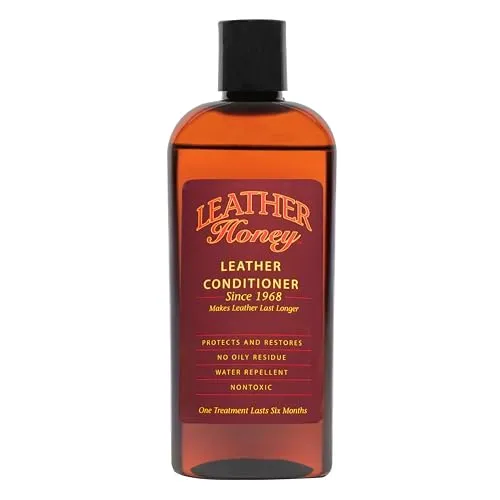
A long-lasting, fragrance-free conditioner for genuinely dry leather, and one of the few worth using on an older or unfinished interior.
What we like
- One application is rated to last at least six months, against monthly reapplication for most rivals
- Contains no silicone and no solvents, so it does not leave the slick shine that cheap dressings do
- Free of PFAS and made without animal products, and Leather Honey has sold the same formula since 1968
- One of the best selling leather care products on Amazon, sitting near the top of its category
What we don't
- It only conditions, so you still need a separate cleaner before you use it
- Cannot be used on suede, faux leather or vinyl, which rules out a lot of modern seat inserts
- 8 oz for around seventeen dollars is the highest price per ounce in this guide
- It soaks in slowly, so seats need to sit for hours before anyone can lean back on them
| Product type | Conditioner only, no cleaning agent |
|---|---|
| Container size | 8 oz bottle |
| Conditioner included | This is the conditioner, buy a cleaner separately |
| Finish left | Non-sticky and water repellent, fragrance-free |
| Ph balanced | Yes, stated by Leather Honey |
| Price bracket | $ |
Leather Honey is the conditioner to buy when your leather is genuinely dry, and it is worth being clear that a lot of car leather is not. The formula dates to 1968 and was built for furniture, saddles and boots, where the hide is often unfinished and can actually absorb oil. It has been sold unchanged long enough to sit near the very top of Amazon’s leather care sales chart.
The headline claim is durability. Leather Honey says one application lasts at least six months, where most conditioners ask for monthly treatment. That is possible because the product penetrates rather than sitting on top. It contains no silicone and no solvents, which is why it dries non-sticky instead of leaving the greasy sheen that cheap seat dressings do.
Application is slow on purpose. You apply a thin coat with a cloth, leave it for two hours or more, then wipe off anything that has not soaked in. On very dry leather a second coat helps. On a seat you use every day, plan to do it on a weekend, because leaving it to absorb properly is the whole point.
There are hard limits. It is a conditioner and nothing else, so dirt has to come off first with a proper cleaner. It cannot go on suede, faux leather or vinyl, and a modern car interior often mixes real leather bolsters with vinyl or synthetic panels that look identical from a foot away. Check what you actually have before you start.
Price per ounce is the highest here, and 8 oz is a small bottle. Against that, six months of coverage from one treatment means the running cost is lower than the sticker suggests. Leather Honey also sells a kit that pairs the conditioner with a matching cleaner if you want both from the same brand.
This is a research-based pick built from the live Amazon listing and manufacturer information, not hands-on testing.
Research-based pick: this recommendation is based on product data, owner feedback and comparison with products we have tested, not on direct hands-on testing.
Buy it if: An older car with dry, thirsty leather, or a classic interior where the hide is not coated in modern polymer.
Skip it if: Your seats are recent factory leather in good condition, which needs cleaning far more than it needs oil.
How we chose#
This is a research-based guide, not a hands-on test. Nobody can fairly rank five leather cleaners without five identical dirty seats, so we did not pretend to. What we did compare is what each product is, what the maker actually claims, what is in the box and where each one fits.
We picked one product per job rather than five versions of the same spray. That gives you a two-bottle system, a one-step budget spray, a kit that includes brushes and pads, a specialist cleaner for perforated seats, and a dedicated conditioner. Every price, size and model number here comes from the live Amazon listing checked on 2 September 2026.
Two of these picks, the Weiman spray and the Leather Honey conditioner, sit near the top of Amazon’s leather care sales chart. We treat that as a signal that people buy them again, not as proof of performance. We left out anything that would not say what it contains or what surfaces it is safe on.
What to consider before buying#
Start by working out what kind of leather you have. If your seats came from a factory in the past three decades, they are almost certainly coated. Coated leather wants cleaning. Uncoated leather, which shows up on older cars and some high-end aniline interiors, wants both cleaning and feeding. Get this wrong and you will spend money on oil that never goes anywhere.
Then decide how much of a job you want it to be. A one-step spray like Weiman turns a full interior into a twenty minute wipe down. A two-step system doubles that, and a kit with brushes doubles it again if you do the job properly. Buy the one you will actually use, because a bottle of the best leather cleaner in the world does nothing sitting in a garage.
Look at what is in the box. Most leather cleaner arrives as a bare bottle and quietly assumes you own microfiber towels, an applicator pad and a soft brush. If you do not, add that to the price. The Stemni kit bundles all of it, which is why it costs more than the bottles alone are worth.
Finally, check the surfaces list. Every product here works on finished leather. None of them go on suede. Leather Honey specifically excludes faux leather and vinyl, and a modern interior often mixes real leather bolsters with vinyl panels that look and feel almost the same. For the rest of the cabin, plastics, screens and cloth trim, a general car interior cleaner is the right tool instead.
Your car leather is coated, and that changes everything#
The word leather makes people picture a saddle or a work boot. Car seats are not that. Almost all automotive leather is finished with a pigmented polymer topcoat, a thin flexible layer of colour and clear coat sprayed onto the hide and then embossed with a grain pattern. That coat is what makes a seat survive sunlight, sweat, seatbelt buckles and twenty thousand slides in and out of the driver’s door.
So when you clean a car seat, you are cleaning a plastic film. The hide underneath is sealed off. That is good news, because it means dirt sits on top where a mild cleaner can lift it. It also means the failure mode is different from what people expect. Seats do not usually crack because the leather dried out. They crack because the topcoat wore thin at a flex point, or got repeatedly hit by UV, and then split.
This is also why pH matters. The topcoat is a polymer, and strongly alkaline household cleaners attack polymers. A pH balanced formula, which Chemical Guys and Stemni both state for their kits, is aiming for something close to neutral so it lifts soil without softening the finish. That single detail separates a leather cleaner from the all-purpose cleaner under your sink.
What a conditioner actually does on a coated seat#
Here is the uncomfortable part of leather care. Most car leather does not need conditioning oil, and heavy conditioners leave a slick greasy seat. The marketing here is largely inherited from furniture care, where hides are often unfinished and really can drink oil.
A conditioner cannot feed a coated seat, because the polymer topcoat blocks it. What conditioners do on modern leather is sit on the surface. The better ones, like Leather Honey with no silicone and no solvents, leave a matte, non-sticky film and add a bit of water repellency. The cheap ones leave a shine that looks wet in photos, transfers onto your clothes, and makes the seat slippery under braking.
That does not make conditioner useless. It means you should use very little of it, and apply it to the towel rather than the seat. It also means the picks that matter most for a modern car are the cleaning products. Leather Honey earns its place here for older and uncoated interiors, where the oil genuinely gets in and the six month durability claim is worth having.
If your seats already feel stiff and look dry, conditioner is worth a try, but be realistic. A conditioner cannot repair a worn topcoat or refill a crack. Once the finish has split, the fix is a dye and refinish job, not a bottle.
Perforated seats and the holes that hold product#
Cooled and heated seats need airflow, so the leather insert is punched with hundreds of small holes. Those holes are where leather care goes wrong. Spray any liquid straight at a perforated panel and it runs into the perforations, where there is very little air movement and no easy path out. It dries slowly and leaves a pale ring around each hole. On a beige or grey interior, the pattern is obvious and stubborn.
The fix is technique before product. Spray onto an applicator pad or a folded microfiber, then wipe across the surface. Work in one direction so you are dragging soil out of the holes rather than pushing it in. Do not soak the panel and do not use a stiff brush on perforations, because the bristle tips push liquid down into the channels. Good microfiber towels matter more here than anywhere else in the car, since a cheap towel sheds lint straight into the holes.
Chemical Guys VentRight is the only pick here made for this specific problem, with a flow-through formula meant to move along those channels and carry buildup out. It is worth the extra money if your seats are vented. If they are smooth leather, it does nothing a cheaper cleaner cannot.
How often to clean, and the dye transfer problem#
Cleaning frequency is the thing that actually decides how a leather interior ages. Every two or three months is enough for a normal car. What ruins seats is leaving body oil and grit in place, because grit works like sandpaper against the topcoat every time you sit down and slide across.
The driver’s seat bolster does most of the suffering. It takes your weight, the friction of getting in and out, and whatever is in your back pocket. A quick wipe of that one panel every few weeks does more for the interior than a full detail twice a year.
Light interiors have a second problem. Dark denim transfers dye onto pale leather, and the longer it sits the deeper it migrates into the texture of the coating. Fresh transfer comes off with a cleaner and a soft brush, which is where the horse hair brush in the Stemni kit does real work. Old transfer often does not come off at all. If you have cream or light grey seats and you wear dark jeans, clean monthly and treat it as maintenance rather than a deep clean. It also helps to vacuum grit off the seats first, and our guide to the best car vacuums covers the tools for that.
Final recommendation#
For a car you clean yourself and care about, buy the Chemical Guys Leather Cleaner & Conditioner Kit. Separate bottles mean you can clean hard and condition lightly, which is the right order and the right ratio for coated seats. Most people, though, will be happier with the Weiman Leather Cleaner, Conditioner & Protector. It costs under ten dollars, cleans a whole interior in one pass, and adds sun protection where a parked car needs it most. Choose the Stemni kit if you are starting with nothing and want the brushes, pads and towel in the same box, and accept that you are paying a premium for the tools. Get the Chemical Guys VentRight if your seats are perforated for heating or cooling, since it is the only product here built for that problem. And buy Leather Honey only if your leather is genuinely dry or uncoated, because on a healthy modern seat the cleaning step is what matters and the oil is not going anywhere.
Frequently asked questions
Do car leather seats really need conditioning?
Far less often than the bottles suggest. Almost every car built in the past thirty years has pigmented, coated leather, which means a polymer film sits between the oil and the hide. Conditioner cannot pass through that film, so it mostly stays on the surface. Clean seats regularly and you have done ninety percent of the work. Conditioner earns its place on older cars, on unfinished aniline hides, and on interiors that have already gone dry and stiff, which is where Leather Honey makes sense.
Can I use household cleaner or baby wipes on car leather?
Not if you want the finish to last. All-purpose cleaners are usually alkaline, and a high pH softens and eventually breaks down the clear coat on a coated seat. Baby wipes are worse than they look because many contain alcohol and surfactants that strip the topcoat a little at a time, which is why a seat wiped with them for years goes patchy and shiny. Use something made for leather. Chemical Guys and Stemni both state their formulas are pH balanced, and that claim is the one to look for.
What is the difference between a leather cleaner and a leather conditioner?
A cleaner is a mild detergent that lifts dirt, sweat and body oil off the surface so you can wipe them away. A conditioner adds oils or waxes back, meant to keep the material flexible. They pull in opposite directions, so a bottle that claims both is holding back on the cleaning side. The Weiman spray does both in one pass and that is fine for light dirt. For a seat that is actually soiled, the Chemical Guys two-bottle kit cleans harder because the cleaner is not carrying oils.
How often should I clean leather car seats?
Every two or three months for a daily driver is plenty, with a quick wipe of the driver's seat bolster more often. That bolster is where you slide in and out, and it collects more wear than the rest of the interior combined. If you wear dark denim, clean the driver's seat monthly, because dye transfer sets harder the longer it sits. A car that is only driven at weekends can go twice a year without any harm.
How do I clean perforated or ventilated leather seats without staining them?
Never spray anything directly at a perforated panel. Liquid runs into the holes, sits where it cannot dry, and leaves pale rings around each perforation that are very difficult to remove. Spray onto a pad or towel first, then wipe across the holes rather than pressing into them. Chemical Guys VentRight is built for exactly this, with a formula meant to travel through the micro-channels and carry buildup out instead of sealing it in.
Will leather cleaner remove blue jean dye from light seats?
Sometimes, if you catch it early. Fresh dye transfer sits on top of the clear coat and a proper cleaner with a soft brush will lift most of it. Once it has been there for months it migrates into the texture of the coating and no ordinary cleaner will fully remove it. The Stemni kit is useful here because the horse hair brush works the cleaner into the grain where the dye hides. Prevention beats treatment. Clean light seats monthly if you wear dark denim.
About the author

Dale Harper Lead Gear Editor
Dale is a longtime truck owner and former accessory-shop tech who builds these guides from manufacturer fit data, aggregated owner feedback and direct spec comparison. Research-based picks are always labelled as such.
Daily driver: 2022 Ford F-150 XLT SuperCrew
- Tonneau covers and bed accessories
- Seat covers and interior protection
- Lift kits and suspension