The Best Jumper Cables: 5 Sets Compared for 2026
Five jumper cable sets compared on gauge, length, amps and clamps, from a cheap 6 gauge pair to a 0 gauge diesel set, with the honest limits.

Jumper cables are cheap, they all look the same in a photo, and the difference between a good pair and a bad pair only shows up on the one morning you need them. This guide compares five sets actually sold on Amazon: the Energizer 4 gauge 20 foot cables as the safe default, the shorter and cheaper Energizer 6 gauge 16 foot set, the ExtreSpo 0 gauge 25 foot cables for diesels and work trucks, the NOONE 2 gauge 20 foot set with a reverse polarity alarm and a voltage display, and the AutoChat 1 gauge 30 foot cables for when the two cars simply cannot get close. We compared them on wire gauge, cable length, published amp rating, clamp design, temperature range and what comes in the bag. By the end you will know which gauge your engine actually needs, why length quietly costs you starting power, and which part of a cheap set fails first.
Table of contents
- Quick picks
- Cable length compared
- Comparison table
- Best Overall: Energizer Heavy Duty Jumper Cables 4 Gauge 20 Feet
- Best Value: Energizer Jumper Cables 6 Gauge 16 Feet
- Best for Trucks and Diesels: ExtreSpo Heavy Duty Jumper Cables 0 Gauge 25 Feet
- Best for Beginners: NOONE 2 Gauge 20 Foot Jumper Cables with Smart-7 Protector
- Best for Long Reach: AutoChat Heavy Duty Jumper Cables 1 Gauge 30 Feet
- How we chose
- What to consider before buying
- Why gauge numbers run backwards
- Longer cables cost you starting power
- The right order to connect the clamps
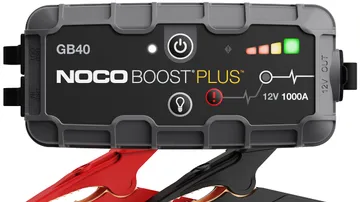
- When a jump pack is the better tool
- Final recommendation
- FAQ
Quick picks
Every pick wins a specific use case. Jump to the full review before you buy.
-
Best Overall
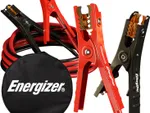
Energizer Heavy Duty Jumper Cables 4 Gauge 20 Feet
A 4 gauge, 20 foot set from a brand that sells in real volume, thick enough and long enough for almost every car and half-ton truck.
-
Best Value
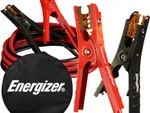
Energizer Jumper Cables 6 Gauge 16 Feet
The cheaper, thinner, shorter version of our top pick, and still enough cable for a small car if you can park the two vehicles close together.
-
Best for Trucks and Diesels
ExtreSpo Heavy Duty Jumper Cables 0 Gauge 25 Feet
A thick 0 gauge, 25 foot set rated for 12V and 24V vehicles, built for engines that a normal set of cables cannot turn over.
-
Best for Beginners
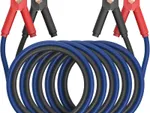
NOONE 2 Gauge 20 Foot Jumper Cables with Smart-7 Protector
A 2 gauge, 20 foot set with a protector box that shows battery voltage and warns you with a red light if the clamps are on backward.
-
Best for Long Reach
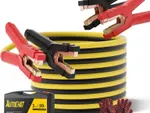
AutoChat Heavy Duty Jumper Cables 1 Gauge 30 Feet
Thirty feet of 1 gauge cable for the times the two cars cannot get close, such as a parking garage, a snowbank or a driveway with the dead car facing the wrong way.

Compare every pick
| Product | Award | Gauge | Cable length | Amperage rating | Best for | Where to buy |
|---|---|---|---|---|---|---|
| Energizer Heavy Duty Jumper Cables 4 Gauge 20 Feet | Best Overall | 4 AWG copper clad aluminum | 20 feet | Not published by Energizer | Anyone with a normal car, crossover or half-ton pickup who wants one set of cables to keep in the trunk and stop thinking about. | Check price for Energizer Heavy Duty Jumper Cables 4 Gauge 20 Feet at Amazon (affiliate link) |
| Energizer Jumper Cables 6 Gauge 16 Feet | Best Value | 6 AWG copper clad aluminum | 16 feet | Not published by Energizer | A compact or mid-size car owner who wants cheap insurance in the trunk and can usually get the helping car parked nose to nose. | Check price for Energizer Jumper Cables 6 Gauge 16 Feet at Amazon (affiliate link) |
| ExtreSpo Heavy Duty Jumper Cables 0 Gauge 25 Feet | Best for Trucks and Diesels | 0 AWG copper clad aluminum | 25 feet | 1000 A instantaneous | Diesel pickup, work van and commercial truck owners who need cables that will not sag when a big starter pulls hard. | Check price for ExtreSpo Heavy Duty Jumper Cables 0 Gauge 25 Feet at Amazon (affiliate link) |
| NOONE 2 Gauge 20 Foot Jumper Cables with Smart-7 Protector | Best for Beginners | 2 AWG copper clad aluminum | 20 feet | 600 A instantaneous | A new driver, or anyone buying cables for a family member who has never jumped a car and would rather not learn under pressure. | Check price for NOONE 2 Gauge 20 Foot Jumper Cables with Smart-7 Protector at Amazon (affiliate link) |
| AutoChat Heavy Duty Jumper Cables 1 Gauge 30 Feet | Best for Long Reach | 1 AWG | 30 feet | 900 A instantaneous | Drivers who park in tight garages, or anyone whose vehicle usually dies somewhere the helping car cannot easily reach. | Check price for AutoChat Heavy Duty Jumper Cables 1 Gauge 30 Feet at Amazon (affiliate link) |
Swipe sideways to compare every column.
Best Overall
Energizer Heavy Duty Jumper Cables 4 Gauge 20 Feet
by Energizer
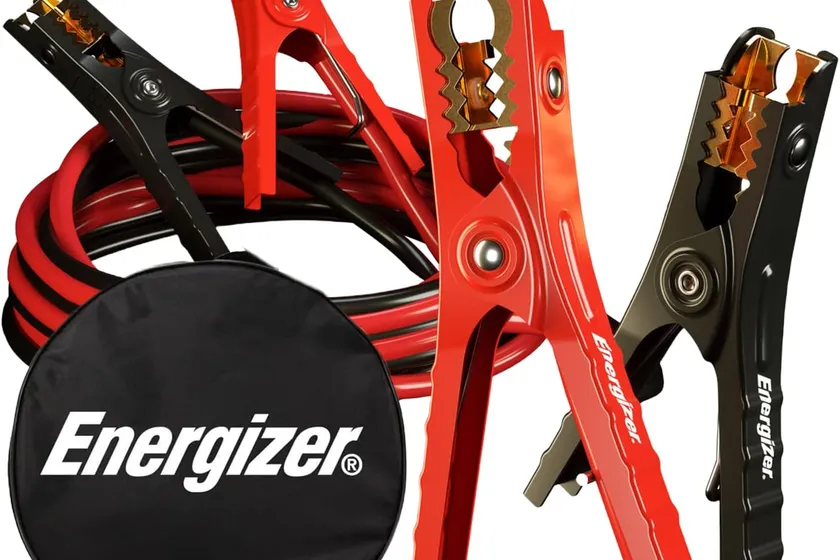
A 4 gauge, 20 foot set from a brand that sells in real volume, thick enough and long enough for almost every car and half-ton truck.
What we like
- 4 gauge is the sweet spot for passenger cars and light trucks, thick enough to carry a strong current without being awkward to coil
- 20 feet reaches from one battery to another even when the cars cannot be parked nose to nose
- Sits inside the top 200 sellers in its Amazon category, so problems would show up in feedback quickly
- Comes with a zip travel bag, which is the difference between cables that live in the trunk and cables that live in a tangle
What we don't
- Energizer does not publish an amp rating, so you cannot compare its current capacity against sets that do
- Copper clad aluminum, not solid copper, so it carries less current than a pure copper set of the same gauge
- No reverse polarity alarm, so hooking up backward is entirely on you
| Gauge | 4 AWG copper clad aluminum |
|---|---|
| Cable length | 20 feet |
| Amperage rating | Not published by Energizer |
| Vehicle rating | Trucks, SUVs, full-size, mid-size and compact cars |
| Safety protection | Thick vinyl insulation, no polarity alarm |
| Price bracket | $ |
Most people buy jumper cables once. This is the set to buy if you only want to do it once. It is 4 gauge, which is thick enough to start a normal engine without the cables getting hot, and it is 20 feet long, which is long enough to reach a battery on the far side of the other car.
Energizer is not making anything clever here. The cables are copper clad aluminum with a thick vinyl jacket, the clamps have springs and coated handles, and there is a zip bag to keep the whole thing tidy. That is the entire product. What it has going for it is scale. The listing sits inside the top 200 sellers in its Amazon category, which means a very large number of people have bought it and kept buying it. That is not the same as a lab test, but it does mean a bad batch would be loud and obvious.
The gap in the listing is the amp rating. Energizer does not publish one. Sets like the ExtreSpo 0 gauge and the NOONE 2 gauge both state a peak current figure, and this one just says 4 gauge and leaves you to work it out. Those peak numbers are self-reported and not audited, so they are not proof of much either, but their absence makes a direct comparison harder.
The other honest limit is chemistry. Copper clad aluminum carries less current than solid copper at the same gauge. Nearly every set in this price range is copper clad aluminum, so it is not a mark against this one specifically, but it does mean you should not read “4 gauge” here as equal to 4 gauge welding cable.
Buy it for a sedan, crossover or half-ton truck. Step up to the ExtreSpo 0 gauge if you own a diesel, or the NOONE 2 gauge if a reverse polarity alarm would let you sleep better.
Research-based pick: this recommendation is based on product data, owner feedback and comparison with products we have tested, not on direct hands-on testing.
Buy it if: Anyone with a normal car, crossover or half-ton pickup who wants one set of cables to keep in the trunk and stop thinking about.
Skip it if: You drive a big diesel or a 24V vehicle, where 4 gauge will heat up before it delivers the current the starter wants.
Best Value
Energizer Jumper Cables 6 Gauge 16 Feet
by Energizer
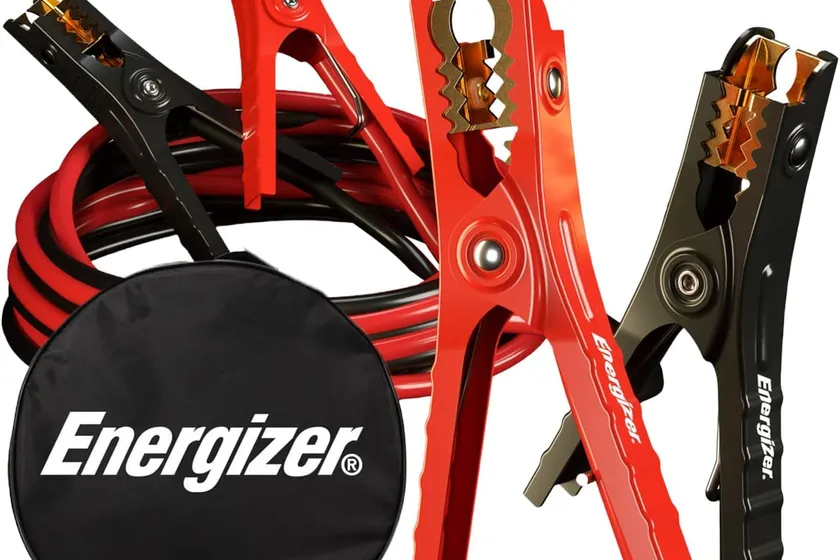
The cheaper, thinner, shorter version of our top pick, and still enough cable for a small car if you can park the two vehicles close together.
What we like
- Costs meaningfully less than the 4 gauge version while coming from the same product family and the same seller
- 16 feet and 6 gauge coils down small, so it fits under a seat or in a spare tire well
- Same top 200 category sales position as the 4 gauge set, so the design has a lot of buyers behind it
- Includes the same zip travel bag, so it stores without turning into a knot
What we don't
- 6 gauge is a real step down in current capacity, and a cold, tired battery will take longer to bring back
- 16 feet is short enough that the two cars have to be parked close, which is not always possible in a parking garage
- No published amp rating and no reverse polarity alarm
| Gauge | 6 AWG copper clad aluminum |
|---|---|
| Cable length | 16 feet |
| Amperage rating | Not published by Energizer |
| Clamp type | Sprung clamps with coated handles |
| Case included | Yes, zip travel bag |
| Price bracket | $ |
This is the same idea as our top pick, made thinner and shorter to hit a lower price. It is 6 gauge instead of 4, and 16 feet instead of 20. If you drive a small car and you are buying cables mostly so that you own a pair, this is a sensible place to spend your money.
Six gauge is not nothing. It is far better than the 8 and 10 gauge sets that sell for under fifteen dollars, and for a four-cylinder engine on a mild day it will do the job. The current it can carry is lower than 4 gauge though, and that shows up exactly when you need it least, which is a January morning with a battery that has been dying quietly for two months. On a cold start you may need to let the good car run for several minutes before the dead one will turn over.
The length is the other compromise. Sixteen feet is enough when two cars are nose to nose in a driveway. It is not enough when a helpful stranger pulls in beside you in a parking lot and the batteries end up on opposite corners. Our 20 and 25 foot picks exist for that situation.
The build is the same as the 4 gauge set: copper clad aluminum core, thick vinyl coating, sprung clamps with coated handles, zip bag included. It carries the same strong category sales position, so the design has plenty of owners behind it. Energizer does not list an amp rating for either set.
Buy it for a small car and a tight budget. Spend the extra on the 4 gauge Energizer if you want one set that will not feel undersized in five years.
Research-based pick: this recommendation is based on product data, owner feedback and comparison with products we have tested, not on direct hands-on testing.
Buy it if: A compact or mid-size car owner who wants cheap insurance in the trunk and can usually get the helping car parked nose to nose.
Skip it if: You drive anything with a large engine, or you park where you cannot control how the other car pulls up.
Best for Trucks and Diesels
ExtreSpo Heavy Duty Jumper Cables 0 Gauge 25 Feet
by ExtreSpo
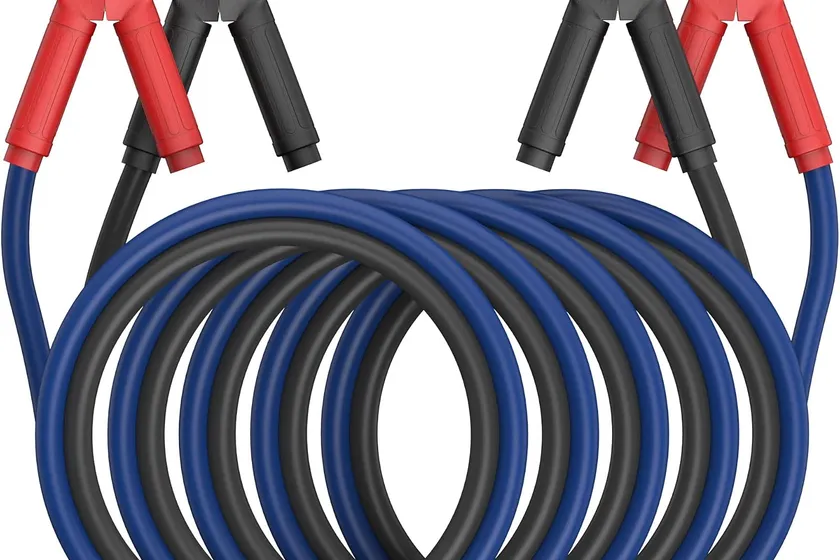
A thick 0 gauge, 25 foot set rated for 12V and 24V vehicles, built for engines that a normal set of cables cannot turn over.
What we like
- 0 gauge is the thickest wire in this guide and the only one rated up to 8.0L gas and 6.0L diesel engines
- Works on 12V and 24V systems, so it covers commercial trucks as well as pickups
- 25 feet lets you reach across a truck bed or from a tow rig parked at an angle
- Ships with gloves and terminal brushes, which are the two things you always wish you had at the roadside
What we don't
- Heavy and stiff, so it fills a good chunk of a trunk and is a chore to coil back into the bag
- Costs roughly three times the price of our top pick, which is wasted money on a four-cylinder car
- The 1000 amp figure is self-reported by the brand, not measured by an independent lab
| Gauge | 0 AWG copper clad aluminum |
|---|---|
| Cable length | 25 feet |
| Amperage rating | 1000 A instantaneous |
| Vehicle rating | Up to 8.0L gas and 6.0L diesel, 12V and 24V |
| Case included | Yes, plus gloves and terminal brushes |
| Price bracket | $$ |
Big engines need more current, and current needs thicker wire. That is the whole argument for this set. At 0 gauge it is the thickest cable in this guide by a wide margin, and ExtreSpo rates it for engines up to 8.0L gas and 6.0L diesel on both 12V and 24V systems. A 4 gauge set asked to start a 6.7L diesel will get warm and crank slowly. This one will not.
The 25 foot length is not just about reach between two cars. On a truck the battery may sit on the far side of a wide engine bay, or under a step, and the vehicle giving the jump may be a tow rig that cannot get close. Twenty five feet buys you options. It also costs you a little voltage over the run, which is exactly why the wire is so thick.
The kit is better thought out than most. You get a carry case, gloves and terminal brushes. Brushes matter more than people think, because a corroded terminal will block a jump no matter how good the cables are. ExtreSpo lists the cable as UL listed and rates it from -40 F to 140 F.
Two honest points. The 1000 amp figure comes from the brand, not from an independent test, so treat it as a size class rather than a measurement. And this set is genuinely bulky. Coiling stiff 0 gauge cable back into its bag in the cold is annoying, and there is no way around that.
Buy it if you own a diesel, a work van or a commercial truck. If your heaviest vehicle is a half-ton pickup, the 4 gauge Energizer is plenty and far easier to store.
Research-based pick: this recommendation is based on product data, owner feedback and comparison with products we have tested, not on direct hands-on testing.
Buy it if: Diesel pickup, work van and commercial truck owners who need cables that will not sag when a big starter pulls hard.
Skip it if: You drive a passenger car, where this is more weight, more bulk and more money than the job needs.
Best for Beginners
NOONE 2 Gauge 20 Foot Jumper Cables with Smart-7 Protector
by NOONE
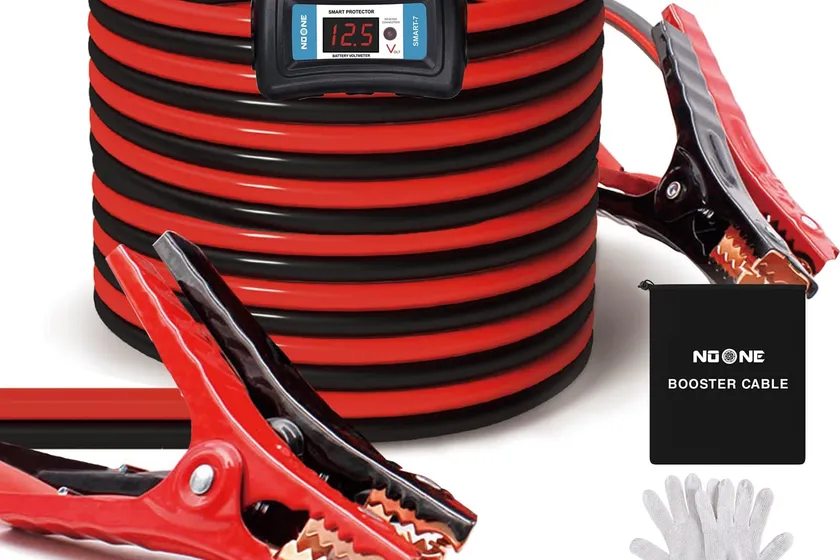
A 2 gauge, 20 foot set with a protector box that shows battery voltage and warns you with a red light if the clamps are on backward.
What we like
- Reverse polarity alarm catches the single mistake that does expensive damage to a car
- LCD display shows the battery voltage, so you can see whether the dead car is charging or simply dead
- 2 gauge and 20 feet is thicker and longer than most sets sold at this price
- UL listed clamps with rubber covers, and NOONE lists three years of after-sales service
What we don't
- The protector box is one more electronic part to fail, and a plain cable has nothing in it to break
- 600 amps is the lowest published rating of the three sets here that publish one
- NOONE does not state a maximum engine size, so heavy truck and diesel owners are guessing
| Gauge | 2 AWG copper clad aluminum |
|---|---|
| Cable length | 20 feet |
| Amperage rating | 600 A instantaneous |
| Safety protection | Reverse polarity alarm and LCD voltage display |
| Clamp type | UL listed clamps with rubber covers |
| Price bracket | $ |
There is one mistake that turns a dead battery into a repair bill, and that is clamping red to negative. On most cables nothing stops you. On this set a box sits in the middle of the run, lights up red and sounds a buzzer when the polarity is wrong, and shows green when it is right. For someone doing this for the first time in the dark, that is worth real money.
The LCD readout is the quieter benefit. It shows battery voltage while you are connected, so you can tell the difference between a battery that is taking charge and one that is finished. Without it you are guessing, cranking, and hoping.
The cable itself is not an afterthought. Two gauge and 20 feet puts it above the Energizer 4 gauge set for thickness and matches it for reach, with UL listed clamps wrapped in non-conducting rubber. NOONE rates it at 600 amps of instantaneous current and lists a working range of -40 F to 140 F, with three years of after-sales support. Gloves and a carry bag are in the box.
The trade is complexity. A plain set of cables is copper, vinyl and steel, and there is very little in it to go wrong over ten years in a trunk. This set adds an electronic module, and electronics that live through heat, cold and vibration are the part most likely to quit. NOONE also does not publish a maximum engine size, which makes it hard to know where the limit sits.
Buy it for a first car, a teenager or anyone who would rather have the cables tell them they got it wrong. Choose the ExtreSpo 0 gauge instead if you tow or run a diesel.
Research-based pick: this recommendation is based on product data, owner feedback and comparison with products we have tested, not on direct hands-on testing.
Buy it if: A new driver, or anyone buying cables for a family member who has never jumped a car and would rather not learn under pressure.
Skip it if: You have jumped plenty of cars and would rather pay for thicker copper than for an electronics box.
Best for Long Reach
AutoChat Heavy Duty Jumper Cables 1 Gauge 30 Feet
by AutoChat
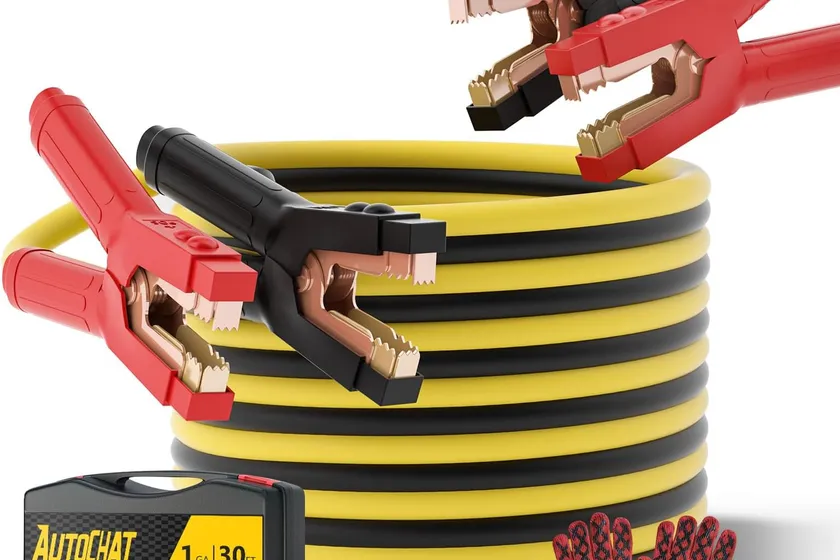
Thirty feet of 1 gauge cable for the times the two cars cannot get close, such as a parking garage, a snowbank or a driveway with the dead car facing the wrong way.
What we like
- 30 feet is the longest run in this guide and solves the parking problem no other set can
- 1 gauge wire keeps the voltage loss over that long run under control
- Rated to 900 amps on 12V and 24V vehicles, up to 7.5L gas and 5.5L diesel
- Carry case, gloves and terminal brushes are included rather than sold separately
What we don't
- Thirty feet of 1 gauge is heavy and bulky, and it takes up serious trunk space
- AutoChat is a small brand with a much thinner sales history than Energizer, so long-term feedback is limited
- The listing does not state whether the core is copper clad aluminum or solid copper
| Gauge | 1 AWG |
|---|---|
| Cable length | 30 feet |
| Amperage rating | 900 A instantaneous |
| Vehicle rating | Up to 7.5L gas and 5.5L diesel, 12V and 24V |
| Case included | Yes, plus gloves and brushes |
| Price bracket | $$ |
Cable length is the problem people only discover at the roadside. Your battery is under the hood on the left. The helping car pulls up beside you, and its battery is on the right. Now you need 25 feet of cable and you own 16. This set exists for that morning.
Thirty feet is a lot of reach, and AutoChat pairs it with 1 gauge wire rather than something thin, which matters. Long cable loses voltage over its length, and the only way to give that back is to make the wire thicker. A 30 foot run of 6 gauge would be close to useless. A 30 foot run of 1 gauge is a real tool, rated here at 900 amps of instantaneous current for 12V and 24V vehicles up to 7.5L gas and 5.5L diesel.
The kit includes a carry case, gloves and brushes. The clamps are large alligator style with jagged teeth and insulating rubber, and AutoChat lists a working range of -40 F to 140 F.
Now the drawbacks, and they are not small. Thirty feet of 1 gauge cable is heavy and stiff, and it will claim a real corner of your trunk. AutoChat is also a much smaller brand than Energizer, with a far thinner sales history, so there is less long-term owner feedback to lean on. The listing does not say whether the core is copper clad aluminum or solid copper, and at this price copper clad aluminum is the safer assumption.
Buy it if the reach problem is your problem. If you can always park close, the Energizer 4 gauge 20 foot set does the same job for less money and less bulk.
Research-based pick: this recommendation is based on product data, owner feedback and comparison with products we have tested, not on direct hands-on testing.
Buy it if: Drivers who park in tight garages, or anyone whose vehicle usually dies somewhere the helping car cannot easily reach.
Skip it if: You have limited trunk space, or your cars can always be parked nose to nose in a driveway.
How we chose#
This is a research-based comparison, not a cold-weather bench test. We started with the jumper cable sets that sell in volume on Amazon, then read every listing line by line: gauge, length, published amp rating, clamp construction, stated temperature range, what comes in the bag and what the brand says about engine size.
We picked across shapes rather than ranking five near-identical 4 gauge sets. That gives you a mainstream everyday pair, a cheaper and shorter version of it, a heavy 0 gauge set for diesels, a set with a reverse polarity alarm for nervous first-timers, and a very long set for awkward parking. Sets that published no gauge at all, or that were thinner than 6 gauge, did not make the list.
One thing we refused to do is rank by advertised amps. Those numbers are self-reported by each brand and nobody audits them, so a 1000 amp claim from one seller and a 600 amp claim from another are not measured the same way. Gauge, length and clamp design tell you far more.
What to consider before buying#
Start with your engine, because that sets the gauge. A small four-cylinder pulls a fraction of what a 6.7L diesel pulls on a cold start, and asking a thin cable to deliver that current makes the cable hot instead of turning the engine over. Buy thicker than you think you need. There is no penalty for a big cable on a small car other than bulk and price.
Then think about where your car dies. If it dies on your own driveway with a second car available, 16 feet is fine. If it dies in a parking garage where a stranger parks wherever they can fit, you want 20 feet or more. The number of jumps that fail because the cables would not reach is much higher than most people expect.
Look hard at the clamps. This is where cheap sets fall apart first. You want strong springs, teeth that bite, and insulated handles wide enough to grip with gloves on. A clamp that will not hold onto a side-post terminal is useless no matter how thick the wire behind it is.
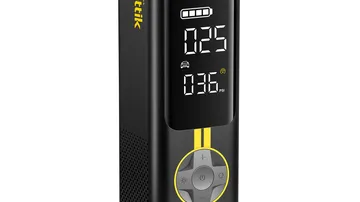
Finally, treat cables as one part of a trunk kit rather than the whole thing. A dead battery is one failure. A soft tire is another, and a portable air compressor covers that one for about the same money.
Why gauge numbers run backwards#
American Wire Gauge measures how many times a wire was pulled through a die to make it thinner. More passes gives a higher number, so the number goes up as the wire gets thinner. Ten gauge is skinny. Zero gauge is thick enough that you will notice the weight the moment you pick up the bag.
The practical effect is current capacity. A thicker wire has less resistance, so more of the good battery’s power reaches the dead starter instead of turning into heat in the cable. That is why a 4 gauge set will crank an engine that a 10 gauge set only makes tick. A cheap 10 gauge pair is not a smaller version of a good pair. On a big engine on a cold day it is closer to useless, and you can feel it, because the cable itself gets warm while nothing happens.
Here is the part the listings do not tell you. Cheap sets often advertise a gauge that measures thinner than claimed once you strip the insulation back. A thick vinyl jacket makes a skinny wire look substantial, and there is no independent body checking the number on the packaging. Nearly everything in this price range is also copper clad aluminum rather than solid copper, which carries less current at the same gauge. That is normal and it is not a scandal, but it does mean you should buy one gauge step thicker than the math suggests, and be suspicious of any set that is far cheaper than everything else at its stated size.
Longer cables cost you starting power#
Every foot of cable adds resistance, and resistance eats voltage. Run a jump through 30 feet of thin wire and the dead battery sees noticeably less than what the good battery is putting out. That is voltage drop, and it is the reason a long cheap set can perform worse than a short cheap set.
The fix is thicker wire. That is why our long picks are also our thick picks. The ExtreSpo set is 25 feet and 0 gauge. The AutoChat set is 30 feet and 1 gauge. Neither of those pairings is an accident. A 30 foot run of 6 gauge would be a bad tool, and you will still see sets sold in that shape.
So do not shop for length alone. Decide how far you need to reach, then buy the thickest cable you can afford at that length. Sixteen feet at 6 gauge and 25 feet at 0 gauge can both be sensible buys. Twenty five feet at 8 gauge is not.
The right order to connect the clamps#
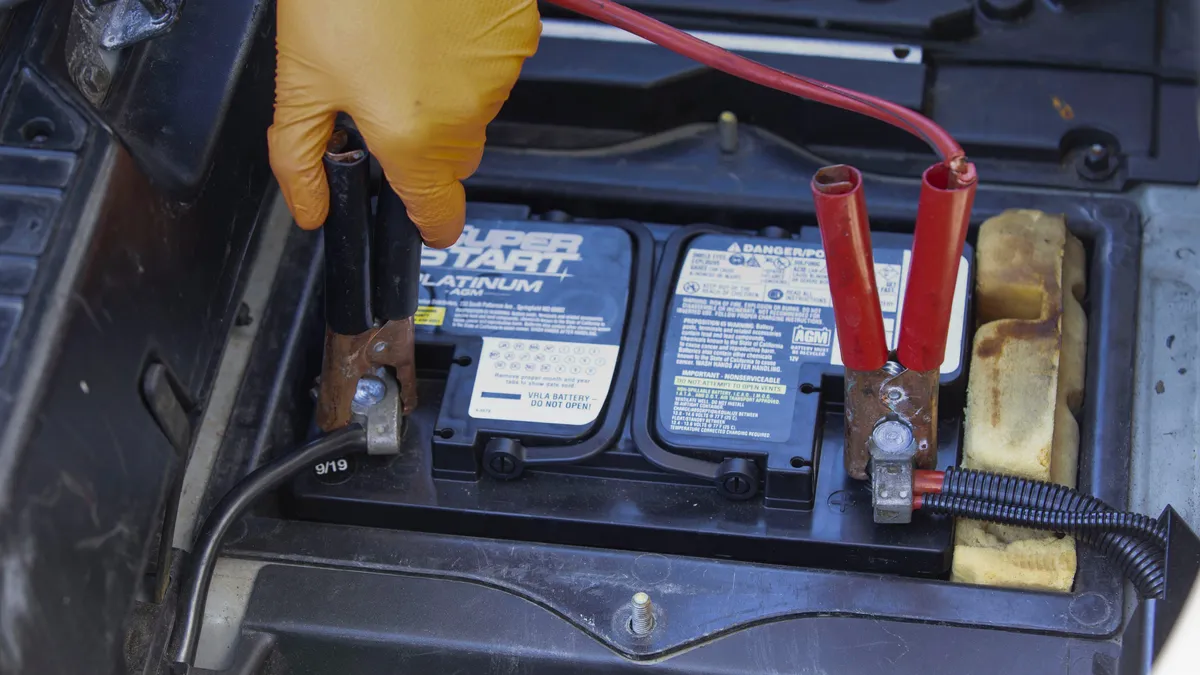
Order matters, and it is not just tradition. Connect red to the dead battery’s positive terminal first, then red to the good battery’s positive terminal. Next connect black to the good battery’s negative terminal. The last clamp is the one people get wrong.
That final black clamp should go on a bare metal ground point on the dead car’s engine block or chassis, not on the dead battery’s negative post. A weak battery vents hydrogen, and the last connection is the one that sparks. Making that spark a foot away from the battery instead of on top of it is the entire reason for the rule.
Take the clamps off in reverse order once the engine is running, and never let a live red clamp touch bare metal or the black clamp. If you want the cables to warn you when you have the polarity backwards, the NOONE 2 gauge set does exactly that with a red light, a buzzer and an automatic cut-off.
When a jump pack is the better tool#
Cables have one requirement that people forget when they buy them: a second working car, with a driver willing to stop and pop the hood. At 2am in an empty lot, or on a shoulder where nobody wants to pull over, a perfect set of 0 gauge cables is a bag of copper.
A lithium jump pack solves that. It starts the car on its own, it fits in a glovebox, and it charges phones too. The trade-offs are real though. It has to be charged, it loses output in deep cold, and it will not live for twenty years in a trunk the way a set of cables will. Our portable car jump starter guide compares the packs worth buying.
The right answer for most drivers is both, and it is not expensive. Cables cost twenty to thirty dollars and never go flat, so they belong in every trunk as the backup. Add a jump pack if you drive alone often, drive at night, park somewhere isolated, or if the person you are buying for would rather not flag down a stranger. If you only buy one, and you always drive with other cars around, cables are the cheaper and longer-lasting choice.
Final recommendation#
Buy the Energizer 4 gauge 20 foot set if you want one pair of cables to keep in the trunk and never think about again. It is thick enough for nearly every car and half-ton truck, long enough for most parking situations, and it sells in enough volume that a bad batch would be obvious. If your car is small and your budget is tight, the Energizer 6 gauge 16 foot set does the same job on a smaller scale, as long as you can park the two cars close.
Own a diesel, a work van or anything with a 24V system, and the ExtreSpo 0 gauge 25 foot set is the one that will not sag under a heavy starter. Buying for a new driver, or for someone who has never done this before, the NOONE 2 gauge set with its polarity alarm and voltage display is worth the small premium. And if the problem you keep running into is reach, not power, the AutoChat 1 gauge 30 foot cables are the only set here that will stretch across a garage aisle.
Frequently asked questions
What gauge jumper cables do I actually need?
Match the wire to the engine. A four-cylinder car is fine on 6 gauge, like the Energizer 16 foot set. Most sedans, crossovers and half-ton pickups are better on 4 gauge, which is why the Energizer 20 foot set is our top pick. Big gas engines and diesels need 2, 1 or 0 gauge, which is where the NOONE 2 gauge, the AutoChat 1 gauge and the ExtreSpo 0 gauge sets come in. If you are between sizes, buy thicker. Thicker wire never hurts a small engine.
Why do the gauge numbers get smaller as the cable gets thicker?
American Wire Gauge counts how many times the wire was drawn through a die to thin it out. More passes means a higher number and a thinner wire. So 10 gauge is skinny and 0 gauge is very thick, which feels backwards until you know where the number comes from. Each step down roughly increases the current the cable can carry. That is why a 4 gauge set starts an engine faster than a 10 gauge set at the same length.
How long should my jumper cables be?
Sixteen feet works when both cars can park nose to nose. Twenty feet is the practical minimum if you park in lots and garages, and 25 feet covers trucks with the battery on the far side of a wide engine bay. Thirty feet, like the AutoChat set, is for people who genuinely cannot control where the helping car pulls in. Do not just buy the longest set you can find, because longer cable loses more voltage unless the wire is thicker to compensate.
Do I need cables with reverse polarity protection?
You need it if there is any chance you or someone in your family will connect the clamps in a hurry, in the dark, without checking. The NOONE 2 gauge set sounds an alarm and cuts current when the clamps are backward, and shows battery voltage on a small screen. Everyone else here relies on you knowing red goes to positive. Experienced drivers can skip the feature and spend the money on thicker wire instead.
Should I buy jumper cables or a portable jump starter?
Cables need a second car, a second driver and someone willing to stop. A jump pack needs neither, which is why a lot of drivers now carry one instead. Cables still win on price, on lifespan, and on the fact that they never need charging. The honest answer for most people is to keep cheap cables in the trunk and add a jump pack if you often drive alone or at night. Our guide to [portable car jump starters](/garage/best-portable-car-jump-starter/) covers that side.
Why do cheap jumper cables fail?
Almost always at the clamps. The jaw springs go soft, the teeth stop biting through corrosion, or the wire is crimped rather than soldered where it enters the handle and eventually works loose. The second failure is the wire itself. Nearly every set at this price uses copper clad aluminum rather than solid copper, and some budget sets measure thinner than the gauge printed on the packaging once you strip the jacket back.
About the author

Dale Harper Lead Gear Editor
Dale is a longtime truck owner and former accessory-shop tech who builds these guides from manufacturer fit data, aggregated owner feedback and direct spec comparison. Research-based picks are always labelled as such.
Daily driver: 2022 Ford F-150 XLT SuperCrew
- Tonneau covers and bed accessories
- Seat covers and interior protection
- Lift kits and suspension