The Best OBD2 Scanners: 5 Code Readers and Scan Tools Compared
Five real OBD2 scanners compared, from a cheap plug-in reader to a bidirectional pro tool, with plain talk on live data, ABS access and what a code means.

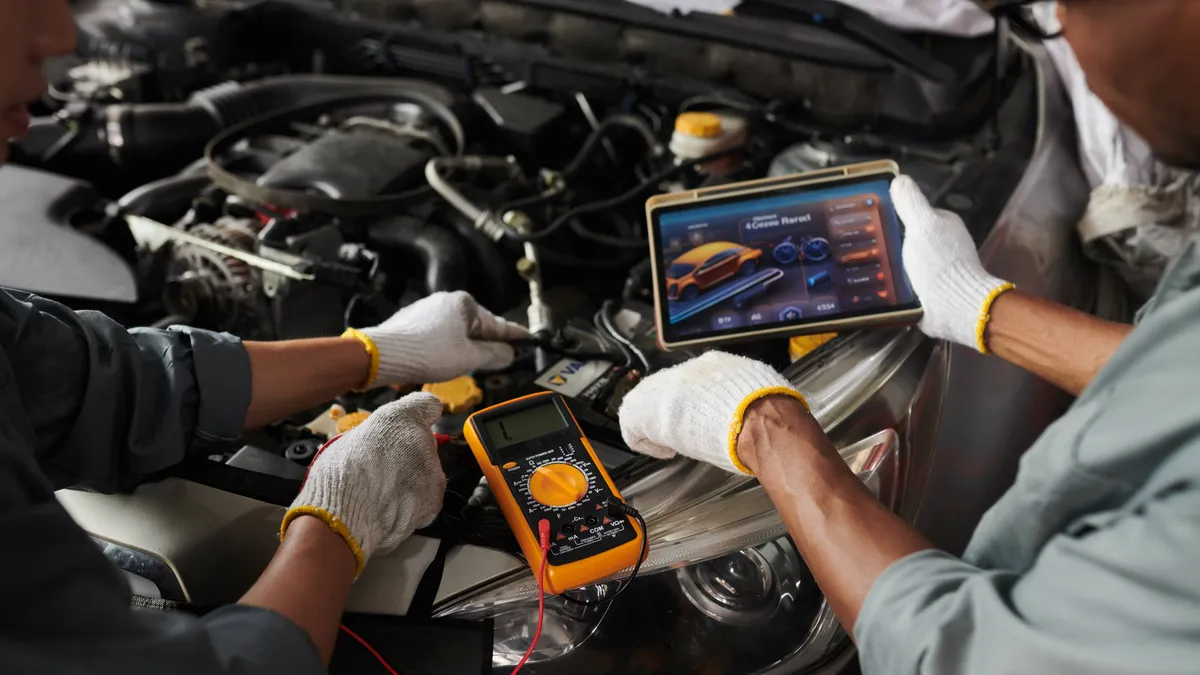
A check engine light is the least helpful warning on a car. It tells you something is wrong and nothing about what. An OBD2 scanner turns that light into a code, a definition and, on the better tools, live sensor data you can actually work with. This guide compares five scanners sold on Amazon right now: the ANCEL AD310, a simple wired code reader that has been a top seller for years, the FOXWELL NT301 with live data graphing and smog readiness LEDs, the MOTOPOWER MP69033 as the cheap pick with a surprisingly big screen, the UMEIJA V011 Bluetooth dongle that uses your phone as the display, and the Innova 5610, a bidirectional scan tool that reads ABS and airbag modules and can command parts on. We look at what each one can see, what it cannot, and why the price gap between them is bigger than the feature list suggests.
Table of contents
- Quick picks
- Comparison table
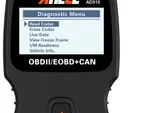
- Best Overall: ANCEL AD310 Classic Enhanced Universal OBD II Scanner
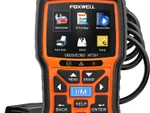
- Best for Live Data: FOXWELL NT301 OBD2 Scanner Live Data Code Reader
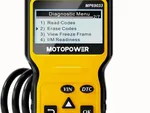
- Best Value: MOTOPOWER MP69033 Car OBD2 Scanner Code Reader
- Upgrade Pick: Innova 5610 OBD2 Bidirectional Scan Tool
- Best Phone-Based Pick: UMEIJA V011 Bluetooth 5.4 OBD2 Scanner
- How we chose
- What to consider before buying
- A code is a starting point, not a diagnosis
- Engine only, or all systems
- Live data, freeze frame and bidirectional control
- Final recommendation
- FAQ
Quick picks
Every pick wins a specific use case. Jump to the full review before you buy.
-
Best Overall
ANCEL AD310 Classic Enhanced Universal OBD II Scanner
A plain wired code reader that tells you why the check engine light is on, with no app, no battery and nothing to set up.
-
Best for Live Data
FOXWELL NT301 OBD2 Scanner Live Data Code Reader
A mid-priced handheld that graphs live sensor data on a color screen, which is what you need when a fault comes and goes.
-
Best Value
MOTOPOWER MP69033 Car OBD2 Scanner Code Reader
A cheap wired code reader with a bigger screen than most, for the driver who wants one tool in the glovebox and no fuss.
-
Upgrade Pick
Innova 5610 OBD2 Bidirectional Scan Tool
A bidirectional scan tool that reads ABS, airbag and transmission modules and can command parts on, which is what separates a scan tool from a code reader.
-
Best Phone-Based Pick
UMEIJA V011 Bluetooth 5.4 OBD2 Scanner
A small Bluetooth dongle that turns your phone into the screen, for people who would rather read charts than squint at a two-line display.
Compare every pick
| Product | Award | Scanner type | Live data support | Best for | Where to buy |
|---|---|---|---|---|---|
| ANCEL AD310 Classic Enhanced Universal OBD II Scanner | Best Overall | Handheld code reader | Live data, freeze frame and hard memory data | A driver who wants to know what the check engine light means before calling a shop, and nothing more complicated than that. | Check price for ANCEL AD310 Classic Enhanced Universal OBD II Scanner at Amazon (affiliate link) |
| FOXWELL NT301 OBD2 Scanner Live Data Code Reader | Best for Live Data | Handheld scan tool | Live data with graphing and logging, plus O2 sensor and EVAP tests | A home mechanic who already fixes their own car and wants to watch sensor values while the engine runs. | Check price for FOXWELL NT301 OBD2 Scanner Live Data Code Reader at Amazon (affiliate link) |
| MOTOPOWER MP69033 Car OBD2 Scanner Code Reader | Best Value | Handheld code reader | Live data flow with a real-time curve, plus freeze frame | Someone buying their first scanner who wants to spend as little as possible and still read and clear codes properly. | Check price for MOTOPOWER MP69033 Car OBD2 Scanner Code Reader at Amazon (affiliate link) |
| Innova 5610 OBD2 Bidirectional Scan Tool | Upgrade Pick | Bidirectional professional scan tool | OBD2 live data plus enhanced OEM data streams | A serious home mechanic or a small shop that does brake, suspension and drivetrain work, not just check engine lights. | Check price for Innova 5610 OBD2 Bidirectional Scan Tool at Amazon (affiliate link) |
| UMEIJA V011 Bluetooth 5.4 OBD2 Scanner | Best Phone-Based Pick | Bluetooth dongle with a phone app | Live data, freeze frame and sensor readings shown as charts | A driver who already lives on their phone and wants clear graphs and repair suggestions without buying a handheld. | Check price for UMEIJA V011 Bluetooth 5.4 OBD2 Scanner at Amazon (affiliate link) |
Swipe sideways to compare every column.
Best Overall
ANCEL AD310 Classic Enhanced Universal OBD II Scanner
by ANCEL
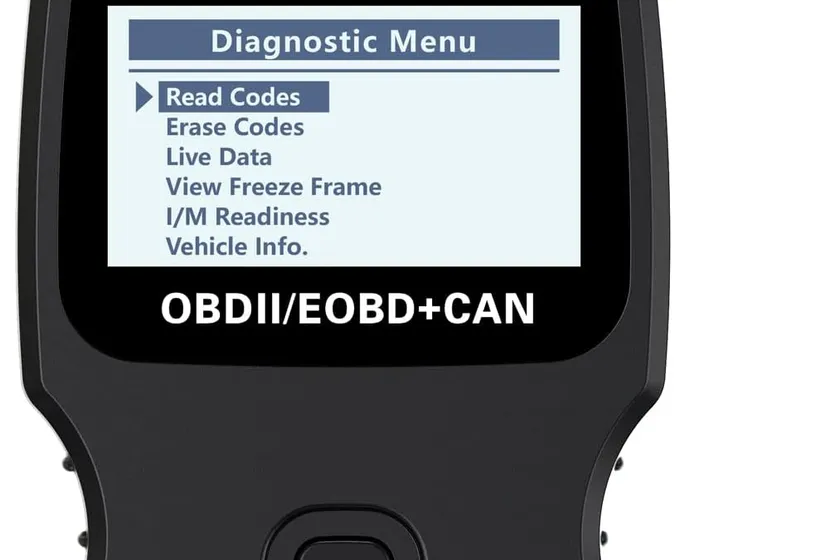
A plain wired code reader that tells you why the check engine light is on, with no app, no battery and nothing to set up.
What we like
- Plugs straight into the OBD2 port for power, so there is no battery to die and no phone to pair
- Supports every OBD2 protocol, including CAN, ISO9141, KWP2000, J1850 VPW and J1850 PWM
- Reads live data, freeze frame and I/M readiness, not just the code number
- Sits at a sales rank of 15 in its category, so it has years of real owner feedback behind it
What we don't
- Only reads emission and engine codes, so an ABS or airbag light stays a mystery
- Will not work at all on a pre-1996 OBD1 car, even with an adapter
- The listing never states the screen size, and the two-line style display shows very little at once
| Scanner type | Handheld code reader |
|---|---|
| Systems covered | Engine and emissions only |
| Live data support | Live data, freeze frame and hard memory data |
| Bidirectional control | None |
| Vehicle coverage | 1996 and newer US, 2000 and newer EU and Asian OBD2 vehicles |
| Price bracket | $ |
The AD310 wins Best Overall because it does the one job most people actually need. The light comes on, you plug this in, you get a code and a plain English definition on screen. There is no app to install, no account, no Bluetooth pairing and no battery. Power comes from the car’s own diagnostic port.
ANCEL lists support for all five OBD2 protocols, which sounds like small print but matters. Some very cheap readers only handle CAN, the newest protocol, and then fail silently on an older car. This one covers CAN plus ISO9141, KWP2000, J1850 VPW and J1850 PWM, so it talks to most 1996 and newer US vehicles and many 2000 and newer imports.
It also goes past the bare code. You get live data, freeze frame, hard memory data and I/M readiness, which is the screen you want before a smog test. Freeze frame is the useful one. It shows what the engine was doing at the exact moment the fault was stored, so a misfire that only happens on the highway leaves a trace.
The build is simple and tough. The cable is 2.5 feet of thick, flexible insulation, the device weighs about 12 ounces, and the buttons are large and labelled. It gets dropped in a garage and keeps working, which is more than you can say for a phone.
The limits are real. ANCEL states plainly that the AD310 only handles emission-related diagnosis. If your fault is outside the emissions system, or the warning is an ABS or airbag light, this tool will not show it. And it will not work on an OBD1 car at all, adapter or not. For that you need the Innova 5610.
Research-based pick: this recommendation is based on product data, owner feedback and comparison with products we have tested, not on direct hands-on testing.
Buy it if: A driver who wants to know what the check engine light means before calling a shop, and nothing more complicated than that.
Skip it if: You need to chase an ABS, airbag or transmission warning light, because this reader cannot see those systems.
Best for Live Data
FOXWELL NT301 OBD2 Scanner Live Data Code Reader
by FOXWELL
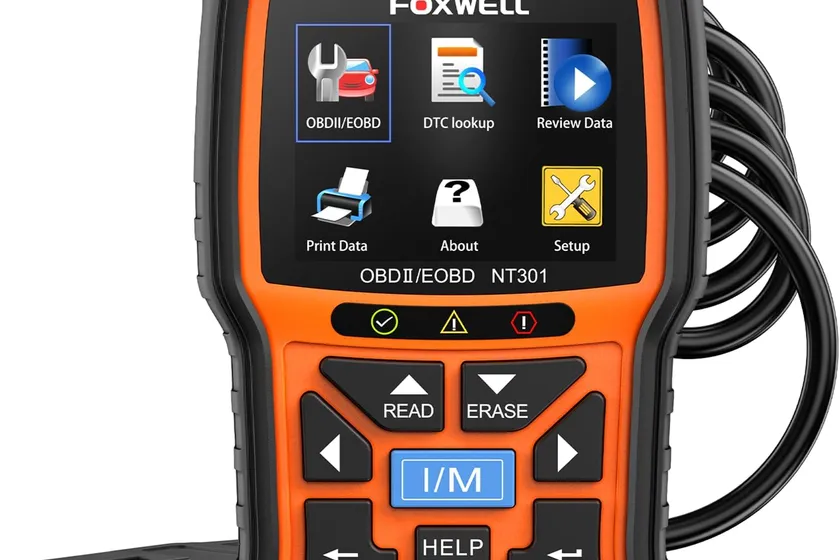
A mid-priced handheld that graphs live sensor data on a color screen, which is what you need when a fault comes and goes.
What we like
- Graphs and logs live sensor data, so you can watch fuel trims and O2 readings change instead of reading a frozen number
- One-click I/M readiness with a red, yellow and green LED plus an audible beep, so smog status is obvious at a glance
- Runs the extra OBD2 modes most cheap readers skip, including the O2 sensor test and the EVAP leak test
- 2.8 inch color screen stays readable in daylight, and FOXWELL includes lifetime free updates
What we don't
- Still engine and emissions only, so ABS, airbag and transmission codes are out of reach
- Costs roughly twice what a basic reader costs, which is hard to justify if you only want a code number
- No bidirectional control, so you cannot command a component on to test it
| Scanner type | Handheld scan tool |
|---|---|
| Display type | 2.8 inch color screen |
| Live data support | Live data with graphing and logging, plus O2 sensor and EVAP tests |
| Systems covered | Engine and emissions only |
| Update method | Lifetime free updates |
| Price bracket | $$ |
The gap between a $25 reader and the NT301 is not the code list. It is what happens after you have the code. FOXWELL built this one around live data graphing, and that is the feature that turns a guess into a diagnosis.
Here is why graphs matter. A number on a screen tells you the coolant temperature right now. A graph tells you that the reading dropped for two seconds and then jumped back, which is how a failing sensor behaves. Intermittent faults are the expensive ones, and they are almost impossible to catch by staring at a single value. The NT301 can also log data so you can look at it later.
It adds the deeper OBD2 modes too. The O2 sensor test checks how the oxygen sensors are switching, and the EVAP test looks for leaks in the fuel vapor system, which is where a lot of stubborn check engine lights actually live. Basic readers usually leave both out.
The smog readiness setup is genuinely well thought out. There is a dedicated hotkey, a red, yellow and green LED, and a speaker that beeps. You plug in, press one button and know whether the car will pass an inspection without reading a menu.
What it does not do is see past the engine. FOXWELL is clear that this is an OBD2 tool, so ABS, airbag and transmission modules are invisible to it. It also has no bidirectional control. If you need either of those, the Innova 5610 in this guide is the step up.
Research-based pick: this recommendation is based on product data, owner feedback and comparison with products we have tested, not on direct hands-on testing.
Buy it if: A home mechanic who already fixes their own car and wants to watch sensor values while the engine runs.
Skip it if: You want ABS or airbag access, since the NT301 stops at the engine and emissions systems just like the cheaper readers.
Best Value
MOTOPOWER MP69033 Car OBD2 Scanner Code Reader
by MOTOPOWER
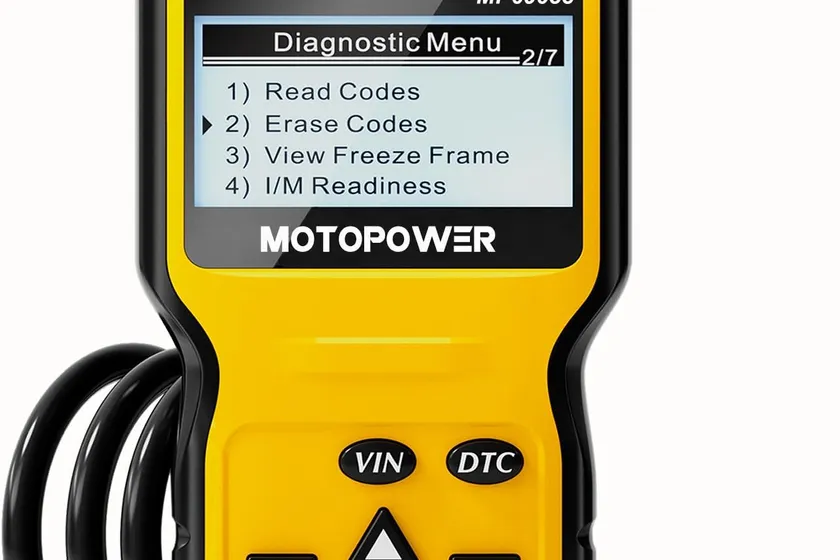
A cheap wired code reader with a bigger screen than most, for the driver who wants one tool in the glovebox and no fuss.
What we like
- 2.8 inch LCD with white backlight and contrast adjustment, which is a large screen at this price
- Six buttons including shortcut keys that pull the VIN and the fault codes without menu digging
- Shows live data as a real-time curve, so you get a rough trend rather than one frozen number
- Supports 9 protocols and 6 languages, covering most 1996 and newer US cars plus 2000 and newer imports
What we don't
- MOTOPOWER states clearly that ABS, airbag and oil service light systems are not supported
- No listed software updates, so the built-in code library will slowly fall behind newer vehicles
- The screen ships with a protective film that scratches easily and looks like screen damage until you peel it off
| Scanner type | Handheld code reader |
|---|---|
| Display type | 2.8 inch LCD with white backlight |
| Systems covered | Engine and emissions only, no ABS or airbag |
| Live data support | Live data flow with a real-time curve, plus freeze frame |
| Vehicle coverage | 9 protocols, most 1996 and newer US plus 2000 and newer EU and Asian |
| Price bracket | $ |
The MP69033 is the value pick because it is the cheapest tool here that still feels like a proper piece of equipment. It has a 2.8 inch LCD, the same size screen as the FOXWELL NT301, on a device that costs a fraction as much. Bigger screens are not a luxury on a scan tool. They mean full code definitions instead of scrolling one word at a time.
It covers the standard set of OBD2 jobs. Read codes, clear codes, freeze frame, I/M readiness, vehicle information and a data flow view with a real-time curve. It also pulls basics like vehicle speed, calculated load, coolant temperature and engine speed, which is enough to sanity check whether a sensor reading looks sane.
The button layout deserves credit. Alongside scroll and enter there are dedicated keys that jump straight to the VIN and to the fault codes. On a tool you use twice a year, shortcuts matter more than features, because you will have forgotten the menu structure by the time you need it again.
Power comes from the OBD2 port through a 2.5 foot cable with thick insulation, so there is no battery to check. Six languages are supported, which is more than the price suggests.
The trade-offs are honest ones. MOTOPOWER says outright that ABS, airbag and oil service systems are outside what an OBD2 reader can touch. There is also no update path listed, so the code library is frozen at whatever shipped in the box. On a 2012 sedan that is fine. On a 2025 car with a manufacturer-specific code, you may end up looking the number up online anyway.
Research-based pick: this recommendation is based on product data, owner feedback and comparison with products we have tested, not on direct hands-on testing.
Buy it if: Someone buying their first scanner who wants to spend as little as possible and still read and clear codes properly.
Skip it if: You want a tool that stays current for a decade, since MOTOPOWER lists no update path for the code database.
Upgrade Pick
Innova 5610 OBD2 Bidirectional Scan Tool
by Innova
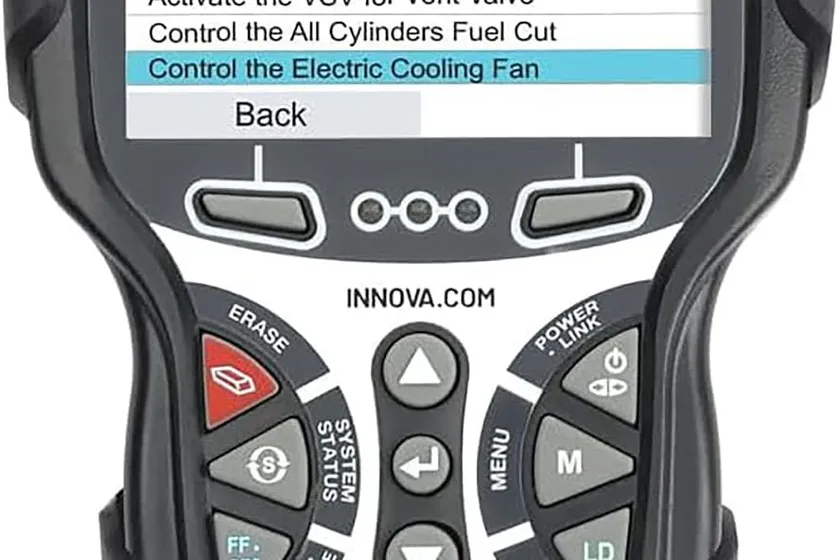
A bidirectional scan tool that reads ABS, airbag and transmission modules and can command parts on, which is what separates a scan tool from a code reader.
What we like
- Bidirectional control lets you switch a fuel pump on and off or retract an electronic parking brake from the tool
- Reads engine, ABS, SRS and transmission modules, so warning lights beyond the check engine light are visible
- Enhanced OEM data stream shows manufacturer-specific values, not only the generic OBD2 set
- Free updates with no subscription fee, plus US-based phone support in English and Spanish
What we don't
- Costs about six times what a good handheld code reader costs, which is only worth it if you repair cars regularly
- Innova states coverage varies by make, model and year, so a function you bought it for may not work on your car
- Listed for most 1996 to 2023 vehicles, so the newest model years may not be covered yet
| Scanner type | Bidirectional professional scan tool |
|---|---|
| Systems covered | Engine, ABS, SRS and transmission on supported vehicles |
| Bidirectional control | Yes, can command tests such as fuel pump on and off and electronic parking brake retraction |
| Live data support | OBD2 live data plus enhanced OEM data streams |
| Update method | Free updates included, no subscription |
| Price bracket | $$$ |
The 5610 is here to show what the top of this category actually buys you. It is not a better code reader. It is a different class of tool, and the difference is bidirectional control.
Every other pick in this guide only listens. It asks the car’s computer for stored codes and sensor values and prints what comes back. The 5610 can also talk. Innova lists commands like turning the fuel pump on and off and retracting an electronic parking brake. That flips diagnosis on its head. Instead of guessing whether a fuel pump is dead, you command it to run and listen. Instead of fighting a rear caliper for an hour, you retract the piston with the tool and change the pads.
It also sees more of the car. The enhanced data stream covers ABS, SRS, transmission and engine, so an ABS light or an airbag light stops being a trip to the shop. Special reset functions handle dealership-level relearn procedures that a code reader has no way to perform.
Innova pairs it with the RepairSolutions2 app, which adds verified fixes and parts suggestions, and there is no subscription. Updates are included, and support runs from a US phone line on weekdays.
Two things should slow you down. The price is in a different bracket entirely, and Innova repeats the same warning in almost every bullet: coverage varies by make, model and year, and the tool is not universal. Run your exact vehicle through Innova’s coverage checker before buying, because the bidirectional functions you want may simply not exist for your car. It is also listed for 1996 to 2023 vehicles, so very new cars may fall outside it.
Research-based pick: this recommendation is based on product data, owner feedback and comparison with products we have tested, not on direct hands-on testing.
Buy it if: A serious home mechanic or a small shop that does brake, suspension and drivetrain work, not just check engine lights.
Skip it if: You own one car and want to know why a light is on, because a $30 reader answers that question just as well.
Best Phone-Based Pick
UMEIJA V011 Bluetooth 5.4 OBD2 Scanner
by UMEIJA
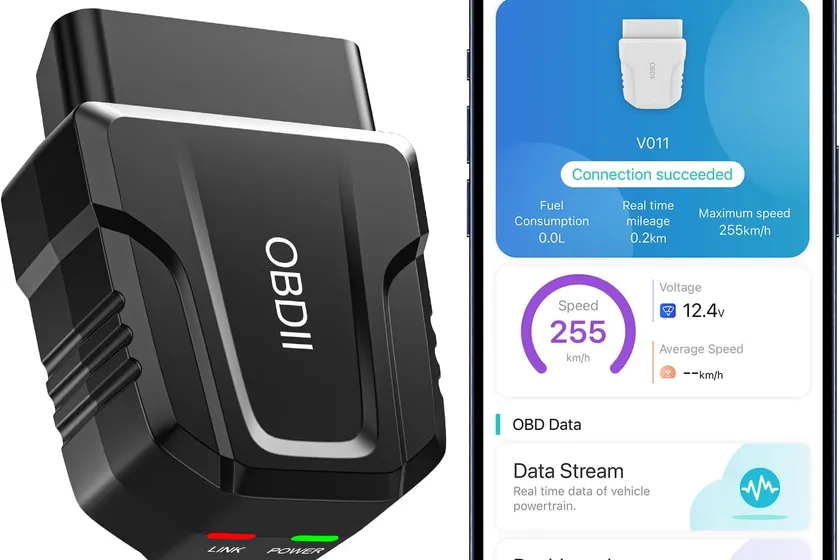
A small Bluetooth dongle that turns your phone into the screen, for people who would rather read charts than squint at a two-line display.
What we like
- Uses your phone as the display, so live data arrives as readable charts instead of scrolling numbers
- Bluetooth 5.4 connects to both iOS and Android, and the app is free with no subscription mentioned
- Small enough to leave plugged in under the dash, with nothing to store in the glovebox
- Listed as compatible with over 96 percent of makes from 1996 to the present, across a long list of brands
What we don't
- UMEIJA warns you to unplug it after use, because leaving it in the port can drain the car battery
- Depends on one specific app, so a broken update or a dropped app can turn the hardware into dead plastic
- Engine and emissions only, with no ABS, airbag or transmission access
- Pairing is fussy on iPhone, where you have to leave Bluetooth on and let the app connect rather than pairing in settings
| Scanner type | Bluetooth dongle with a phone app |
|---|---|
| Connection method | Bluetooth 5.4 to an iOS or Android phone |
| Display type | Your phone screen |
| Live data support | Live data, freeze frame and sensor readings shown as charts |
| Update method | Free OBD Home app for Android and iOS |
| Price bracket | $ |
The dongle approach solves one real problem. Handheld readers have small screens, and small screens make live data hard to read. The V011 hands that job to your phone, which has a big bright display and can draw a proper chart. Coolant temperature, engine speed, vehicle speed and control module voltage all show up as visuals you can actually interpret.
The hardware itself is tiny. It plugs into the OBD2 port and stays there, connecting over Bluetooth 5.4 to an iOS or Android phone. UMEIJA lists the standard OBD2 feature set behind it: reading DTCs, clearing the check engine light, emission readiness, live data streaming, freeze frame, sensor data, VIN retrieval and diagnostic reports.
Coverage is broad on paper. The listing claims over 96 percent of makes and models from 1996 onward, naming Toyota, Honda, Chevrolet, Ford, Mercedes-Benz, Jeep, BMW, Porsche, Subaru, Nissan, Cadillac, Volkswagen and Lexus. Nine languages are supported.
Now the honest part. UMEIJA tells you in its own listing to unplug the device after use so it does not drain the car battery. That undercuts the main reason to buy a dongle, which is leaving it in place. It also ties you to one app, and app-dependent tools age badly. A handheld reader from 2016 still works today. An app from 2016 often does not.
There is also a setup quirk on iPhone. You turn Bluetooth on but do not pair the device in phone settings. The app connects on its own. That trips people up, and it is the kind of friction a plug-in reader never has.
Research-based pick: this recommendation is based on product data, owner feedback and comparison with products we have tested, not on direct hands-on testing.
Buy it if: A driver who already lives on their phone and wants clear graphs and repair suggestions without buying a handheld.
Skip it if: You want a tool you can hand to anyone in the family, since a dongle plus an app is more setup than plugging in a reader.
How we chose#
This is a research-based guide, not a workshop test. We started from the OBD2 scanners actually selling on Amazon, then read every listing against the same set of questions: which systems can it see, does it show live data, can it send commands back to the car, how does it connect, and does the maker publish updates.
We picked across formats on purpose, because five near-identical plug-in readers would tell you nothing. So the list runs from a simple wired reader to a Bluetooth dongle, a mid-range handheld with graphing, a value pick and a bidirectional professional tool. That spread maps to the real decision most people are making, which is how much scanner they need rather than which brand is best.
We took brand claims at face value where they were specific and ignored them where they were vague. Sales rank was used only as a sanity check on how long a tool has been in real hands. The ANCEL AD310 sits at rank 15 in its category, which is a genuine signal that a lot of people have used it and kept using it. Star ratings and review counts were not available for these listings, so we did not use them at all.
What to consider before buying#
Start with the light you are trying to chase. If it is the check engine light, almost any OBD2 tool will read it, and you can stop at the cheapest one that works. If it is an ABS light, an airbag light or a transmission fault, the picture changes completely, because those live in modules a standard OBD2 reader is not allowed to touch.
Then think about who will use it. A wired reader works the moment you plug it in, with no app, no pairing and no battery. That matters if the tool will sit in a glovebox for two years and then get handed to a family member at the side of a road. A dongle is smaller and shows nicer graphs, but it needs a phone, an app and a bit of patience.
Screen size is worth more than it sounds. A two-line display shows a code and a truncated definition. A 2.8 inch screen, which both the MOTOPOWER MP69033 and the FOXWELL NT301 have, shows the full definition and readable data. You will spend less time scrolling and more time fixing.
Last, be realistic about how often you will use it. A scanner that lives in a garage next to your jack stands and ramps and gets used monthly justifies a bigger spend. One that gets used twice a year does not.
A code is a starting point, not a diagnosis#
This is the part most guides skip, so here it is plainly. A trouble code tells you which test the car’s computer failed. It does not tell you which part is broken. Those are different things, and confusing them costs people real money.
Take P0420, the most common code on the internet. It means catalyst system efficiency below threshold. People read that as “buy a catalytic converter” and spend a thousand dollars. But that code is set by comparing two oxygen sensor readings. A lazy downstream O2 sensor sets it. So does a small exhaust leak ahead of the sensor. So does an engine running rich because of a bad coolant temperature sensor, which quietly destroys the converter as a side effect. Replacing the converter without finding the cause just kills the new one.
The same logic applies everywhere. P0171, system too lean, points at a vacuum leak, a dirty mass airflow sensor, a weak fuel pump or a failing O2 sensor. The code narrows the field. Your eyes, a smoke test and live data close it.
What a scanner buys you is the start of the trail and the ability to check your work. That is genuinely valuable, and it is worth thirty dollars to almost any driver. Just do not let the screen convince you it has named the broken part.
Engine only, or all systems#
Every scanner here reads the engine and emissions system, because that is what the OBD2 standard requires carmakers to expose. It is a legal minimum built for emissions testing, and it is why a twenty dollar tool from any brand can read your check engine light.
Everything else in the car is optional territory. ABS, airbag, transmission, body control, tire pressure and the rest live in separate modules that speak manufacturer-specific languages. ANCEL, MOTOPOWER and FOXWELL all state this limit in their own listings. The AD310 note is the bluntest: it only supports diagnosis of emission-related issues.
That is why the ABS light is the moment people outgrow a cheap reader. You plug in, the tool says no codes found, and the light is still on. Nothing is broken with the tool. It simply cannot see that module.
The Innova 5610 is the pick here that crosses that line, reading engine, ABS, SRS and transmission on supported vehicles. Note the words “on supported vehicles”. Innova repeats that caveat in nearly every bullet on its listing, and it is not boilerplate. All-systems coverage is built car by car, so a tool that reads ABS on a Ford may do nothing on a Volkswagen.
Live data, freeze frame and bidirectional control#
Three features separate real diagnostic work from code reading, and they arrive at three different price points.
Live data is the first. It streams sensor values while the engine runs: engine speed, coolant temperature, fuel trims, oxygen sensor voltage, intake air temperature. Every pick in this guide has some version of it. What differs is presentation. The FOXWELL NT301 graphs and logs it, the UMEIJA V011 charts it on your phone, and the MOTOPOWER MP69033 draws a simple real-time curve. A moving line finds a dropout that a static number never will.
Freeze frame is the second, and it is underrated. When the computer stores a fault, it also stores a snapshot of the engine’s condition at that exact moment. Engine speed, load, temperature, fuel trim. For a fault that only appears when the engine is cold or on the highway, that snapshot is often the only evidence you get. The AD310, the NT301, the MP69033 and the V011 all capture it.
Bidirectional control is the third and by far the biggest jump. Everything below it only listens to the car. A bidirectional tool speaks back. The Innova 5610 can command the fuel pump on and off or retract an electronic parking brake. That means you can test a component directly instead of inferring its condition, and you can do rear brake jobs on cars where the caliper has to be electronically retracted first. It is also why that tool costs what it costs.
Final recommendation#
Most people should buy the ANCEL AD310 and stop there. It reads and clears codes, shows live data and freeze frame, works on every OBD2 protocol, needs no battery or app, and has the longest track record of anything here. It answers the question the check engine light asks, which is the only question the vast majority of drivers ever have.
If you want the same job done for less, the MOTOPOWER MP69033 does it with a larger 2.8 inch screen, at the cost of no update path. If you actually turn wrenches and want to watch sensors move while the engine runs, the FOXWELL NT301 is the one worth the extra money, thanks to live data graphing and the O2 and EVAP tests. If you would rather read charts on your phone than a small display, the UMEIJA V011 is the cheapest way in, as long as you accept the app dependency and unplug it between uses. And if you fix brakes, chase ABS lights or work on more than one car, the Innova 5610 is the only pick that can read those modules and command parts on. Check your vehicle against Innova’s coverage list first. While you are building out the garage, a decent tool set and a jump starter that holds its charge cover most of what goes wrong before a scanner ever gets plugged in.
Frequently asked questions
Will an OBD2 scanner work on my car?
If your car was sold new in the US in 1996 or later, yes. OBD2 became mandatory that year, so the 16-pin port and the basic code set are standard. Imports are a little later: most EU and Asian models from around 2000 onward are covered, and the MOTOPOWER MP69033 and ANCEL AD310 both list those dates. What varies is the extra stuff. The Innova 5610 covers ABS and airbag modules on many vehicles but not all, and Innova says so plainly. Check your exact year, make and model before buying anything above a basic reader.
Does clearing a code fix the problem?
No. Clearing a code only turns the light off. If the fault is still there, the computer will store the code again and the light will come back, usually within a few drive cycles. FOXWELL says this outright about the NT301, and it is true of every tool here. Clearing also wipes your emissions readiness monitors, which means you can fail a smog test simply because the car has not driven enough since the reset. Fix the fault first, then clear the code, then drive the car before any inspection.
What is the difference between a code reader and a scan tool?
A code reader pulls the stored fault code from the engine computer and shows you a definition. The ANCEL AD310 and MOTOPOWER MP69033 are code readers. A scan tool goes further. The FOXWELL NT301 adds live data graphing and the deeper OBD2 test modes, and the Innova 5610 reads ABS, airbag and transmission modules and can send commands back to the car. The price roughly tracks that ladder. Most drivers never need to climb past the first rung.
Do I need a scanner that reads ABS and airbag codes?
Only if you plan to fix those systems yourself. A standard OBD2 reader is emissions-focused by law, so it cannot see the ABS or airbag modules at all. The ANCEL AD310, MOTOPOWER MP69033, FOXWELL NT301 and UMEIJA V011 all stop at the engine. If an ABS light or an airbag light is what worries you, the Innova 5610 is the only pick here that can read those modules, and even then coverage depends on your vehicle.
Is a Bluetooth dongle better than a handheld scanner?
It depends on what you value. A dongle like the UMEIJA V011 uses your phone as the screen, so live data appears as real charts instead of scrolling numbers on a two-line display. That is a genuine advantage. The cost is dependence. You need the right app, a paired phone and a working update, and UMEIJA even tells you to unplug the device after use so it does not drain the battery. A handheld like the AD310 has none of that and works in ten years exactly as it does today.
What does I/M readiness mean and why does it matter?
I/M readiness tells you whether your car has finished the self-tests it runs on its emissions systems. If those monitors are not complete, most states will fail your inspection before they even look at your emissions numbers. This happens after any battery disconnect or code clear, because the monitors reset and need a full drive cycle to run again. Every scanner in this guide shows readiness status, and the FOXWELL NT301 makes it easiest with a one-button hotkey and a red, yellow and green LED.
About the author

Dale Harper Lead Gear Editor
Dale is a longtime truck owner and former accessory-shop tech who builds these guides from manufacturer fit data, aggregated owner feedback and direct spec comparison. Research-based picks are always labelled as such.
Daily driver: 2022 Ford F-150 XLT SuperCrew
- Tonneau covers and bed accessories
- Seat covers and interior protection
- Lift kits and suspension