The Best Car Creepers: 5 Picks Compared for Home and Shop Garages
Five real car creepers compared, from a budget plastic deck to a 400 lb wide body and a folding topside creeper, with honest clearance notes.

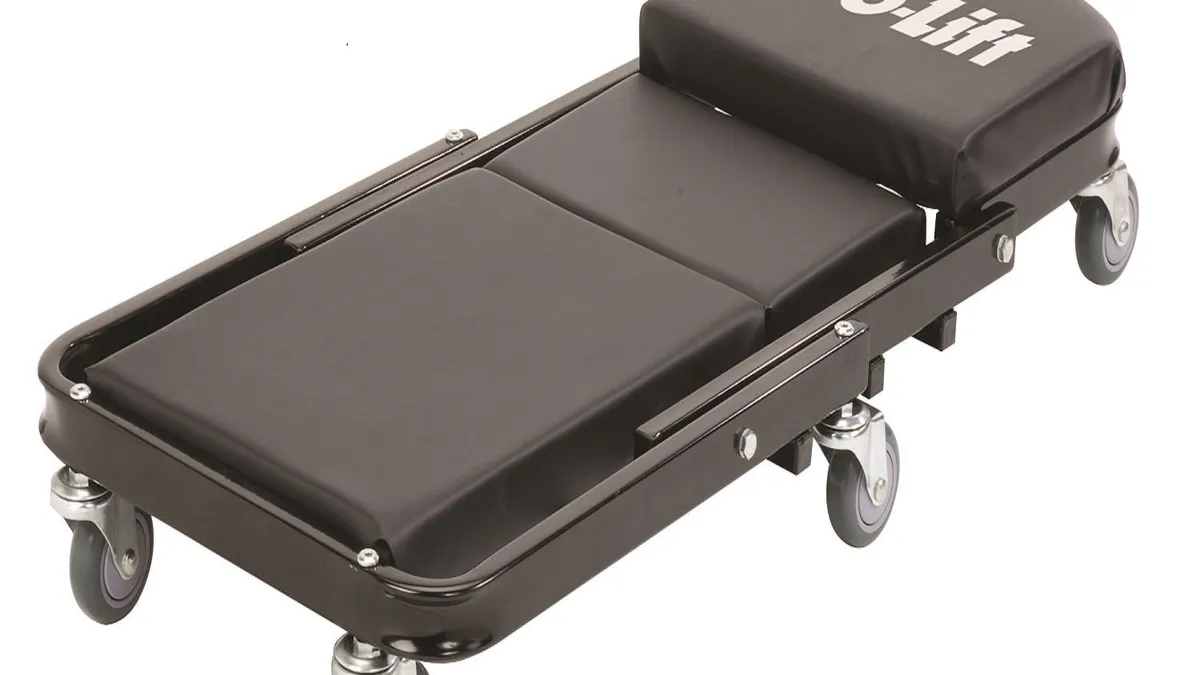
A creeper is a cheap tool that people still manage to buy wrong, and it almost always comes down to one number: how tall the thing is. A thick padded creeper is lovely to lie on and useless if it will not fit under your car. A flat plastic creeper fits anywhere and stops dead on the first extension cord it meets. This guide compares five creepers sold on Amazon that each answer a different version of that trade: the folding Pro-LifT C-9100 that turns into a seat, the low-cost BIG RED TRP6240 plastic deck, the very flat Lisle 97102 for low cars, the wide 400 lb Traxion 1-100 with big all-terrain wheels, and the Traxion 3-700 topside creeper for engine bay work. We compared them on deck height and size, published weight capacity, deck material and padding, wheel size and whether they fold away. By the end you will know which height your car can accept, which wheels suit your floor, and where spending more buys comfort you will actually feel.
Table of contents
- Quick picks
- Rated weight capacity compared
- Comparison table
- Best Overall: Pro-LifT C-9100 Foldable Z Creeper, 40 in
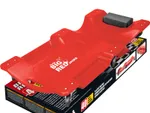
- Best Budget: BIG RED TRP6240 Torin 40 in Rolling Shop Creeper
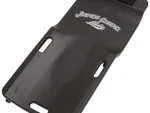
- Best for Low Clearance Cars: Lisle 97102 Low Profile Plastic Creeper
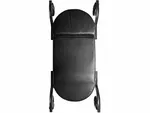
- Best for Rough Garage Floors: Traxion 1-100 ProGear Wide Body Low Profile Creeper
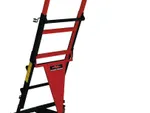
- Best for Engine Bay Work: Traxion 3-700 ProGear Foldable Topside Engine Creeper
- How we chose
- What to consider before buying
- Deck height versus comfort
- Wheel size and what your floor is really like
- Under the car or over the engine
- Final recommendation
- FAQ
Quick picks
Every pick wins a specific use case. Jump to the full review before you buy.
-
Best Overall
Pro-LifT C-9100 Foldable Z Creeper, 40 in
A padded steel creeper that folds into a rolling seat in seconds, which makes it the most useful single tool in this guide for a home garage.
-
Best Budget
BIG RED TRP6240 Torin 40 in Rolling Shop Creeper
The cheapest sensible creeper here, a light plastic deck with a padded headrest and tool trays that covers occasional driveway jobs.
-
Best for Low Clearance Cars
Lisle 97102 Low Profile Plastic Creeper
A flat 4 in plastic creeper made in the USA with a 7/8 in floor clearance, built to fit under cars the padded creepers cannot reach.
-
Best for Rough Garage Floors
Traxion 1-100 ProGear Wide Body Low Profile Creeper
A 400 lb rated wide body creeper on 5 in casters, built for cracked concrete, dirty shop floors and mechanics who do not fit on a narrow deck.
-
Best for Engine Bay Work
Traxion 3-700 ProGear Foldable Topside Engine Creeper
A folding topside creeper that lets you lie over the fender and reach deep into a tall engine bay instead of bending over it.
Compare every pick
| Product | Award | Creeper style | Working size | Load capacity | Deck surface | Casters | Best for | Where to buy |
|---|---|---|---|---|---|---|---|---|
| Pro-LifT C-9100 Foldable Z Creeper, 40 in | Best Overall | Folding Z creeper that doubles as a mechanic seat | 41 in long, 18 in wide, 7 in tall | 450 lb | Thick padded cushions over a welded steel frame | Six 3 in polyurethane swivel casters | Home mechanics who lift the car on ramps or stands and want one tool that works both lying down and sitting up. | Check price for Pro-LifT C-9100 Foldable Z Creeper, 40 in at Amazon (affiliate link) |
| BIG RED TRP6240 Torin 40 in Rolling Shop Creeper | Best Budget | One-piece blow molded plastic under-car creeper | 39.8 in long, 18.7 in wide, 5.1 in tall | 280 lb | Molded plastic deck with a padded headrest and dual tool trays | Six 360 degree swivel casters | Weekend oil changes and light jobs on a smooth garage floor, where you want a creeper without spending much. | Check price for BIG RED TRP6240 Torin 40 in Rolling Shop Creeper at Amazon (affiliate link) |
| Lisle 97102 Low Profile Plastic Creeper | Best for Low Clearance Cars | Low profile one-piece plastic under-car creeper | 38 in long, 17.5 in wide, 4 in tall | 300 lb | Body-fitting HDPE deck with lumbar support and a replaceable padded headrest | Six 2 in urethane pop-in swivel rollers | Owners of sedans, sports cars and anything low who need the thinnest creeper that still supports the back properly. | Check price for Lisle 97102 Low Profile Plastic Creeper at Amazon (affiliate link) |
| Traxion 1-100 ProGear Wide Body Low Profile Creeper | Best for Rough Garage Floors | Padded wide body steel creeper with a drop deck | About 40 in long, 19 in wide, 4.75 in deck height | 400 lb | Contoured padded deck with built-in lumbar support and no side rails | Four 5 in all-terrain TPR rubber casters | Anyone working on a cracked driveway or a dirty shop floor, and larger mechanics who need a wide, high capacity deck. | Check price for Traxion 1-100 ProGear Wide Body Low Profile Creeper at Amazon (affiliate link) |
| Traxion 3-700 ProGear Foldable Topside Engine Creeper | Best for Engine Bay Work | Folding topside creeper for leaning over the engine bay | Working height adjusts from 53 in to 75 in | 400 lb | Padded sling deck with a removable upholstered cover | Four casters, two of them locking | Owners of lifted trucks, vans and diesels who do long engine bay jobs and want to stop leaning over the fender. | Check price for Traxion 3-700 ProGear Foldable Topside Engine Creeper at Amazon (affiliate link) |
Swipe sideways to compare every column.
Best Overall
Pro-LifT C-9100 Foldable Z Creeper, 40 in
by Pro-LifT
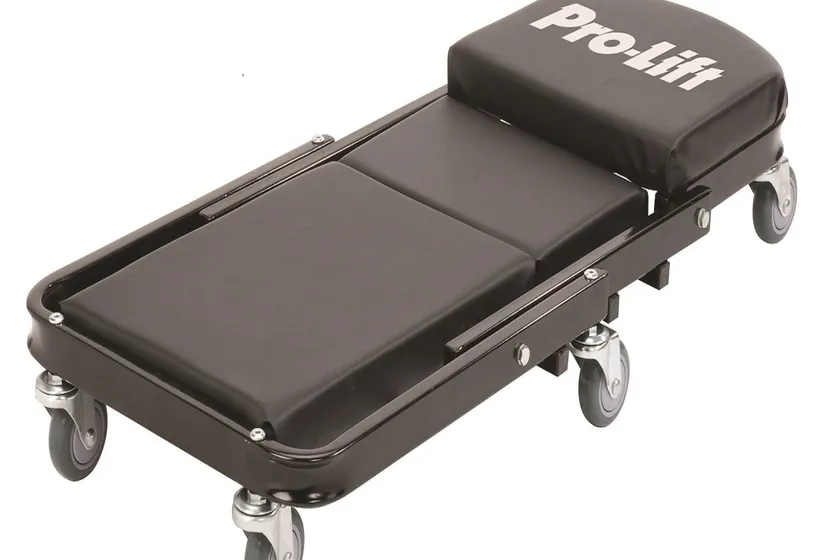
A padded steel creeper that folds into a rolling seat in seconds, which makes it the most useful single tool in this guide for a home garage.
What we like
- Folds from a flat creeper into a mechanic seat with one pull pin, so one tool covers brake jobs and under-car work
- Rated at 450 lb, the highest capacity of any pick here, with a welded steel frame behind it
- Six 3 in polyurethane casters roll over cords, grit and expansion joints far better than the small wheels on plastic creepers
- The largest owner review base in this guide by a wide margin, with a consistently high rating over many years
What we don't
- It sits about 7 in tall at the headrest, so it will not slide under a stock car that has not been jacked up
- At roughly 25 lb it is heavy to carry and awkward to hang on a wall compared to a plastic creeper
- The casters bolt on at home, and owners report the supplied wrench is poor quality
| Creeper style | Folding Z creeper that doubles as a mechanic seat |
|---|---|
| Working size | 41 in long, 18 in wide, 7 in tall |
| Load capacity | 450 lb |
| Deck surface | Thick padded cushions over a welded steel frame |
| Casters | Six 3 in polyurethane swivel casters |
| Price bracket | $$ |
The Pro-LifT C-9100 wins Best Overall because it does two jobs well instead of one job cheaply. Flat, it is a padded 40 inch creeper. Folded, it locks into a Z shape and becomes a rolling stool at seat height. Most garage work is not all under the car, so being able to sit up for brake, wheel and lower body panel work without dragging out a second seat is worth real money.
The build is the other reason it leads. The frame is welded steel, the rating is 450 lb, and the six casters are 3 inch polyurethane instead of the small plastic wheels used on cheap creepers. Bigger wheels are the single biggest comfort upgrade on a garage floor, because they roll over air hose, extension cord and grit rather than stopping dead on them.
The honest limitation is height. Thick padding plus big casters put the deck around 7 inches off the floor, and owners who use it under an unraised car say so plainly. If your vehicle is not on ramps, stands or a lift, this creeper will not fit. That single trait decides whether it works for you, and it is why the low Lisle 97102 exists in this guide.
It also arrives needing the casters bolted on, and the included wrench is thin. Ten minutes with your own socket sorts it.
Buy this if you raise the vehicle before you work and you want the most capable, most comfortable everyday creeper here. Skip it and buy the Lisle 97102 if clearance is your problem, or the BIG RED TRP6240 if you only need something to lie on a few times a year.
Research-based pick: this recommendation is based on product data, owner feedback and comparison with products we have tested, not on direct hands-on testing.
Buy it if: Home mechanics who lift the car on ramps or stands and want one tool that works both lying down and sitting up.
Skip it if: You work on a car with low ground clearance that you cannot raise, where the flat Lisle 97102 fits and this will not.
Best Budget
BIG RED TRP6240 Torin 40 in Rolling Shop Creeper
by BIG RED
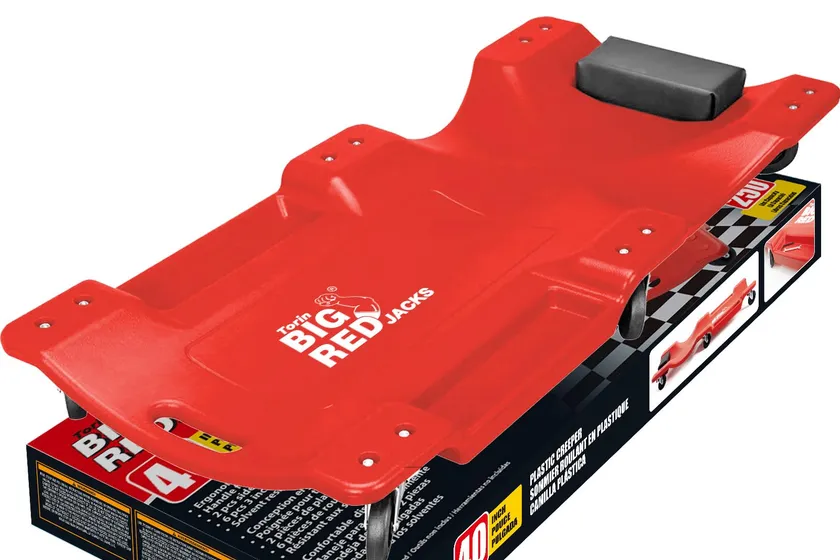
The cheapest sensible creeper here, a light plastic deck with a padded headrest and tool trays that covers occasional driveway jobs.
What we like
- Costs the least in this guide while still giving you a padded headrest, a shoulder recess and two side tool trays
- Light enough at around 10 lb to pick up with one hand and stand against the garage wall
- The 5.1 in body is lower than the padded steel picks, so it fits under more vehicles without extra lift
- Long sales history with a strong average rating across more than a thousand owner reviews
What we don't
- Rated at only 280 lb, the lowest capacity here, which rules it out for larger mechanics
- Owners report the blow molded corners can crack around the caster mounts after a few years of use
- The small casters stall on gravel, seams and extension cords, so it really wants a smooth concrete floor
| Creeper style | One-piece blow molded plastic under-car creeper |
|---|---|
| Working size | 39.8 in long, 18.7 in wide, 5.1 in tall |
| Load capacity | 280 lb |
| Deck surface | Molded plastic deck with a padded headrest and dual tool trays |
| Casters | Six 360 degree swivel casters |
| Price bracket | $ |
The BIG RED TRP6240 wins Best Budget because it delivers the parts of a creeper that matter most for occasional use at the lowest price in this guide. You get a full 40 inch molded deck, a padded headrest, a recess for your shoulders and a tool tray on each side, which is more than some creepers that cost twice as much.
What makes it different from the padded steel picks is the one-piece plastic body. There is no hinge to flop around, no frame rails for your shirt to fall through and nothing to catch your fingers. It weighs around ten pounds, so it stands against a wall or hangs on a hook without a thought. That simplicity is the point.
The real limitation is the 280 lb rating, and it is not a formality. That is the lowest capacity in this comparison, and the failure owners describe is specific: cracks form in the plastic around the caster mounts, then a corner breaks off with the wheel still attached. Reports of that are rare but they are real, and they line up with heavier use over years.
The other honest weakness is the wheels. Small casters on a light deck are fine on sealed concrete and frustrating anywhere else. On gravel, cracked asphalt or over a trailing extension cord, you stop moving.
Buy it if you do a few jobs a year on a clean garage floor and want to spend as little as possible. If you are a bigger person or you work outdoors on rough ground, the Traxion 1-100 solves both problems, and the Pro-LifT C-9100 is the better everyday tool if you have room to raise the car.
Research-based pick: this recommendation is based on product data, owner feedback and comparison with products we have tested, not on direct hands-on testing.
Buy it if: Weekend oil changes and light jobs on a smooth garage floor, where you want a creeper without spending much.
Skip it if: You are near the 280 lb limit or you work on a rough driveway, where the Traxion 1-100 is the better answer.
Best for Low Clearance Cars
Lisle 97102 Low Profile Plastic Creeper
by Lisle
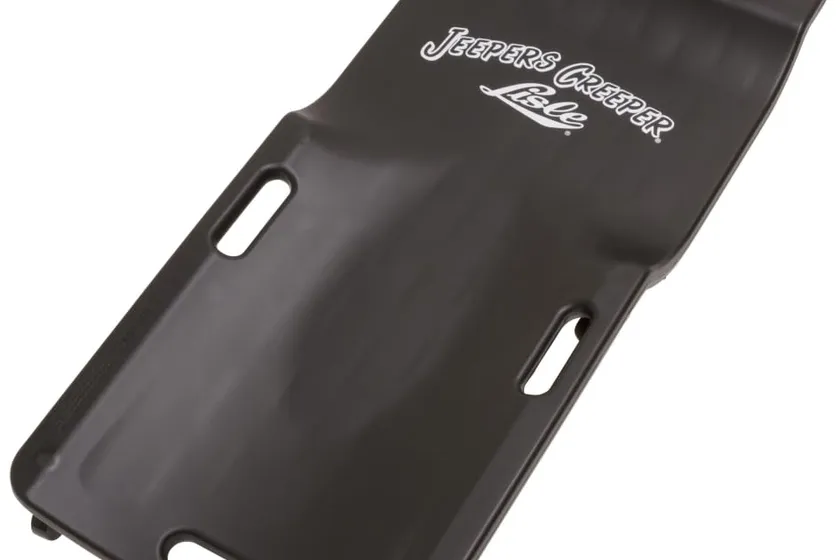
A flat 4 in plastic creeper made in the USA with a 7/8 in floor clearance, built to fit under cars the padded creepers cannot reach.
What we like
- At 4 in tall with 7/8 in of floor clearance it slides under low cars and over air hoses that stop other creepers
- Rollers pop in and out of steel bushings molded into the body, so a broken wheel is a two minute fix instead of a new creeper
- The body-fitting deck includes lumbar support and a replaceable padded headrest, which is unusual on a flat plastic creeper
- Lisle backs the body with a lifetime warranty and the creeper weighs only about 11 lb
What we don't
- The 2 in rollers are small, so pebbles, cord and rough asphalt still stop it dead
- Hard plastic under your back is less comfortable than the padded decks on the Pro-LifT and Traxion picks for long sessions
- Costs noticeably more than plastic creepers of the same size from budget brands
| Creeper style | Low profile one-piece plastic under-car creeper |
|---|---|
| Working size | 38 in long, 17.5 in wide, 4 in tall |
| Load capacity | 300 lb |
| Deck surface | Body-fitting HDPE deck with lumbar support and a replaceable padded headrest |
| Casters | Six 2 in urethane pop-in swivel rollers |
| Price bracket | $$ |
The Lisle 97102 wins Best for Low Clearance Cars because it answers the problem that ends most creeper purchases: the creeper is too thick to fit. The deck is 4 inches tall and the frame sits 7/8 of an inch off the floor, which is about as flat as a usable creeper gets. On a car you cannot raise much, that difference is the whole job.
What sets it apart from other cheap flat creepers is the detail work. The body is one piece of blow molded polyethylene with ribs bonded through the middle, so it does not flex like a hollow shell. The rollers sit in steel bushings molded into the plastic and pop out by hand, which means a dead wheel costs you a few dollars instead of a new creeper. The headrest is padded and replaceable, and Lisle warranties the body for life.
The limitation is the wheels themselves. They are 2 inches, they are urethane, and they behave like small wheels always do: fine on clean concrete, stopped by a bolt, a zip tie or a rough driveway. Owners are consistent about this. It is a shop floor tool, not an all-terrain one.
The other trade is comfort. Hard plastic supports your back well for a while, but it is not padding. For a two hour exhaust job, the padded picks here win.
Buy this if your car sits low or you want a creeper that fits everywhere and lasts. Choose the Traxion 1-100 instead if your floor is rough, or the Pro-LifT C-9100 if you want cushioning and a seat mode more than you want thinness.
Research-based pick: this recommendation is based on product data, owner feedback and comparison with products we have tested, not on direct hands-on testing.
Buy it if: Owners of sedans, sports cars and anything low who need the thinnest creeper that still supports the back properly.
Skip it if: You spend hours at a time under a raised truck, where the padded Pro-LifT C-9100 or Traxion 1-100 is far kinder to your body.
Best for Rough Garage Floors
Traxion 1-100 ProGear Wide Body Low Profile Creeper
by Traxion
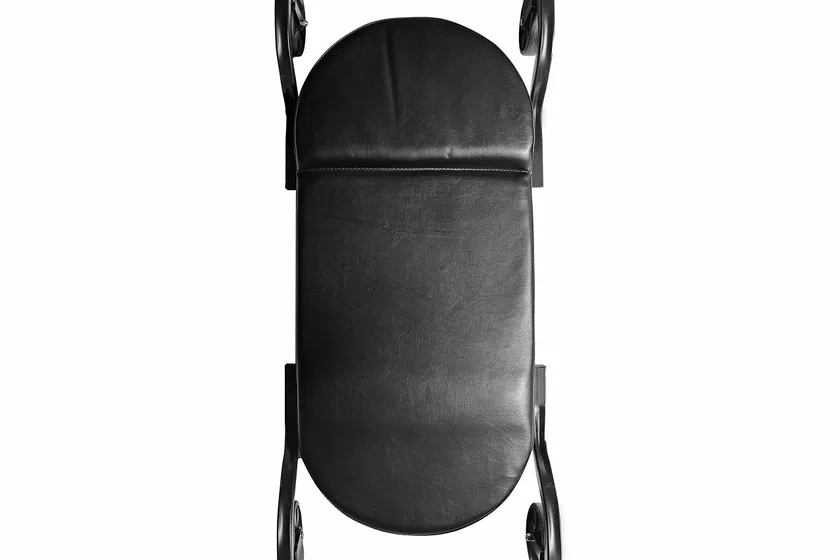
A 400 lb rated wide body creeper on 5 in casters, built for cracked concrete, dirty shop floors and mechanics who do not fit on a narrow deck.
What we like
- Huge 5 in rubber casters roll over grit, floor cracks and small debris that stop every other creeper here
- Wide contoured deck with real padding and built-in lumbar support stays comfortable through long jobs
- The drop deck frame has no side rails, so you can kneel or sit on it and there are no pinch points at your torso
- Rated at 400 lb on a welded steel frame, which suits larger mechanics who crack plastic decks
What we don't
- The big casters raise the deck to roughly 4.75 in, so it will not fit under a low car that is sitting on its own wheels
- Owners report that deep gravel and sand still stop it, despite the all-terrain wording on the listing
- It is the most expensive under-car creeper in this guide by a wide margin
| Creeper style | Padded wide body steel creeper with a drop deck |
|---|---|
| Working size | About 40 in long, 19 in wide, 4.75 in deck height |
| Load capacity | 400 lb |
| Deck surface | Contoured padded deck with built-in lumbar support and no side rails |
| Casters | Four 5 in all-terrain TPR rubber casters |
| Price bracket | $$$ |
The Traxion 1-100 wins Best for Rough Garage Floors because it fixes the thing people complain about most with cheap creepers. Small wheels stop on anything. These are 5 inch rubber casters, and owners who work on cracked concrete and older shop floors describe the difference as night and day: it rolls over dirt, seams and dropped hardware instead of stopping and dumping you.
The deck design matters just as much. It is wider than a standard creeper, it is contoured with lumbar support, and the frame drops below the pad rather than running alongside it. That means there are no side rails to bruise your shins, no rails for your shirt to fall into, and you can kneel or sit on the end without it flipping. The 400 lb rating and welded steel frame make it one of the few creepers here that suits a larger mechanic.
The limitation is the same thing that makes it good. Big wheels sit the deck about 4.75 inches up, which is taller than a flat plastic creeper. Under a lifted truck or a car on stands, that is fine. Under a low car resting on its tires, you will not get beneath it at all.
Be realistic about the all-terrain claim too. Owners agree it handles rough concrete and light debris, and they also report that deep gravel or sand still stops it. No creeper wheel solves loose ground.
Buy it if your floor or driveway is the problem, or if you are simply too big for a plastic deck. If clearance is your problem instead, buy the Lisle 97102.
Research-based pick: this recommendation is based on product data, owner feedback and comparison with products we have tested, not on direct hands-on testing.
Buy it if: Anyone working on a cracked driveway or a dirty shop floor, and larger mechanics who need a wide, high capacity deck.
Skip it if: Your car is low and stays on its wheels, where the flat Lisle 97102 fits and this simply will not.
Best for Engine Bay Work
Traxion 3-700 ProGear Foldable Topside Engine Creeper
by Traxion
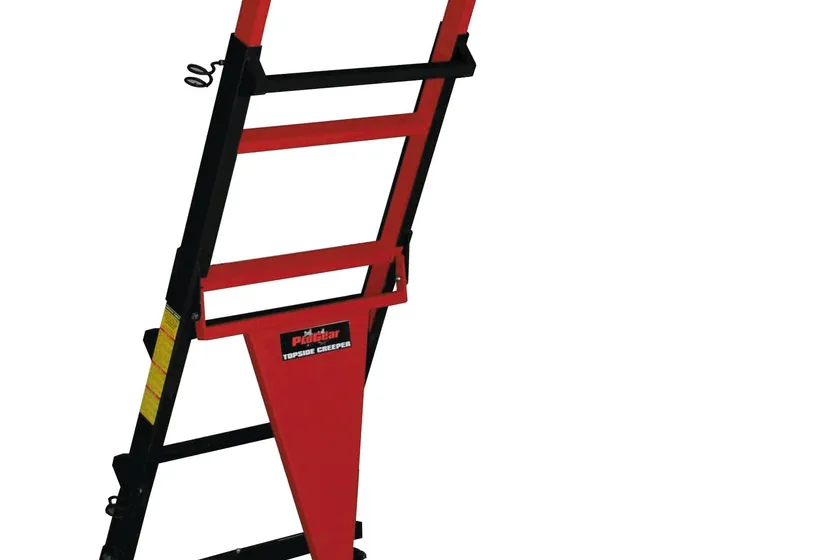
A folding topside creeper that lets you lie over the fender and reach deep into a tall engine bay instead of bending over it.
What we like
- Adjusts from 53 in to 75 in of working height, so it suits everything from a sedan to a lifted diesel truck
- Gives about 140 in of engine compartment reach, which covers work back at the firewall that you cannot reach standing
- The I-shaped base rolls in close on both sides of the vehicle, and two casters lock before you climb on
- Folds flat for storage, which matters because this is a large piece of equipment
What we don't
- The padding over the frame is thin, and owners report a sore chest and ribs after long sessions on it
- Assembly quality draws real complaints, with reports of uneven welds and bolt holes that leave the frame feeling loose
- It costs several times more than any under-car creeper here and weighs around 72 lb to move
| Creeper style | Folding topside creeper for leaning over the engine bay |
|---|---|
| Working size | Working height adjusts from 53 in to 75 in |
| Load capacity | 400 lb |
| Deck surface | Padded sling deck with a removable upholstered cover |
| Casters | Four casters, two of them locking |
| Price bracket | $$$ |
The Traxion 3-700 wins Best for Engine Bay Work because it is the only pick here that solves the other half of the problem. Every other creeper in this guide puts you under the car. This one puts you over it, lying flat across a padded deck at fender height so you can reach the back of an engine bay with both hands free.
That matters most on tall vehicles. Owners of lifted trucks and diesels describe the same experience: fuel pump, injector and sensor jobs that used to mean standing on a bumper or kneeling in the engine bay become normal work. The height adjusts from 53 to 75 inches, the base is shaped to roll in close on either side, and two casters lock so it does not drift while you climb up.
The biggest real limitation is padding. The cover is a thin upholstered sling over a steel frame, and owners consistently say your chest and ribs feel it after an hour. Several report adding foam or a pillow, which works but should not be necessary at this price.
Build quality is the other honest concern. A recurring complaint is uneven welds and loose-feeling joints after assembly, with owners adding their own washers to tighten things up. Most people still rate it well, but check every bolt before you stand on it.
Buy this only if engine bay work is a regular part of your life and the vehicle is tall. If you are choosing one creeper for general use, buy the Pro-LifT C-9100 instead and come back to a topside later.
Research-based pick: this recommendation is based on product data, owner feedback and comparison with products we have tested, not on direct hands-on testing.
Buy it if: Owners of lifted trucks, vans and diesels who do long engine bay jobs and want to stop leaning over the fender.
Skip it if: Your work is mostly oil changes, brakes and exhaust under the car, where any under-car creeper here is the right tool.
How we chose#
This is a research-based guide, not a hands-on garage test. We started with the creepers that sell in real volume on Amazon, then read each listing for the numbers that decide whether a creeper works for a given person and a given car: deck height, deck length and width, published weight capacity, wheel size and deck material. We also read aggregated owner feedback for the failure patterns that repeat, mainly cracked plastic at the caster mounts, wheels that stall on debris and padding that is thinner than the photos suggest.
We deliberately picked across creeper styles rather than lining up five identical plastic decks. That means a folding creeper that turns into a seat, a low-cost plastic deck, a very flat creeper for low cars, a wide high capacity creeper on big wheels, and a topside creeper for engine bay work. Creepers with no published capacity, or with thin review histories, did not make the list.
What to consider before buying#
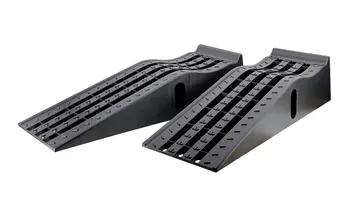
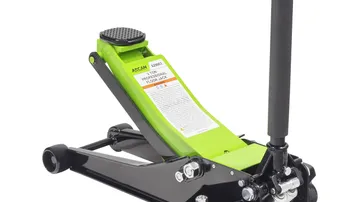
Start with clearance, because it decides everything else. Measure the gap under your car at its lowest point, then be honest about how much of that is left once your chest and arms are on top of the creeper. If the number is small and you cannot raise the car, you need a flat creeper and nothing else matters. If you already lift the vehicle with a set of car ramps or a jack, every creeper here becomes an option.
Then think about how long your jobs last. Twenty minutes on a hard plastic deck is fine. Two hours is not. Padding costs height, so this is a straight trade rather than an upgrade.
Finally, look at your floor. Smooth sealed concrete flatters small wheels. Cracked concrete, old asphalt and a dusty driveway do not, and no amount of capacity makes up for a creeper that will not roll.
Deck height versus comfort#
Every creeper here sits somewhere on one line. The Lisle 97102 is 4 in tall with almost no cushioning, and it fits under things nothing else in this guide can reach. The Pro-LifT C-9100 is about 7 in tall with thick padding and big wheels, and it is far kinder to your back for a long job. The BIG RED TRP6240 and the Traxion 1-100 sit in between at roughly 5 in and 4.75 in. There is no pick that is both flat and plush, so decide which problem is yours before you compare anything else.
Wheel size and what your floor is really like#
Wheel diameter is the most underrated spec on a creeper. Small 2 in rollers are quiet, low and easily stopped. The 5 in casters on the Traxion 1-100 and the 3 in casters on the Pro-LifT roll over cords, seams and grit that would stop the others, at the cost of extra deck height. If you work on a garage floor you sweep, small wheels are fine. If you work on a driveway, buy the biggest wheels you can accept.
Under the car or over the engine#
Most people want an under-car creeper, and four of these five are exactly that. The Traxion 3-700 is the exception. It is a topside creeper, a padded platform you lie across at fender height to reach deep into an engine bay, and it is the right tool only if you own a tall truck or van and do real engine work. It is not a replacement for a normal creeper. If your list is oil changes, brakes and exhaust work, spend the money on a good under-car creeper and a proper floor jack instead.
Final recommendation#
Most people should buy the Pro-LifT C-9100. It is padded, it is rated at 450 lb, the wheels are large enough for a real garage floor, and folding it into a seat makes it useful for brake and wheel jobs as well. If your car is low and stays on its own tires, the Lisle 97102 is the pick, because a comfortable creeper that does not fit is worth nothing. If you work on rough concrete or you are a bigger mechanic, the wide 400 lb Traxion 1-100 and its 5 in casters are worth the extra money. Buy the BIG RED TRP6240 if you just need something to lie on a few times a year on a clean floor. And add the Traxion 3-700 only when engine bay work on a tall vehicle is a regular part of your week.
Frequently asked questions
How much clearance do I need to use a creeper?
Measure from the floor to the lowest point under your car, then add a few inches for your body. A flat creeper like the Lisle 97102 is 4 in tall, and you still need room for your chest and arms on top of that, so most people want at least 12 to 14 in of clearance. Padded creepers such as the Pro-LifT C-9100 sit around 7 in tall, which usually means raising the car first. This is why creepers and ramps are so often bought together.
Do I need to raise the car before using a creeper?
For anything beyond looking around, yes. Trucks and SUVs often have enough factory clearance for a flat creeper, but most cars do not. Raising the vehicle on ramps or on a jack and stands gives you room to work and room for a thicker, more comfortable creeper. Never work under a vehicle held up by a jack alone.
What weight capacity should I look for?
Look at your own weight plus a margin, and remember your body is not the only load. Pushing hard on a stuck bolt puts extra force through the deck. The BIG RED TRP6240 is rated at 280 lb, the Lisle 97102 at 300 lb, the Traxion 1-100 at 400 lb and the Pro-LifT C-9100 at 450 lb. If you are within about 50 lb of a creeper's rating, buy the next one up.
Are plastic creepers or padded steel creepers better?
They fail in different ways. Plastic creepers are light, low, easy to wipe clean and cheap, and their weakness is cracking around the caster mounts over years of use. Padded steel creepers are stronger, more comfortable for long jobs and much taller, and their padding soaks up oil and eventually wears. Pick by clearance first, then by how long your typical job lasts.
Why do the wheels stop rolling on my floor?
Almost always because the casters are too small for the surface. Two inch wheels stop on a pebble, a dropped bolt or an air hose. Bigger casters like the 5 in wheels on the Traxion 1-100 roll over most of that, though loose gravel and sand still defeat any creeper. Sweeping the work area before you start makes a bigger difference than most people expect.
How long does a car creeper last?
A plastic creeper used a few times a year commonly lasts many years, and the usual end is a cracked corner at a caster mount rather than a worn wheel. Steel frame creepers outlast the padding on them. The most useful feature for lifespan is replaceable wheels, since casters are the first thing to break on any creeper. The Lisle rollers pop out by hand and the bolt-on casters used by the other picks are standard sizes.
About the author
Dale Harper Lead Gear Editor
Dale is a longtime truck owner and former accessory-shop tech who builds these guides from manufacturer fit data, aggregated owner feedback and direct spec comparison. Research-based picks are always labelled as such.
Daily driver: 2022 Ford F-150 XLT SuperCrew
- Tonneau covers and bed accessories
- Seat covers and interior protection
- Lift kits and suspension