The Best CB Radios: 5 Picks Compared, and the Truth About Range
Five real CB radios compared, from a compact Radioddity to a sideband Bearcat 980, plus the plain truth that your antenna sets your range, not the radio.

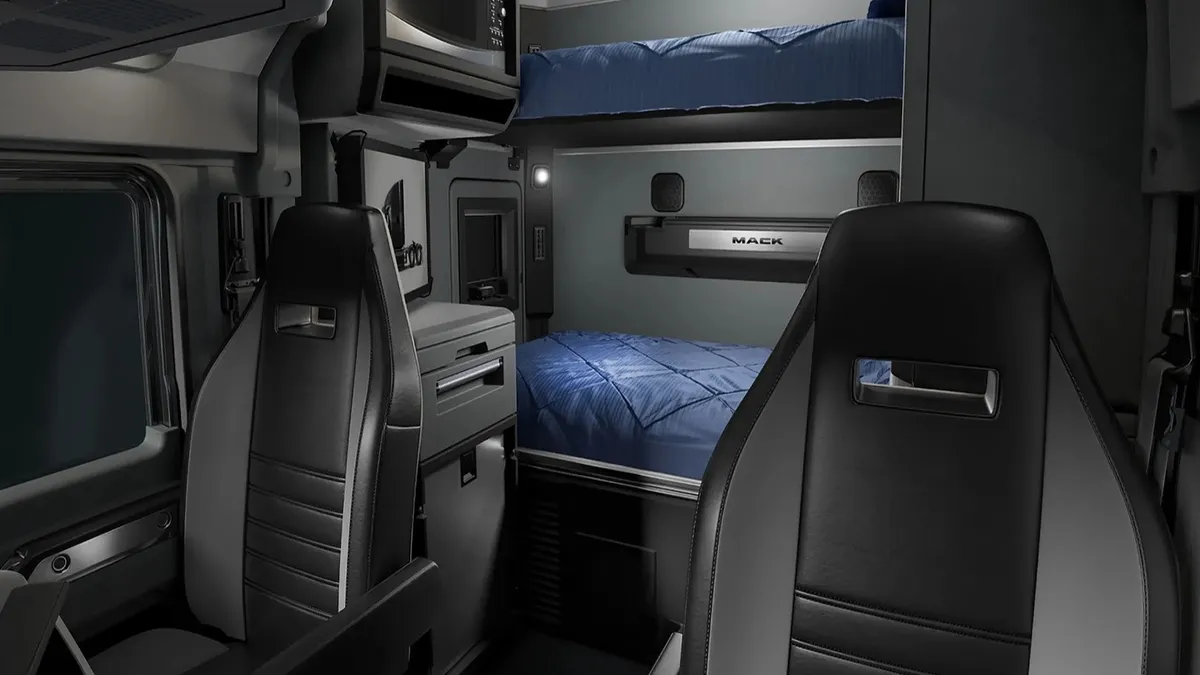
A CB radio still works when the cell towers do not, which is why truckers, off-roaders and convoy drivers keep buying them. The confusing part is that all five radios in this guide transmit at the same 4 watts, because that is the legal ceiling in the United States. What separates them is size, features and how easy they are to set up. We compared five real CB radios sold on Amazon: the full-size Cobra 29 LTD Classic AM/FM with its built-in SWR meter, the low-cost Radioddity CB-606, the palm-sized Cobra 19 MINI for vehicles with no dash space, the Uniden Bearcat 980 with sideband and NOAA weather channels, and the Cobra HHRT50 Road Trip handheld that actually comes with an antenna. We looked at radio size, channel features, weather band, sideband support and whether an antenna is in the box. We also explain the part most guides skip, which is that your antenna, not your radio, decides how far you talk.
Table of contents
- Quick picks
- Transmit power of each CB radio
- Comparison table
- Best Overall: Cobra 29 LTD Classic AM/FM CB Radio
- Best Value: Radioddity CB-606 AM/FM CB Radio
- Best Compact Option: Cobra 19 MINI AM/FM CB Radio
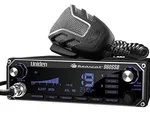
- Upgrade Pick: Uniden Bearcat 980 SSB CB Radio
- Best Handheld: Cobra HHRT50 Road Trip Handheld CB Radio
- How we chose
- What to consider before buying
- Why the antenna decides your range, not the radio
- SWR, the number that protects your radio
- 4 watts is the ceiling, so what does long range mean
- SSB, and who actually uses it
- Final recommendation
- FAQ
Quick picks
Every pick wins a specific use case. Jump to the full review before you buy.
-
Best Overall
Cobra 29 LTD Classic AM/FM CB Radio
The full-size Cobra 29 is the standard mobile CB, and the AM/FM version keeps it useful now that FM channels are legal in the US.
-
Best Value
Radioddity CB-606 AM/FM CB Radio
A compact 40-channel AM/FM radio that costs a fraction of the name-brand sets and transmits at the same legal 4 watts.
-
Best Compact Option
Cobra 19 MINI AM/FM CB Radio
A palm-sized 40-channel CB for vehicles with no dash space, with hands-free VOX and two ways to power it.
-
Upgrade Pick
Uniden Bearcat 980 SSB CB Radio
A sideband CB with NOAA weather channels, for drivers who want the extra reach and clarity that SSB allows.
-
Best Handheld
Cobra HHRT50 Road Trip Handheld CB Radio
A handheld CB that ships with a magnetic roof antenna, so it is the only pick here you can use the day it arrives.
Compare every pick
| Product | Award | Power output | Antenna included | Best for | Where to buy |
|---|---|---|---|---|---|
| Cobra 29 LTD Classic AM/FM CB Radio | Best Overall | 4 watts, the legal US ceiling on AM | No antenna listed in the box | Drivers who want one mobile CB that will still be working in ten years and who have room to mount a full-size radio. | Check price for Cobra 29 LTD Classic AM/FM CB Radio at Amazon (affiliate link) |
| Radioddity CB-606 AM/FM CB Radio | Best Value | 4 watts, the legal US ceiling on AM | No antenna listed in the box | Anyone putting a CB in a vehicle for the first time who wants to spend the money on a good antenna instead of the radio. | Check price for Radioddity CB-606 AM/FM CB Radio at Amazon (affiliate link) |
| Cobra 19 MINI AM/FM CB Radio | Best Compact Option | 4 watts, the legal US ceiling on AM | No antenna listed in the box | Jeep, side-by-side and van owners who have no room for a full-size radio but want a permanent CB. | Check price for Cobra 19 MINI AM/FM CB Radio at Amazon (affiliate link) |
| Uniden Bearcat 980 SSB CB Radio | Upgrade Pick | 4 watts, the legal US ceiling on AM | No antenna listed in the box | Long-distance drivers and off-roaders who talk to a group that also runs sideband radios. | Check price for Uniden Bearcat 980 SSB CB Radio at Amazon (affiliate link) |
| Cobra HHRT50 Road Trip Handheld CB Radio | Best Handheld | 4 watts, the legal US ceiling on AM | Yes, magnetic rooftop mount antenna | Renters, rental drivers and anyone who wants a CB in the glovebox without drilling or wiring anything. | Check price for Cobra HHRT50 Road Trip Handheld CB Radio at Amazon (affiliate link) |
Swipe sideways to compare every column.
Best Overall
Cobra 29 LTD Classic AM/FM CB Radio
by Cobra
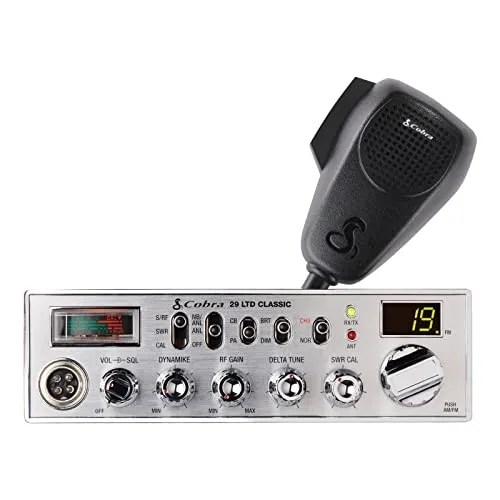
The full-size Cobra 29 is the standard mobile CB, and the AM/FM version keeps it useful now that FM channels are legal in the US.
What we like
- Full-size chassis with real knobs you can find without looking down
- Built-in SWR meter so you can tune the antenna without buying a separate meter
- Adjustable RF gain cuts engine and traffic noise without killing weak signals
- Runs both AM and FM, so it talks to old rigs and newer FM users
What we don't
- The chassis is too deep for many modern dashes and often needs an under-dash bracket
- No NOAA weather channels on this model, which the Cobra 29LX and the handhelds do have
- Costs more than twice what a basic 40-channel radio costs, and the extra buys features, not range
| Radio size | Full-size chassis for dash or under-dash mounting |
|---|---|
| Power output | 4 watts, the legal US ceiling on AM |
| Modulation | AM and FM |
| Weather channels | Not listed on this model |
| Antenna included | No antenna listed in the box |
| Price bracket | $$ |
The Cobra 29 shape has been on the market for decades, and this AM/FM version is the current one. Cobra says the design has been its professional standard for over 50 years. That matters less as a brag and more as a practical point: parts, mounting brackets and microphones for this body style are easy to find, and anyone who has run a CB before already knows where the knobs are.
The feature that earns it the top spot is the built-in SWR calibration. SWR is the measure of how well your antenna is matched to the radio, and getting it wrong is the single most common CB mistake. Most radios make you buy a separate meter and a jumper cable to check it. This one has the meter on the front panel, plus an illuminated indicator that tells you when the reading needs looking at. If a tree branch bends your whip, you will know.
RF gain is the second reason. On a busy highway the noise floor is high, and a radio with only a squelch knob forces you to choose between hearing static or hearing nothing. Turning RF gain down reduces how much background the receiver takes in without cutting off the person you actually want to hear.
The AM and FM dual mode is new-ish and worth understanding. The FCC allowed FM on CB in 2021. FM sounds cleaner when the signal is strong, but it drops out faster than AM when the signal gets weak. Most people you meet on the road are still on AM, so treat FM as a bonus for talking to a group you travel with, not as a range upgrade.
The honest downsides are size and price. This is a deep radio, and a lot of buyers end up mounting it under the dash or on a bracket rather than in a slot. It also has no weather channels. And it does not come with an antenna, which is the part that actually decides how far you talk.
Research-based pick: this recommendation is based on product data, owner feedback and comparison with products we have tested, not on direct hands-on testing.
Buy it if: Drivers who want one mobile CB that will still be working in ten years and who have room to mount a full-size radio.
Skip it if: Your dash has no space for a full-size box or you only need a radio for a couple of trips a year.
Best Value
Radioddity CB-606 AM/FM CB Radio
by Radioddity
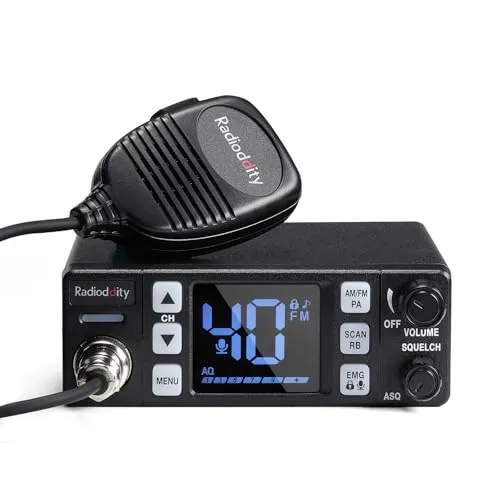
A compact 40-channel AM/FM radio that costs a fraction of the name-brand sets and transmits at the same legal 4 watts.
What we like
- Costs far less than the Cobra and Uniden sets while running the same legal power
- Large 2.2 inch screen with three brightness levels, easy to read at night
- Automatic and manual squelch, plus CTCSS and DCS to filter out chatter
- Small body fits places a full-size 29 chassis will not
What we don't
- No NOAA weather channels, so it will not warn you about a storm ahead
- No SWR meter built in, so you need a separate meter to tune your antenna
- Radioddity has a much smaller dealer and parts network than Cobra or Uniden
| Radio size | Compact, space-saving chassis |
|---|---|
| Power output | 4 watts, the legal US ceiling on AM |
| Modulation | AM, FM and PA |
| Noise control | Automatic and manual squelch, CTCSS and DCS |
| Antenna included | No antenna listed in the box |
| Price bracket | $$ |
This is the pick that proves the point of the whole guide. The CB-606 costs a small share of what the Bearcat 980 costs, and it transmits at exactly the same 4 watts, because that is the legal ceiling every CB in the US has to obey. Put it on a properly tuned 4 foot antenna and it will out-talk a premium radio hooked to a short magnet-mount stub. Every time.
The build is basic in the ways you would expect and better than expected in a few. The 2.2 inch screen is genuinely large for this price and has three brightness settings, so it does not blind you at night. Squelch works two ways, automatic or manual, which means you can set it and forget it or dial it in by hand when conditions are bad. It also supports CTCSS and DCS tone codes, which let you filter out everyone except the group you are travelling with.
AM, FM and PA are all here. The PA function needs a separate horn speaker, which is not included, but the jack is there. There is also an external speaker output, and using one is a real upgrade on any CB, since the tiny speaker inside a mobile radio is always the weak link in a noisy cab.
What you give up is worth knowing. There is no weather band, so you will not get NOAA alerts. There is no SWR meter on the front, so you will need a cheap external meter and a short jumper to tune the antenna, which is a job you cannot skip. And Radioddity is a smaller name than Cobra or Uniden, so a decade from now finding a replacement mic may be harder.
For most people buying a first CB, that trade is fine. Spend the savings on the antenna and the mount.
Research-based pick: this recommendation is based on product data, owner feedback and comparison with products we have tested, not on direct hands-on testing.
Buy it if: Anyone putting a CB in a vehicle for the first time who wants to spend the money on a good antenna instead of the radio.
Skip it if: You want weather alerts, sideband, or a brand with parts you can still buy in fifteen years.
Best Compact Option
Cobra 19 MINI AM/FM CB Radio
by Cobra
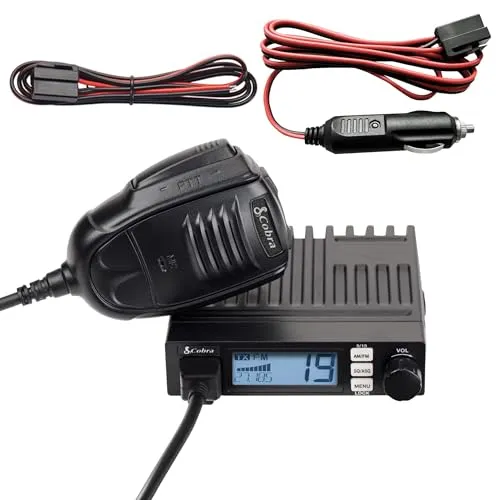
A palm-sized 40-channel CB for vehicles with no dash space, with hands-free VOX and two ways to power it.
What we like
- Small enough to mount almost anywhere, including on a roll bar or under a seat
- Ships with both a 48 inch hardwire kit and a 48 inch 12V plug adapter
- VOX lets it transmit when you speak, so your hands stay on the wheel
- Instant buttons for both channel 9 and channel 19, the two channels drivers use most
What we don't
- Small case means a small speaker, so you will want an external speaker in a loud cab
- No SWR meter on board, so antenna tuning needs a separate meter
- No weather channels, unlike the handheld Cobra HHRT50
| Radio size | Ultra-compact, fits in the palm of your hand |
|---|---|
| Power output | 4 watts, the legal US ceiling on AM |
| Modulation | AM and FM |
| Weather channels | Not listed on this model |
| Antenna included | No antenna listed in the box |
| Price bracket | $$ |
Modern dashboards have almost no room for a radio, and the 19 MINI is Cobra’s answer. It fits in the palm of your hand and still runs the full 40 channels at the legal 4 watts. In a Jeep or a UTV, where the choices are usually a rollbar mount or nothing, that size is the whole reason to buy it.
Power is handled well. Cobra includes a 48 inch hardwire kit for a direct connection to the battery and a 48 inch 12V accessory plug adapter. That means you can wire it in properly for a permanent install, or plug it in for a weekend and pull it out again. If you move between vehicles or share a rig, that flexibility is worth more than a longer feature list.
VOX is the other standout. With it on, the radio transmits when you talk instead of when you press a button. On a trail run with a group, that keeps both hands where they should be. It also picks up every cough and every passenger conversation, so most people leave it off in traffic and switch it on when the group is spread out.
The dedicated channel 9 and channel 19 buttons are more useful than they sound. Channel 9 is the emergency channel. Channel 19 is where highway traffic talk happens. Being able to jump to either with one press, without hunting through 40 channels, is how you actually use a CB while driving.
The compromises follow from the size. The internal speaker is small, and in a loud cab you will want to add an external one. There is no built-in SWR meter, so budget for a separate meter. And there is no weather band here, which the handheld HHRT50 in this guide does have.
Research-based pick: this recommendation is based on product data, owner feedback and comparison with products we have tested, not on direct hands-on testing.
Buy it if: Jeep, side-by-side and van owners who have no room for a full-size radio but want a permanent CB.
Skip it if: You want an SWR meter built in or a big front panel you can operate by feel in the dark.
Upgrade Pick
Uniden Bearcat 980 SSB CB Radio
by Uniden
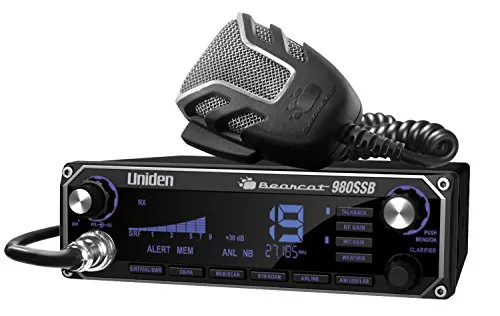
A sideband CB with NOAA weather channels, for drivers who want the extra reach and clarity that SSB allows.
What we like
- Sideband operation, which the FCC allows to run at higher peak power than AM
- NOAA weather channels on a button, useful on long hauls through changing weather
- Integrated SWR reading so you can match the antenna without a separate meter
- Noise cancelling microphone helps in a cab with wind and engine noise
What we don't
- Costs the most of any pick here, and the extra only pays off if the person you are calling also has sideband
- Sideband takes practice, since you have to tune clarifier and pick upper or lower band
- No FM mode listed, so it cannot join the newer FM conversations the Cobra sets can
| Ssb capable | Yes, upper and lower sideband |
|---|---|
| Power output | 4 watts, the legal US ceiling on AM |
| Modulation | AM and SSB, no FM listed |
| Weather channels | NOAA weather band built in |
| Antenna included | No antenna listed in the box |
| Price bracket | $$$ |
SSB stands for single sideband, and it is the only legal way to get more punch out of a CB. A normal AM signal spends most of its power on a carrier wave that carries no voice. Sideband strips the carrier out and puts the power into the voice instead, and the FCC allows sideband stations a higher peak output than the 4 watts AM is capped at. The result is that two sideband radios can hold a conversation across a distance where two AM radios hear only noise.
The catch is that both ends need sideband. If you key up on SSB and the other truck has a plain AM radio, they hear a garbled buzz and nothing else. That is why this is the upgrade pick rather than the top pick. It is the right radio for a convoy, a desert run or a group that has agreed to run sideband. It is the wrong radio if you mostly listen to channel 19.
Beyond sideband, the Bearcat 980 is a well-equipped full-size set. NOAA weather channels are one button away, which is the feature drivers actually use most on a long haul. The display has seven colour options and the keys are laser etched, so it stays readable in any light. The microphone is noise cancelling, and Uniden also sells a wireless mic that pairs with this radio.
Uniden builds SWR reading into the radio, so you can match the antenna without buying a separate meter. That is a genuinely useful feature at any price, and it is the same reason the Cobra 29 sits at the top of this guide.
Two things to keep in mind. Sideband has a learning curve, since you choose upper or lower band and use the clarifier to make a voice sound normal. And there is no FM mode listed here, so you cannot use the newer FM channels.
Research-based pick: this recommendation is based on product data, owner feedback and comparison with products we have tested, not on direct hands-on testing.
Buy it if: Long-distance drivers and off-roaders who talk to a group that also runs sideband radios.
Skip it if: Everyone you talk to is on plain AM channel 19, in which case the sideband hardware is money you will never use.
Best Handheld
Cobra HHRT50 Road Trip Handheld CB Radio
by Cobra
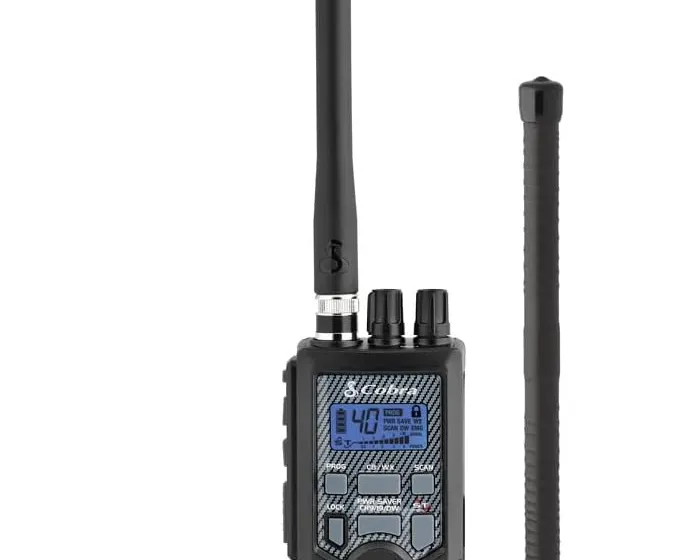
A handheld CB that ships with a magnetic roof antenna, so it is the only pick here you can use the day it arrives.
What we like
- The only radio in this guide that includes an antenna, a magnetic rooftop mount
- Moves between vehicles in under a minute with no wiring at all
- NOAA weather and emergency channels built in
- Dual watch lets you monitor two channels at once, such as 9 and 19
What we don't
- The included magnet antenna is short, so range will be well under what a full-length whip gives you
- Handhelds are hard to hold and drive with, and the omnidirectional mic picks up cabin noise
- No SWR meter, and a magnet mount on a small roof panel gives a compromised ground plane
| Radio size | Handheld, 6.3 by 2 by 1.75 inches |
|---|---|
| Antenna included | Yes, magnetic rooftop mount antenna |
| Power output | 4 watts, the legal US ceiling on AM |
| Weather channels | NOAA weather and emergency channel built in |
| Noise control | Cobra Soundtracker noise filtering |
| Price bracket | $$ |
Every other radio in this guide arrives as a box with no antenna, and the antenna is the part that decides how far you talk. The HHRT50 is the exception. Cobra bundles a magnetic rooftop antenna and a cable, so the kit works the moment you set it on the roof and plug it in. For a rental truck, a borrowed vehicle or a car you do not want to drill, that is the whole appeal.
Be clear-eyed about what the bundled antenna is. It is a short magnet-mount whip, and short antennas are less efficient than long ones. Cobra’s own instruction is to put it in the centre of the roof, and that is not a suggestion. A magnet mount uses the steel roof as its ground plane, and moving it to a fender or the edge of the roof cuts your range noticeably. On an aluminium-bodied truck or a fibreglass roof it will not stick or perform properly at all.
The radio itself is well set up for road use. Soundtracker is Cobra’s noise filtering, which the company says clears out most of the background hiss on both transmit and receive. NOAA weather channels are built in, and dual watch lets you monitor two channels at once, so you can sit on channel 19 while keeping an ear on channel 9.
The omnidirectional microphone is a mixed blessing. It picks up your voice from any angle, so you do not have to hold the radio to your mouth. It also picks up your passengers, your radio and your road noise.
Treat it as a portable CB that works everywhere rather than a range machine. If you want distance, put a fixed radio on a properly mounted full-length antenna instead.
Research-based pick: this recommendation is based on product data, owner feedback and comparison with products we have tested, not on direct hands-on testing.
Buy it if: Renters, rental drivers and anyone who wants a CB in the glovebox without drilling or wiring anything.
Skip it if: You want maximum range, in which case a fixed radio on a properly mounted full-length antenna is a better use of the same money.
How we chose#
This is a research-based guide, not a range test. We started from the CB radios that sell in real volume on Amazon, then compared the listed specs, the manufacturer documentation and the FCC rules that all of them have to follow. No radio here was installed and driven by us.
We picked five different shapes rather than five near-identical full-size sets, because size is the thing most buyers get wrong. So there is a classic full-size chassis, a compact budget radio, a palm-sized mini, a sideband set and a handheld. Cobra shows up three times, which reflects how much of this market one brand holds rather than any preference on our part.
We paid most attention to the features that change the experience day to day: whether an SWR meter is built in, whether weather channels are included, whether sideband is there, and whether an antenna comes in the box. We ignored transmit power entirely as a selection criterion, because every legal CB sold in the US puts out the same 4 watts on AM.
What to consider before buying#
Start with where the radio will physically live. A full-size Cobra 29 chassis is deep, and a lot of modern dashboards simply cannot take one. Measure before you order. If the space is not there, the Cobra 19 MINI or the compact Radioddity CB-606 solves the problem for less money.
Then budget for the antenna as a separate line item, not an afterthought. Only the handheld HHRT50 includes one. For the other four you need an antenna, a mount and coax cable, and that package can cost as much as a cheap radio.
Decide next whether you need weather channels. NOAA broadcasts are genuinely useful on a long haul, and only the Uniden Bearcat 980 and the Cobra HHRT50 have them here. The Cobra 29 LTD does not.
Last, think about who you talk to. If it is strangers on the highway, AM on channel 19 is the whole job. If it is a fixed group, sideband or FM tone codes can give you a quieter channel to yourselves.
Why the antenna decides your range, not the radio#
This is the part worth reading twice. A CB antenna is a tuned length of metal, and its efficiency depends on three things: how long it is, how it is mounted, and how good its ground plane is. The radio just feeds it. Swapping a $44 radio for a $200 one changes almost nothing about how far your voice travels.
Length matters because a CB signal has a long wavelength. A full quarter wave antenna for CB is about 102 inches, which is why you see tall whips on trucks. Shorter antennas use a coil to fake that length electrically, and every inch you take off costs you efficiency. A 4 foot antenna is a sensible compromise. An 18 inch stub is a big step down.
The ground plane is the part almost nobody explains. A mobile antenna needs a metal surface underneath it to work against, and the roof of a steel vehicle is the best one you have. Mount the antenna in the centre of the roof and it radiates evenly in all directions. Mount it on a mirror bracket or the corner of a bed rail and you get less range in some directions and more in others. On a fibreglass camper shell or an aluminium body panel the ground plane is poor or missing, and the same antenna performs worse.
So the honest ranking is this. A cheap radio on a tall, well-mounted, properly tuned antenna beats an expensive radio on a short magnet-mount stub. If your budget is fixed, put the money into the antenna and the mount.
SWR, the number that protects your radio#
SWR stands for standing wave ratio. It is a measure of how much of the power your radio sends up the coax actually leaves the antenna, and how much bounces back down the cable. A reading near 1.5 to 1 is good. Above 3 to 1 you are wasting a lot of your signal and pushing power back into the transmitter, where it turns into heat. Over months that heat is what kills CB output stages.
Checking SWR takes a meter, a short jumper cable, an open space away from buildings, and about ten minutes. You key up on channel 1, note the reading, key up on channel 40, note that one, and adjust the antenna length based on which channel reads higher. The Cobra 29 LTD Classic and the Uniden Bearcat 980 both have the meter built in, which saves you the extra purchase. With the Radioddity CB-606, the Cobra 19 MINI or any handheld you need an external meter.
The failure mode this prevents is real and common. A new CB that seems weak, or one that quietly stops transmitting after a season, is usually an antenna problem, not a radio problem.
4 watts is the ceiling, so what does long range mean#
Every FCC certified CB radio sold in the United States is capped at 4 watts of output on AM. That is a legal limit, not a design choice, so a listing that promises long range is not promising more power. It cannot. What it is really describing is the antenna, the receiver sensitivity or, in the case of sideband, a different mode of transmission.
That is why our comparison chart above is flat. All five radios sit at the same 4 watts. Amplifiers that push past the limit exist and are sold, but running one on CB frequencies is illegal in the US and can interfere with other services.
The place where a radio genuinely can help is on the receiving side. RF gain controls, noise limiters and filtering like Cobra’s Soundtracker do not extend your transmit range, but they can pull a weak voice out of engine noise so you actually hear it. If you already run recording gear in the cab, our guides to the best dash cams for pickup trucks and the best semi truck dash cams cover the electrical noise those units add, which affects CB reception too.
SSB, and who actually uses it#
Single sideband is the one legal way to get more reach out of a CB. A regular AM transmission spends most of its power on a carrier wave that carries no voice at all. Sideband removes the carrier and puts that power into the voice, and the FCC allows sideband stations a higher peak output than the 4 watt AM cap.
In practice that means two sideband radios can talk across distances where two AM radios hear nothing but hiss. The Uniden Bearcat 980 is the only pick here that does it.
The limit is that both ends need sideband. If you transmit on SSB and the other driver has an AM-only radio, they hear a distorted mumble. Sideband is used by long-haul drivers, remote off-road groups and hobbyists who talk over distance on purpose. It is almost never used on channel 19. Sideband also asks more of the operator, since you choose upper or lower band and use the clarifier knob to make a voice sound natural.
Buy it if your group has agreed to run it. Skip it if you are buying a radio to hear about the traffic ahead. Truckers who want a full electronics setup often pair a CB with a recorder, and our dash cam guide for truckers covers that side.
Final recommendation#
Most drivers should buy the Cobra 29 LTD Classic AM/FM. The full-size panel is easy to use while driving, the SWR meter is on board so you can tune your antenna properly, and it will still be serviceable in a decade. If money is tight, buy the Radioddity CB-606 and spend the difference on a taller antenna and a solid mount, because that combination will out-talk the expensive radio on a poor antenna. If your vehicle has no dash space, the Cobra 19 MINI is the answer, and it comes with both power options in the box. If you run with a group over long distances and everyone agrees to use sideband, the Uniden Bearcat 980 is the only pick here that can do it, and it adds NOAA weather channels too. And if you want a CB you can move between vehicles with no wiring and no separate antenna purchase, the Cobra HHRT50 Road Trip is the one to get, as long as you accept that its short magnet antenna gives up range for that convenience.
Frequently asked questions
How far will a CB radio actually reach?
Two to five miles is a fair expectation for a mobile CB on a decent antenna in normal terrain. Open highway with clear sight lines can stretch that further, and hills or city buildings can cut it to under a mile. The radio barely changes this number. Antenna length, where it is mounted and how well it is tuned change it a lot. A Radioddity CB-606 on a properly tuned 4 foot whip will reach further than a Bearcat 980 on a short magnet stub stuck to a fender.
Do I need a licence to use a CB radio in the US?
No. CB is licence free in the United States for anyone, including visitors, as long as you use an FCC certified radio at legal power and do not modify it. That is different from ham radio, which does require a licence and a test. The trade for that freedom is the 4 watt AM power cap and the limit of 40 channels. Amplifiers that push a CB past the legal limit are illegal to use on CB frequencies, no matter what the seller says.
What antenna should I buy with my radio?
Longer is better, and a centre-loaded or full-length whip beats a short stub every time. A 4 foot antenna mounted high and near the middle of a metal roof or bed rail is a good target for most trucks. Budget roughly what you spent on the radio, then a bit more for a solid mount and good coax. The Cobra HHRT50 is the only pick here that includes an antenna, and its magnetic mount is short by design, so it trades reach for convenience.
Should I get AM/FM or sideband?
Get AM at minimum, since that is what almost everyone on the road uses. FM, which the Cobra 29 LTD and the 19 MINI both support, sounds cleaner when the signal is strong but fades out sooner when it is weak. Sideband, which the Uniden Bearcat 980 offers, reaches further but only works when the other station also has sideband. If you talk to strangers on channel 19, plain AM is what you need. If you run with a group that agreed on sideband, buy sideband.
What is SWR and do I really have to check it?
SWR measures how much of your transmit power the antenna sends out versus how much bounces back into the radio. A high reading means wasted range and heat going back into the transmitter, which can damage it over time. Checking takes about ten minutes with a meter and a short jumper cable. The Cobra 29 LTD and the Bearcat 980 have the meter built in. With the Radioddity CB-606 or the Cobra 19 MINI you need an external meter, and it is not a step to skip.
Which pick is right for a vehicle with no dash space?
The Cobra 19 MINI. It fits in the palm of your hand, so it can go on a roll bar, under a seat or on the side of a centre console. It ships with both a hardwire kit and a 12V plug adapter, so you can install it permanently or run it loose. If you would rather not wire anything at all, the Cobra HHRT50 handheld sits in the cupholder and its antenna sticks to the roof, though you give up range for that convenience.
About the author
Dale Harper Lead Gear Editor
Dale is a longtime truck owner and former accessory-shop tech who builds these guides from manufacturer fit data, aggregated owner feedback and direct spec comparison. Research-based picks are always labelled as such.
Daily driver: 2022 Ford F-150 XLT SuperCrew
- Tonneau covers and bed accessories
- Seat covers and interior protection
- Lift kits and suspension