The Best Wheel Cleaners: 5 Picks Compared
Five real wheel cleaners compared, from a pH neutral iron remover to a pro gallon concentrate, with honest notes on which finishes each is safe on.

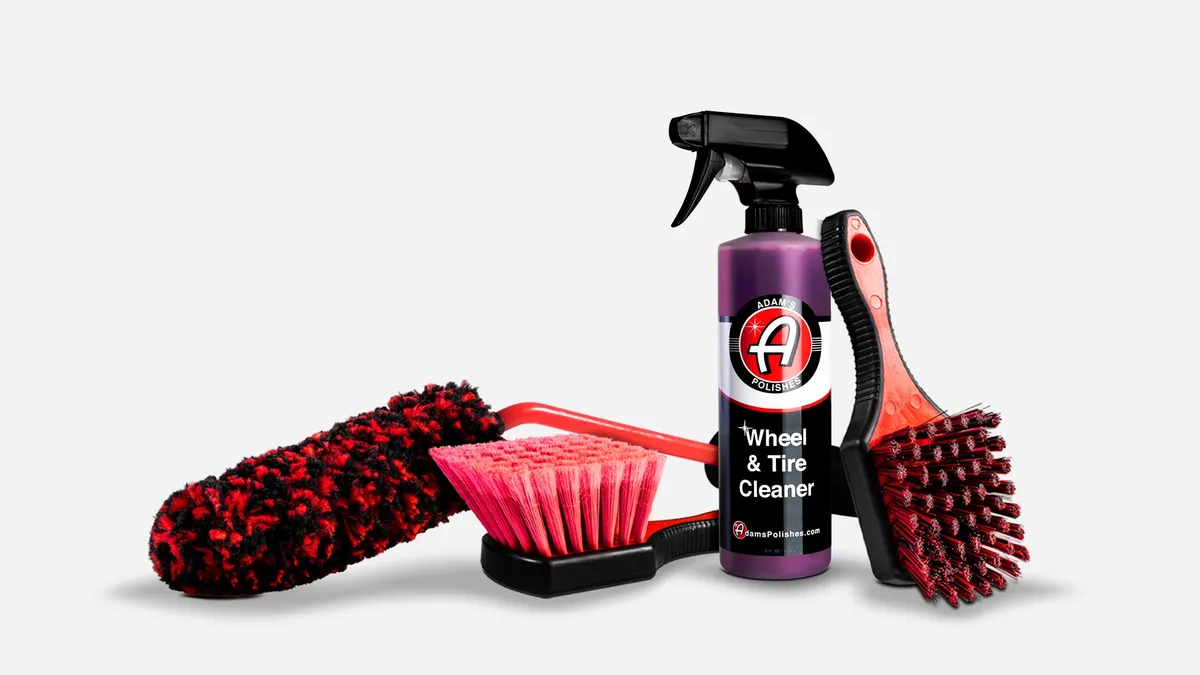
Wheels get dirtier than any other part of a car, and the reason is not mud. Every time you brake, your pads shed hot iron particles that stick to the wheel and start to bond into the finish. Soap will not lift that, which is why a dedicated wheel cleaner exists. The other half of the problem is that the wrong chemical can permanently stain a polished or uncoated wheel, so the safe pick depends on what your wheels are made of. This guide compares five wheel cleaners you can buy on Amazon right now: the non-acid P & S Brake Buster gallon, the colour changing Turtle Wax Hybrid Solutions Iron Remover, the finish-safe Meguiar's Hot Rims Aluminum Wheel Cleaner, the cheap and cheerful Armor All Extreme Wheel and Tire Cleaner, and the tire-focused Adam's Polishes Wheel & Tire Cleaner gallon. We compared them on formula type, published pH claims, bottle size, the finishes each maker says it is safe on, and whether the product actually removes iron or just cleans the surface.
Table of contents
- Quick picks
- How much cleaner you get in each bottle
- Comparison table
- Best Overall: P & S Brake Buster Wheel and Tire Cleaner
- Best Iron Remover: Turtle Wax Hybrid Solutions Iron Remover & Wheel Cleaner
- Best for Delicate Wheel Finishes: Meguiar's Hot Rims Aluminum Wheel Cleaner
- Best Value: Armor All Extreme Wheel and Tire Cleaner
- Best for Wheels and Tires Together: Adam's Polishes Wheel & Tire Cleaner Gallon
- How we chose
- What to consider before buying
- Why brake dust is embedded metal, not dirt
- pH, acid, and what a strong cleaner does to a wheel
- Iron removers and the purple bleed
- Which cleaner is safe on which finish
- Final recommendation
- FAQ
Quick picks
Every pick wins a specific use case. Jump to the full review before you buy.
-
Best Overall
P & S Brake Buster Wheel and Tire Cleaner
A non-acid gallon that detail shops buy by the case, safe on every common wheel finish and strong enough to pull brake dust and light corrosion off a neglected set.
-
Best Iron Remover
Turtle Wax Hybrid Solutions Iron Remover & Wheel Cleaner
A pH neutral, acid free iron remover that bleeds purple as it dissolves embedded brake dust, and it is safe enough to use on paint and glass as well as wheels.
-
Best for Delicate Wheel Finishes
Meguiar's Hot Rims Aluminum Wheel Cleaner
A clinging foaming gel built specifically for the finishes that harsh cleaners ruin, including bare polished aluminum, anodized and powder-coated wheels.
-
Best Value
Armor All Extreme Wheel and Tire Cleaner
A cheap ready to use spray that cleans wheels and tires in the same pass, and for a normal car washed every couple of weeks it is enough.
-
Best for Wheels and Tires Together
Adam's Polishes Wheel & Tire Cleaner Gallon
A high sudsing alkaline gallon aimed at brown, dressing-caked tires as much as at dirty wheels, and one of the strongest sellers in the category.
Compare every pick
| Product | Award | Formula type | Ph level | Container size | Safe on finishes | Best for | Where to buy |
|---|---|---|---|---|---|---|---|
| P & S Brake Buster Wheel and Tire Cleaner | Best Overall | Non-acid liquid cleaner, use straight or foam it | Non-acid, exact pH not published | 128 fl oz (1 gallon jug) | Chrome, aluminum, painted, powder-coated and steel | Anyone washing more than one vehicle, or washing weekly, who wants one bottle that is safe on every wheel in the driveway. | Check price for P & S Brake Buster Wheel and Tire Cleaner at Amazon (affiliate link) |
| Turtle Wax Hybrid Solutions Iron Remover & Wheel Cleaner | Best Iron Remover | Ready to use iron remover spray that turns purple | pH neutral and acid free | 23 fl oz trigger spray bottle | All wheels, plus paint, clear coat, polished metal, chrome and glass | Wheels that still look grey and dull after a proper wash, because the dirt left behind is embedded metal rather than surface grime. | Check price for Turtle Wax Hybrid Solutions Iron Remover & Wheel Cleaner at Amazon (affiliate link) |
| Meguiar's Hot Rims Aluminum Wheel Cleaner | Best for Delicate Wheel Finishes | Ready to use clinging foaming gel | Not published by Meguiar's | 24 fl oz trigger spray bottle | Uncoated polished aluminum, anodized and powder-coated wheels | Aftermarket wheels with bare polished aluminum, anodized or powder-coated finishes, where the wrong chemical causes permanent staining. | Check price for Meguiar's Hot Rims Aluminum Wheel Cleaner at Amazon (affiliate link) |
| Armor All Extreme Wheel and Tire Cleaner | Best Value | Ready to use foaming spray | Not published by Armor All | 24 fl oz trigger spray bottle | All factory and aftermarket finishes, including alloy, steel, chrome and plastic trims | A daily driver on ordinary factory wheels, washed regularly, where the goal is clean rather than concours. | Check price for Armor All Extreme Wheel and Tire Cleaner at Amazon (affiliate link) |
| Adam's Polishes Wheel & Tire Cleaner Gallon | Best for Wheels and Tires Together | High sudsing alkaline solvent and surfactant blend | Alkaline, exact pH not published | 128 fl oz (1 gallon jug) | Clear-coated, powder-coated, chrome, alloy and painted wheels | Owners who dress their tires and are tired of brown, blooming sidewalls that dressing will no longer stick to. | Check price for Adam's Polishes Wheel & Tire Cleaner Gallon at Amazon (affiliate link) |
Swipe sideways to compare every column.
Best Overall
P & S Brake Buster Wheel and Tire Cleaner
by P & S Professional Detail Products
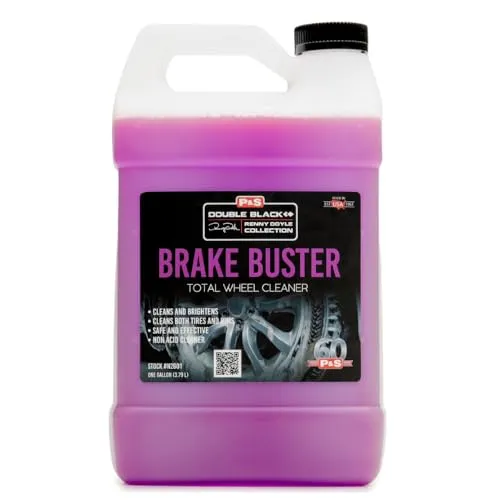
A non-acid gallon that detail shops buy by the case, safe on every common wheel finish and strong enough to pull brake dust and light corrosion off a neglected set.
What we like
- Non-acid formula is rated safe on chrome, aluminum, painted, powder-coated and steel wheels, so you do not have to identify your finish first
- A gallon covers many months of weekly washing, which works out far cheaper per wheel than buying 16 oz bottles
- Works straight from the jug on heavy grime, or diluted in a foam sprayer for regular maintenance washes
- P & S says it leaves a coating behind that helps repel the next round of brake dust
What we don't
- A gallon jug is awkward to pour, so you need your own trigger bottle or foam sprayer to actually use it
- Nothing changes colour, so you have to judge dwell time and coverage by eye
- Buying a gallon is a lot of money and shelf space to commit to if you only wash one car a month
| Formula type | Non-acid liquid cleaner, use straight or foam it |
|---|---|
| Ph level | Non-acid, exact pH not published |
| Container size | 128 fl oz (1 gallon jug) |
| Safe on finishes | Chrome, aluminum, painted, powder-coated and steel |
| Iron remover | Yes: lifts embedded iron, brake dust and light corrosion |
| Price bracket | $ |
Brake Buster is the bottle you see in the background of a lot of professional detailing videos, and the reason is boring but useful. It is non-acid, so it does not force you to work out whether your wheels are clear coated or bare polished aluminum before you spray. That one property removes the most expensive mistake in wheel cleaning.
It wins Best Overall because it covers the widest range of jobs. Sprayed straight from the jug it handles a set of wheels that has not been touched all winter, cutting brake dust, oil and what P & S calls light corrosion. Diluted into a foam sprayer, the same product becomes a gentle weekly maintenance wash that costs pennies per wheel. Most cleaners do one of those two jobs, not both.
The gallon is the point and also the catch. At this size the cost per wash drops well below any spray bottle on the shelf, but a gallon jug does not have a trigger on it. You need a separate spray bottle, and ideally a pump foamer, before you can use a drop of it. Budget for that.
The other trade-off is feedback. Iron removers tell you when they are working by bleeding purple. Brake Buster does not react or change colour, so judging dwell time comes down to watching the foam and touching the wheel. That is a small thing once you have a routine, but beginners often like the visual cue.
Buy it if wheel cleaning is a regular habit rather than an occasional chore. If you want to see the chemistry working, the Turtle Wax iron remover gives you that. If you only need one small bottle, the Armor All spray costs a fraction as much up front.
Research-based pick: this recommendation is based on product data, owner feedback and comparison with products we have tested, not on direct hands-on testing.
Buy it if: Anyone washing more than one vehicle, or washing weekly, who wants one bottle that is safe on every wheel in the driveway.
Skip it if: You wash a single car a few times a year and would rather spend five dollars on a ready to use spray.
Best Iron Remover
Turtle Wax Hybrid Solutions Iron Remover & Wheel Cleaner
by Turtle Wax
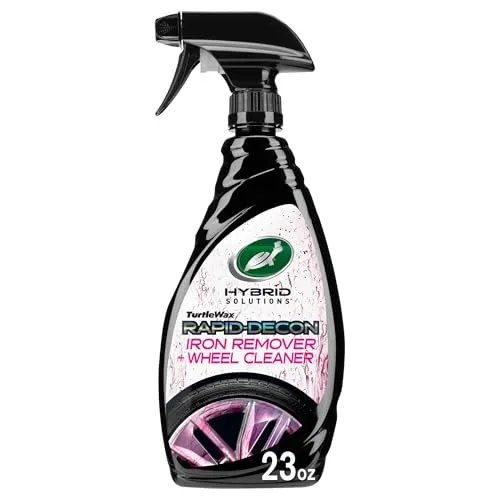
A pH neutral, acid free iron remover that bleeds purple as it dissolves embedded brake dust, and it is safe enough to use on paint and glass as well as wheels.
What we like
- Colour changing reaction shows you exactly where iron is embedded, which takes the guesswork out of dwell time
- pH neutral and acid free, so Turtle Wax rates it safe on painted panels, clear coat, polished metal, chrome and glass
- Dissolves bonded iron without heavy scrubbing, which is the part a normal soap simply cannot do
- Turtle Wax added scent blocking to hide the sulphur smell that most iron removers give off
What we don't
- Iron removers are slow chemistry, so a badly contaminated wheel often needs a second application
- At 23 fl oz it empties fast if you use it as a full car decontamination spray rather than a wheel product
- The purple bleed stains light driveways and concrete if you let it run off and dry
| Formula type | Ready to use iron remover spray that turns purple |
|---|---|
| Ph level | pH neutral and acid free |
| Container size | 23 fl oz trigger spray bottle |
| Safe on finishes | All wheels, plus paint, clear coat, polished metal, chrome and glass |
| Iron remover | Yes: colour changes clear to purple as it reacts with iron |
| Price bracket | $ |
This is the one product here that does a genuinely different job. Brake dust is not dirt. It is hot metal shaved off the rotor and the pad, fired at the wheel, and partly welded into the finish. Soap cannot lift that. An iron remover can, because it chemically binds to the iron particles and turns them into something water soluble.
The purple bleed is that reaction happening in front of you. Turtle Wax builds the colour change in so you can see where contamination is worst and how long to leave the product sitting. It is a useful cue, though it is worth knowing the colour tells you iron is present, not how much damage it has done.
Being pH neutral and acid free is what makes this a wide use product rather than a wheel-only one. Turtle Wax rates it for painted panels, clear coat, polished metal, chrome and glass, which means the same bottle handles the rust-coloured specks that show up on white paint after a few months of highway driving. That flexibility comes at a price in volume, because 23 fl oz does not go far once you start spraying whole panels.
Two habits matter. Work on cool wheels in shade, and rinse thoroughly before the product dries. Dried iron remover leaves purple staining on concrete and takes real effort to clean off a driveway.
Buy it if your wheels look dull no matter how hard you scrub. Use it alongside a normal cleaner, not instead of one. The P & S Brake Buster is the better weekly product, and this is the bottle you reach for every few months to reset the finish.
Research-based pick: this recommendation is based on product data, owner feedback and comparison with products we have tested, not on direct hands-on testing.
Buy it if: Wheels that still look grey and dull after a proper wash, because the dirt left behind is embedded metal rather than surface grime.
Skip it if: Your wheels only ever get a light dusting and a normal cleaner already brings them back.
Best for Delicate Wheel Finishes
Meguiar's Hot Rims Aluminum Wheel Cleaner
by Meguiar's
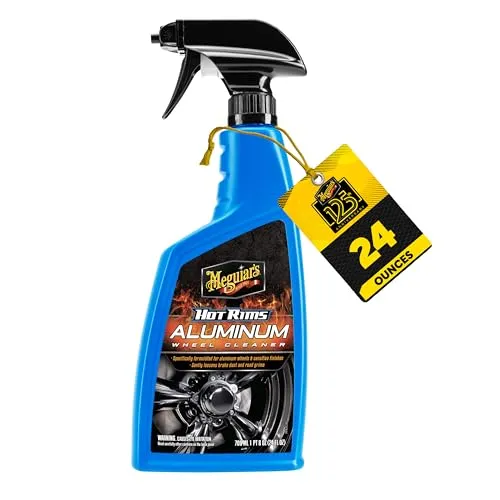
A clinging foaming gel built specifically for the finishes that harsh cleaners ruin, including bare polished aluminum, anodized and powder-coated wheels.
What we like
- Meguiar's names uncoated polished aluminum and anodized finishes on the label, which very few wheel cleaners will do
- The gel clings instead of running off, so it keeps working in spoke gaps and around lug holes
- Safe enough to use on visible brake components as well as the wheel face
- One of the cheapest bottles here, so trying it on a sensitive set is a low risk decision
What we don't
- It is a cleaner, not an iron remover, so deeply embedded brake dust needs a different product
- Meguiar's does not publish a pH figure, so you are trusting the finish list rather than a number
- A clinging gel needs a proper rinse or it leaves residue drying in the recesses
| Formula type | Ready to use clinging foaming gel |
|---|---|
| Ph level | Not published by Meguiar's |
| Container size | 24 fl oz trigger spray bottle |
| Safe on finishes | Uncoated polished aluminum, anodized and powder-coated wheels |
| Iron remover | No: sold as a brake dust and grime cleaner, not an iron remover |
| Price bracket | $ |
Most wheels on the road are clear coated, which is why most wheel cleaners get away with a vague safe on all finishes claim. The wheels that get destroyed are the other kind: bare polished aluminum, anodized, and some powder coats. Those surfaces have no clear layer protecting the metal, and an aggressive cleaner can stain or etch them in one wash. The damage does not polish out easily.
Hot Rims exists for that problem. Meguiar’s names those finishes directly on the listing, and that specificity is the whole reason this pick is here. When a maker is willing to print uncoated polished aluminum on a bottle, it is telling you something a generic label is not.
The format helps too. It is a foaming gel rather than a thin liquid, so it grabs the surface and stays put. On a wheel with deep spokes, a runny cleaner spends most of its dwell time on the ground. This one keeps working where the grime actually is.
What it will not do is decontaminate. It cleans brake dust off the surface, but it is not sold as an iron remover and it does not change colour. If your wheels still look grey and flat after using it, the remaining contamination is bonded iron and you need the Turtle Wax product instead.
Buy it if you own wheels you are nervous about. Rinse well, work on cool metal, and treat it as your regular wash product rather than a rescue for a set that has been neglected for years.
Research-based pick: this recommendation is based on product data, owner feedback and comparison with products we have tested, not on direct hands-on testing.
Buy it if: Aftermarket wheels with bare polished aluminum, anodized or powder-coated finishes, where the wrong chemical causes permanent staining.
Skip it if: You have ordinary clear coated factory wheels and want the strongest cleaner you can safely buy.
Best Value
Armor All Extreme Wheel and Tire Cleaner
by Armor All
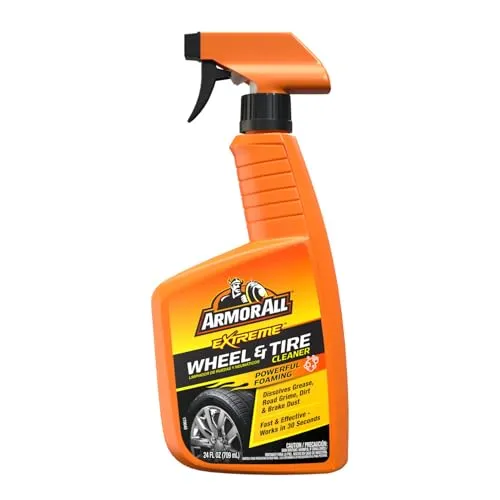
A cheap ready to use spray that cleans wheels and tires in the same pass, and for a normal car washed every couple of weeks it is enough.
What we like
- Costs a few dollars a bottle, which makes it the easiest way to find out whether you even need a dedicated wheel cleaner
- Armor All rates it for all factory and aftermarket finishes, including alloy, steel, chrome and plastic wheel trims
- Handles the tire as well as the wheel, so one bottle covers the whole corner of the car
- Armor All gives a 30 second dwell time, which is a clear instruction rather than a vague soak
What we don't
- A 24 fl oz bottle empties quickly if you clean four wheels and four tires every wash
- No iron removing chemistry and no colour change, so bonded brake dust stays put
- Armor All does not publish a pH figure, which matters if your wheels are bare polished aluminum
| Formula type | Ready to use foaming spray |
|---|---|
| Ph level | Not published by Armor All |
| Container size | 24 fl oz trigger spray bottle |
| Safe on finishes | All factory and aftermarket finishes, including alloy, steel, chrome and plastic trims |
| Dilution ratio | Ready to use, no mixing |
| Price bracket | $ |
Wheel cleaning gets talked about as if every car needs professional chemistry. Most do not. If you wash your car every week or two and the wheels are ordinary clear coated factory alloys, a cheap spray applied before the dirt bakes on will keep them looking fine for years.
That is the case for this bottle. It is under five dollars, it is ready to use, and Armor All lists it as safe on all factory and aftermarket finishes including alloy, steel, chrome and plastic trims. It also does the tire in the same pass, which saves buying a second product for the rubber.
The published instructions are refreshingly specific. Spray a cool wheel, wait 30 seconds, rinse and dry with a soft cloth so you do not get water spots. Following that is most of the battle. Spraying a hot wheel is how you get streaks and staining with any cleaner, not just this one.
The limits are real and worth stating plainly. There is no iron removing chemistry here, so contamination that has already bonded into the finish will not lift. And because Armor All publishes finish claims rather than a pH number, we would still use the Meguiar’s Hot Rims gel on bare polished aluminum, where the consequences of guessing wrong are permanent.
Buy it as your default wheel spray and step up only when it stops keeping up. For a car washed often, that day may never come.
Research-based pick: this recommendation is based on product data, owner feedback and comparison with products we have tested, not on direct hands-on testing.
Buy it if: A daily driver on ordinary factory wheels, washed regularly, where the goal is clean rather than concours.
Skip it if: Your wheels have months of baked-on brake dust that a surface cleaner will not shift.
Best for Wheels and Tires Together
Adam's Polishes Wheel & Tire Cleaner Gallon
by Adam's Polishes
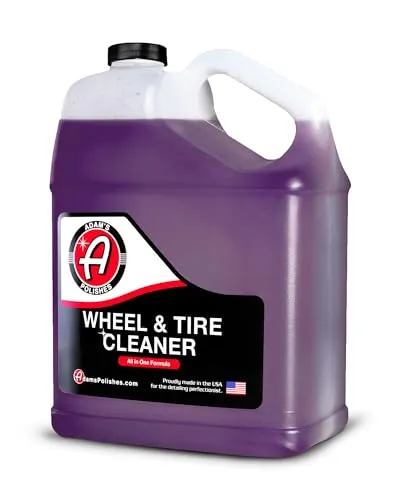
A high sudsing alkaline gallon aimed at brown, dressing-caked tires as much as at dirty wheels, and one of the strongest sellers in the category.
What we like
- Alkaline solvent and surfactant blend is built to strip old silicone dressings, grease and wax build-up off tire rubber
- Adam's rates it for clear-coated, powder-coated, chrome, alloy and painted wheels
- Sales rank sits around 165 in its Amazon category, which is genuinely high volume for a detailing chemical
- A gallon means you can be generous with it, which matters because tires soak up product
What we don't
- Alkaline chemistry is what strips dressings, and that same strength is why we would not put it on bare polished aluminum
- It is the most expensive bottle in this guide and arrives with no trigger sprayer
- Adam's publishes no dilution ratio, so you are guessing at the right mix for light maintenance work
| Formula type | High sudsing alkaline solvent and surfactant blend |
|---|---|
| Ph level | Alkaline, exact pH not published |
| Container size | 128 fl oz (1 gallon jug) |
| Safe on finishes | Clear-coated, powder-coated, chrome, alloy and painted wheels |
| Dilution ratio | No ratio published, sold as a gallon refill |
| Price bracket | $$ |
Brown tires are a chemistry problem, not a dirt problem. Rubber contains anti-ozone compounds that migrate to the surface over time, and old silicone dressings trap them there. Rinse water does nothing. That is what this product is aimed at.
Adam’s uses an alkaline blend of solvents and surfactants that strips silicones, greases, wax build-up and previously applied dressings. On the wheel it deals with brake dust and road film in the same pass. The practical result is that one bottle handles the whole lower corner of the car, and any dressing you apply afterwards has clean rubber to bond to. Dressing applied over an old, dirty tire never lasts, and this is the fix.
Volume is part of the appeal. Tires drink product, and a 16 oz trigger bottle disappears in one thorough session. A gallon lets you use enough. It also happens to be one of the best selling products in this category on Amazon, sitting near rank 165, which tells you a lot of people keep repurchasing it.
Be clear-eyed about the chemistry. Alkaline cleaners are aggressive by design, and the same strength that lifts old dressing off rubber is a reason to keep it away from bare polished aluminum. Adam’s finish list covers clear-coated, powder-coated, chrome, alloy and painted wheels. Uncoated polished aluminum is not on that list, and that omission is worth respecting.
Buy it if tires are your frustration. For wheels alone, P & S Brake Buster costs less and carries the safer non-acid rating.
Research-based pick: this recommendation is based on product data, owner feedback and comparison with products we have tested, not on direct hands-on testing.
Buy it if: Owners who dress their tires and are tired of brown, blooming sidewalls that dressing will no longer stick to.
Skip it if: Your wheels are uncoated polished aluminum or anodized, where a pH neutral cleaner is the safer choice.
How we chose#
This is a research-based comparison rather than a side by side cleaning test. We pulled the wheel cleaners that are actually selling on Amazon, then checked each one against its live listing: the formula type, any published pH or acid claim, the bottle size, the exact list of finishes the maker says it is safe on, and whether the product is sold as an iron remover or just a surface cleaner.
We picked across the different jobs instead of ranking five near-identical sprays. That gives you a non-acid workhorse in gallon form, a dedicated iron remover with a visible reaction, a gel built for sensitive uncoated finishes, a cheap ready to use spray for ordinary factory wheels, and an alkaline gallon aimed at tires as much as wheels.
One thing worth flagging up front. None of the five are acid based. Acid cleaners do exist and they work fast, but the risk to polished and uncoated wheels is high enough that we did not want to recommend one to a general audience without knowing what wheels the reader owns.
What to consider before buying#
Work out what your wheels are made of first. This matters more than any other decision here. Most factory wheels are clear coated, which means a layer of paint and lacquer sits between the chemical and the metal, and almost any cleaner is fine. Aftermarket wheels are the problem. Bare polished aluminum and anodized finishes have exposed metal, and a strong cleaner can stain them in a single wash.
Then decide how often you will use it. Frequency changes the answer completely. Dust that gets washed off weekly never bonds, so a five dollar spray is enough. Wheels that go a whole winter untouched need real chemistry to recover.
Think about the tires too. Half the reason wheels look bad is brown, blooming sidewalls, and that is a separate chemical problem from brake dust. The Adam’s and Armor All picks handle both surfaces. The Turtle Wax iron remover is aimed squarely at the metal.
Last, a good cleaner is only part of a clean wheel. You still need a proper wash routine, and our guide to the best car wash soaps covers the shampoos that will not strip whatever protection you have on the paint.
Why brake dust is embedded metal, not dirt#
Every stop you make grinds your brake pad against a spinning iron rotor. That contact throws off tiny metal particles at high temperature, and they land on the nearest surface, which is the inside face of your wheel. Because they arrive hot, they do not just sit on top. They partly fuse into the clear coat.
This is why a wheel can be scrubbed with soap and a brush and still look grey. The loose grime comes off. The embedded iron stays, and it keeps oxidising, which is what gives neglected wheels that dull orange-brown cast under the shine.
It is also why time matters so much. Fresh dust rinses away. Dust that has been through a few heat cycles and a rain shower has started to bond, and at that point you need chemistry rather than effort. A stiffer brush will not fix it, and scrubbing harder on a soft finish causes its own damage.
pH, acid, and what a strong cleaner does to a wheel#
pH is the single most useful number on a wheel cleaner bottle, and most brands do not print it. Acidic cleaners dissolve brake dust deposits fast. Alkaline cleaners are better at breaking down oils, greases and old tire dressings. Neutral cleaners are slower at both and safer on everything.
Here is the honest version. A strong acid cleaner will permanently damage polished or uncoated wheels. Not stain, not dull. Etch. The acid attacks the exposed aluminum directly and leaves a hazy, pitted surface that polishing will not fully recover. Match the chemistry to the wheel, and when you are unsure, use pH neutral.
The same warning applies in a milder form to alkaline products. The Adam’s gallon in this guide is alkaline because that is what strips old silicone dressing off rubber, and it is genuinely good at that job. Adam’s lists it as safe on clear-coated, powder-coated, chrome, alloy and painted wheels. Polished aluminum is not on that list, and we would treat that as deliberate.
Turtle Wax and P & S both go the other way. Turtle Wax states pH neutral and acid free. P & S states non-acid. Those claims are the reason both products can be used on a wide range of wheels without a finish audit first.
Iron removers and the purple bleed#
An iron remover uses a chemical that grabs onto iron and converts it into something water soluble. Spray it on a contaminated wheel and the reaction starts within seconds. The purple streaks running down the wheel are the by-product of that conversion, which is why the effect only shows up where iron is actually present.
That visual feedback is genuinely useful. It tells you which wheels are worst, and it tells you when the reaction has finished, because the bleeding stops. It also has a downside. The colour is dramatic enough that people assume more purple means better product, when it really just means more contamination.
Iron removers are slow on purpose. They need dwell time, usually a few minutes, and they work best on a cool wheel in shade. Rushing the rinse or letting the product dry on a hot wheel wastes the chemistry and leaves streaks. The runoff also stains light concrete, so hose the driveway down afterwards.
They are not weekly products. Use one every few months to reset a wheel back to clean, then keep it that way with a normal cleaner. The same chemistry works on paint too, which is where an iron remover overlaps with a clay bar. If your paint feels rough as well as looking speckled, our guide to the best clay bars covers the mechanical side of decontamination.
Which cleaner is safe on which finish#
Clear coated wheels are the easy case and cover most cars on the road. There is a layer of paint and lacquer over the metal, so any of the five picks here will be fine. Chrome is similarly tolerant, since the plating is hard and non-porous.
Powder-coated wheels are also well protected, though the coating can be damaged if it already has chips or peeling, and a strong cleaner will get underneath. Check for damage before spraying anything aggressive.
Bare polished aluminum and anodized wheels are where people ruin expensive rims. There is nothing between the chemical and the metal. Meguiar’s Hot Rims is the pick here that names both finishes on the bottle, which is why it earns its place despite being a straightforward cleaner rather than a decontamination product.
Painted calipers and visible brake components sit inside the wheel and get sprayed whether you meant to or not. Meguiar’s and Chemical Guys both list caliper use, and it is worth checking that on any bottle you buy if your car has coloured calipers. Once the wheel is clean, sealing it makes the next wash easier, and the products in our best ceramic coatings for cars roundup work on wheel faces as well as paint.
Final recommendation#
Most people should buy P & S Brake Buster. The non-acid rating means you do not need to identify your wheel finish before using it, a gallon costs less per wash than any spray bottle, and it works both straight and diluted. If your wheels still look grey after a proper wash, the problem is bonded iron and the Turtle Wax Hybrid Solutions Iron Remover is the bottle that fixes it, on paint and glass as well as wheels. Anyone with bare polished aluminum or anodized rims should use Meguiar’s Hot Rims Aluminum Wheel Cleaner, because it is the only pick here that names those finishes on the label. If you wash your car often and your wheels are ordinary factory alloys, the Armor All Extreme spray costs under five dollars and will keep them looking fine. And if brown, blooming tires are what actually bothers you, the Adam’s Polishes gallon is built to strip old dressing off rubber, as long as your wheels are not bare polished aluminum.
Frequently asked questions
What actually is brake dust, and why will car soap not remove it?
Brake dust is mostly iron. Your pads and rotor grind against each other under heat and pressure, and the metal that comes off gets fired at the inside of the wheel while it is still hot. Those particles land and partly embed themselves into the paint or clear coat. Car shampoo is designed to lift oily road film off a surface, and it does that well, but it has no chemistry that touches bonded metal. That is why a wheel can look clean when wet and still look grey and flat once it dries.
Is an acid wheel cleaner better than a pH neutral one?
It is faster, and that speed is the whole risk. Acid cleaners strip heavy brake dust quickly because they attack the deposits directly, but they attack whatever else they touch too. On bare polished aluminum, anodized or damaged clear coat, a strong acid can etch or stain the surface permanently, and no polish brings that back. None of the five picks here are acid based. If you do not know what finish your wheels have, use a pH neutral product like the Turtle Wax iron remover and accept a longer dwell time.
Why does an iron remover turn purple?
The active ingredient bonds to iron particles and converts them into a compound that dissolves in water. The purple colour is a by-product of that reaction, not a dye that reacts to dirt in general. So the bleeding you see on the Turtle Wax Hybrid Solutions Iron Remover is a genuine signal that embedded metal is being lifted. It tells you iron is present and where it is worst. It does not tell you how much is left, so a second application on a badly contaminated wheel is normal.
Which wheel cleaner is safe on my wheels?
Start by working out the finish. Most factory wheels are clear coated and tolerate almost anything on this list. Aftermarket wheels are where it gets risky, because bare polished aluminum and anodized finishes have no protective layer. Meguiar's Hot Rims Aluminum Wheel Cleaner is the only pick here that names those finishes on the label. The Adam's gallon is alkaline and lists clear-coated, powder-coated, chrome, alloy and painted wheels, with polished aluminum absent from that list. When you are not sure, pH neutral is the safe default.
Should I buy a gallon or a spray bottle?
It depends on how often you wash. A gallon of P & S Brake Buster or the Adam's cleaner costs far less per wash and lets you be generous, which matters on tires because rubber soaks up product. But neither jug comes with a trigger sprayer, so you need a spray bottle or a pump foamer before you can use it. If you wash one car every few weeks, a ready to use bottle like the Armor All spray is simpler and you will not have half a gallon going stale in the garage.
How do I stop brake dust coming back so fast?
Three things help. Clean the wheels regularly, because dust that has not had time to bond comes off easily with a cheap spray. Second, seal the wheel face after cleaning, since a slick surface gives hot particles less to grip. Third, look at your pads. Low-metallic and ceramic pads produce far less iron than semi-metallic ones, which is the single biggest difference between a car with filthy wheels and one that stays clean between washes.
About the author

Dale Harper Lead Gear Editor
Dale is a longtime truck owner and former accessory-shop tech who builds these guides from manufacturer fit data, aggregated owner feedback and direct spec comparison. Research-based picks are always labelled as such.
Daily driver: 2022 Ford F-150 XLT SuperCrew
- Tonneau covers and bed accessories
- Seat covers and interior protection
- Lift kits and suspension