The Best Car Polishers: 5 Dual Action and Rotary Machines Compared
Five car polishers compared, from a beginner safe dual action kit to a 15 mm long throw machine and a rotary buffer, with plain advice on which one you need.

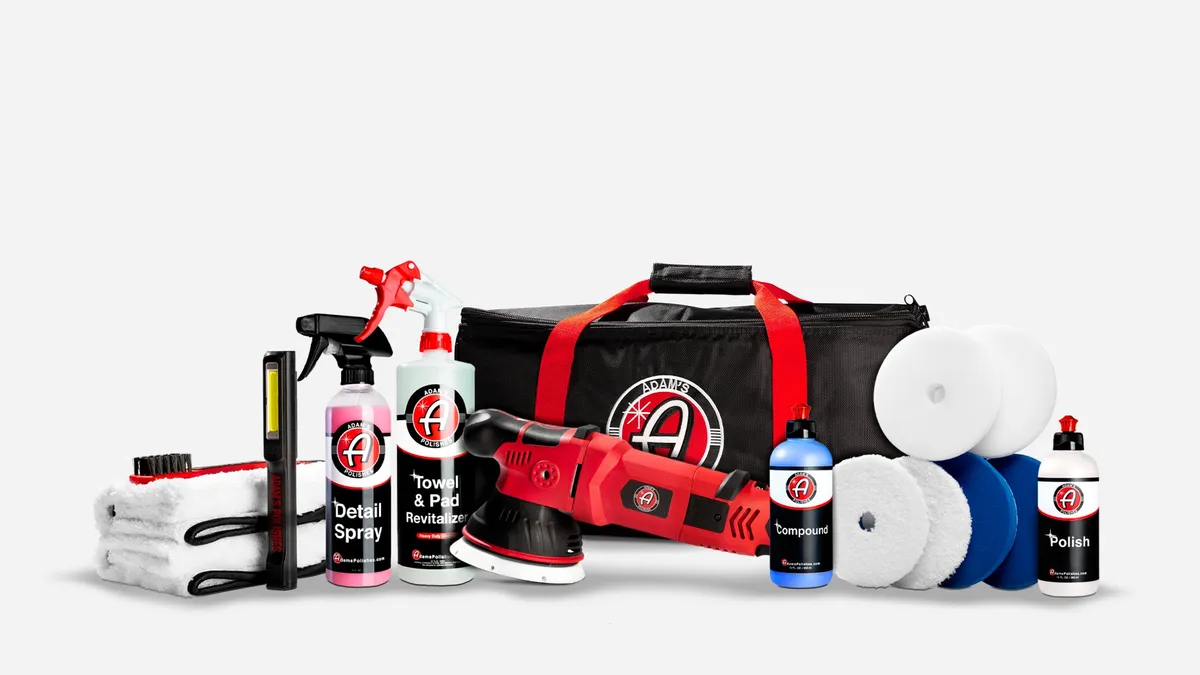
A car polisher is the tool that turns dull, swirled paint back into a clean reflection, and picking one is mostly a question of how much risk you are willing to carry. This guide compares five machines sold on Amazon in the United States. The Chemical Guys TORQX kit is the safe complete starter, with an 8 mm dual action head and the pads and liquids already in the box. The BATOCA T1 runs a 15 mm long throw and an 1100 W motor for people who want a full car done in an afternoon. The AOBEN 6 inch dual action is the cheapest way to find out whether machine polishing suits you. The Niusken cordless kit is light and small enough for tight panels and needs no outlet. The LDHTHOPI 1600W rotary is the heavy cutter, and it is the one that can ruin your paint if you have never used one. We compared them on polisher type, orbit throw, motor power, speed range, pad size and what ships in the box.
Table of contents
- Quick picks
- Comparison table
- Best Overall: Chemical Guys TORQX Random Orbital Polisher Kit BUF503X
- Best for Fast Correction: BATOCA T1 15mm Dual Action Polisher
- Best Value: AOBEN 6 Inch Dual Action Car Buffer Polisher
- Best Compact Option: Niusken Cordless Car Buffer Polisher Kit PGJ-21V
- Best for Experienced Users: LDHTHOPI 1600W Rotary Buffer Polisher
- How we chose
- What to consider before buying
- Dual action and rotary, and why it matters
- Throw length decides your afternoon
- Pads and compound do more than the machine
- Cordless machines run out of two things
- Final recommendation
- FAQ
Quick picks
Every pick wins a specific use case. Jump to the full review before you buy.
-
Best Overall
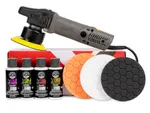
Chemical Guys TORQX Random Orbital Polisher Kit BUF503X
A well known 8 mm dual action polisher that arrives with the pads, polishes and compounds you need, so a first timer can correct paint the same day it lands.
-
Best for Fast Correction
BATOCA T1 15mm Dual Action Polisher
A 15 mm long throw dual action polisher with an 1100 W motor, built for people who want to correct a whole car in an afternoon instead of a weekend.
-
Best Value
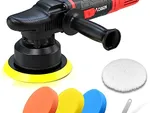
AOBEN 6 Inch Dual Action Car Buffer Polisher
The cheapest dual action machine here, with a 6 inch plate, 6 speeds and four pads, and it does the same job as polishers costing three times more.
-
Best Compact Option
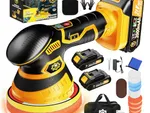
Niusken Cordless Car Buffer Polisher Kit PGJ-21V
A 3.3 lb cordless dual action polisher on a 5 inch plate, easy to work into tight panels and the strongest seller of the five machines here.
-
Best for Experienced Users
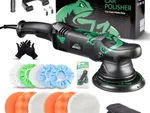
LDHTHOPI 1600W Rotary Buffer Polisher
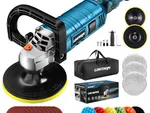
A 1600 W rotary buffer with 7 speeds and seven pads, meant for heavy oxidation and boat gelcoat, and only for someone who has run a rotary before.
Compare every pick
| Product | Award | Polisher type | Best for | Where to buy |
|---|---|---|---|---|
| Chemical Guys TORQX Random Orbital Polisher Kit BUF503X | Best Overall | Dual action random orbital | A first time detailer who wants one box that contains the machine and everything that goes on it, from a brand with a long track record. | Check price for Chemical Guys TORQX Random Orbital Polisher Kit BUF503X at Amazon (affiliate link) |
| BATOCA T1 15mm Dual Action Polisher | Best for Fast Correction | Dual action random orbital | Someone correcting a full size car or SUV who has used a polisher before and wants to spend fewer hours doing it. | Check price for BATOCA T1 15mm Dual Action Polisher at Amazon (affiliate link) |
| AOBEN 6 Inch Dual Action Car Buffer Polisher | Best Value | Dual action random orbital | A driver who wants to try machine polishing without spending much, and who already has compound or is happy to buy it separately. | Check price for AOBEN 6 Inch Dual Action Car Buffer Polisher at Amazon (affiliate link) |
| Niusken Cordless Car Buffer Polisher Kit PGJ-21V | Best Compact Option | Dual action random orbital | Anyone polishing in a driveway with no outlet nearby, or working a small car with lots of curved panels and tight edges. | Check price for Niusken Cordless Car Buffer Polisher Kit PGJ-21V at Amazon (affiliate link) |
| LDHTHOPI 1600W Rotary Buffer Polisher | Best for Experienced Users | Rotary, the pad spins on one fixed axle | A detailer or boat owner who already knows how to keep a rotary moving and needs to cut heavy oxidation quickly. | Check price for LDHTHOPI 1600W Rotary Buffer Polisher at Amazon (affiliate link) |
Swipe sideways to compare every column.
Best Overall
Chemical Guys TORQX Random Orbital Polisher Kit BUF503X
by Chemical Guys
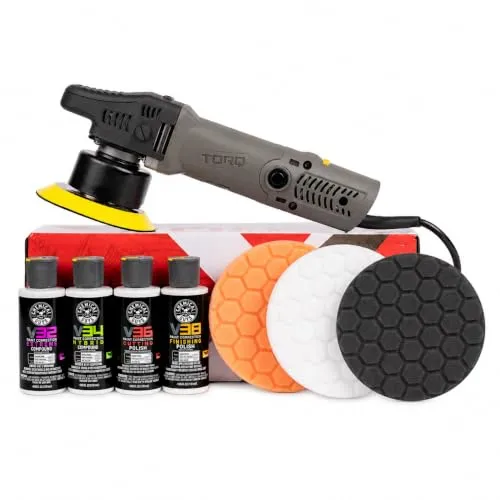
A well known 8 mm dual action polisher that arrives with the pads, polishes and compounds you need, so a first timer can correct paint the same day it lands.
What we like
- Dual action motion means the pad stalls instead of digging in, so it is very hard to burn paint with it
- The 9 piece kit ships with pads, polishes and compounds, so there is no second shopping trip before you start
- Chemical Guys publishes the 8 mm throw figure, which most cheap listings leave out entirely
- Long selling model with years of owner feedback behind it rather than a listing that appeared last month
What we don't
- Costs roughly three times the cheap dual action machines here and the motor is no stronger for it
- The listing contradicts itself on power, saying 800 W in the title and 700 W in the bullets, so treat the number loosely
- Neither the speed range nor the backing plate size appears on the Amazon listing, which is odd at this price
- An 8 mm throw covers less paint per pass than the 15 mm BATOCA, so a full car takes longer
| Polisher type | Dual action random orbital |
|---|---|
| Orbit throw | 8 mm |
| Pads included | 9 piece kit with pads, polishes and compounds |
| Power source | Corded |
| Motor power | Listed as 800 W in the title and 700 W in the bullets |
| Price bracket | $$$ |
The TORQX kit is the pick for most people because it removes the two ways a first polishing job goes wrong. The first is the machine. A dual action polisher spins the pad and moves it in a small circle at the same time, and the moment you press too hard the pad stops rotating. That stall is the safety feature. It is why a beginner can lean on this thing over a body line and end up with a dull spot rather than bare primer.
The second way it goes wrong is buying the machine and nothing else. Chemical Guys sells this as a 9 piece kit with pads, polishes and compounds in the box. You open it, wash the car and start. Buying a bare polisher and then guessing which pad goes with which liquid is where a lot of people stall out for a month.
The throw is 8 mm, which Chemical Guys states plainly. That is a normal short throw. It is gentle and controlled, and it is slower than the 15 mm machines. On a sedan hood you will make more passes to clear the same swirls.
The price is the real argument against it. At close to two hundred dollars it costs about three times the AOBEN, and the AOBEN moves the pad the same way. You are paying for the included liquids, the published spec and a brand that has been selling this exact model for years. Some people want that. Some people would rather put the difference into better pads.
One honest wrinkle: the listing says 800 W in the title and 700 W in the bullet points. It is the same tool either way, but do not build a decision on that figure.
Buy it if this is your first polisher and you want the whole job in one box. Skip it if you already have compound and pads on the shelf.
Research-based pick: this recommendation is based on product data, owner feedback and comparison with products we have tested, not on direct hands-on testing.
Buy it if: A first time detailer who wants one box that contains the machine and everything that goes on it, from a brand with a long track record.
Skip it if: You already own pads and compound, in which case the AOBEN or the BATOCA give you the same dual action motion for far less money.
Best for Fast Correction
BATOCA T1 15mm Dual Action Polisher
by BATOCA
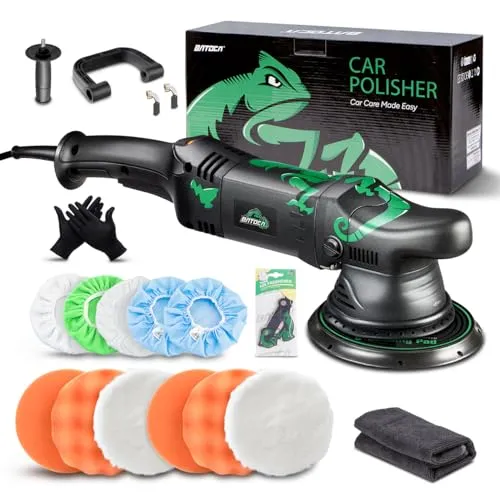
A 15 mm long throw dual action polisher with an 1100 W motor, built for people who want to correct a whole car in an afternoon instead of a weekend.
What we like
- The 15 mm throw covers noticeably more paint per pass than the 8 mm machines, so a full car goes quicker
- 1100 W motor gives it more grunt than the 700 W and 800 W picks when a wool pad loads up with compound
- Still a dual action, so the pad stalls under pressure and the burn risk stays low
- Speed dial runs 2500 to 5500 RPM across 6 settings, which covers waxing at the bottom and cutting at the top
What we don't
- A long throw machine wobbles more on curved panels and takes both hands to keep flat
- The 5 inch pad size makes tight areas like mirror caps and pillars awkward, so you will still finish some spots by hand
- Heavier and bulkier to hold overhead on a roof than the 3.3 lb cordless Niusken
- BATOCA does not publish a duty cycle, so plan your own cool down breaks on long sessions
| Polisher type | Dual action random orbital |
|---|---|
| Orbit throw | 15 mm |
| Motor power | 1100 W |
| Speed range | 6 speeds, 2500 to 5500 RPM |
| Pad size | 5 inch |
| Price bracket | $$ |
Throw length is the number that decides how long you stand in the driveway. BATOCA lists this one at 15 mm, nearly double the 8 mm throw of the TORQX and the Niusken. The pad travels further on every rotation, so it works a bigger patch of paint each pass. On a hood that is the difference between four slow passes and two.
The 1100 W motor matters more than it looks on paper. A dual action polisher loses pad rotation when you press down, and a weak motor loses it early. With more power behind it the pad keeps turning while you actually apply the compound, which is when correction happens.
The trade off is control. A long throw machine has more mass swinging around off centre, so it walks across the panel more and it fights you on curves. Door handles, mirror caps and the edges around a spoiler are where it feels clumsy. Most people run a long throw on the big flat panels and pick up something smaller for the rest.
Six speeds from 2500 to 5500 RPM is a sensible spread. The low end is for spreading wax and sealant, the middle is for polishing, the top is for cutting out defects. The dial is on the body, so you can change it mid panel.
It is still a dual action, which is the important safety point. Press too hard and the pad stops spinning rather than sanding a hole in your clear coat. That is not true of the LDHTHOPI rotary further down this list.
Choose this if you have polished a car before and you are tired of how long it takes. Choose the TORQX instead if you are still learning what a correct pass feels like.
Research-based pick: this recommendation is based on product data, owner feedback and comparison with products we have tested, not on direct hands-on testing.
Buy it if: Someone correcting a full size car or SUV who has used a polisher before and wants to spend fewer hours doing it.
Skip it if: This is your first machine, since a long throw is harder to keep flat and the shorter throw TORQX is more forgiving while you learn.
Best Value
AOBEN 6 Inch Dual Action Car Buffer Polisher
by AOBEN
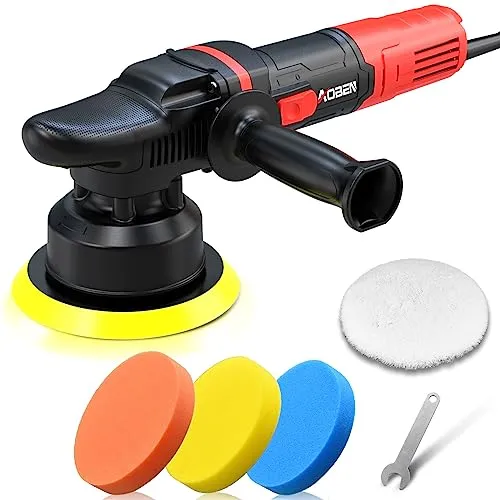
The cheapest dual action machine here, with a 6 inch plate, 6 speeds and four pads, and it does the same job as polishers costing three times more.
What we like
- Cheapest pick in this guide and still a genuine dual action random orbital, not a disguised rotary
- 6.5 inch pads sit proud of the 6 inch backing plate, so the hard plate edge cannot touch your paint
- Speed range starts at 1000 RPM, lower than the BATOCA or the Niusken, which suits spreading wax and sealant
- Comes with three foam pads and a synthetic wool pad, enough to cut and finish without another order
What we don't
- AOBEN does not publish the orbit throw anywhere on the listing, so you cannot tell how fast it will correct
- The listing admits the machine stalls under pressure on speeds 1 to 3 and needs a restart at a higher speed
- At 5.29 lb it is the heaviest pick here to hold on a roof or a tailgate
- Only four pads in the box, against twelve pads and bonnets with the Niusken kit
| Polisher type | Dual action random orbital |
|---|---|
| Motor power | 700 W, 120 V 60 Hz |
| Speed range | 6 speeds, 1000 to 4500 RPM |
| Pad size | 6 inch backing plate with 6.5 inch pads |
| Pads included | 3 foam pads and 1 synthetic wool pad |
| Price bracket | $$ |
Most people who ask which polisher to buy would be perfectly happy with this one. It is a dual action random orbital with a 700 W motor, six speeds from 1000 to 4500 RPM, and it costs less than a decent set of pads. The paint does not know how much the machine cost. It knows what pad and what liquid touched it.
The detail worth noticing is the pad sizing. AOBEN puts 6.5 inch pads on a 6 inch backing plate. That half inch of overhang means the hard plastic edge of the plate never reaches the paint, even when you tilt the machine at a door edge. Cheap polishers that ship same size pads scuff paint exactly that way.
The low speed setting is genuinely useful. Starting at 1000 RPM is slower than the BATOCA or the Niusken can go, and slow is what you want when you are spreading a sealant or working a wax rather than cutting.
Two honest problems. First, AOBEN never states the orbit throw. Every serious polisher listing gives that number, and its absence usually means it is a short 8 mm class throw, but you are guessing. Second, AOBEN admits in its own listing that the machine can stop when you press hard on speeds 1 to 3, and that you have to restart it on a higher setting. That is annoying rather than dangerous, and it is the price of a small motor.
It is also the heaviest machine in this guide at 5.29 lb, which you will feel on a roof.
Get it if you want to find out whether machine polishing is for you. If you already know it is, the BATOCA is worth the extra money for the long throw.
Research-based pick: this recommendation is based on product data, owner feedback and comparison with products we have tested, not on direct hands-on testing.
Buy it if: A driver who wants to try machine polishing without spending much, and who already has compound or is happy to buy it separately.
Skip it if: You want a published throw figure and predictable correction speed, which the BATOCA and the Chemical Guys kit both give you.
Best Compact Option
Niusken Cordless Car Buffer Polisher Kit PGJ-21V
by Niusken
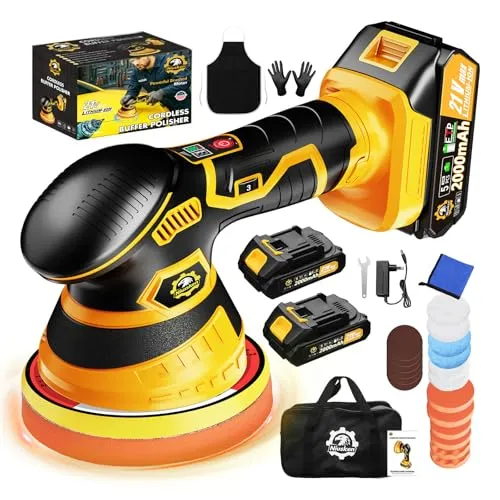
A 3.3 lb cordless dual action polisher on a 5 inch plate, easy to work into tight panels and the strongest seller of the five machines here.
What we like
- Weighs only 3.3 lb, so you can hold it against a roof or a tailgate without your arms giving out
- 5 inch backing plate reaches around mirrors, pillars and bumper curves that a 6 inch pad skates over
- No cord to drag across wet paint, which is the most common way people put a fresh scratch in a clean panel
- Ships with 12 pads and bonnets plus 6 sanding discs and two 21 V batteries, so nothing else is needed to start
What we don't
- Niusken states the polisher can shut itself off after 20 minutes of continuous high speed use and needs to cool down
- The battery pack fits this machine only and will not accept DeWalt or other third party batteries
- Battery power means less torque than the corded 1100 W BATOCA when a wool pad loads with compound
- 2000 mAh packs are small, so on a full size vehicle you will be swapping and charging rather than working straight through
| Polisher type | Dual action random orbital |
|---|---|
| Orbit throw | 8 mm |
| Power source | Cordless |
| Speed range | 6 speeds, 2800 to 5800 RPM |
| Pad size | 5 inch backing plate, 5 inch and 6 inch pads |
| Price bracket | $$ |
This is the machine for tight work. It weighs 3.3 lb and runs a 5 inch backing plate, and both numbers matter more than they sound. Weight decides whether you can hold the polisher flat against a roof for ten minutes. Plate size decides whether the pad can follow a curved bumper or a mirror cap instead of riding on one edge.
It is a proper dual action with an 8 mm throw, so it behaves like the TORQX in how it treats paint. Press too hard and rotation stops. That makes it a reasonable first polisher as well as a second one.
Losing the cord is a bigger deal than people expect. A polisher cord drags across paint you just cleaned, and it picks up grit off the driveway on the way. Cordless removes that risk completely, and it means you can polish in a parking spot with no outlet.
The catches are all about battery power, and Niusken is upfront about them. The listing says the machine can shut off after more than 20 minutes of continuous high speed running and needs a few minutes to cool. The two batteries are 2000 mAh, which is small, so on an SUV you will be alternating packs. And the pack is a proprietary design that will not take DeWalt batteries, so if you already own a cordless tool platform, that investment does not carry over.
Torque is the last limitation. Under a loaded wool pad a battery tool gives up before a corded 1100 W machine does. For wax, sealant and light swirl removal that never comes up. For heavy correction it does.
Its sales rank is low, meaning it moves a lot of units, which is real information even without published ratings.
Research-based pick: this recommendation is based on product data, owner feedback and comparison with products we have tested, not on direct hands-on testing.
Buy it if: Anyone polishing in a driveway with no outlet nearby, or working a small car with lots of curved panels and tight edges.
Skip it if: You are correcting a full size truck in one session, where the corded BATOCA will not stop for a battery swap or a cool down.
Best for Experienced Users
LDHTHOPI 1600W Rotary Buffer Polisher
by LDHTHOPI
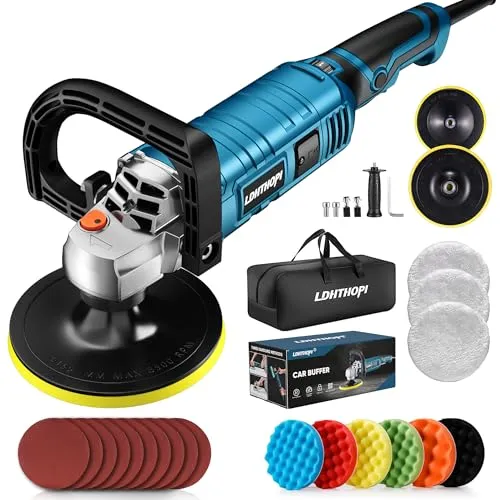
A 1600 W rotary buffer with 7 speeds and seven pads, meant for heavy oxidation and boat gelcoat, and only for someone who has run a rotary before.
What we like
- 1600 W and direct drive rotation cut oxidation and deep defects far faster than any dual action here
- 7 speeds from 1000 to 3500 RPM, and the low end is genuinely slow enough for controlled work
- Takes 6 inch and 7 inch pads, so it covers large flat panels and boat hulls quickly
- Can be run bare, with the D handle or with the side handle, which changes how you brace it for different panels
What we don't
- A rotary spins the pad on one fixed axle: hold it on an edge or a body line for a few seconds and it will burn straight through the clear coat
- Leaves holograms and buffer trails that then need a dual action pass to remove, so it is rarely the only machine you own
- LDHTHOPI states a 15 minute maximum run time before a 5 minute cool down, which breaks up long jobs
- No orbital motion at all, so there is no built in protection if your technique slips
| Polisher type | Rotary, the pad spins on one fixed axle |
|---|---|
| Orbit throw | None, a rotary has no orbit |
| Motor power | 1600 W |
| Speed range | 7 speeds, 1000 to 3500 RPM |
| Pad size | 6 inch and 7 inch |
| Price bracket | $$ |
Say the dangerous part first. A rotary polisher in untrained hands will burn through clear coat on an edge in seconds. There is no orbit, no stall, no forgiveness. The pad spins on one axle and every bit of the motor’s 1600 W goes into friction on one spot. Rest it on a door edge, a hood corner or a raised body line for a moment too long and you are looking at primer, and the fix is a respray of that panel.
That is not a reason nobody should own one. It is a reason this is the fifth pick and not the first. If you have run a rotary before, it does things no dual action can. Heavy oxidation on a neglected single stage paint job, chalky boat gelcoat, deep sanding marks: a rotary clears those in one pass while a dual action is still warming up.
The spec sheet is sensible for the job. Seven speeds from 1000 to 3500 RPM, and that 1000 RPM floor is the setting to learn on. Six and seven inch pads cover ground fast. Three handle positions let you brace it properly, which is the whole game with a rotary, because you keep it moving and you never stop.
Two practical limits. LDHTHOPI says do not run it more than 15 minutes without a 5 minute break, so a full car is a stop start job. And a rotary leaves holograms, those faint swirl trails that show up in sunlight, which means you finish with a dual action anyway.
Treat it as a second machine for heavy work, not as the one polisher you buy.
Research-based pick: this recommendation is based on product data, owner feedback and comparison with products we have tested, not on direct hands-on testing.
Buy it if: A detailer or boat owner who already knows how to keep a rotary moving and needs to cut heavy oxidation quickly.
Skip it if: You are searching for your first polisher, in which case buy the Chemical Guys TORQX or the AOBEN and leave rotaries alone.
How we chose#
This is a research-based comparison, not a hands-on paint correction test. We started from the polishers that actually sell in the United States, pulled the live Amazon listing for each one, and compared the facts the manufacturer publishes: polisher type, orbit throw, motor power, speed range and settings, backing plate and pad size, and what ships in the box.
We picked across formats on purpose rather than ranking five near identical dual action machines. That gave us a complete beginner kit, a long throw machine for speed, a budget dual action, a light cordless for tight panels, and one rotary for heavy cutting. Where a brand does not publish a spec we say so instead of guessing, which is why the AOBEN entry has a blank where its orbit throw should be.
Amazon returned no star ratings or review counts for these listings, so nothing here is based on ratings. Where a product sells in high volume we say that, because sales rank is real data.
What to consider before buying#
Start with what your paint needs. If the finish is dull, swirled from automatic car washes, or covered in fine scratches you can feel with a fingernail, a polisher will help. If the paint is chalky and faded down to a matte grey, that is oxidation and you need cutting power. If the clear coat is peeling in sheets, no polisher fixes that.
Then think about how much time you have. Throw length is the single biggest factor in how many hours you stand there. The 15 mm BATOCA covers roughly double the paint per pass that the 8 mm TORQX does. That is the whole reason long throw machines exist.
Budget comes third, and it matters less than people assume. The AOBEN costs about a quarter of the TORQX kit and moves the pad the same way. What the expensive kit buys you is the pads and liquids in the box, a published spec sheet and a brand with a long history. If you already own compound and pads, the cheap machine is the sensible buy.
Last, check the boring notes in the listing. Duty cycles are real. LDHTHOPI says stop the rotary every 15 minutes. Niusken says the cordless may shut off after 20 minutes at high speed. Those numbers change how you plan a Saturday.
Dual action and rotary, and why it matters#
A dual action polisher, also called a random orbital or a DA, does two things at once. The pad spins on its spindle and the spindle itself moves in a small circle. The spinning part is driven by friction, not by gears, so the moment you push down hard the pad stops rotating and only orbits. Heat cannot build in one place. That single behaviour is why a person who has never polished a car can pick up the TORQX, the AOBEN, the BATOCA or the Niusken and not damage anything worse than a hazy patch.
A rotary is different. The pad is bolted to a driven axle and it turns, full stop. There is no orbit and no stall. All the friction lands on the same spot for as long as you hold it there. A rotary polisher in untrained hands will burn through clear coat on an edge in seconds, and once the clear is gone the panel needs paint, not polish. Edges and body lines go first because the clear coat is thinnest there and the pad presses hardest.
Rotaries still exist because they cut. On badly oxidised paint or boat gelcoat, the LDHTHOPI clears in one pass what a DA works at for six. They also leave hologram trails, which are faint curved swirls you only see in direct sun, so a rotary job normally finishes with a DA pass anyway.
If you are reading this guide to decide what to buy, buy a dual action.
Throw length decides your afternoon#
Throw is how far the pad swings sideways on each turn of the spindle. Short throw is around 8 mm. Long throw is 15 mm and up. The BATOCA T1 is the long throw machine here. The TORQX and the Niusken are both 8 mm.
More throw means more paint touched per second. On a hood, a 15 mm machine clears an area in about half the passes an 8 mm machine needs. Across a whole car that is hours.
The cost is stability. A long throw head carries more mass moving off centre, so it walks across the panel, vibrates through your forearms and lifts on curves. Beginners tend to fight it and end up polishing unevenly. Short throw machines sit flat and behave, which is exactly why a first polisher should probably be one.
Note that plenty of cheap listings do not publish throw at all, AOBEN included. That absence is usually a short throw, but you are guessing, and guessing about the main performance number is not great.
Pads and compound do more than the machine#
The machine supplies motion. The pad and the liquid do the cutting. Two people with the same polisher get completely different results because one of them matched the pad to the job and the other did not.
Pads run from wool, which cuts hardest, through firm foam for compounding, to soft foam for finishing and soft finishing pads for wax and sealant. Compound is the aggressive liquid that removes defects. Polish is the finer liquid that removes what the compound left behind. Wax or sealant goes on last and protects nothing underneath if you skipped the earlier steps.
The order matters more than the brand. Cut, refine, protect. If you skip refine, the paint looks great in the shade and hazy in the sun.
The kits here vary a lot in what they give you. The TORQX arrives with pads, polishes and compounds together, which is the whole reason to pay for it. The Niusken bundles twelve pads and bonnets plus sanding discs but no liquids. The AOBEN gives you four pads. If your machine does not come with the liquids, read our guide to scratch removers and compounds before you buy blind.
Cordless machines run out of two things#
Cordless polishers are genuinely useful and genuinely limited, and the limits are worth understanding before you spend.
The first thing they run out of is battery. The Niusken kit ships two 21 V 2000 mAh packs, which is a small capacity for a tool that pulls hard. You work with one and charge the other. On a sedan that rhythm is fine. On a crew cab pickup it turns into waiting.
The second thing they run out of is torque. A polisher pad loaded with compound creates real drag, and a battery tool sags under that load where a corded 1100 W machine like the BATOCA keeps pulling. For spreading wax, applying sealant and light swirl work you will never notice. For serious correction you will.
There is a third catch that costs money. Proprietary battery packs do not cross platforms. Niusken states plainly that its pack will not accept DeWalt batteries, so owning a shed full of DeWalt tools buys you nothing here.
What you get in exchange is real. No cord dragging across freshly cleaned paint, which is one of the more common ways people put a new scratch in a panel they just fixed. And 3.3 lb in your hand instead of five, which your shoulders notice on a roof.
Final recommendation#
Buy the Chemical Guys TORQX kit if this is your first polisher and you want the machine, pads, polish and compound to arrive together. It is the safe, boring, correct answer for most people, and the 8 mm throw is forgiving while you learn. If you have polished a car before and the time is what bothers you, the BATOCA T1 and its 15 mm throw cuts the job down sharply. If you want to try this without committing much money, the AOBEN is the cheapest genuine dual action here and it will not hurt your paint. If you work in a driveway with no outlet, or your car has a lot of curves and tight edges, the light 5 inch Niusken cordless kit is the one to get. And buy the LDHTHOPI 1600W rotary only if you already know how to run a rotary and you have oxidised paint or boat gelcoat to cut. Whichever you pick, finish the job with a layer of wax or sealant, and start it by pulling the grit out of the paint with a clay bar, because polishing over embedded contamination just grinds it in.
Frequently asked questions
Is a dual action polisher really safe for a beginner?
Close to it. A dual action head spins the pad and swings it in a small circle at the same time, and the spinning part stops as soon as you press down hard. That stall is the safety feature. Heat never builds in one spot, so the worst a beginner usually does is leave a hazy patch that polishes out. The Chemical Guys TORQX and the AOBEN both work this way. A rotary has no stall, which is why we put the LDHTHOPI last and told you to leave it alone if this is your first machine.
Should I buy a 5 inch or a 6 inch polisher?
Pick the plate size to match your car, not the biggest one available. A 6 inch plate like the AOBEN uses covers a hood or a roof faster, so big flat panels go quicker. A 5 inch plate like the Niusken and the BATOCA run bends around mirror caps, pillars, bumper corners and the curved rear of a hatchback without riding up on one edge. If you own a truck or a wagon, go 6 inch. If you own a small car with a lot of shape in the bodywork, go 5 inch and accept the extra passes.
What does orbit throw actually mean?
Throw is how far the pad travels sideways on each rotation, measured in millimetres. An 8 mm machine like the TORQX or the Niusken moves the pad a short distance, so it works a smaller patch of paint per pass and behaves gently. The BATOCA moves 15 mm, so it clears roughly double the area in the same time and finishes a full car much sooner. The trade is control. Long throw machines wobble more and take both hands to keep flat, especially on curves. Note that AOBEN does not publish a throw figure at all.
Do I need a rotary polisher?
Almost certainly not. A rotary spins the pad on one fixed axle with no orbit and no stall, and in untrained hands it will burn through clear coat on a panel edge in seconds. That damage needs a respray, not more polish. Rotaries earn their place on badly oxidised single stage paint and on chalky boat gelcoat, where the LDHTHOPI 1600W cuts in one pass what a dual action needs six passes to touch. They also leave hologram trails you then have to remove with a dual action. Treat a rotary as a second machine.
How long does it take to polish a whole car?
Longer than you think, and mostly for reasons the machine cannot fix. Washing, drying and decontaminating the paint comes first, and that alone can take two hours. Correction itself runs roughly four to eight hours on a sedan with an 8 mm machine like the TORQX, and less with the 15 mm BATOCA because each pass covers more ground. The Niusken adds battery swaps and a cool down after long high speed runs, and the LDHTHOPI rotary asks for a 5 minute break every 15 minutes. Plan a full weekend the first time.
Is a cordless polisher good enough for a whole car?
For wax, sealant and light swirl removal, yes. The Niusken kit ships two 21 V 2000 mAh batteries, and that is enough to keep working while one charges. Two things limit it. Torque drops under a loaded wool pad, so heavy cutting takes longer than with the corded 1100 W BATOCA. And Niusken states the tool can shut itself off after more than 20 minutes of continuous high speed use until it cools. Its battery pack is also proprietary and will not accept DeWalt cells.
About the author
Dale Harper Lead Gear Editor
Dale is a longtime truck owner and former accessory-shop tech who builds these guides from manufacturer fit data, aggregated owner feedback and direct spec comparison. Research-based picks are always labelled as such.
Daily driver: 2022 Ford F-150 XLT SuperCrew
- Tonneau covers and bed accessories
- Seat covers and interior protection
- Lift kits and suspension